
B2B Drip Campaign Guide to Boost Conversions

PPC advertising produces most important results. The average click-through rate reaches 3.17% and conversion rate touches 3.75%. These impressive numbers extend beyond paid advertising. B2B email drip campaigns can achieve better results with proper optimization and targeting.
Most businesses put all their efforts into one-off email blasts. Our research shows that strategic drip campaigns create better participation consistently. PPC campaigns need continuous testing and optimization to succeed. The same applies to B2B drip campaigns that need careful planning, audience segmentation, and ongoing refinement to generate quality leads.
This piece will get into everything you need to know about creating high-performing drip campaigns. You’ll learn about selecting the right triggers and crafting compelling content for each funnel stage. We’ll also look at ground examples from successful SaaS and ecommerce companies to help you implement these strategies in your business.
What Makes a B2B Email Drip Campaign Work
Email drip campaigns perform better than one-off messages because they deliver the right content at the perfect time. These automated sequences get about 80% higher open rates and three times the click-through rates compared to single-send emails. B2B marketers find this approach particularly valuable when they adapt it to their specific business goals.
Key elements of successful drip campaigns
B2B email drip campaigns that drive results share several core elements:
Strategic automation serves as the foundation of effective drip campaigns. Automation tools trigger emails based on user behaviors or set schedules instead of manual sending. Your messages reach recipients at the right moment without constant monitoring.
Proper timing and spacing helps avoid recipient fatigue. The most effective B2B drip campaigns include 4-10 emails spaced between 4 days to 2 weeks apart. This schedule keeps your brand relevant without overwhelming prospects.
Personalization turns standard messages into meaningful conversations. Campaigns that segment audiences based on buyer personas see their open rates double and click-through rates increase fivefold. B2B personalization includes using recipients’ names and creating content specific to their industries, roles, and challenges.
Clear call-to-action shows recipients their next steps in your funnel. Each message should include a specific, business-focused action – whether it’s requesting a demo, joining a webinar, or reaching out to sales.
Consistent design strengthens your brand identity. The same visual elements, fonts, and colors throughout your campaign create a unified experience.
Regular testing and analytics help you improve continuously. You can track open rates, click-through rates, and conversion metrics to see what appeals to your audience and make adjustments.
How B2B goals differ from B2C in email automation
B2B email marketing takes a different path than B2C because business audiences have unique needs and objectives:
Longer, more complex sales cycles define B2B transactions. Business tools need multiple touchpoints and personalized content to support decision-making. B2B drip campaigns nurture leads over time to build trust and show value.
ROI-focused messaging matters most in B2B communications. These campaigns provide detailed product insights, case studies, and financial proof to verify investment decisions. B2C emails, on the other hand, focus on emotional benefits and quick satisfaction.
Content depth and technical detail set B2B emails apart from B2C ones. Business audiences expect industry terms, statistics, data, and expertise in longer emails. Successful B2B drip campaigns deliver substantial, educational content that shows your company’s authority.
Conservative, professional design works best in B2B email marketing. Clear communication and content take priority over flashy visuals. The focus stays on showing value and building credibility rather than emotional responses.
Relationship building stands out as the main goal instead of quick conversions. B2B marketers want to guide prospects through the sales funnel with relevant information at each stage toward partnerships or contracts. Drip campaigns work as ongoing conversations rather than single promotional messages.
These key differences help create B2B email drip campaigns that appeal to business decision-makers and deliver results throughout the extended buyer’s experience.
Choosing the Right Triggers and Entry Points
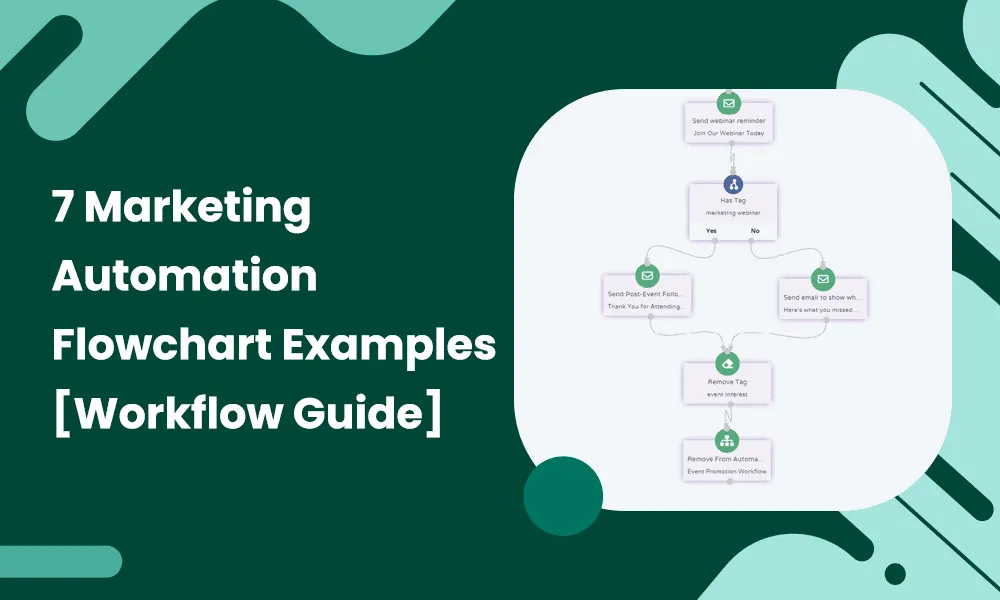
Your B2B email drip campaign’s success depends on choosing the right triggers. These specific actions or conditions start automated emails. They ensure your messages reach prospects at the time when they’re most likely to respond.
Behavioral triggers vs. time-based triggers
Behavioral triggers that respond to prospect actions work substantially better than traditional time-based sequences. Research shows trigger-based emails outperform standard email blasts by a remarkable 497%. These emails are better at getting B2B prospects to participate.
Behavioral triggers start when prospects take specific actions:
- Downloading a whitepaper or resource
- Visiting your pricing page multiple times
- Attending a webinar
- Abandoning a shopping cart
- Submitting a form
These actions show intent and interest. They create powerful opportunities to start meaningful conversations. To cite an instance, when prospects visit your pricing page multiple times, they’re likely ready to make a purchase decision. This creates the perfect moment to send helpful information that addresses common buying concerns.
Time-based triggers follow set schedules whatever the recipient does. While they offer less tailored communication, they help keep your brand relevant and re-engage quiet prospects. The most effective B2B drip campaigns space these emails four, seven, or fourteen days apart. This prevents message fatigue and keeps communication steady.
Lining up triggers with intent signals
Intent signals show where prospects are in their buying trip. You can tailor your messaging based on these signals. More importantly, these signals help you prioritize leads and focus your sales and marketing efforts on promising opportunities.
Here are the different types of intent signals:
- Behavioral intent signals come from prospect actions on your website or digital platforms
- Engagement-based signals come from interactions with your content or communications
- Content consumption patterns point to specific areas of interest and pain points
To line up triggers with intent effectively, watch which content types get the most engagement from prospects. Create targeted follow-up sequences that address their shown interests. When a prospect downloads a guide about finding qualified leads, your drip campaign should offer complementary resources about converting those leads.
Making use of CRM and website data to inform triggers
Your CRM system and website analytics are the foundations of an effective trigger strategy. They give you the evidence-based insights to create relevant, timely communications that guide prospects through your sales funnel.
Combining website tracking with your CRM gives you detailed insights into prospect behavior. Once visitors share their contact information, this tracking connects their site behavior with their database profile. This creates powerful remarketing opportunities. You should implement these notable triggers:
- Page-specific triggers for high-intent pages like pricing, features, or case studies
- Form submission triggers to follow up after original contact
- Offline interaction triggers such as trade show attendance or sales meetings
- Milestone triggers for account creation, subscription renewals, or usage thresholds
Targeting segmented audiences based on specific behaviors improves performance substantially. Campaigns that segment using buyer personas see open rates double and click-through rates increase fivefold.
The timing and content of your triggered emails matter equally. Immediate triggers (within two hours of an action) work best when user intent is high. Some behaviors need strategically delayed responses to avoid overwhelming prospects.
Optimising Content for Each Stage of the Funnel
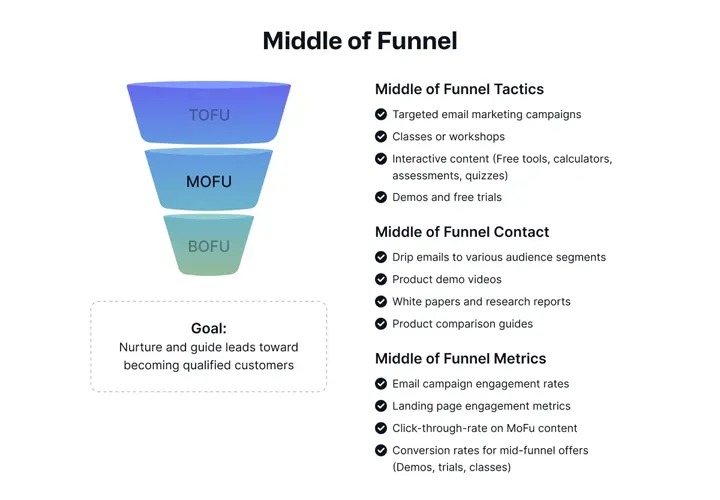
Your B2B email drip campaigns become conversion powerhouses when you create targeted content for each stage of your customer’s experience. You’ll keep prospects involved and moving smoothly toward purchase by matching your message to their decision process.
Top-of-funnel: education and awareness
The first stage of content introduces your brand and builds credibility without pushing for quick sales. Prospects just start to find their problems and explore tools during this awareness stage.
TOFU content that works puts education before sales. Your goal is to give valuable information that shows your company’s expertise. This method gets 95% higher engagement rates among B2B marketers. It works because it tackles pain points without bombarding prospects with sales pitches.
Content types that work best at this stage include:
- How-to guides and educational resources
- Authority articles and industry insights
- Informative newsletters with practical tips
TOFU content starts relationship building. It should showcase your expertise while guiding prospects to think over your tools. This stage builds the trust foundation needed later, even though immediate conversion isn’t the goal.
Mid-funnel: trust-building and case studies
Prospects understand their problems and actively evaluate potential tools in the consideration stage. Mid-funnel content needs to separate your offering by highlighting its unique value.
Case studies and customer testimonials work exceptionally well here. They turn abstract claims into real examples. This social proof builds brand confidence when prospects compare options. Detailed product information, webinars, and industry reports help answer specific questions during evaluation.
Prospects want deeper insights customized to their challenges at this point. Mid-funnel prospects want interactive ways to explore tools before they commit. Tools like quizzes, calculators, or assessments that give customized recommendations work well.
Bottom-of-funnel: conversion-focused messaging
Bottom-funnel prospects are ready to decide, they just need that final nudge to convert. Your content should now tackle last-minute objections and create urgency.
Product demos have tested highly effective. They let potential customers test your solution firsthand before buying. Email campaigns that highlight specific benefits for each prospect’s situation can increase conversion rates by up to 10%.
Time-limited offers create helpful urgency that stops prospects from delaying their decision. Cost estimates, ROI calculators, and comparison charts help prospects make their case when they need approval from other stakeholders.
Testing and Improving Campaign Performance
Testing rigorously sets exceptional B2B email drip campaigns apart from average ones. Informed refinements will give your campaigns lasting success by adapting to your audience’s changing priorities and behaviors.
A/B testing subject lines and CTAs
A/B testing helps you learn about what works by comparing email element variations to identify which version appeals most to recipients. Your tests should focus on:
Subject lines – Test different approaches such as questions versus statements, personalized versus generic, or varied lengths. Companies that test subject lines see open rates increase by up to 497% compared to standard email blasts.
Call-to-action elements – Button designs, colors, placements, and wording need experimentation. Testing button colors against text links or varying CTA placements (header, mid-email, footer) shows what motivates your specific audience to act.
The best results come from testing one element at a time. This approach shows exactly how specific components affect performance changes.
Tracking open rates, CTR, and conversion
Key metrics are the foundations of continuous improvement:
Open rates show how well subject lines perform. Daily monitoring reveals healthy B2B rates typically above 20%.
Click-through rates (CTR) reveal content engagement. A click rate above 15% is a big deal as it means that your audience values your offerings.
Conversion rates show how many recipients take desired actions like downloading content or requesting demos. This metric proves your emails create real business outcomes.
Bounce rates (ideally below 5%) and unsubscribe rates need monitoring to keep your list healthy.
When to pause, tweak, or rebuild a sequence
Your campaign modification decisions should be informed by data:
Pause campaigns that consistently fall below key measures or become seasonally inappropriate.
Tweak sequences with strong open rates but low click-throughs, this suggests effective subject lines but content needs work. Small adjustments to messaging, visuals, or CTAs often solve this issue.
Rebuild sequences completely if your basic assumptions about audience needs prove wrong or multiple metrics stay low despite adjustments.
Note that audience priorities change constantly. Regular segmentation updates based on new data keep your B2B drip campaigns relevant and successful.
Best B2B Email Drip Campaign Examples to Learn From
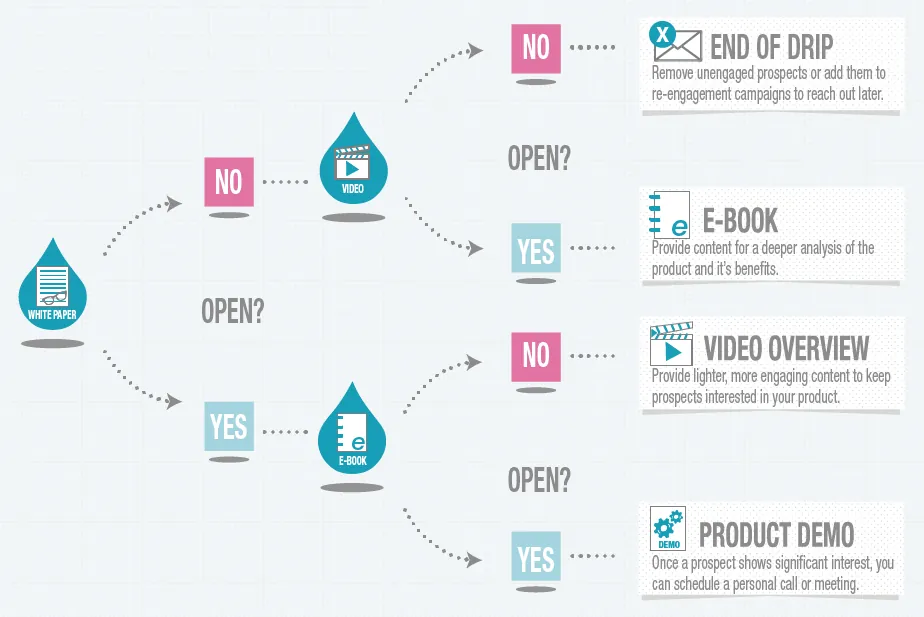
Real-life B2B email drip campaigns teach us lessons that theory alone can’t provide. These examples show how companies put strategies into action and get measurable results.
B2B drip campaign examples from SaaS
SaaS companies are usually great at email automation because of their technical background and longer sales cycles.
Box, a secure file-sharing platform, created an educational drip series called “Box Tips” to help users get the most value from their product. They focused on helpful content about key features instead of just sending sales messages. The company understood that education plays a significant role throughout the customer’s trip.
Dropbox stands out in a competitive market by adding personality to their onboarding emails. Their drip campaigns blend practical guidance with a unique brand voice that turns free users into paying customers.
Trello runs education-focused drip campaigns that target specific user behaviors. Their email sequences give custom guidance based on how customers use their platform. This helps users find relevant features they might have missed.
Ecommerce B2B email drip campaigns
B2B ecommerce brands face unique challenges that smart drip campaigns can solve.
Vitrazza, a glass chair mat company, turned their struggling email program around with a personalized welcome series. Their campaign used customer testimonials and custom content that led to a 55% jump in revenue and 20% better click-through rates.
Dell made their product launch emails better by adding GIFs to show new products. This simple visual change let prospects see products in action right from their inbox and boosted sales by 109%.
Eternity Modern set up several specialized workflows including welcome emails, cart abandonment sequences, and product suggestions. This detailed approach generated $80,000 monthly within three months and grew to $289,000 monthly in under a year.
What these examples get right (and wrong)
The best B2B drip campaigns share common strengths and avoid typical mistakes.
Effective elements include content personalization based on user behaviors rather than basic segments. Premier Bidets found that grouping audiences by past purchases and browsing habits increased engagement and conversions by a lot. The best campaigns also provide value beyond sales pitches through educational content to build authority in their field.
Common mistakes include sending too many emails to recipients. Research shows successful drip campaigns usually have 4-10 emails sent 4 days to 2 weeks apart. Many companies also don’t update their campaigns based on performance data. This means they miss chances to improve their approach as they learn more about their audience.
The best B2B drip campaigns create a perfect mix of automated efficiency and personalized relevance. They deliver content that feels custom-made even when sent to thousands of recipients.
Struggling to keep your B2B email drip campaigns engaging? Discover practical tips in our guide and let GrowLeads.io help you connect with leads!
Conclusion
B2B email drip campaigns deliver remarkable results at the time they are strategically planned and executed. Your campaigns can combine behavioral triggers, tailored content, and continuous optimization to nurture leads through their experience, instead of settling for generic email blasts.
Data shows what strikes a chord with your audience. Analytics guide refinements that boost involvement. Companies with the best results focus on delivering value at each funnel stage. Educational content works for awareness, social proof helps to think over options, and compelling offers drive conversion.
The examples we got into show how proper segmentation and timing turn standard emails into powerful conversion tools. Dell’s 109% sales increase and Eternity Modern’s rapid revenue growth showcase the potential of well-crafted drip sequences.
Your B2B email drip campaigns should adapt to your audience’s needs. Clear objectives, performance metrics, and data-driven refinements form the foundation. Note that small improvements add up over time and create eco-friendly growth through automated yet tailored communication.
FAQs
Q1. How many emails should be included in a B2B drip campaign?
Most effective B2B drip campaigns consist of 4-10 emails spaced between 4 days to 2 weeks apart. This cadence keeps your brand top-of-mind without overwhelming prospects.
Q2. What are the key elements of a successful B2B email drip campaign?
Successful B2B email drip campaigns include strategic automation, proper timing and spacing, personalization, clear calls-to-action, consistent design, and regular testing and analytics for continuous improvement.
Q3. How do behavioral triggers differ from time-based triggers in email campaigns?
Behavioral triggers respond to specific prospect actions, such as downloading a whitepaper or visiting a pricing page, making them more effective than time-based triggers, which follow predetermined schedules regardless of recipient actions.
Q4. What types of content work best for top-of-funnel prospects in B2B drip campaigns?
Top-of-funnel content should focus on education and awareness. Effective content types include how-to guides, thought leadership articles, industry insights, and informative newsletters with actionable tips.
Q5. How can you improve the performance of your B2B email drip campaigns?
To improve campaign performance, conduct A/B testing on subject lines and CTAs, track key metrics like open rates and click-through rates, and regularly analyze data to determine when to pause, tweak, or rebuild sequences. Additionally, keep your campaigns updated based on evolving audience preferences and new data insights.

Builds the demand intelligence, automation, and deliverability systems behind Growleads pipeline.