Lead Generation Expert Strategy: B2B Email Drip Campaigns That Convert [Google Ads Guide]
![Hero Image for How to Build B2B Email Drip Campaigns That Actually Convert [Google Ads Guide]](https://growleads.io/wp-content/uploads/2025/05/aad4ff6f-8621-4640-b6e5-78c9915de4a6.webp)
Did you know that B2B email drip campaigns connected to Google Ads B2B strategies drive up to 18 times more revenue than typical broadcast emails?
I’ve seen it with my own eyes companies spending big money on Google Ads but completely dropping the ball when it comes to nurturing those expensive clicks. They get the traffic but miss out on actual sales. Think about it: you’re paying for every single click, but what happens when someone lands on your page and doesn’t buy right away?
This huge gap between Google Ads B2B lead generation expert strategy and email follow-up is literally burning your marketing budget. The stats don’t lie: B2B companies with proper drip campaigns generate 50% more sales-qualified leads at 33% lower costs. And here’s something even more impressive, these targeted email sequences get 80% higher open rates and triple the click-through rates compared to one-off messages.
Let me be straight with you, getting traffic from Google Ads B2B targeting isn’t enough. It’s what you do after they click that really counts. Most of your competitors are making this exact mistake, which means you’ve got a golden opportunity to outshine them by connecting these two powerful channels.
I’m going to walk you through exactly how to build email drip campaigns that turn those Google Ads leads into paying customers. Ready to transform those expensive clicks into your most reliable revenue stream? Let’s get started.
Connect Google Ads to Your Email Funnel
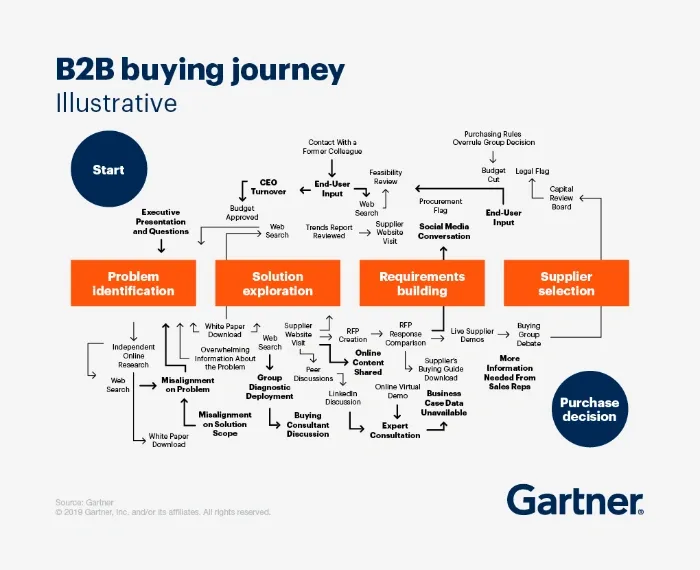
Image Source: Neil Patel
Let’s talk about the real power of connecting Google Ads directly to your email marketing. It’s all about creating that seamless path from when someone first shows interest to when they finally become a customer. When B2B prospects search for tools you offer, they’re showing clear intent – and that’s gold you shouldn’t waste.
Use Google Ads B2B lead generation expert strategy to capture intent
Did you know Google owns around 90% of the search engine market worldwide? On top of that, the average B2B buyer does 12 different online searches before they even visit your website. This makes Google Ads perfect for grabbing those high-intent prospects who are actively looking for tools.
Here’s the thing about Google Ads B2B strategies – they’re completely different from broad awareness campaigns. Instead of just targeting demographics, you’re targeting people exactly when they’re searching for what you offer. You’re catching them at the perfect moment.
Want to effectively capture this intent? Here’s how:
- Identify high-intent keywords – I love using Google Keyword Planner for this. It helps you find exactly what your audience types when they’re ready to engage. For B2B campaigns, skip the purely informational keywords and focus on commercial and transactional ones.
- Implement contextual targeting – Google’s Display Network is amazing for this. You can place your ads on specific websites that B2B decision-makers frequently visit. This puts your message right in front of customers who are already browsing related content.
- Craft compelling ad copy – Your ad text needs a strong, clear call-to-action that gets people clicking. Remember, 74% of leads expect to hear from you immediately after showing interest, so make sure your ad sets clear expectations about what happens next.
Set up triggers for email automation from ad clicks
Once you’ve got people’s attention through Google Ads, you need to connect those clicks to your email sequences. This is where many businesses drop the ball.
First things first, set up conversion tracking in Google Ads to monitor leads from your campaigns. This gives you the foundation to link email engagement back to specific ad sources.
You can also create automated rules in Google Ads that trigger based on certain conditions. These rules can even send email notifications when specific thresholds are met – it’s like having a simple alert system for your team.
For more advanced setups, you’ve got several options:
- Direct integrations – I’m a big fan of platforms like Zapier that connect Google Ads and email services without any coding. Once set up, new leads from your ads automatically enter your email sequences based on how they interacted.
- Webhook implementations – For real-time transfers, Google actually recommends webhook integrations over manual CSV downloads. This syncs new leads instantly so you can send welcome messages or promised content right away.
- Google Ads lead form extensions – These forms are pre-filled with user information, making mobile sign-ups much easier. Connect them directly to your CRM or email platform through third-party integrators for smooth data flow.
Timing is absolutely crucial here – companies contacting leads within five minutes are 100x more likely to convert those leads into sales. So your integration needs to be fast as well as accurate.
By setting up these connections, you’re not just using Google Ads to get traffic anymore. You’re turning it into the first step of a complete B2B nurturing journey that actually converts.
Segment Your Audience Based on Ad Behavior
You know what’s crazy? Most marketers send the same boring emails to everyone, then wonder why their campaigns fail. After connecting Google Ads to your email platform, the magic happens when you organize those leads based on how they interact with your ads.
Map Google Ads B2B audiences to email segments
Let’s talk about audience capabilities in Google Ads. The platform categorizes users into groups based on interests, intents, and demographics. For B2B marketing, these segments become gold when transferred to your email ecosystem.
I’ve tested dozens of approaches, and nothing beats matching Google’s audience segments with corresponding email segments in platforms like HubSpot or Mailchimp. This keeps your messaging consistent from ad to inbox.
When building your segments, here are the Google Ads audience types you should consider:
- CRM-based audiences – Upload your existing customer data to create targeted lists
- Rule-based audiences – Group users based on specific actions they’ve taken on your site
- Logical audiences – Combine multiple lists for sophisticated targeting
- Similar/Lookalike audiences – Target new prospects resembling your best customers
The Customer Match feature is my absolute favorite for B2B email integration. It lets you use both online and offline customer data across Search, Shopping, Gmail, YouTube, and Display. Think of it as building a bridge between your Google Ads campaigns and email sequences.
Even better? Customer Match helps you optimize campaigns by adjusting bids based on customer activities. Your high-value prospects from email get prioritized ad exposure, creating a virtuous cycle between channels. Pretty neat, right?
Use ad engagement data to personalize email flows
The real power comes when you use specific ad interactions to tailor your email content. Behavior-based segmentation organizes users based on their ad engagement, whether they clicked specific messages, downloaded resources, or engaged with particular creative elements.
Interest-based segmentation takes this even further. If someone clicks an ad about automation tools, they should enter an email sequence focused specifically on that topic.
Here’s something wild, about half of customers feel companies don’t use their personal information in ways that benefit them. That’s a massive opportunity for you to stand out by creating genuinely helpful personalized experiences.
When segmenting B2B audiences, I always consider:
- Industry vertical – The content that works for manufacturing falls flat for healthcare
- Company size – Enterprise needs are worlds apart from SMB requirements
- Job title – Decision-makers need different info than influencers
- Interaction depth – A serious researcher deserves different content than a casual browser
Let me give you an example. If a CFO from a large healthcare organization clicks your Google Ad about cost-reduction case studies, they should get completely different emails than a marketing manager from a small retail business who clicked on branding resources.
One more thing, the membership duration for Customer Match lists extends to 540 days, giving you plenty of time to nurture leads. To keep things fresh, I recommend regularly updating these lists by syncing with your CRM or uploading new data periodically.
Get this alignment right between ad engagement and email content, and your drip campaigns will deliver exactly what each prospect needs at the perfect moment in their buying journey.
Plan the Drip Sequence Around Buyer Intent
Got your leads from Google Ads? Segmented them properly? Great! Now it’s time for the real magic, creating email sequences that actually guide those prospects toward hitting that “buy” button.
Define goals for each email stage
Look, every single email in your sequence needs a clear job to do. Without specific goals, you’re just sending random messages that don’t connect with each other. Trust me, I’ve seen too many campaigns fail because they lack direction.
For a drip campaign that actually converts, here’s what each stage should accomplish:
- Awareness stage: Educate prospects about tools to their challenges
- Consideration stage: Present your specific offerings with supporting evidence
- Decision stage: Deliver convincing case studies and limited-time offers
- Post-conversion stage: Onboard new clients and encourage advocacy
Your campaign goals shouldn’t be fluffy, either. They need concrete numbers like “increase conversion rate by 15%” or “boost engagement by 20%”. Without these targets, you’re essentially throwing emails into the void and hoping something sticks.
Match email content to the ad’s promise
Want to know why most email sequences fail? They completely disconnect from what got the lead interested in the first place. When someone clicks your Google Ads B2B targeting, they’re showing specific intent that your emails need to address.
I always tell my clients: if your ad promises a solution to budget problems, your emails better continue that conversation, not suddenly switch to talking about something totally different. This consistency builds trust over time as people get familiar with what you’re offering.
Here’s a crucial point: each email needs to stand on its own while still being part of the bigger story. Why? Because if someone misses your first two emails but opens the third, they should still understand what you want them to do.
Set timing based on lead temperature
Ever sent six emails in three days and wondered why people unsubscribed? Timing matters big time. I categorize leads as Hot, Warm, or Cold based on how they interact with my content.
Hot leads have opened emails four or more times or clicked multiple links. Cold leads barely engage, with fewer than two opens.
For timing that works, try this approach:
- Send welcome emails immediately after sign-up (strike while the iron’s hot!)
- Follow with a second email three to five days later
- Keep to weekly or biweekly emails at first
- Ramp up frequency for your most engaged prospects
- Try to wake up dormant leads after a month of nothing
Just remember that different industries respond differently to timing strategies. What works for SaaS might bomb for manufacturing. That’s why you need to constantly check your open rates, click-throughs, and conversions to fine-tune your approach.
Build Landing Pages That Support the Email Journey
Your landing page isn’t just a destination, it’s the crucial bridge connecting your Google Ads clicks to your email drip campaigns. A well-designed landing page justifies what you’re spending on ads and dramatically increases the chances visitors will join your email sequence.
Design Google Ads B2B landing pages for conversion
When it comes to B2B Google Ads campaigns, your landing pages make or break your success in turning those expensive clicks into valuable leads. I was shocked when I learned that just a 1-second delay in mobile load time can slash conversions by up to 20%. That’s why I’m obsessive about speed optimization for every landing page I build.
Want to know what makes B2B landing pages B2B landing pages actually convert? Here’s what works:
- Clear, benefit-focused headline that instantly speaks to your visitor’s needs
- Problem-solving copy that highlights tools instead of just listing features
- Minimal form fields that ask only for what you absolutely need
- Trust signals like client logos, testimonials, and certifications
- Prominent call-to-action that perfectly aligns with the first step in your email sequence
Oh, and don’t forget, your landing page absolutely must be mobile-friendly. A huge chunk of B2B research happens on mobile devices these days, so run your page through Google’s Mobile-Friendly test to spot any issues. I also recommend keeping an eye on your “Mobile-friendly click rate” in Google Ads to make sure you’re performing well across all devices.
Ensure message match between ad, page, and email
Ever heard of message match? It’s how well your landing page content lines up with the ad that brought visitors there. When you nail both this and visual consistency, you create what the experts call “scent match”, that feeling visitors get when they know they’ve arrived at exactly the right place.
So what does strong message match look like in practice? Here’s my approach:
- Keep headlines consistent between your ad and landing page
- Use the same visuals and design elements across all touchpoints
- Deliver exactly what your ad copy promised
- Carry the same tone and messaging into your email sequence
When you mess this up, it creates what I call cognitive whiplash. For example, if someone clicks an ad for a “MINI for you sales event” but lands on a generic car customization page with no mention of that event, they’ll bounce faster than you can say “wasted ad spend”.
Beyond just improving user experience, message match directly impacts your Google Ads Quality Score. A higher Quality Score means lower cost-per-click and better ad positions, it’s a virtuous cycle that keeps giving back to your campaigns.
As you line up your ads, landing pages, and emails, remember this: consistency builds trust. When you maintain the same message throughout the entire journey, you dramatically increase the chances that prospects will continue through your carefully crafted email sequence.
Test and Optimise for Better Conversions
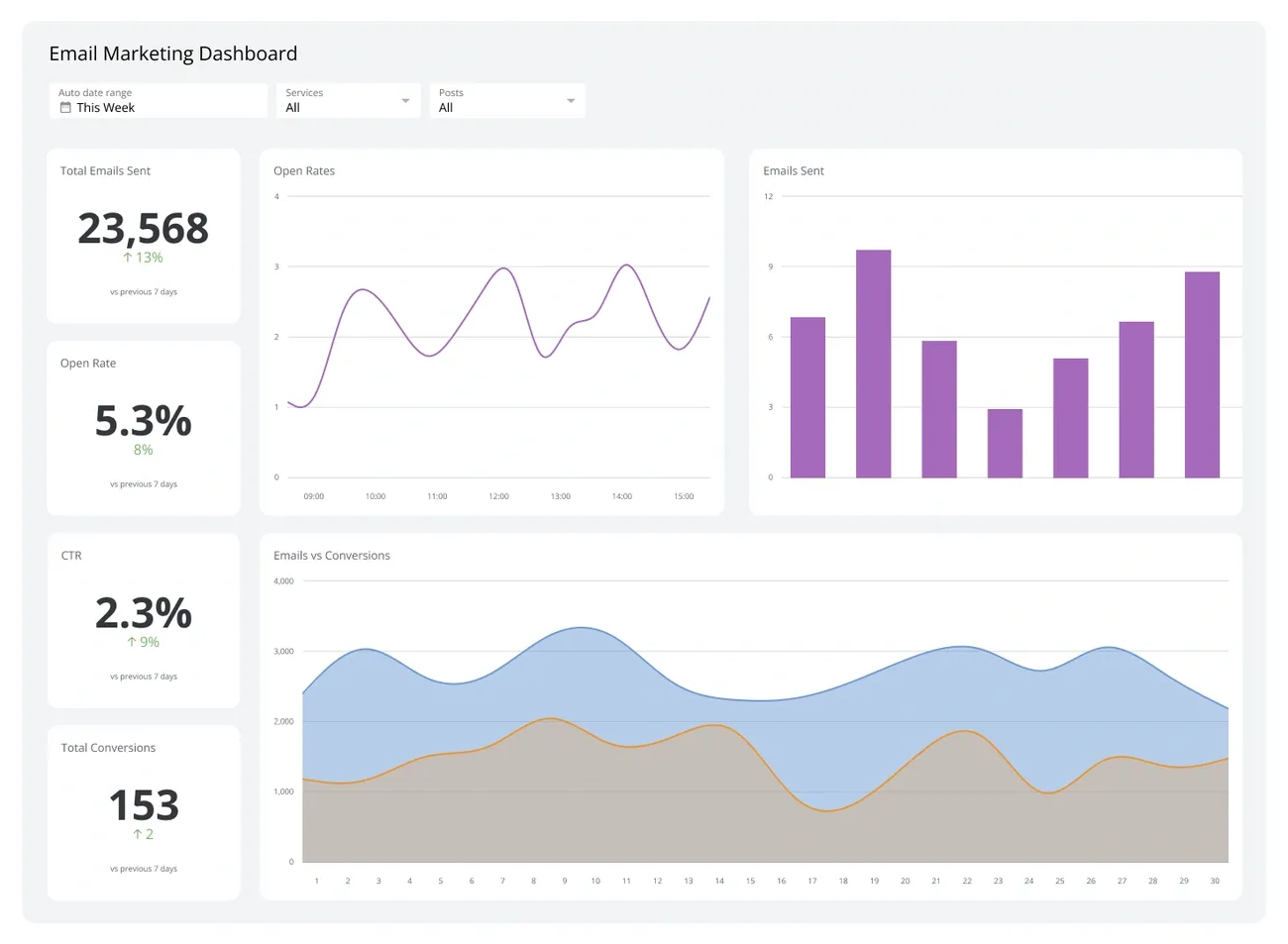
Image Source: Klipfolio
Once you’ve got your campaigns up and running, the real work begins. Let’s be honest, your first attempt probably won’t be perfect. But that’s where continuous measurement and testing come in. The data doesn’t lie, it tells you exactly what’s working and what needs fixing.
Track open, click, and conversion rates
The numbers tell different parts of your story. I’ve found that B2B email open rates typically average around 15.14%, slightly lower than B2C’s 19.78%. But here’s the good news, B2B emails often achieve better click rates at approximately 3.18%, beating B2C’s 2.09%.
Remember how to calculate these metrics properly? Your open rate is just unique opens divided by total emails delivered, then multiplied by 100. Click-through rates measure the percentage of people who actually clicked links in your email. Want deeper insights? Look at click-to-open rates (CTOR), which compare clicks to opens rather than total deliveries.
These metrics are gold mines of information. Low open rates? Your subject lines need work. Good opens but poor clicks? Your content or CTA isn’t compelling enough. High clicks but no conversions? Your landing page might be the culprit.
Use A/B testing to refine subject lines and CTAs
Don’t just guess what works, test it! But here’s the trick: change just one thing at a time. Testing subject line length? Don’t mess with send times in the same test. Evaluating CTA buttons? Keep those subject lines consistent.
Most email platforms nowadays let you test up to five subject line variations at once. Once you’ve collected enough data, just pause the underperformers and let the winners run.
Subject lines aren’t the only thing worth testing. Try experimenting with:
- Images versus no images
- Button designs instead of text links (buttons can boost clicks by 27%!)
- Different copy lengths (shorter text usually works better on mobile)
- Adding personalization (which can lift click-through rates by 14%)
Don’t make snap judgments based on a single send. I recommend running each test across at least four email sends before making any permanent changes. The patterns over time tell the real story.
Adjust based on Google Ads performance data
Google uses your conversion data to optimize campaign performance across multiple dimensions. And don’t forget about Quality Score, it’s like a report card showing you exactly what needs improvement.
Is your Google Ads B2B campaign showing low ad relevance scores? Make your email messaging match more closely to the search terms that brought in those leads. Seeing low expected click-through rates? Time to jazz up both your email and ad copy to make your offers more compelling.
When you combine your email metrics with your Google Ads data, you create a powerful feedback loop. This continuous improvement cycle sharpens both channels, delivering better and better results for your integrated campaigns.
Sound like a lot of work? It is. But it’s the difference between wasting your ad budget and turning it into a profit machine.
Wrap-Up and Next Steps
Transform Your Google Ads Leads into Loyal Customers
Connecting Google Ads to email drip campaigns creates a powerful system that blows away what either channel could do on its own. Throughout this guide, I’ve shown you how those high-intent Google Ads clicks can become qualified leads through smart nurturing sequences.
Here’s the thing about effective B2B email drip campaigns – they start with capturing real intent through Google Ads, then keeping your messaging consistent at every touchpoint. When you segment your audience based on how they interact with your ads, your emails can deliver exactly what each prospect needs at the perfect moment.
Want to know the real difference between getting average results and crushing it? It comes down to three things: planning your drip sequence around what buyers actually want, supporting the journey with landing pages built for conversion, and constantly testing every single element of your campaigns.
Did any of these tips spark an idea for generating better quality leads? I’d love to hear about it! GrowLeads.in is ready to help you shine.
The marketers who really master this integration enjoy 50% more qualified leads at way lower costs than their competitors. So what are you waiting for? Start implementing these strategies today, get your advertising and email efforts working together, test methodically, and watch as those expensive clicks transform into your most reliable revenue stream.
FAQs
Q1. How can I connect Google Ads to my email marketing funnel?
You can connect Google Ads to your email funnel by setting up conversion tracking, using direct integrations like Zapier, implementing webhooks for real-time data transfer, or utilizing Google Ads lead form extensions. These methods ensure that leads generated from your ads automatically enter your email sequences based on their specific interactions.
Q2. What are some effective ways to segment my B2B audience for email campaigns?
Effective B2B audience segmentation can be done based on criteria such as industry vertical, company size, job title, and interaction depth with your ads. You can also use Google Ads audience types like CRM-based audiences, rule-based audiences, and similar/lookalike audiences to create targeted email segments.
Q3. How should I structure my B2B email drip sequence?
Structure your B2B email drip sequence by defining clear goals for each stage (awareness, consideration, decision, post-conversion), matching email content to your ad’s promise, and setting timing based on lead temperature. Generally, create sequences of 4-10 emails with intervals ranging from four days to two weeks.
Q4. What elements should I include in my B2B landing pages to support email conversions?
Effective B2B landing pages should include a clear, benefit-focused headline, problem-solving copy, minimal form fields, trust signals (like client logos and testimonials), and a prominent call-to-action that aligns with your email sequence’s first step. Ensure the page is mobile-friendly and maintains message match with your ads and emails.
Q5. How can I optimize my B2B email campaigns for better performance?
To optimize your B2B email campaigns, track key metrics like open rates, click-through rates, and conversion rates. Use A/B testing to refine subject lines, CTAs, and other email elements. Additionally, adjust your strategies based on Google Ads performance data, focusing on improving ad relevance and expected click-through rates.

Runs paid acquisition across Google, LinkedIn, and Meta for B2B pipeline.