
10 B2B Sales Funnel Frameworks That Drive Revenue in 2026

B2B sales funnel frameworks are the foundations of predictable revenue growth, yet only 9% of marketing professionals feel confident about their current strategy. Picture a high-stakes chess game where every move counts and one wrong step leads to checkmate.
B2B marketing funnels need a strategic framework to succeed. Companies that systematically research their prospects grow three to ten times faster and become up to two times more profitable than their counterparts. B2B buyers dedicate most of their time to independent research, which makes sharing relevant content a vital part of trust building. The modern B2B sales and marketing funnel’s success depends on five stages: brand awareness, interest, intent, consideration, and decision to buy.
Sales teams looking for predictability and scalability can turn random prospecting into repeatable success with the right B2B strategy. Research shows 82% of prospects welcome contact through social networks, while sales reps who use social media outperform their peers consistently. Your digital presence shapes your sales funnel’s effectiveness, as 80% of potential clients visit your website when evaluating service providers.
We’ve gathered the 10 most effective B2B sales funnel frameworks that drive real revenue results in 2025. These tested frameworks will help create an efficient path from prospect to customer, whether you struggle with lead generation or need to optimize your entire sales process.
Sales and Marketing Alignment Framework
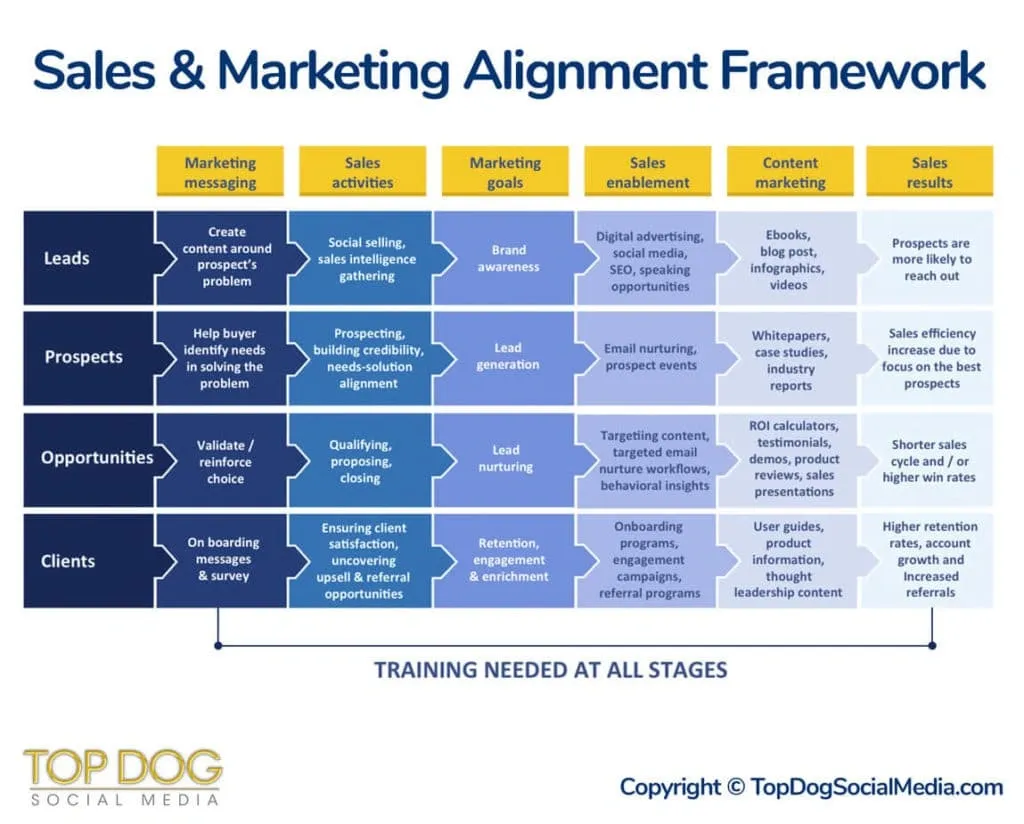
Image Source: Top Dog Social Media
Sales and marketing teams working together are the foundations of a working B2B sales funnel framework. Forrester’s research shows businesses with strong sales and marketing coordination grow 19% faster and see 15% higher profits. This framework reshapes the scene by turning separate operations into one unified system that optimizes results across your funnel.
Key features of Sales and Marketing Alignment Framework
The framework puts shared communication, strategy, and goals at its core. Both departments can now work as one unified organization. These key features stand out:
- Shared definitions and metrics – Standard definitions of marketing qualified leads (MQL), sales qualified leads (SQL), and other key performance indicators create a common language
- Unified customer data – One central system manages customer relationships throughout their lifecycle across all touchpoints
- Collaborative planning processes – Teams develop go-to-market strategies together instead of planning separately
- Regular communication cadence – Clear channels and processes help teams share messages quickly and work together on opportunities
This framework closes the traditional gap between teams and makes the buyer’s trip more efficient. Marketing teams can now focus on engaging buyers early while preparing them for meaningful sales conversations later in the funnel.
Benefits of Sales and Marketing Alignment Framework
A properly implemented framework brings significant business advantages. Aberdeen Group’s research reveals aligned sales and marketing teams can:
- Generate 32% higher revenue
- Retain 36% more customers
- Achieve 38% higher win rates
Sirius Decisions found companies with aligned teams grow 24% faster and increase profits 27% more over one year. Better alignment helps buyers make smarter purchase decisions.
Only 35% of average sales leaders have their teams working with marketing. However, 95% of “Leading” sales leaders maintain this alignment.
Challenges with Sales and Marketing Alignment Framework
Teams face specific obstacles when implementing this framework:
- Misaligned objectives – Different KPIs create conflicting priorities between teams
- Cultural differences – Sales teams chase immediate revenue and quarterly quotas while marketing takes a longer view
- Poor communication – Teams miss critical strategy insights without regular information sharing
- Data discrepancies – Different metrics and separate systems breed confusion and mistrust
These challenges make implementation difficult even when companies understand the benefits. Outfunnel’s research shows nearly half of all sales and marketing professionals still don’t feel well-coordinated.
Best practices for Sales and Marketing Alignment Framework
Your B2B sales funnel can work better with these tested approaches:
Establish common goals and metrics – Revenue becomes the central focus. Marketing owns a defined percentage of pipeline while sales commits to specific conversion rates.
Implement regular collaborative meetings – Biweekly meetings help review shared goals, solve bottlenecks, and improve lead handoff processes.
Create shared customer personas – Teams build detailed buyer profiles together. They combine sales’ real-life insights with marketing’s behavioral data.
Employ integrated technology – Connected CRM and marketing automation create one central system. Teams track leads and access current data easily.
Promote mutual understanding – Marketing teams join sales calls while sales participates in marketing planning.
A truly working B2B marketing funnel needs both teams to share insights about market trends, customer needs, and content performance. This feedback loop keeps your sales strategy adaptable and focused on customers.
Lead Generation Strategy Framework
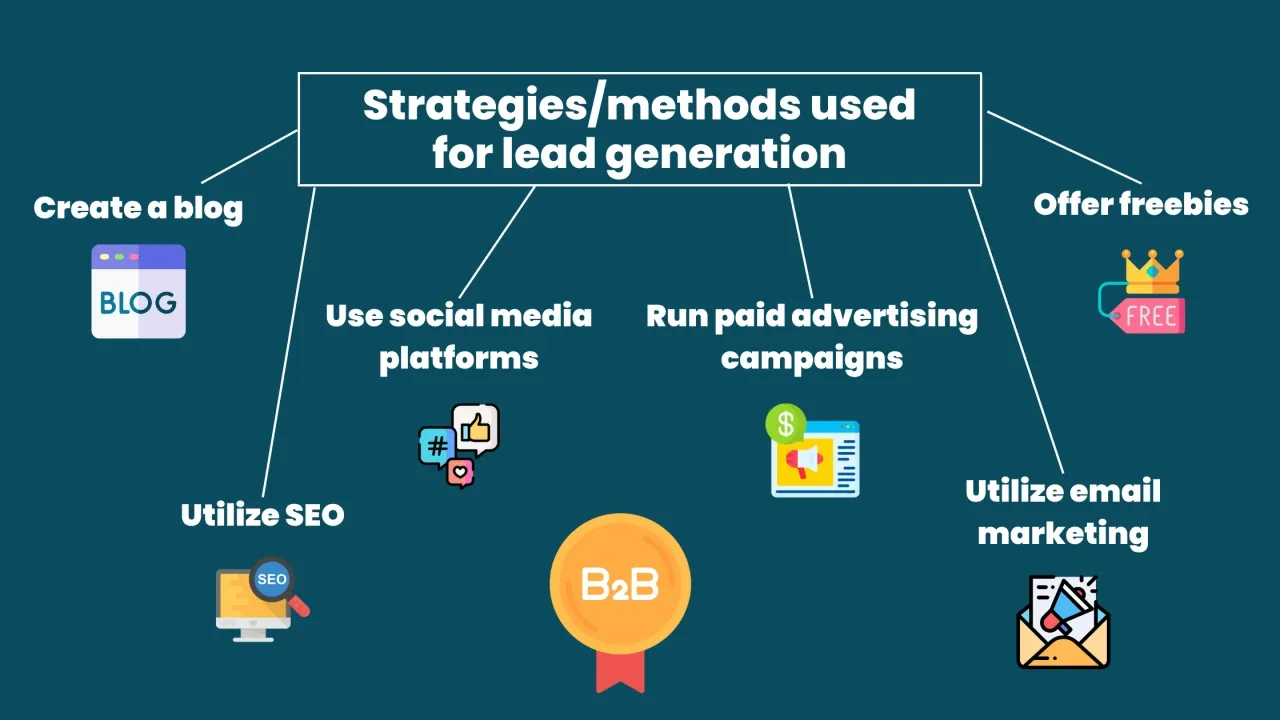
Image Source: LinkedIn
“This approach helps you filter out unqualified leads and zero in on those who see the value in your service.”
, Dashly Marketing Team, Sales Funnel Optimization Specialists
B2B sales funnel frameworks thrive on lead generation. This strategic approach helps build visibility, credibility, trust, and interest from potential leads who can become high-value customers. B2B marketers (85%) think over lead generation a top priority, yet 44% see their efforts as just neutral in effectiveness. This shows why we need a well-laid-out framework.
Key features of Lead Generation Strategy Framework
A lead generation framework that works needs several vital components to attract and qualify potential buyers:
- Multichannel approach – Using channels of all types including social media, email, content marketing, and website optimization to reach more people
- Lead scoring and grading – Giving numerical values to leads based on behavior and how well they fit your target market
- Content strategy alignment – Making valuable resources that solve specific problems at different funnel stages
- Data-driven targeting – Buyer data helps create ideal customer profiles (ICPs) and buyer personas for exact targeting
- Automation tools – Technology that makes lead capture, nurturing, and qualification easier
Benefits of Lead Generation Strategy Framework
This framework brings real value to B2B organizations when done right:
Your market reach grows beyond your original target audience. It also gets more and thus encourages more quality leads that convert better, which boosts revenue while making the best use of resources.
Your company’s visibility and brand awareness improve, making you an authority in your industry. Companies that use systematic lead generation grow three to ten times faster than those without structured plans.
Challenges with Lead Generation Strategy Framework
Setting up an effective lead generation framework comes with its share of obstacles:
Companies don’t deal very well with picking the right strategy among countless options and mixed advice. Many teams lack enough expertise in content creation, data analysis, and marketing automation, which creates major roadblocks.
Lead quality remains the biggest problem, with 61% of marketers naming lead generation their toughest task. Getting accurate contact details and keeping databases current takes time but remains vital.
Best practices for Lead Generation Strategy Framework
Your B2B sales funnel can work better through lead generation if you:
Define clear buyer personas and ICPs – A deep understanding of your audience before creating content or campaigns improves targeting by a lot.
Implement lead scoring – Your efforts should focus on prospects more likely to convert by giving points for specific actions like webinar attendance or high-value page visits.
Create valuable content – Educational content matters since 47% of buyers read three to five pieces before they talk to sales and 65% make purchasing decisions before any contact.
Use automation – Tools can predict content that engages leads based on past interactions while delivering tailored experiences at scale.
Measure and optimize – Key metrics like conversion rates, cost per lead, and ROI help you refine your lead generation continuously.
Lead Nurturing Framework

Image Source: Ninjapromo
Lead nurturing is a vital bridge between acquisition and conversion in any successful B2B sales funnel framework. Research shows that 96% of visitors to your website aren’t ready to buy right away. This makes strategic nurturing essential to guide prospects through their buying process.
Key features of Lead Nurturing Framework
A resilient lead nurturing framework has several essential components that move prospects systematically toward purchase decisions:
- Segmentation and scoring – Categorizing leads based on profile characteristics, behaviors, and engagement levels to deliver tailored content
- Personalization engine – Adapting communications to individual needs based on data signals. Personalized emails generate six times higher transaction rates
- Multi-channel orchestration – Combining various touchpoints including email (78% effectiveness), website (48%), and social media (39%)
- Progressive profiling – Building rich datasets by gathering prospect information gradually without overwhelming them
- Behavioral triggers – Setting up automated workflows based on specific actions that signal buying intent
Benefits of Lead Nurturing Framework
This framework delivers clear advantages throughout your B2B sales funnel:
Nurtured leads make 47% larger purchases than non-nurtured leads. Companies that excel at nurturing generate 50% more sales-ready leads at 33% lower cost. The process also creates 20% more sales opportunities compared to non-nurtured approaches.
Nurturing builds trust over time and shortens sales cycles. It also improves lead quality management by helping teams understand prospect needs better.
Challenges with Lead Nurturing Framework
Teams face several obstacles when implementing this framework:
Creating relevant content is the biggest hurdle, with 59% of marketers naming it their primary challenge. About 51% of professionals say their nurturing initiatives need improvement, and 44% find lead nurturing difficult.
Teams also struggle with targeting by decision stage (49%), targeting by persona (39%), and managing nurturing campaign workflows (33%).
Best practices for Lead Nurturing Framework
Here’s how to optimize your B2B sales strategy through nurturing:
Implement predictive AI – Use artificial intelligence to predict which leads are most likely to convert, enabling more targeted efforts.
Develop stage-specific content – Create progression messaging that guides prospects from awareness through validation and education.
Personalize communications – Use prospect data to customize messaging as they consume content and spend more time with your brand.
Establish clear timeframes – Plan contact schedules based on your average customer buying cycle to avoid overwhelming prospects.
Measure continuously – Monitor engagement metrics like email opens and click-through rates, then adjust timing and content based on results.
Account-Based Marketing (ABM) Framework
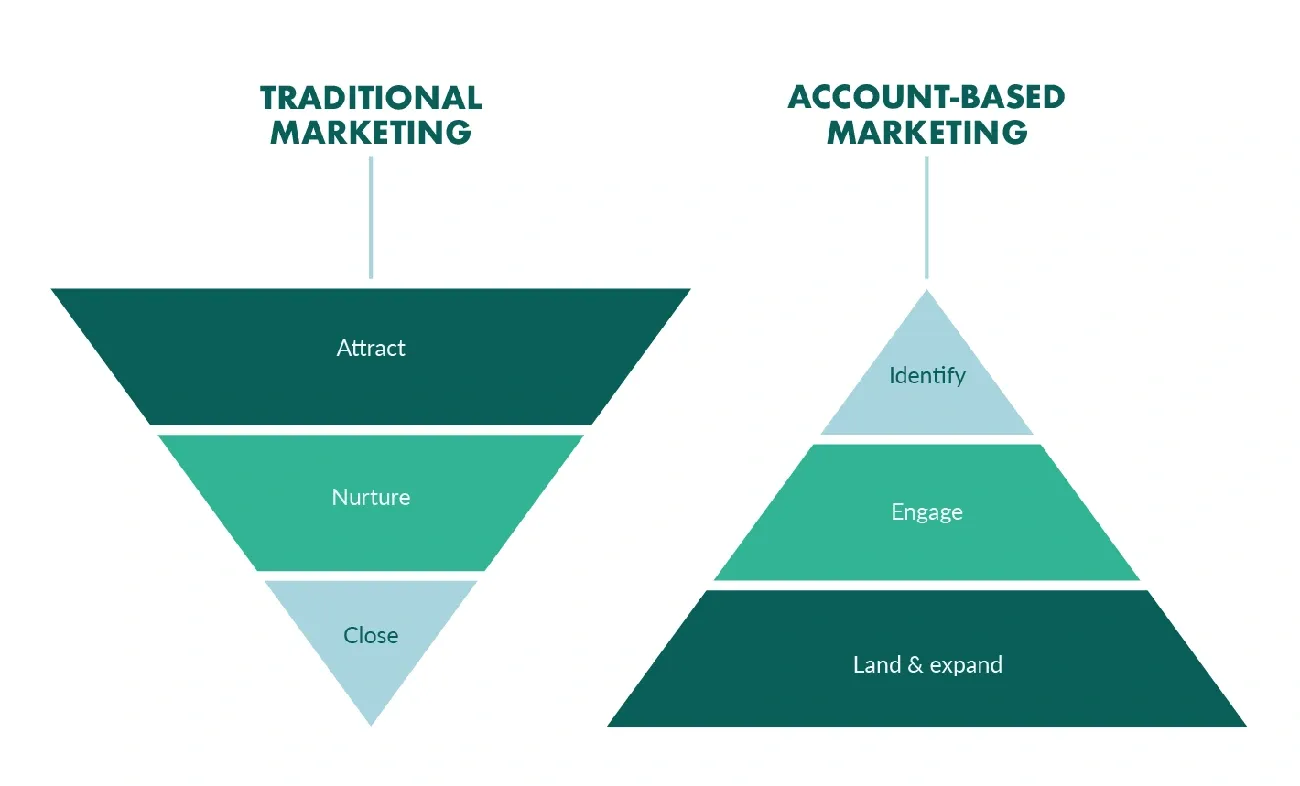
Image Source: Farinella
Account-Based Marketing (ABM) has transformed the B2B sales funnel framework. Research shows 79% of marketers get higher ROI from ABM compared to other marketing strategies. The approach turns traditional lead-centric methods upside down by treating specific high-value accounts as individual markets.
Key features of Account-Based Marketing Framework
ABM framework stands out from standard B2B marketing funnels through several unique elements:
- Cross-functional arrangement – Teams from marketing, sales, and customer service work together to achieve shared account goals
- Target account selection – Data-driven criteria and ideal customer profiles (ICPs) help identify and prioritize valuable accounts
- Tailored engagement – Each target account receives custom content that addresses their specific needs and challenges
- Multi-channel orchestration – Personalized outreach happens through direct mail, retargeting, email, and custom landing pages
Benefits of Account-Based Marketing Framework
B2B organizations can streamline their sales strategy with ABM’s substantial advantages. We found that 76% of marketers report better ROI with ABM than other approaches. Mature ABM programs drive 79% of all sales opportunities.
ABM streamlines processes by focusing on accounts with high conversion potential. Sales teams can quickly eliminate unqualified prospects and direct their resources to opportunities with better conversion chances.
Challenges with Account-Based Marketing Framework
ABM framework implementation comes with its share of hurdles. Technology integration remains a challenge, as 29% of marketers struggle to get accurate data. On top of that, 47% of organizations point to separate sales and marketing funnels as the main cause of misalignment.
Companies find it hard to create custom content at scale, especially when targeting many accounts at once. Measuring ROI becomes complex because ABM uses multiple touchpoints that make attribution difficult.
Best practices for Account-Based Marketing Framework
Your ABM framework can work better with these tested strategies. Start with a small pilot program targeting few accounts before expanding. Sales and marketing should create shared account lists that both teams can access.
Data integration serves as the foundation of successful ABM. Invest in tools that connect your CRM with marketing automation platforms. Regular account reviews help track progress and set priorities, which keeps momentum strong during extended sales cycles.
Follow-Up and Engagement Framework

Image Source: Artisan
A systematic Follow-Up and Engagement Framework drives successful conversions in today’s competitive B2B digital world. Research shows that 80% of sales need at least five follow-up interactions to close. Yet 44% of sales professionals quit after a single attempt. This framework makes the difference between lost opportunities and closed deals.
Key features of Follow-Up and Engagement Framework
The most effective follow-up frameworks need these core components:
- Multi-channel orchestration – Email (78% effectiveness), website (48%), and social media (39%) create cohesive participation
- Personalized timing – Response rates peak during the first 24 hours after the original contact
- Value-driven messaging – Each follow-up gives new insights instead of just “checking in”
- AI-driven automation – Predictive tools that set follow-up priorities based on engagement levels and find the best timing
Benefits of Follow-Up and Engagement Framework
This framework delivers measurable advantages throughout your B2B sales funnel. Companies with structured follow-up strategies see 47% higher response rates. Consistent engagement builds emotional connections that turn prospects into loyal customers.
Smart follow-ups help sales teams handle objections right away and clear doubts that could derail conversions. Many companies gain a competitive edge by responding first, with 30-50% of sales going to vendors who make the original contact.
Challenges with Follow-Up and Engagement Framework
All the same, many organizations don’t deal very well with implementation. Finding the sweet spot between persistence and respect remains tricky. Too aggressive and prospects leave; too passive and opportunities slip away. Large organizations face logistical challenges in creating truly personalized follow-ups at scale.
Best practices for Follow-Up and Engagement Framework
Your B2B marketing funnel needs these optimization strategies:
Implement a defined cadence – Plan follow-ups with specific timing: first follow-up within 5-15 minutes, second on day 2, third on day 4, fourth on day 7, fifth on day 10.
Prioritize value delivery – Share relevant case studies, industry insights, or educational content in each interaction instead of just “checking in”.
Use multiple channels – Mix email with other touchpoints like social media, calls, or personalized video to boost engagement rates.
Track engagement metrics – Monitor response rates and adjust timing based on actual performance data continuously.
Referral and Advocacy Framework
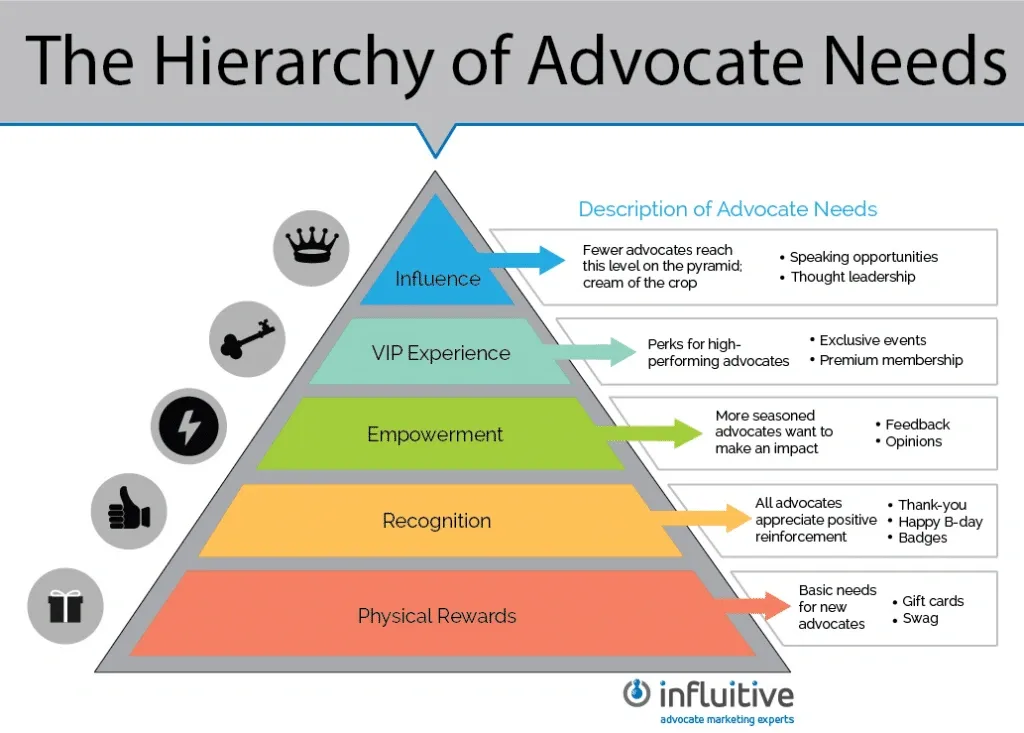
Image Source: Custify
B2B growth relies heavily on word-of-mouth recommendations. 84% of decision-makers begin their buying experience with a referral. The Referral and Advocacy Framework helps turn happy customers into active supporters who bring new business opportunities through your B2B sales funnel.
Key features of Referral and Advocacy Framework
The framework systematically controls customer satisfaction through:
- Formalized program structure – Clear pathways for referrals replace random acts of support
- Advocate personality types – Different approaches match various advocate personalities: educators share knowledge, validators provide feedback, status seekers want recognition, and collaborators aim for mutual success
- Multi-channel orchestration – Email, social networks, industry groups, and direct customer communication work together
- Incentive mechanisms – Both referrers and new clients receive rewards to maximize participation
Benefits of Referral and Advocacy Framework
Referrals deliver remarkable financial returns. They convert 300-400% better than cold leads and cost 5-15 times less than traditional marketing approaches. These numbers make them essential to any B2B sales strategy.
Referred customers spend 25% more, show 18% lower churn rates, and deliver 16% higher lifetime value. Companies with structured referral programs see 86% more revenue growth over two years compared to those without.
Challenges with Referral and Advocacy Framework
Implementation creates hurdles for many organizations. Only 14% of businesses achieve high employee participation in their referral programs. Consistent participation becomes the biggest problem when original enthusiasm fades without proper structure.
Success tracking presents difficulties because measuring program effectiveness needs sophisticated analytics. Creating incentives that truly motivate supporters proves equally challenging.
Best practices for Referral and Advocacy Framework
Your B2B marketing funnel needs these elements to succeed:
Focus on mutual benefit – Both referrer and referred party should gain value
Simplify the process – One-click sharing options make referrals easy
Identify high-value advocates – Focus on satisfied customers who match your ideal customer profile
Implement strong tracking – Dedicated software helps monitor program performance
Sales Experience Optimization Framework
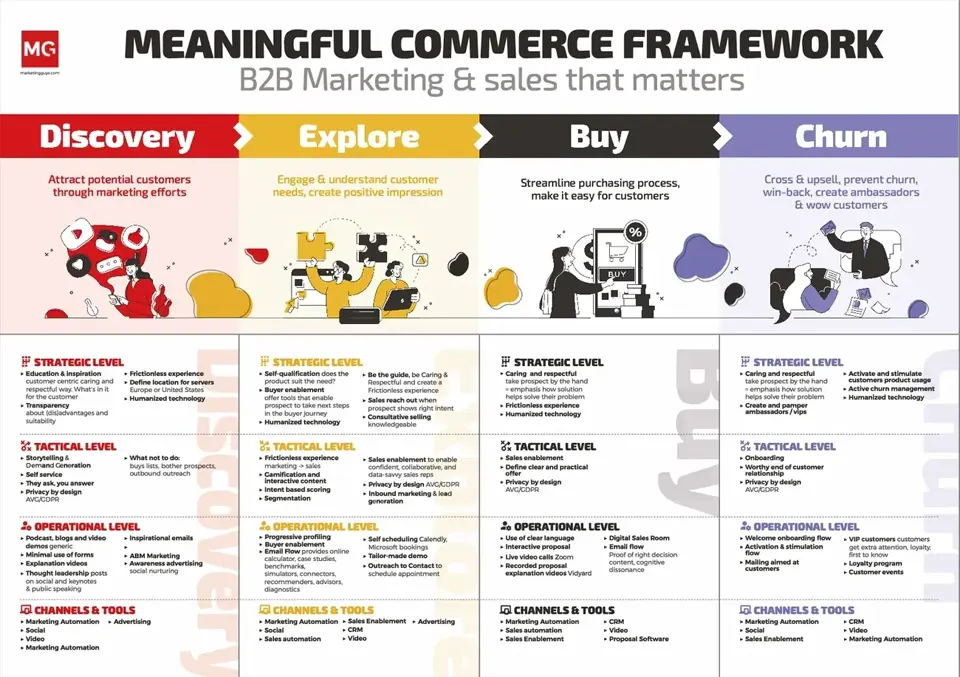 Image Source: Marketing Guys
“This B2B Consulting Sales Funnel template focuses on education, trust-building, and personalized engagement.”
, Dashly Marketing Team, Sales Funnel Template Specialists
Your B2B sales funnel’s success depends on customer experience. B2B companies score nowhere near as well as B2C firms, averaging less than 50% on customer satisfaction compared to 65-85% for B2C. The Sales Experience Optimization Framework helps close this gap. It creates smooth buyer trips that boost conversions throughout your marketing and sales pipeline.
Key features of Sales Experience Optimization Framework
This framework improves the customer’s complete trip:
- End-to-end trip redesign – We tackle all aspects of customer experience including process, tools, performance management, and employee mindsets
- Multi-channel arrangement – Buyers are 1.8 times more likely to complete high-quality deals when they engage with both digital and human touchpoints
- Personalization engine – Messages adapt to each stakeholder’s role, pain points, and buying stage
- Sales automation – Tools like CRM, CPQ (Configure, Price, Quote), and digital sales rooms make interactions smoother
Benefits of Sales Experience Optimization Framework
Better sales experiences create powerful business effects. B2B companies that lead in customer experience consistently earn higher margins than their competitors. A detailed transformation can boost revenue by 10-15% while cutting service costs by 10-20%.
Customer loyalty grows stronger too. Many contract renewals specifically mention improved experience as their reason for staying. B2B settings often see these loyalty benefits faster than B2C markets.
Challenges with Sales Experience Optimization Framework
The implementation process has its hurdles. B2B’s complexity makes optimization tricky because multiple decision-makers have different needs. B2B trips grow longer and more technical over time. They involve continuous interactions across sales and service touchpoints.
Marketing and sales teams’ misalignment creates problems. About 47% of organizations say separate funnels cause disconnected customer experiences.
Best practices for Sales Experience Optimization Framework
Your B2B sales strategy works better when you:
Create trip transparency – Show customer trips clearly both inside and outside your company. Teams understand how their work improves the overall experience
Establish trip coordination – A dedicated coordinator should arrange the trip and track end-to-end performance indicators
Invest in digital tools – Use self-service options, online interfaces and automated decisions. B2B customer experience often underuses these tools
Balance personalization with efficiency – Find the right mix between customization and scalability in your marketing and sales funnel
Intent Data and Predictive Analytics Framework

Image Source: Highperformr
B2B sales funnels have changed dramatically with analytical insights and predictive analytics. These tools create a framework that spots buying signals before competitors do. Recent studies show that 69% of companies utilize intent data to prioritize leads and accounts. This helps teams direct their resources toward opportunities with the highest ROI.
Key features of Intent Data and Predictive Analytics Framework
Two vital components make this framework change traditional B2B marketing funnels:
- Intent signals tracking – Tracking digital behaviors like website visits, content downloads, and search queries that show buying interest
- First and third-party data integration – Your website data works together with external sources for better visibility
- Predictive scoring models – Historical data and machine learning help forecast which accounts will likely convert
- Multi-channel signal collection – Intent signals come from publisher networks, review sites, and industry publications
Benefits of Intent Data and Predictive Analytics Framework
B2B organizations see remarkable results with this framework. Companies can narrow down their target list from 10,000 prospects to 100 based on buying intent. Sales teams work more efficiently, with a 2.9x boost in pipeline effectiveness.
Challenges with Intent Data and Predictive Analytics Framework
The implementation process has its hurdles. Intent data alone cannot prove if a buyer is ready. Many companies find it hard to connect intent data with their existing CRM systems. Privacy regulations also create compliance issues that need careful handling.
Best practices for Intent Data and Predictive Analytics Framework
Your B2B sales strategy can work better through this framework:
Combine intent signals with other indicators – Look at pain points, budget availability, and decision-maker presence along with intent
Implement regular data analysis – Watch intent data patterns to refine your strategy
Focus on high-intent keywords – Choose terms that show active purchase interest
Regularly assess strategies – Stay flexible and review performance metrics as market conditions change
Lost Lead Feedback Loop Framework
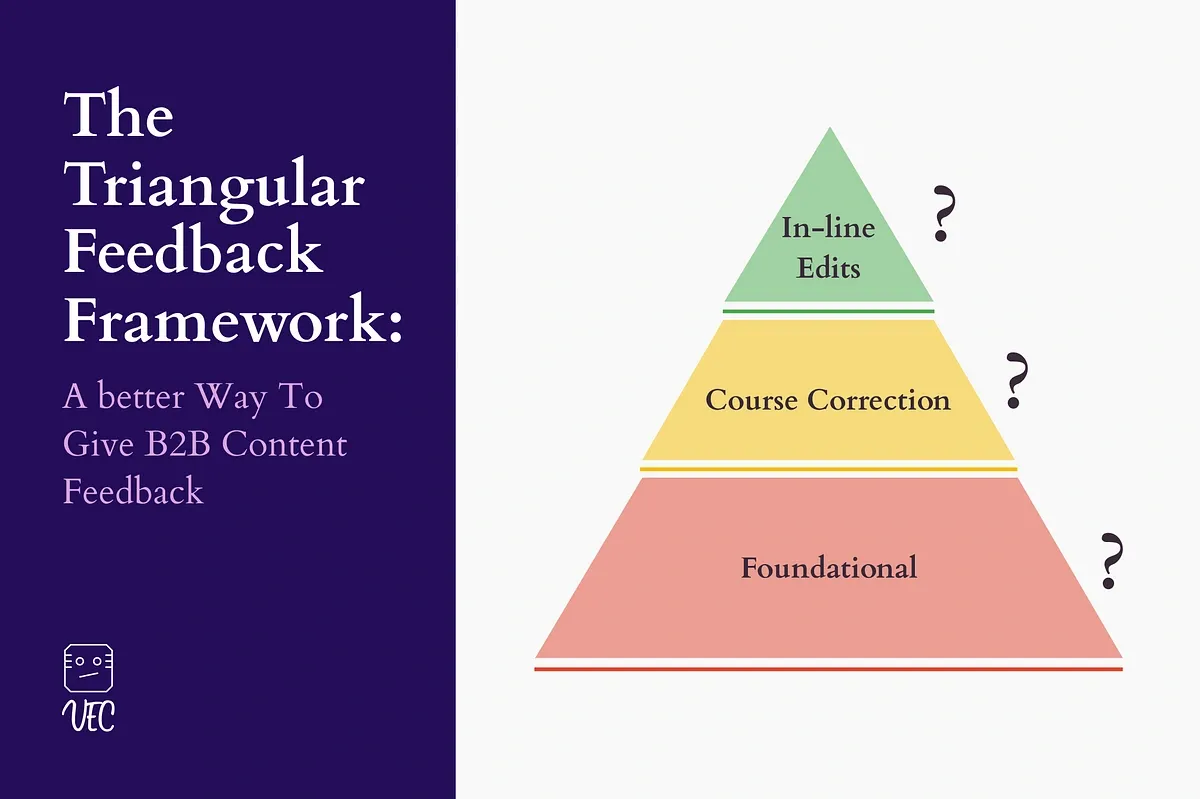
Image Source: Medium
The Lost Lead Feedback Loop Framework helps you learn valuable lessons from deals that didn’t close. Sales data shows only 20% of opportunities lead to closed deals across industries. This framework turns these losses into learning opportunities that strengthen your B2B sales funnel.
Key features of Lost Lead Feedback Loop Framework
Your feedback loop needs these key components to work:
- Structured feedback collection – Surveys that ask open-ended questions about why leads disengage, what barriers they face, and how you could improve
- Closed-loop reporting – A continuous information flow that tracks qualified leads from first contact until they close or reject
- Universal lead definition (ULD) – Clear guidelines that define “sales-ready” leads before you start collecting feedback
- Cross-functional integration – Sales and marketing teams work together to share information and adapt quickly
Benefits of Lost Lead Feedback Loop Framework
B2B companies see real results from this framework. Customer churn drops significantly – companies that use closed-loop feedback reduce churn by at least 2.3% each year. Companies without these processes watch their churn increase by 2.1% yearly.
The numbers tell a compelling story. A $500 million company with 20% yearly churn can add $234 million to its bottom line over five years by reducing churn by 2.3%. Companies that formalize their closed-loop feedback also see their revenue grow by double digits each quarter.
Challenges with Lost Lead Feedback Loop Framework
The path isn’t always smooth. Marketing teams often lose sight of leads after handing them to sales. Many employees resist feedback because they think it’s criticism rather than helpful information.
Poor tracking systems make it hard to measure success. Teams start enthusiastically but their participation drops without proper structure.
Best practices for Lost Lead Feedback Loop Framework
These practices will help you get better results throughout your B2B marketing funnel:
Respond within 48 hours – Your Net Promoter Score can jump 6 points when you close the loop in under 48 hours
Implement quarterly business reviews – B2B decision-makers respond well to these feedback sessions
Layer feedback mechanisms – Mix surveys with win/loss analysis and direct outreach to get the full picture
Make feedback a permanent value – Show your team that feedback helps everyone learn and grow – it’s not just negative comments
Performance Metrics and Funnel KPIs Framework

Image Source: Forecastio
B2B sales funnel performance improves when companies measure what truly matters. Surprisingly, 68% of companies don’t line up, design, or measure their sales funnel properly. A detailed Performance Metrics Framework builds the information foundation you need to optimize each funnel stage and propel predictable revenue development.
Key features of Performance Metrics Framework
The most effective metrics frameworks need several vital components:
- Stage-specific KPIs – Each funnel stage needs different metrics, starting from top-of-funnel awareness down to bottom-of-funnel conversion
- Sales and marketing alignment – Teams share metrics that bridge departmental silos and create unified accountability
- Lead quality indicators – Quality measurements that assess fit, participation, and conversion probability
- Dashboard visualization – Live display of 5-9 carefully selected metrics that guide business forward
Benefits of Performance Metrics Framework
Metrics frameworks serve as a core component of any B2B sales strategy and deliver substantial advantages. We identified weak conversion points that enabled targeted improvements throughout the funnel. Many organizations discovered that performance analytics boosted their sales team’s productivity and maximized revenue.
Strong metrics help B2B companies make evidence-based decisions. McKinsey research shows companies that make use of information-driven sales strategies grow faster and increase profits by 15-25%.
Challenges with Performance Metrics Framework
The implementation comes with significant hurdles. Many organizations track too many metrics at once, which creates confusion instead of clarity. It also becomes sort of hard to get one’s arms around choosing between sales metrics (which measure activities) and sales KPIs (which measure strategic progress).
Companies risk wasting resources on unqualified leads while neglecting high-potential ones without proper metrics integration.
Best practices for Performance Metrics Framework
Your B2B marketing funnel can work better through effective measurement:
Quality matters more than quantity – focus on 5-9 critical KPIs instead of tracking everything possible. The metrics must be SMART (Specific, Measurable, Achievable, Relevant, Timely) to maintain practical utility.
The core team should analyze metrics together and address bottlenecks regularly. A balanced mix of leading indicators (predictive metrics) and lagging indicators (results metrics) gives you a complete funnel view.
Comparison Table
| Framework | Key Features | Primary Benefits | Main Challenges | Best Practices |
|---|---|---|---|---|
| Sales and Marketing Alignment | • Shared definitions and metrics • Unified customer data • Shared planning • Regular communication |
• 32% higher revenue • 36% higher customer retention • 38% higher win rates |
• Mismatched objectives • Cultural differences • Poor communication • Data discrepancies |
• Set common goals • Regular shared meetings • Create shared personas • Connect technology |
| Lead Generation Strategy | • Multi-channel approach • Lead scoring • Content strategy fit • Informed targeting |
• 3-10x faster growth • Higher quality leads • Better brand awareness |
• Strategy selection • Lack of expertise • Lead quality issues • Database maintenance |
• Define clear buyer personas • Use lead scoring • Create valuable content • Utilize automation |
| Lead Nurturing | • Segmentation and scoring • Individual-specific engine • Multi-channel coordination • Progressive profiling |
• 47% larger purchases • 50% more sales-ready leads • 33% lower costs |
• Creating relevant content • Targeting by decision stage • Managing processes |
• Use predictive AI • Create stage-specific content • Customize communications • Set clear timeframes |
| Account-Based Marketing | • Cross-team coordination • Target account selection • Individual engagement • Multi-channel coordination |
• 76% greater ROI • 79% of sales opportunities • Better sales cycle efficiency |
• Technology integration • Sales-marketing fit • Content customization • ROI demonstration |
• Start small with pilot program • Create shared account lists • Connect data systems • Regular account reviews |
| Follow-Up and Engagement | • Multi-channel coordination • Custom timing • Value-driven messaging • AI-driven automation |
• 47% higher response rates • Stronger emotional bonds • Immediate objection handling |
• Balance of persistence • Customization at scale |
• Set defined cadence • Focus on value delivery • Use multiple channels • Track engagement metrics |
| Referral and Support | • Formal program structure • Support personality types • Multi-channel coordination • Incentive systems |
• 300-400% higher conversion • 25% higher spending • 18% lower churn rates |
• Low employee involvement • Maintaining participation • Tracking success |
• Focus on mutual benefit • Simplify the process • Find high-value supporters • Use reliable tracking |
| Sales Experience Optimization | • End-to-end trip redesign • Multi-channel coordination • Customization engine • Sales automation |
• Higher margins • 10-15% revenue growth • 10-20% cost reduction |
• B2B complexity • Multiple decision-makers • Marketing-sales gaps |
• Create trip transparency • Build coordination • Invest in digital tools • Balance customization |
| Intent Data and Predictive Analytics | • Intent signals tracking • Data integration • Predictive scoring • Multi-channel collection |
• Precise targeting • 2.9x sales pipeline effectiveness |
• Data integration limits • Privacy regulations • Intent data gaps |
• Mix multiple signals • Regular data analysis • Focus on high-intent keywords • Review strategies regularly |
| Lost Lead Feedback Loop | • Structured feedback collection • Closed-loop coverage • Universal lead definition • Cross-team integration |
• 2.3% churn reduction • Double-digit revenue growth |
• Feedback integration • Team resistance • Tracking systems |
• Respond within 48 hours • Quarterly business reviews • Layer feedback systems • Make feedback count |
| Performance Metrics and KPIs | • Stage-specific KPIs • Sales-marketing fit • Lead quality indicators • Dashboard views |
• Spots weak points • 15-25% profit increase • Better productivity |
• Too many metrics • Metric selection confusion • Resource allocation |
• Focus on 5-9 critical KPIs • Ensure SMART metrics • Regular team reviews • Balance leading/lagging indicators |
Conclusion
A well-laid-out strategic framework tailored to your business needs is essential to build an effective B2B sales funnel. In this piece, we explored ten tested frameworks. Each offers unique advantages for different stages of the buyer’s trip. The comparison table shows how these frameworks work together and address specific pain points in the sales process.
Successful B2B organizations rarely stick to just one approach. They combine multiple frameworks to create detailed revenue engines. Teams can identify high-potential prospects when they pair the Sales and Marketing Alignment Framework with Intent Data and Predictive Analytics. This ensures coordinated follow-through across departments.
Numbers tell the story clearly. Companies using formal frameworks grow 3-10x faster than those using ad hoc processes. On top of that, collaborative efforts generate 32% higher revenue and 36% better customer retention.
Your specific business challenges determine the right mix of frameworks. Are you struggling with lead quality? Lead Generation and Intent Data frameworks should be your first focus. Low conversion rates? Lead Nurturing and Follow-Up frameworks will have the biggest effect. Customer churn keeping you up at night? Lost Lead Feedback Loop and Referral frameworks are a great way to get results.
Note that success takes commitment and patience. Start with one framework that tackles your biggest challenge. Master it really well, then add more frameworks systematically. The process might seem overwhelming at first. A methodical approach focused on steady improvement will reshape your B2B sales funnel into a predictable revenue-generating machine.
The Performance Metrics Framework helps you track progress across all other frameworks. Without clear KPIs, you won’t know which strategies actually propel revenue growth.
Unlock top B2B sales funnel frameworks for 2025 at GrowLeads.io today!
FAQs
Q1. What are the key B2B sales trends expected in 2025?
In 2025, B2B sales are likely to see increased adoption of AI for training and experimentation, with more businesses sharing their AI use cases publicly. Additionally, there’s a shift towards digital selling and proactive engagement strategies to adapt to changing buyer behaviors.
Q2. How does the “Rule of 7” apply to B2B marketing?
The “Rule of 7” in B2B marketing suggests that potential customers need to encounter a brand or message at least seven times before taking action. This principle emphasizes the importance of consistent, repeated exposure to build trust and recognition in the B2B space.
Q3. What characterizes the top of the B2B sales funnel?
The top of the B2B sales funnel, also known as the awareness stage, focuses on grabbing the attention of prospects who may not be familiar with your business. Content at this stage is designed to address the needs of buyers who are independently researching online before considering a purchase.
Q4. How can businesses optimize their B2B sales funnel frameworks?
Businesses can optimize their B2B sales funnel frameworks by implementing a combination of strategies such as aligning sales and marketing teams, using data analytics, personalizing customer experiences, and continuously measuring and refining their approach based on performance metrics.
Q5. What are the benefits of implementing a structured B2B sales funnel framework?
Implementing a structured B2B sales funnel framework can lead to faster growth rates, improved lead quality, higher conversion rates, and increased revenue. Companies using formal frameworks often experience 3-10x faster growth compared to those relying on ad hoc processes, and can see benefits such as 32% higher revenue and 36% better customer retention.

Runs the sales process, lead qualification, and client delivery that turn signals into qualified meetings.