
ABM Technology Stack for Effective B2B Lead Generation

Did you know the global market for Account-based Marketing will grow from US$1.4 Billion in 2023 to US$3.1 Billion by 2030? I’m not surprised. Companies are realizing that an effective ABM technology stack is essential when you’re targeting high-value accounts with precision.
I’ve seen account-based marketing (ABM) become a game-changer in B2B lead generation. It delivers better ROI and stronger customer loyalty by focusing your resources on high-potential accounts. Your ABM technology stack, the collection of integrated tools and platforms supporting your strategy, plays a huge role in marketing effectiveness by streamlining personalization, automation, and data analysis.
Avoid disconnected point solutions. Trust me, a thoughtfully built B2B tech stack aligns your teams and boosts overall efficiency. When you combine the right ABM tools, you can track customer behavior, segment accounts, and create personalized content at scale, all without losing track of your goals.
At its core, an effective ABM technology stack includes a Customer Relationship Management (CRM) system, enhanced with advanced data analytics, account scoring tools, personalization engines, and marketing automation software. These components work together to help you identify high-value accounts, engage with them effectively, and build long-term relationships.
In this article, I’ll walk you through the essential tools needed to build an ABM technology stack that delivers measurable results, helping you scale your account-based marketing strategy without wasting resources on ineffective tools.
Understanding the ABM Tech Stack for B2B Lead Generation
The technology powering your account-based marketing strategy makes all the difference between just finding target accounts and actually engaging them effectively. Let’s dive into what makes up this crucial technology framework and why it matters for your B2B lead generation efforts.
What is an ABM tech stack?
An ABM tech stack is a collection of integrated tools and platforms specifically designed to support the various stages of account-based marketing. Here’s the thing – unlike general marketing tools, this technology toolkit is purposefully built to execute ABM strategies across the entire funnel, from account identification to engagement and measurement.
Your ABM tech stack typically includes several core functionalities:
-
Audience building and selection tools for identifying and prioritizing high-value accounts
-
Engagement and orchestration platforms for delivering personalized content
-
Reporting and analytics solutions for measuring campaign effectiveness
-
Automation and integration capabilities that connect your various systems
Want to know what makes a true ABM tech stack different from a random collection of disconnected tools? It’s integration. When properly assembled, these technologies transform from a fragmented group into a connected, cohesive system. This integration gives your sales and marketing teams access to resources that create replicable strategies while optimizing and streamlining campaigns and workflows.
Why ABM technology matters for B2B lead generation
Account-based marketing technology fundamentally changes how you approach B2B lead generation by enabling a more precise, focused, and efficient marketing and sales strategy. Instead of casting a wide net and hoping for the best, your ABM tools help concentrate resources on high-potential opportunities that deliver better ROI and stronger customer loyalty.
First off, the right tech stack empowers your organization to target specific accounts earlier in the sales cycle. By directing your marketing efforts toward decision-makers at carefully selected companies, you create personalized experiences with content tailored specifically to their needs.
ABM technology also significantly boosts your ability to scale personalization efforts. I’ll be honest – without robust tools, delivering customized content to multiple accounts simultaneously would be practically impossible. Marketing automation platforms allow you to move both known prospects and anonymous visitors through relevant content journeys more effectively.
Additionally, these technologies provide deeper insights into account engagement, allowing for continuous refinement of your strategies. By gathering precise and actionable information about target accounts, your marketing and sales teams can evolve their approaches based on actual customer behaviors and preferences.
The technology you implement should connect program results directly to revenue. When properly deployed, your ABM tech stack can shorten sales cycles by addressing specific needs of key decision-makers, helping them progress from awareness to decision stages faster. Plus, the ability to consistently deliver tailored content builds loyalty and encourages ongoing engagement with existing clients.
Core ABM Tools Every B2B Tech Stack Needs
Building an effective ABM technology stack isn’t rocket science, but you do need three foundational components working together. I’ve seen countless companies struggle because they’re missing one of these critical pieces. Let’s dive into what you absolutely need to identify, engage, and convert those high-value accounts.
CRM systems for account management
At the foundation of every successful B2B tech stack sits a robust Customer Relationship Management (CRM) system. Trust me, your CRM isn’t just another tool, it’s the central hub for all your account information, providing that single source of truth that keeps sales and marketing aligned. Without this, you’re basically flying blind.
A well-integrated CRM system does three crucial things for your ABM platform:
-
Maintains accurate records of all your account interactions (no more “who talked to whom last?”)
-
Enables your sales teams to access comprehensive account profiles in seconds
-
Supports actual data-driven decisions through unified customer views
I couldn’t talk about CRMs without mentioning platforms like Salesforce, HubSpot, and other major CRM systems. These tools make tracking account interactions practically seamless while ensuring both sales and marketing are working from the same playbook.
Marketing automation platforms for personalized outreach
Marketing Automation Platforms (MAPs) form the second critical component of your ABM tools ecosystem. Are you still sending one-off emails to prospects? Stop that right now. These systems support your account-based marketing by automating personalized communications and tracking engagement across multiple channels.
MAPs like Adobe Marketo Engage let you create dynamic, multi-step campaigns that adapt to each account’s specific behaviors. Your team can deliver the right content to decision-makers at precisely the right moment without doing everything manually. Sound good so far? It gets better.
These platforms absolutely shine at scaling personalization efforts that would be impossible to manage by hand. They streamline email campaigns, lead nurturing, and data analysis, saving you hours while maximizing efficiency.
Data enrichment tools for better targeting
OK, so you’ve got your CRM and automation systems. That’s not all, though. Your ABM technology remains incomplete without proper data enrichment tools. I can’t tell you how many clients I’ve seen with fantastic systems but garbage data. These solutions automatically enhance your lead profiles with additional data points, giving you much deeper insights into target accounts.
Here’s how data enrichment platforms boost your ABM strategy:
-
They validate and standardize your data to ensure consistency
-
They add firmographic and demographic information for better segmentation
-
They supply intent signals that show which accounts are actually ready to buy
I don’t care how well you know your market, these tools help uncover new target accounts based on ideal customer profiles. Plus, they enable more precise targeting and personalization by filling those annoying gaps in your existing database.
Tools like Clearbit, ZoomInfo, and similar solutions provide comprehensive company and contact data that seriously enhances your ability to identify and engage high-potential accounts.
Advanced ABM Platforms to Scale Your Lead Generation
So you’ve got your foundation in place? Great. Now let’s talk about scaling your ABM technology with more sophisticated platforms. These aren’t just nice-to-have extras – they’re the difference between basic targeting and the kind of precision engagement that actually drives results.
Intent data platforms for predictive targeting
Ever wished you could read your prospects‘ minds? Intent data platforms get pretty close. They track digital behaviors that signal buying interest, completely changing how you identify and prioritize accounts. These tools analyze online activities like website visits, content downloads, and product research to show you which companies are actively exploring solutions in your space.
The numbers here are pretty impressive. Accounts identified through AI-powered intent signals convert at much higher rates. Look at RollWorks AI – accounts they flag as “high-fit” are over 2x more likely to become opportunities and nearly 4x more likely to convert into customers.
Here’s what’s crazy though – only 21% of marketers currently use intent data. That’s a huge competitive opportunity for you if you’re willing to jump in while others hesitate.
These platforms work by combining your first-party data with third-party intelligence. Demandbase, for instance, merges your internal data with outside sources to reveal which companies are in-market and what they’re signaling. You get visibility into the entire buyer journey, helping your team focus on accounts showing real purchase interest.
Account-based advertising solutions for precision marketing
Account-based advertising (ABA) takes your ABM tech stack to another level by delivering personalized ad experiences to specific companies instead of broad audiences. The benefits here are clear:
-
Enhanced targeting: Your ads reach the exact decision-makers within your chosen accounts
-
Improved efficiency: You focus resources on high-value prospects rather than wasting budget on broad campaigns
-
Higher ROI: Personalized messaging significantly boosts engagement and conversion rates
I’ve seen companies use some really effective ABA tactics – contextual targeting (showing ads when employees read relevant content), website tracking to identify visiting companies, and account-based retargeting to keep your brand top-of-mind throughout the buying process.
Want a stat that’ll make you sit up? According to RollWorks data, ad-influenced accounts progress through the pipeline 234% faster and have shorter sales cycles overall. That makes advertising a strategic lever in your ABM platform strategy, not just a supporting tactic.
Sales enablement tools for deeper engagement
Sales enablement tools complete your advanced ABM technology stack by helping your team convert those identified opportunities into actual customers. They bridge that critical gap between marketing identification and sales execution.
The best ABM implementations I’ve seen involve tight alignment between marketing and sales, particularly during prospect engagement. Good sales enablement software helps your customer-facing teams access resources they need to tell consistent stories about specific campaigns, products, or initiatives.
One feature I really like is enablement intelligence, which uses AI to identify patterns and suggest optimal content for specific opportunities based on what’s worked in similar sales cycles. This helps your sales reps personalize their outreach, addressing each account’s specific needs and use cases.
Throughout the B2B buying journey, sales enablement provides reps with just-in-time training and content tailored to the specific industries and challenges of target accounts. This personalization builds deeper relationships with decision-makers, ultimately shortening sales cycles and improving conversion rates.
Materials and Methods: Assembling Your ABM Tech Stack
Putting together an effective ABM tech stack isn’t just about picking cool tools – it’s about methodical planning. I’ve seen companies waste thousands of dollars on shiny objects that don’t work together. The success of your strategy hinges on how well these technologies collaborate to deliver consistent, accurate data across your organization.
Choosing tools that integrate with your CRM
Your CRM system should be the foundation of your ABM technology stack. No question about it. The most effective ABM implementations I’ve seen define the CRM as the system of record for accounts and contacts. This centralization lets both sales and marketing teams operate from a unified dataset.
When looking at potential ABM tools, prioritize those with robust CRM integration capabilities. Here’s what matters: any campaigns created in your ABM system should synchronize with corresponding campaigns in your CRM. And your marketing automation journeys? They should connect to your CRM as campaigns too.
“Instead of having a narrow-minded approach to using ABM tools for everything, marketers should look into using CRM for the reporting of their campaigns and keep the campaign data in one place”. This alignment between sales, marketing, and IT teams regarding system records and reporting ensures you get comprehensive campaign visibility.
Prioritizing scalability and data accuracy
Once you’ve got integration established, focus on maintaining data quality throughout your B2B tech stack. I can’t stress this enough. Develop and enforce shared data definitions across all platforms to ensure teams use consistent criteria.
To keep your data accurate (which is absolutely crucial):
-
Implement continuous monitoring and auditing processes
-
Automate data updates from reliable vendors
-
Configure workflows that convert leads into contacts within specific accounts
Trust me, automating these processes eliminates error-prone manual data entry. “By focusing on seamless integration and shared data definitions, your CRM and MA systems can ensure that your ABM initiatives are supported by accurate, consistent, and accessible data”.
Testing and validating tool performance
After implementing your ABM platform, establish quantitative benchmarks to measure performance accurately. Don’t just wing it. Statistical tools like Mean Squared Error and Coefficient of Determination help evaluate how well your simulations mirror actual results.
Before going all-in, test new tools through limited rollouts. “Leverage trials and demos: Test tools to ensure they align with your workflows and deliver value”. This approach lets you identify integration challenges before committing fully.
Finally, regularly review your performance metrics to spot optimization opportunities. Your ABM technology stack isn’t a “set it and forget it” solution – it needs ongoing evaluation to maintain peak efficiency as your marketing strategy evolves.
You’re not just building a tech stack; you’re creating an ecosystem that grows with your business. Make sure it’s built on solid ground.
Results and Discussion: Measuring ABM Tech Stack Effectiveness
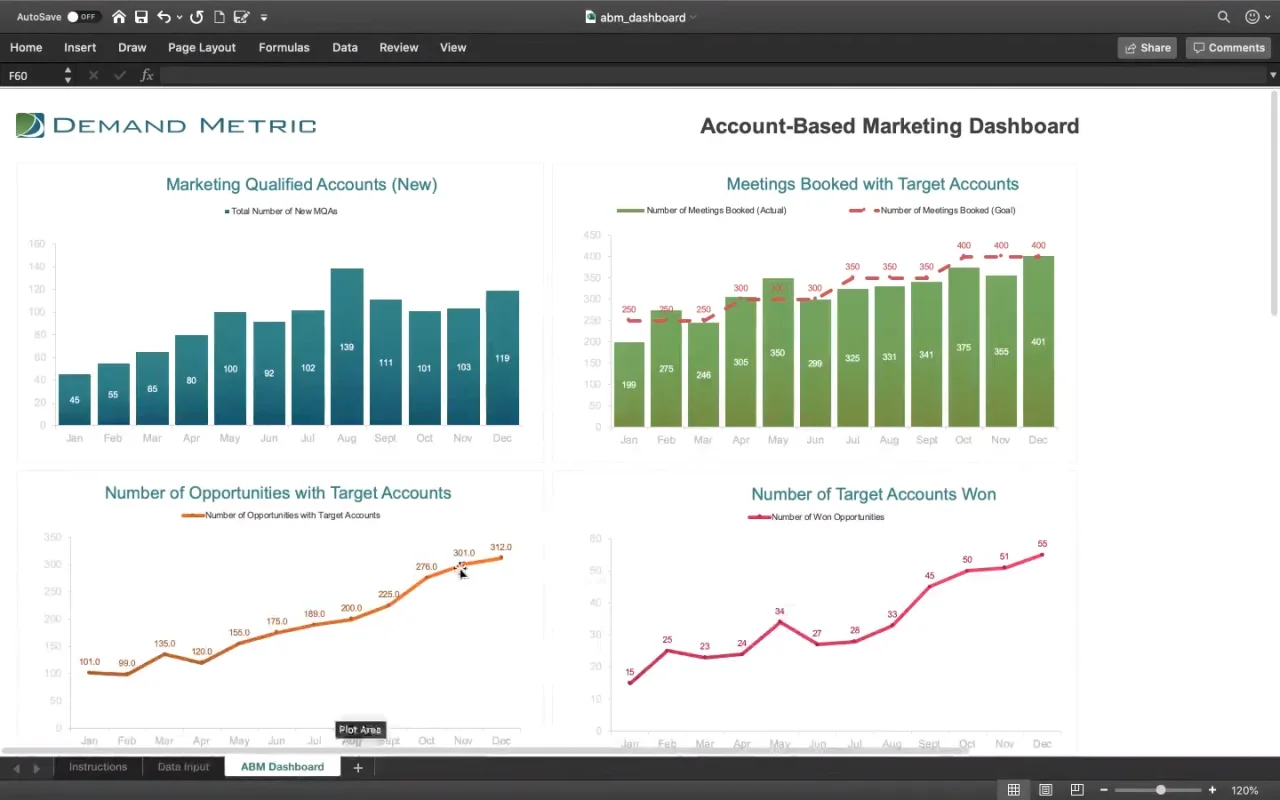
How do you know if your ABM tech stack is actually working? That’s the million-dollar question, isn’t it?
Measuring effectiveness isn’t just about collecting data, it’s about tracking specific metrics that show real account engagement, pipeline progress, and revenue impact. When you evaluate these properly, you can optimize your strategy and maximize your ROI. Let’s dive into what really matters.
Key metrics for ABM success: engagement, pipeline velocity, ROI
Think of ABM metrics like vital signs for your marketing strategy. Just as a doctor checks multiple indicators to assess your health, you need to monitor several metric categories to understand your ABM performance.
First up, engagement metrics. These tell you how your target accounts are interacting with your efforts. The account engagement score pulls together all interactions, email opens, content downloads, social media engagement, website visits, to show you which accounts are genuinely interested. I love this metric because it quickly reveals whether your messaging is actually resonating with decision-makers or falling flat.
Want to know if you’re reaching the right people? Look at your account penetration rate. This shows how effectively you’ve connected with multiple stakeholders in your target organizations. Meanwhile, your account progression rate tells you how efficiently accounts move through your buyer’s journey. Together, these paint the full picture of your account-level engagement.
Pipeline metrics are where the rubber meets the road. Pipeline velocity tracks how quickly deals move through your sales funnel. When velocity is high, your ABM efforts are probably accelerating deals. When it’s sluggish? You’ve likely got roadblocks to address.
Here’s something that might surprise you: accounts influenced by successful ABM advertising progress through the pipeline 234% faster than others. That’s not just a small improvement, it’s a complete transformation of your sales cycle.
ROI metrics ultimately determine if all this effort is paying off:
-
Customer lifetime value (CLV) measures total revenue generated throughout a customer relationship
-
Average deal size compares the value of ABM-sourced deals against other marketing strategies
-
Revenue from target accounts quantifies total earnings from ABM-targeted companies
The most persuasive metric? ROI itself. The formula is straightforward: (Revenue generated – Cost of ABM) / Cost of ABM * 100%. This gives you a clear measure of effectiveness. No complicated equations necessary.
Using analytics platforms for continuous optimization
Analytics platforms aren’t just reporting tools, they’re the difference between a static tech stack and an adaptive system that evolves with your market. Good analytics provide real-time insights into campaign performance, letting you make immediate adjustments when specific approaches aren’t delivering.
I always tell my clients to invest in platforms that integrate data from multiple sources into a single dashboard. Why? This unified view eliminates error-prone manual data entry while giving you up-to-date information for smarter decision-making.
The best analytics platforms also enable multi-touch attribution, ensuring you capture ABM’s full impact across the entire buyer’s journey. With this foundation in place, you can run data-driven tests of different ad formats, personalization approaches, and engagement channels to continuously refine your strategy.
Remember, your ABM tech stack isn’t a “set it and forget it” solution. It’s more like a garden that needs regular tending. With the right analytics in place, you’ll know exactly which areas need your attention to keep growing.
Integration challenges between ABM tools
Here’s the hard truth: most companies struggle when connecting various ABM technologies with their existing systems. I’ve witnessed this firsthand. Integration issues typically stem from lack of standardization between different tools, creating inconsistencies that tank your campaign performance.
The numbers back this up too – slightly over half (51%) of B2B buyers cited poor integration with their existing tech stack as a reason to consider new vendors.
Want to fix these integration headaches? Try these approaches:
-
Conduct regular audits to spot integration weaknesses and overlaps
-
Invest in technologies with adaptable architectures and pre-built connectors
-
Get your marketing, sales, and IT teams talking to each other about integration
As Scott Brinker, VP of Platform Ecosystem at HubSpot, puts it: “The real power of ABM lies in unified data. Without integration, you’re running blind”. I couldn’t agree more.
Data silos and inconsistent account insights
Data silos drive me crazy, and they’re probably frustrating you too. These isolated collections of information within different departments prevent you from seeing the complete picture of your target accounts. The result? You can’t track engagement consistently across channels, which undermines your ABM effectiveness.
But the challenge goes beyond just managing data volume. You also need to distinguish valuable insights from what experts call “vanity data”, metrics that look impressive but don’t actually impact business outcomes. Your ABM efforts should focus on data directly tied to revenue generation, not superficial engagement metrics that make pretty charts but don’t drive results.
To solve data fragmentation, you need to establish a data governance framework with clear guidelines for ownership, access, and quality standards. This framework helps everyone understand their role in maintaining data integrity.
Budget constraints when scaling your tech stack
Are you assuming effective ABM requires expensive software investments? I have good news for you. ABM is more about strategy than software. You can launch successful campaigns using tools you probably already have, like your CRM, email automation software, and basic outbound sequencing tools.
When budget constraints hit (and they always do), prioritize:
-
Integrated platforms that support multiple functions
-
Tools with strong CRM integration capabilities
-
Solutions that automate personalization without requiring additional resources
Instead of asking “What new tool do I need?”, try asking “How can I creatively use what I already have?”. This scrappy approach isn’t just about cutting costs, it’s about being resourceful with your existing technology.
Trust me, I’ve seen companies with modest tech stacks outperform competitors with all the fancy tools because they focused on execution rather than accumulation. The tools matter, but your strategy matters more.
Conclusion
Building Your Optimal ABM Technology Ecosystem
Throughout this article, I’ve shown you how a strategic approach to ABM technology transforms your B2B lead generation efforts. But here’s the thing, you can’t view these tools as separate solutions. The companies getting real results treat them as interconnected components within a unified ecosystem that drives measurable outcomes.
When properly implemented, your ABM tech stack serves as the backbone for precisely targeting those high-value accounts you’re after. From the foundation of robust CRM systems to advanced intent data platforms, each element plays a specific role in your account-based strategy. Most importantly, these technologies work together to deliver the personalization at scale that makes exceptional ABM campaigns stand out from the crowd.
I suggest you take some time now to assess your current technology investments against the frameworks I’ve outlined. Ask yourself: Do your tools effectively integrate with each other? Do they maintain data accuracy across platforms? Are they delivering meaningful metrics beyond surface-level engagement? I’ve noticed that companies achieving the highest ROI from their ABM investments focus relentlessly on system integration, data quality, and continuous performance optimization.
Let’s be honest about something, ABM technology effectiveness ultimately depends on strategic implementation. Without clear objectives and thoughtful execution, even the most sophisticated tools deliver limited value. On the flip side, I’ve seen resourceful teams achieve remarkable results with modest technology stacks by prioritizing integration and alignment between sales and marketing teams.
The future clearly belongs to organizations that build adaptable, integrated ABM technology ecosystems. Those who master this approach gain significant advantages: deeper account relationships, accelerated pipeline velocity, and substantially higher conversion rates. What are you waiting for? Start evaluating your ABM tech stack today to identify opportunities for enhancing your B2B lead generation capabilities.
Building an ABM tech stack can feel like a puzzle, but you don’t have to solve it alone. At GrowLeads.io, we love helping teams find the right tools to supercharge their lead generation. Curious about what’s possible? Reach out, and let’s chat about your goals!
FAQs
Q1. What is an ABM technology stack?
An ABM technology stack is a collection of integrated tools and platforms designed to support account-based marketing strategies. It typically includes CRM systems, marketing automation platforms, data enrichment tools, and advanced solutions for targeting, advertising, and sales enablement.
Q2. Why is ABM technology important for B2B lead generation?
ABM technology enhances B2B lead generation by enabling more precise targeting of high-value accounts, scaling personalization efforts, providing deeper insights into account engagement, and shortening sales cycles. It allows companies to focus resources on the most promising opportunities for better ROI.
Q3. What are some core tools every ABM tech stack needs?
Essential tools for an ABM tech stack include a robust CRM system for account management, marketing automation platforms for personalized outreach, and data enrichment tools for better targeting. These form the foundation for effective account-based marketing strategies.
Q4. How can companies measure the effectiveness of their ABM tech stack?
Companies can measure ABM tech stack effectiveness by tracking key metrics such as account engagement scores, pipeline velocity, and ROI. Using analytics platforms for continuous optimization helps in evaluating performance across various stages of the buyer’s journey and making data-driven improvements.
Q5. What are common challenges in implementing an ABM tech stack and how can they be overcome?
Common challenges include integration issues between tools, data silos leading to inconsistent account insights, and budget constraints when scaling. These can be addressed by prioritizing tools with strong integration capabilities, establishing clear data governance frameworks, and focusing on strategic implementation rather than just acquiring new technologies.

Builds the demand intelligence, automation, and deliverability systems behind Growleads pipeline.