
AI‑Powered Sales Cadence for B2B Success

Did you know your sales outreach cadence now requires over 1,000 touchpoints per sourced opportunity? It’s shocking but true, what once needed just 200-400 touchpoints has skyrocketed to 1,000-1,400 to get results in today’s ultra-competitive B2B market.
Here’s the problem: 44% of sales reps give up after a single follow-up attempt. Yet at least 80% of sales require five or more touches to close. No wonder so many outreach campaigns crash and burn. The top-performing B2B sales teams have figured out that a well-structured sales cadence running 17–21 days with 8–12 strategic touchpoints transforms radio silence into booked meetings.
The perfect outbound cadence isn’t about pestering prospects, it’s about smart timing. Research tells us that spacing your touchpoints two to three days apart works best. Tuesday stands out as the champion day for email outreach with a 27% engagement rate, while Wednesday takes the crown for phone calls with a 33.9% connection rate.
Are your response rates disappointing? Or maybe you’re looking to fine-tune your existing strategy? This guide will walk you through building a B2B sales cadence that actually converts. We’ll tackle everything from selecting the right channels and crafting compelling messages to timing your outreach perfectly and tracking what works.
Ready to stop watching sales opportunities vanish? Let’s get started with what makes an effective sales cadence tick.
Understand the Role of a Sales Cadence
A sales cadence is the backbone of your outreach strategy. It provides structure and consistency to what would otherwise be random prospecting efforts. When you understand its role, you’ll see why certain sales teams consistently outperform others despite targeting similar prospects.
What a sales cadence really means
At its core, a sales cadence is a predefined sequence of touchpoints between your organization and prospects, designed to build relationships throughout the buyer journey. Instead of sending random emails or making sporadic calls, you’re creating a deliberate framework that maps out when and how your team engages with potential clients.
The best cadences use multiple channels, email, phone, social media, video messages, and sometimes direct mail, working together as one system instead of isolated efforts. This multi-channel approach is crucial because you can’t predict how each prospect prefers to communicate.
Think of your sales cadence as a GPS for your sales journey. It eliminates guesswork, ensuring your sales reps know exactly:
-
Which prospects to contact
-
When to reach out to them
-
Which communication channels to use
-
What message to deliver at each stage
-
When to follow up if no response occurs
A structured cadence also standardizes your sales process across your entire team. Some reps naturally excel at follow-up timing, while others might struggle without guidance. With a documented cadence, you deliver a consistent customer experience regardless of which team member handles the account.
Why timing and structure matter in B2B outreach
In today’s competitive B2B environment, research shows it takes an average of 8 touchpoints to make a sale. Timing becomes everything, reaching prospects at precisely the right moment can dramatically boost your conversion rates.
The spacing between touchpoints creates a tricky balance. Contact prospects too frequently, and you’ll come across as desperate. Space touchpoints too far apart, and they’ll forget who you are. Finding this sweet spot requires strategic planning, with research suggesting 2-3 days between touchpoints works best.
Timing also extends to specific hours of the day. Mid-morning typically generates better email engagement, with messages sent between 9 AM and noon receiving significantly higher response rates. For phone calls, it’s different, studies analyzing thousands of B2B sales calls show that late afternoon (4-5 PM) often yields better connection rates.
The structure of your cadence matters just as much. B2B prospects generally have greater involvement in purchasing decisions compared to B2C buyers. As a result, B2B sales cadences need more detailed information, including statistics and case studies that address specific pain points. This approach recognizes the complexity of B2B decision-making and the limited windows you have to engage key stakeholders.
Responding quickly to initial inquiries significantly increases your connection odds. Studies show that following up within five minutes when prospects fill out contact forms gives you a much better chance of establishing a meaningful connection.
Perhaps most importantly, a well-defined structure creates consistency in your outreach, building trust with potential clients. When prospects see coherent messaging across multiple touchpoints, they feel more comfortable engaging with your brand. This consistency helps keep you in their consideration set during the often lengthy B2B buying process.
Additionally, structured cadences allow your team to analyze performance at each stage, spot trends over time, and make data-driven improvements. Without this framework, figuring out what’s working becomes nearly impossible amid the daily chaos of sales activities.
Define Your Audience and Outreach Goals
Success in B2B sales outreach starts well before you send that first email or make your first call. The foundation of any effective sales outreach cadence is knowing exactly who you’re trying to reach and what you want to accomplish. Precision targeting dramatically improves your response rates and conversion chances – it’s the difference between fishing with a net or a spear.
Segment by persona and buying stage
B2B target audiences aren’t one big homogenous group but collections of individuals with specific problems and needs. Your outreach effectiveness multiplies when you segment prospects based on detailed criteria beyond basic demographics. Think of segmentation as your roadmap guiding every aspect of your cadence design.
Start by developing detailed buyer personas that capture your ideal customers. Focus on these key elements:
-
Role and seniority level – C-suite executives typically prefer concise, value-driven emails, while mid-level managers might respond better to LinkedIn messages or phone calls
-
industry-specific challenges – Each industry faces unique pain points your outreach should directly address
-
Company characteristics – Size, location, revenue, and growth trends all signal different approaches
-
Decision timeline – Short vs. long buying cycles require different cadence pacing
-
Communication preferences – Some prospects prefer formal communication while others respond to casual approaches
You also need to identify where prospects stand in their buyer journey. Research shows your messaging should evolve alongside the prospect’s journey, adapting to their awareness and interest levels. Early-stage prospects need educational content focused on problem recognition, while evaluation-stage prospects respond better to comparative information.
Segmentation approaches fall into several categories:
Firmographic segmentation focuses on shared attributes like industry, company size, and organizational structure. This helps identify accounts matching your ideal customer profile.
Behavioral segmentation analyzes actions, engagement patterns, and content consumption habits. This reveals intent signals that indicate buying readiness.
Needs-based segmentation groups prospects by their most significant pain points. Some buyers primarily focus on price, while others prioritize quality, service, or partnership potential.
A sophisticated outbound sales cadence tailors touchpoints based on these segments. A technology segment might receive more technical content while a service-oriented segment gets more case studies and testimonials.
Set clear goals for each outreach sequence
Without specific goals, even the most perfectly targeted sales cadence lacks direction. Successful cadences begin with SMART objectives that provide clear direction and measurable outcomes.
Start by defining precisely what you want your cadence to achieve:
-
Are you generating new qualified leads?
-
Converting prospects into sales conversations?
-
Nurturing existing relationships toward a specific action?
-
Reactivating dormant accounts or opportunities?
Each goal requires a different approach to cadence structure, timing, and messaging. A goal of booking initial discovery calls might need a shorter, more intensive cadence compared to a complex solution sale requiring relationship development.
For each audience segment, establish specific metrics that define success:
-
Number of qualified leads generated from each segment
-
Response rate for new sequences
-
Conversion rates at different funnel stages
-
Appointment setting results
Industry research emphasizes that monitoring performance metrics closely, tracking open rates, response rates, and appointment conversion rates, helps identify what works for each segment. This analytical approach transforms your outreach cadence from a set routine into a continuously improving system.
Your goals will shape the entire cadence design. When targeting C-level executives with limited time, your cadence might prioritize concise, high-value touchpoints spaced further apart. In contrast, cadences for mid-level managers might include more educational content and frequent touchpoints.
Ultimately, your B2B sales cadence effectiveness depends on this initial foundation work. By understanding exactly who you’re targeting and what you aim to achieve, you create a framework for every decision that follows, from channel selection to message content to cadence timing.
Choose the Right Channels for Your Cadence
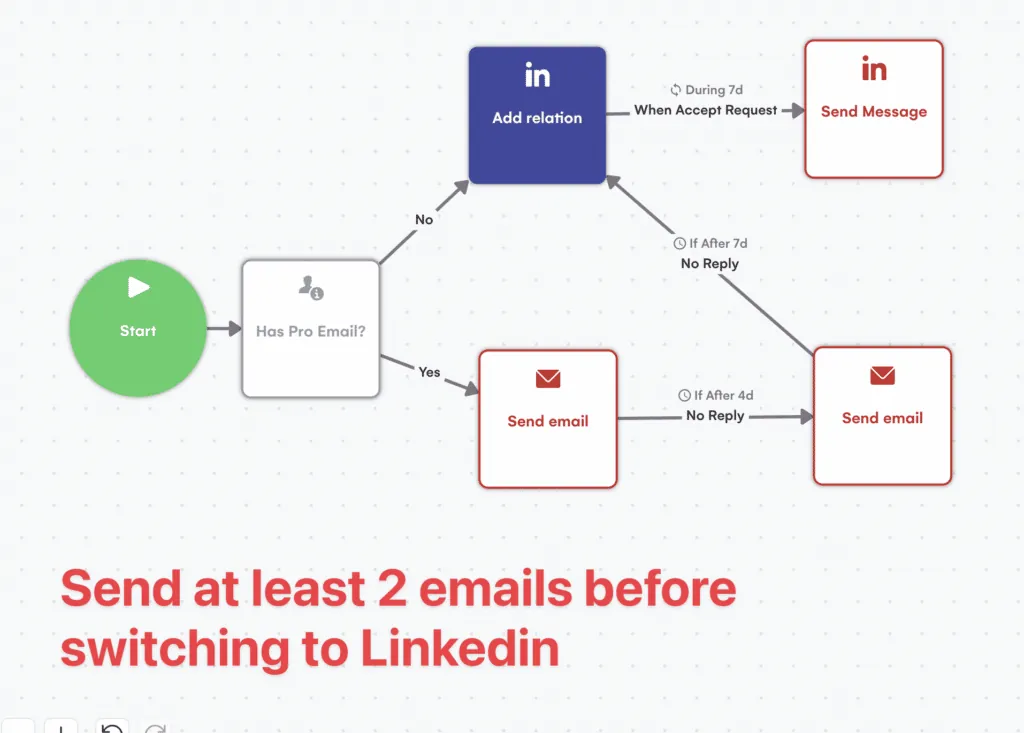
The channels you select for your sales outreach can make or break your entire strategy. Research backs this up – B2B companies using a multi-channel approach see dramatically better results, with contact rates increasing by a whopping 161%.
When to use email, phone, LinkedIn, and video
Each channel plays its own unique role in your outreach mix. Let’s break down when to use each one:
Email remains the backbone of B2B outreach. It’s perfect for sharing detailed information, following up after other touchpoints, and nurturing relationships over time. Want the best results? Send your emails between 9-11 AM, especially on Tuesdays which show the highest open rates. Email works best when you need to:
-
Share detailed information about your solution
-
Send resources like case studies or white papers
-
Connect with prospects who prefer to communicate on their own time
Phone calls create that immediate personal connection that other channels simply can’t match. They’re particularly effective for time-sensitive matters and complex discussions. Try making calls in the afternoon (1-4 PM) when they’re more likely to connect. Phone outreach shines when:
-
Your message needs nuance or explanation
-
You’re following up on previous touchpoints
-
You’re targeting executives who don’t engage much digitally
-
You’re selling in regions like the US where cold calling still works
LinkedIn has become the powerhouse for B2B prospecting, with over 750 million users including 65 million decision-makers. This platform works consistently well during business hours and delivers great results when:
-
You’re targeting B2B professionals and C-suite executives
-
You want to build awareness before direct outreach
-
You’re sharing thought leadership content
-
You want to engage with a prospect’s content before reaching out
-
You’re prospecting within specific industries or roles
Video messages cut through the digital noise with a personal touch. They work particularly well later in your cadence after prospects have engaged with other touchpoints. Adding video can boost reply rates by 25% and is most effective when:
-
You’re explaining something complex
-
You want to add personality to your outreach
-
You’re following up after initial engagement
-
You’re personalizing your approach for high-value accounts
-
Other methods haven’t gotten any response
How to combine channels without overwhelming prospects
Creating a multi-channel approach isn’t about bombarding prospects, it’s about thoughtful orchestration. Here’s how to build an effective mix without becoming annoying:
Start with a primary channel and support strategically. Begin where your audience is most active, then add secondary channels. If email is your foundation, reinforce with LinkedIn engagement or phone follow-ups. This ensures your messaging stays consistent while meeting prospects where they prefer to communicate.
Space your touchpoints intelligently. Keep 2-3 days between outreach attempts and alternate channels throughout your sequence. This creates multiple connection opportunities without feeling pushy. A well-designed cadence might look like:
-
Personalized email introduction
-
Follow-up email with additional value
-
Phone call
-
LinkedIn connection request with personalized note
-
Video message with website review
-
Final “break-up” email
Be channel-flexible but message-consistent. Once you discover a prospect’s preferred communication method, prioritize it while keeping your core message consistent across all platforms. This builds trust while respecting their preferences.
Listen for engagement signals. Pay attention to how prospects respond and adjust accordingly. If they engage with your LinkedIn content but ignore emails, shift your focus to social touchpoints. Similarly, if they open emails but don’t respond, try adding a video message for a more personal approach.
Avoid common multi-channel mistakes like sending identical messages across every platform or failing to connect touchpoints logically. Instead, make sure each new communication references previous touchpoints and moves the conversation forward.
Different industries and regions respond differently to channel combinations. LinkedIn works exceptionally well for technology companies, while healthcare executives might respond better to phone calls or even text messages. The key is testing and optimizing your channel mix based on how your specific audience responds.
Map Out Your Touchpoints and Timing
Once you’ve identified your audience and picked the right channels, you need to map out exactly when and how often you’ll reach out. The structure of your sales outreach cadence determines whether your messages get noticed or ignored. Let me show you what works when it comes to optimizing your touchpoints.
How many touchpoints to include
How many touchpoints should you include? Research provides a surprisingly consistent answer: eight touchpoints hits the sweet spot for most B2B sales cadences. This isn’t random, it follows the law of diminishing returns, where adding more touches beyond eight barely improves your results.
I’ve noticed that keeping your touchpoint number consistent gives you crucial performance data. Most sales teams make the mistake of constantly adjusting touchpoint quantity for individual prospects, which prevents them from discovering their own “magic number”. Start with a set number of touches per prospect, then analyze what happens before making changes.
Keep these two important exceptions in mind:
-
Your industry and buyer personas matter tremendously. While eight touchpoints might be perfect for tech companies, healthcare executives might respond better to fewer touches.
-
Test with consistency. To gather accurate data about what works for your specific audience, you need to apply the same touchpoint quantity to every prospect in a segment.
Spacing your outreach for better engagement
Timing can make or break your prospect’s receptiveness. Research shows that spacing touchpoints 2-3 days apart hits the sweet spot, keeping you on their radar without becoming annoying. This creates a rhythm that maintains awareness without seeming desperate.
For emails specifically, precise timing matters even more. Studies reveal that sending emails five minutes before or after the hour significantly boosts response rates. This strategic timing places your message at the top of the inbox exactly when prospects are checking their messages.
You might also try an urgency-based approach where your touchpoints accelerate toward the end of your sequence:
-
Initial touchpoint
-
Second touchpoint (14 days later)
-
Third touchpoint (7 days later)
-
Subsequent touchpoints increasingly close together
This compression technique signals growing importance without being pushy from day one. The right spacing ultimately depends on your goals, building relationships typically needs more spaced-out touches than time-sensitive offers.
Sample 10-day and 21-day cadence examples
A 10-day sales cadence works well for shorter sales cycles or for leads who’ve already shown interest:
-
Day 1: Initial email or LinkedIn connection request
-
Day 3: Email in morning, phone call in afternoon
-
Day 5: Call in morning, voicemail in afternoon
-
Day 7: Email with new value proposition, afternoon call
-
Day 10: Final email with clear call-to-action
For complex B2B sales that require relationship development, a 21-day cadence delivers better results:
-
Days 1-7: Initial engagement (introduction email, first call, LinkedIn connection)
-
Days 8-14: Value building (share case studies, educational content)
-
Days 15-21: Decision prompts (follow-up calls, “break-up” email)
Many successful B2B sales teams structure their longer cadences like this:
-
Day 1: Blank LinkedIn connection request (higher acceptance rates without messages)
-
Day 2: Contextual email (75-100 words asking for interest, not meetings)
-
Day 5 & 7: Follow-up calls addressing common objections
-
Day 10: Highly personalized, problem-focused email
-
Day 15-18: Social proof email with customer testimonial
-
Day 21: Break-up email requesting feedback
Remember that these templates aren’t one-size-fits-all. You’ll need to customize them for your specific industry and buyer personas. What works perfectly for one segment might need significant adjustment for another.
Write Messages That Get Responses
Your message content makes or breaks your sales cadence. You can have perfect timing and channel selection, but if your messages don’t resonate, you’re just adding to the noise in your prospect’s inbox.
Personalization beyond first names
The days of “Dear {First Name}” are long gone. Research shows personalized emails are 26% more likely to be opened, and 74% of marketers report an average 20% increase in revenue from advanced personalization.
Real personalization takes work – it means doing your homework to understand who you’re talking to. You need to create messages that feel like one-on-one conversations with a trustworthy advisor, not automated blasts.
Want to make your outreach stand out? Try these personalization tactics:
-
Reference specific industry challenges their company is facing
-
Mention recent news or developments in their sector
-
Note mutual connections or shared experiences
-
Address pain points their specific role typically manages
-
Acknowledge a visible project on their public agenda
The key is showing you’ve invested time to understand their situation. As one sales expert puts it, “When leads feel that you understand their unique needs and challenges, they are more likely to have a positive experience with your brand”.
Crafting subject lines and CTAs that work
Your subject line is the gatekeeper to your message, 47% of recipients decide whether to open an email based solely on this element. Your subject line needs to spark curiosity while promising value.
Here’s what works in subject lines:
-
Keep it short and sweet (6-7 words)
-
Create urgency without aggression
-
Address specific pain points
-
Include measurable benefits when you can
-
Reference industry news or trends relevant to them
Throughout your message, build toward a single, clear call-to-action. The data doesn’t lie, personalized CTAs perform 202% better than generic ones. The best CTAs are clear, intriguing, relevant, brief, and connect naturally to your message.
One crucial mistake to avoid: multiple CTAs in a single message. This only confuses prospects about what you actually want them to do. Instead of demanding meetings right away, consider interest-based CTAs that respect the prospect’s time. Let them signal interest before committing to a full meeting.
Your goal isn’t just to close – it’s to help. Many sales experts now recommend “ABH (Always Be Helping)” instead of the aggressive closing techniques of yesterday. When prospects see you as a valuable resource first and a salesperson second, your B2B sales cadence becomes dramatically more effective.
Test, Track, and Improve Your Cadence
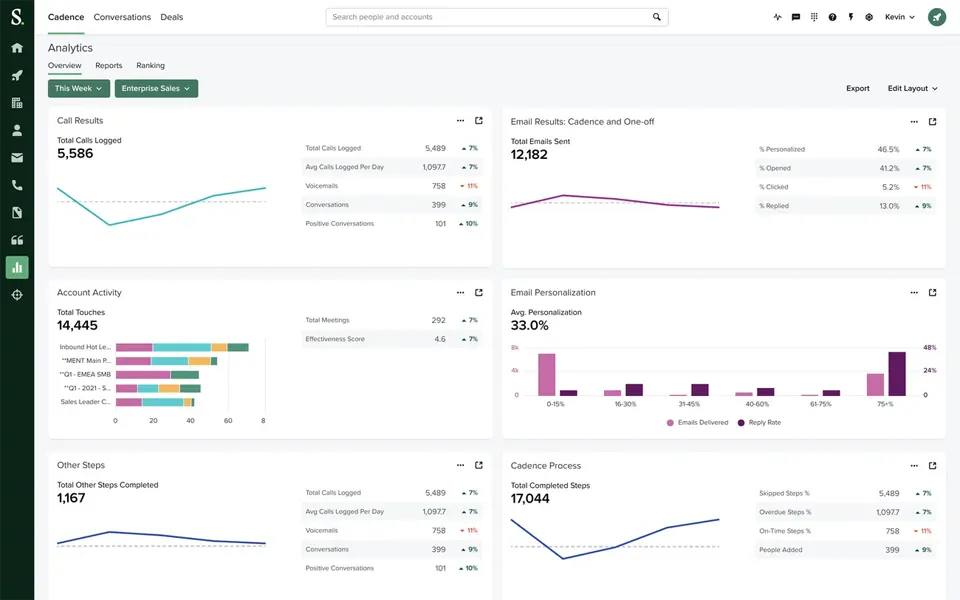
Creating the perfect sales cadence isn’t a set-it-and-forget-it exercise, it requires ongoing testing and refinement. Once you’ve built your outreach strategy, the real work begins through measurement and experimentation.
Key metrics to monitor
The success of your B2B sales cadence boils down to measurable results. Industry benchmarks give you a starting point:
-
Email performance: 1-3% response rate with 23% open rate
-
Call connections: Anything above 5% is considered very good
-
Meeting conversions: A 10%+ conversion rate from connects to bookings signals success
But don’t stop at the basics. Track these deeper metrics to understand how prospects move through your pipeline:
Response metrics tell you how effectively you’re engaging prospects. Watch email opens, click rates, and response times. Speed matters, companies responding within the first hour are seven times more likely to qualify leads.
Pipeline progression shows how prospects advance through sales stages after initial contact. This reveals whether your cadence is actually nurturing relationships or just generating initial interest that goes nowhere.
Conversion rates at different funnel stages help pinpoint exactly where prospects drop off, highlighting which touchpoints need improvement.
How to A/B test your outreach
Your first cadence attempt will rarely hit the mark. A/B testing gives you the scientific method for making it better.
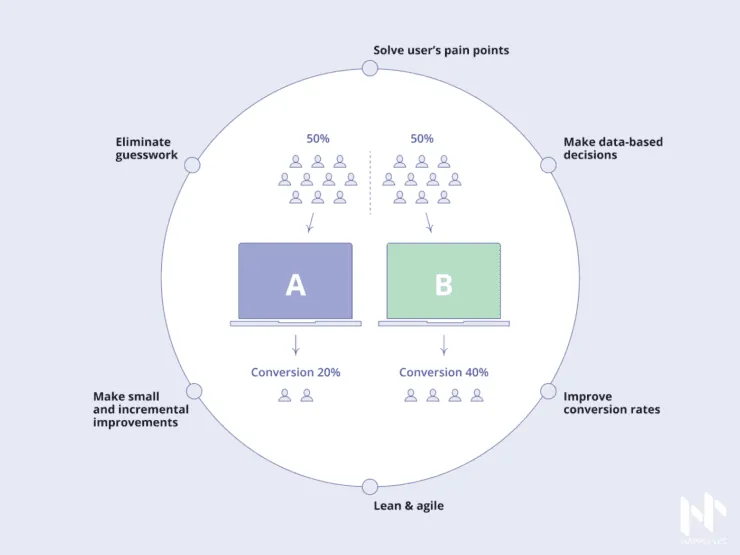
Start by testing just one element at a time, never try to test both open rates and reply rates simultaneously. Begin with subject lines to boost open rates, then move to testing message content for better reply rates.
For results you can trust, make sure at least 100 prospects go through each template variant. This takes patience, but you need 200-300 total data points before making confident decisions.
When building your test variations:
-
Clone existing templates and make small, targeted edits
-
Test timing elements (morning versus afternoon sends)
-
Try different channel sequences (starting with calls versus emails)
-
Experiment with content types (case studies versus industry insights)
Run your tests for 2-4 weeks to gather enough data before drawing conclusions. This methodical approach prevents hasty decisions based on random fluctuations in your numbers.
When to pivot or pause a cadence
Knowing when to change course or stop altogether saves wasted effort. If your metrics consistently fall below industry benchmarks despite testing, it’s time for a major pivot.
Consider adjusting your timing if engagement stays low. This might mean increasing gaps between touchpoints if prospects seem overwhelmed, or tightening intervals if your sales cycle drags. Don’t hesitate to shift the time of day for different channels, early morning, pre-lunch, and end-of-day often work best for calls.
Sometimes, the smartest move is knowing when to stop. If calls and emails consistently go unanswered, formalize the break with a final email. This closure message should briefly apologize for taking their time while offering helpful information addressing pain points. For prospects with future potential, promise to check in after six months and note this in your CRM.
The top-performing sales teams maintain this testing discipline consistently, transforming their outreach from a static process into a living, breathing system that gets better with every iteration.
Conclusion
A well-crafted sales outreach cadence turns your B2B sales process from random, hope-based attempts into a strategic system that delivers consistent results. Throughout this guide, we’ve seen how structured, multi-channel approaches blow haphazard outreach methods out of the water. I’ve witnessed firsthand how response rates double or even triple when sales teams implement these principles properly.
The most important takeaway? Your sales cadence must evolve based on data, not hunches or assumptions. By tracking your key metrics and continuously testing different elements, you’ll uncover exactly what resonates with your specific audience segments. This data-driven approach cuts through the guesswork and lets your team focus energy where it actually matters.
The sweet spot for any sales cadence balances persistence with respect. Research clearly shows most sales require 8+ touchpoints, but timing these interactions appropriately shows professionalism rather than desperation. Start with thoroughly researched audience segments, select your channel mix strategically, map out your touchpoints, craft personalised messages, and then refine everything based on actual results.
Remember that your sales cadence is a direct reflection of your brand voice and values. Each touchpoint creates an impression about how you do business. Focus on providing genuine value at every interaction instead of just pushing for meetings. When prospects see you as a trusted resource first and a vendor second, your conversion rates will naturally improve.
Ready to transform your outreach results? Apply these principles today, measure what happens, and watch your pipeline fill with qualified opportunities that actually convert. Your future self will thank you!
FAQs
Q1. What is a sales outreach cadence and why is it important for B2B success?
A sales outreach cadence is a structured sequence of touchpoints between your organization and prospects, designed to deepen relationships throughout the buyer journey. It’s crucial for B2B success because it provides consistency, helps standardize the sales process, and significantly improves the chances of converting prospects into customers.
Q2. How many touchpoints should be included in an effective B2B sales cadence?
Research suggests that eight touchpoints represent the sweet spot for most B2B sales cadences. This number is based on the law of diminishing returns, where additional touches beyond eight typically produce minimal additional responses. However, the optimal number can vary depending on your specific industry and buyer personas.
Q3. What are the best channels to use in a B2B sales outreach cadence?
The most effective B2B sales cadences typically incorporate multiple channels, including email, phone calls, LinkedIn, and video messages. Email works well for detailed information, phone calls create immediate personal connections, LinkedIn is excellent for B2B prospecting, and video messages add a personal dimension to cut through digital noise.
Q4. How should touchpoints be spaced in a sales cadence for better engagement?
Research indicates that spacing touchpoints 2-3 days apart works best for maintaining engagement without overwhelming prospects. This creates a cadence that keeps you top-of-mind without seeming desperate. However, the ideal spacing can vary based on your specific goals and target audience.
Q5. What are some key metrics to monitor when evaluating a sales cadence?
Important metrics to track include email performance (response rates and open rates), call connection rates, and meeting conversion rates. Additionally, monitor response metrics, pipeline progression, and conversion rates at different funnel stages. These metrics help identify areas for improvement and ensure your cadence is effectively moving prospects through your sales pipeline.

Runs the sales process, lead qualification, and client delivery that turn signals into qualified meetings.