
10 B2B Email Marketing Strategies That Drive 3x Results (2026)

Need a b2b email marketing strategy that works? You’re not alone. B2B companies generate $36 for every dollar they spend on email marketing. Top performers even reach $70 ROI, making email one of the most profitable marketing channels today.
Email rules the B2B world despite newer marketing channels emerging. B2B buyers overwhelmingly prefer email – 77% choose it over other communication methods. Marketing professionals know this too, as 91% rank email as their primary channel. Our team’s work in business-to-business email marketing proves that proper implementation boosts conversion rates and revenue significantly.
B2B email marketing’s success comes down to numbers. Companies that personalize their emails see 26% higher open rates. Segmented lists drive double the clicks, and mobile optimization matters since 46% of all emails are opened on mobile devices. Email marketing leads convert 11.3% better than average marketing qualified leads.
We’ve studied successful b2b email marketing examples and created 10 tested strategies that deliver consistent results for our clients. These practical approaches can triple your results by 2025, whether you manage campaigns internally or work with b2b email marketing services.
Use Personalized Subject Lines
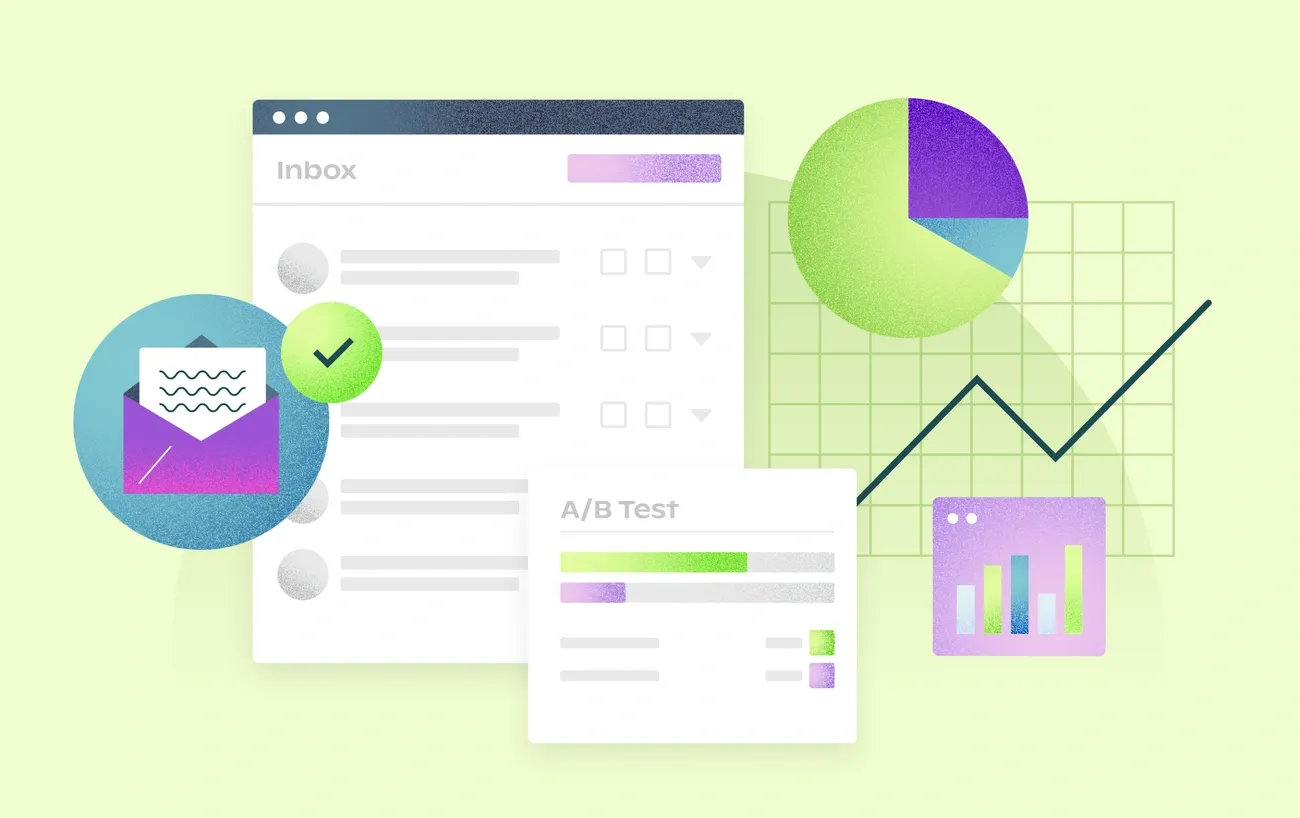
Image Source: Attentive
Personalization sits at the heart of successful B2B email campaigns. Your subject line gives you the first chance to connect with your reader. Let’s see how this powerful technique can transform your email marketing results.
What it is
Personalized subject lines do much more than just add the recipient’s name to emails. They weave in specific details that matter to the recipient and create a custom experience that appeals to their business needs and interests. You can include the recipient’s name, company, industry, job title, past interactions, or even their recent wins. These subject lines speak directly to each recipient. They make people feel valued as unique business partners, not just another name on your list.
Research shows that a well-laid-out personalized subject line is a craft that creates something special for each recipient. This sets the stage for real connections. To cite an instance, instead of “May Newsletter,” you could write “Mark, Find How [Your Company] Can Solve [Specific Industry Challenge].”
Why it works
The psychology behind personalized subject lines makes perfect sense. People pay extra attention when they spot their name or other personal details in a subject line. Scientists call this the “cocktail party effect” – we naturally tune in when we hear something that relates to us.
Personalized subject lines have tested to boost email performance substantially. Studies show that emails with personalized subject lines are 26% more likely to be opened than generic ones. It also drives higher click-through rates, better sales, and keeps people from unsubscribing.
This approach works because it shows you’ve done your homework about your prospect and understand their business challenges. Decision-makers value messages that speak to their specific business situations.
How to implement it
You need a strategic plan to make personalized subject lines work:
- Gather relevant data – Build and organize your prospect information including names, company details, industry, job titles, and past interactions.
- Segment your audience – Put recipients in groups based on demographics, roles, industries, and how they behave. This helps you target better.
- Use dynamic fields – Set up merge tags or variables in your email platform to add personal information to subject lines automatically.
- Test different approaches – Try various ways to personalize and see what appeals most to different audience groups.
- Balance personalization with relevance – Make sure your personal touches add real value instead of feeling forced.
Think about what would appeal to your specific audience. B2B audiences often respond better to company-specific mentions than just seeing their name. You might try something like “Is [Specific Pain Point] holding back [Prospect’s Company Name]?” or “[Your Company Name] can help [Prospect’s Company Name] save up to [XX]%”.
The best B2B email marketing strategy needs constant fine-tuning. Watch your open rates when you test different personalized approaches. Use what you learn to make your B2B email marketing services even better.
Segment Your Email List
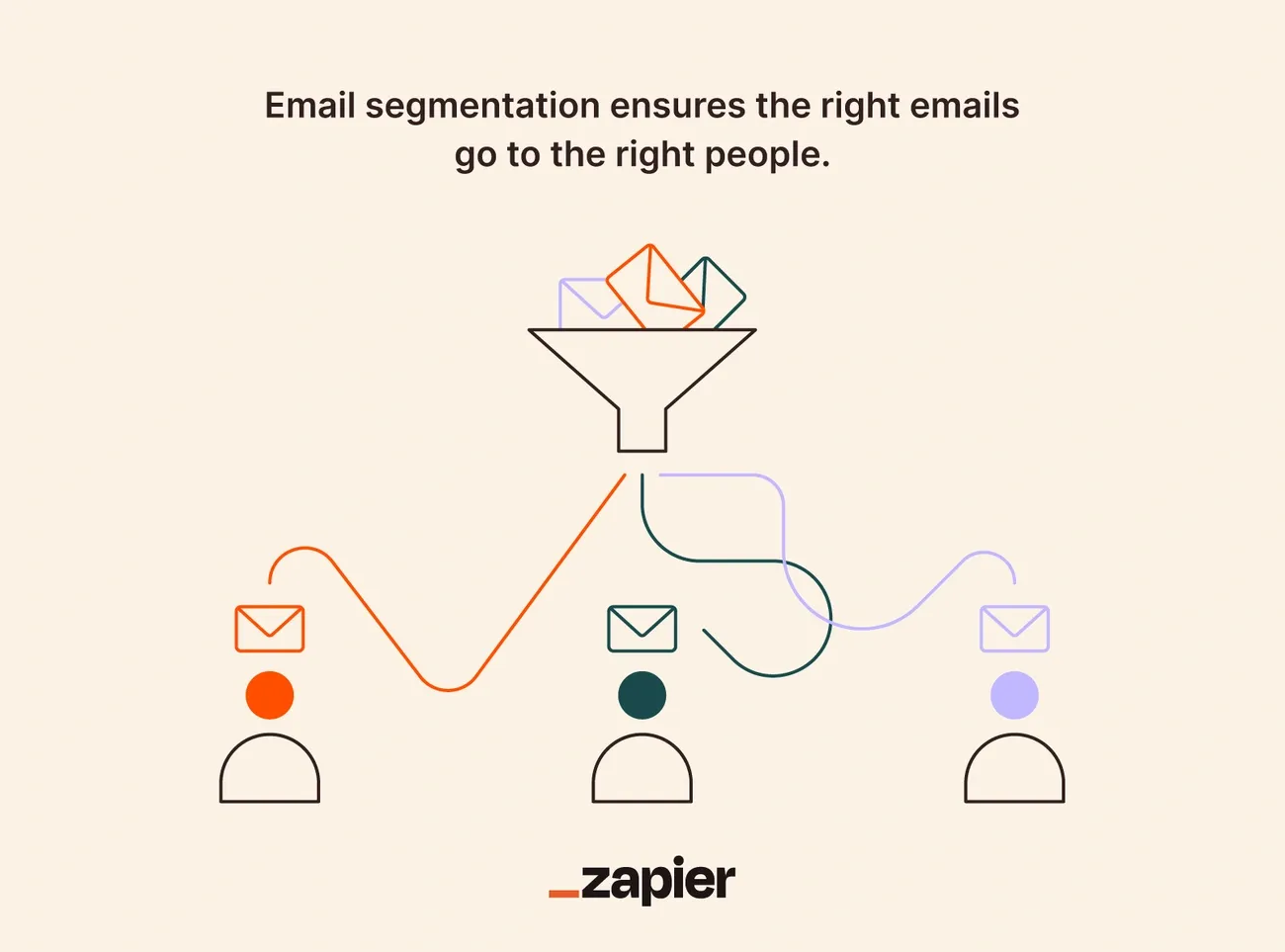
Image Source: Zapier
Email segmentation serves as the foundation of any effective b2b email marketing strategy. This approach splits your contact list into targeted groups. Each group receives content that matches their specific needs and interests.
What it is
Your subscriber list can be split into smaller, targeted groups through email segmentation. This targeted approach helps you send the right message to the right person at just the right time. Data points like demographic information (job titles, geographic location), firmographic details (company size, industry, revenue), behavioral patterns (email engagement, website visits), and lifecycle stages (lead, customer, inactive) help create these segments. Recipients in distinct groups get relevant content that addresses their business challenges.
Why it works
The data supporting segmentation speaks volumes. A Mailchimp study of over 11,000 campaigns and nearly 9 million recipients showed segmented email campaigns achieved 14.3% higher open rates. These campaigns also saw an impressive 100.9% higher click-through rates compared to non-segmented ones. The study revealed a 4.6% decrease in bounce rates and a 9.4% drop in unsubscribe rates.
The Data & Marketing Association’s research discovered segmented email marketing campaigns can boost a company’s revenue by up to 760%. These remarkable results happen because:
- Messages that target specific needs appeal more to recipients
- Personal content creates stronger customer relationships
- Relevant emails attract quality leads and improve conversion rates
- Smart segmentation leads to fewer complaints and unsubscribes
How to implement it
Start by choosing a reliable marketing automation platform with strong segmentation features. Gather essential subscriber data through forms, surveys, website analytics, and CRM integration.
Your business to business email marketing goals should guide segment creation once you have enough data. Popular approaches include:
- Demographic segmentation – Sort contacts by job titles, roles, or other personal traits
- Behavioral segmentation – Group based on actions like content downloads, webpage visits, or previous purchases
- Firmographic segmentation – Sort by company traits such as industry, size, or growth stage
- Lifecycle stage segmentation – Group contacts by their sales funnel position (lead, prospect, customer)
Regular list maintenance keeps your segments effective. Remove inactive subscribers, correct wrong email addresses, and clean up duplicates. These steps help your b2b email marketing services deliver better results.
Segmentation creates a solid base for email marketing success. A clear understanding of your audience lets you craft messages that address their business challenges directly. This approach significantly boosts engagement and conversion rates.
Optimize for Mobile Devices

Image Source: Pipedrive
Your b2b email marketing strategy success depends on how your messages look on smartphones and tablets. Modern professionals check emails while commuting, between meetings, and after work hours. Mobile optimization has become essential to b2b success.
What it is
Mobile optimization for email creates campaigns that work and look great on all mobile devices. This makes your business to business email marketing messages readable and functional on any screen size. Responsive design adjusts email layouts, font sizes, and images based on the viewing device.
Mobile-optimized messages adapt naturally between devices. Recipients won’t need to pinch, zoom, or scroll sideways to read content. This creates a professional image and respects your recipients’ time.
Why it works
Numbers paint a clear picture of mobile optimization’s value. About 46% of all emails are opened on mobile devices. Users delete 71.6% of emails that don’t display correctly on their phones.
B2B companies see strong returns from mobile-friendly email campaigns. Mobile drives or influences 42% of B2B revenue. Mobile optimization increases clicks by 15% and brings almost twice the revenue compared to desktop.
B2B buyers make clear choices based on mobile experience. Half switch to competitors after poor mobile experiences. More than 90% make repeat purchases from vendors offering superior mobile experiences.
How to implement it
Making your email marketing for b2b mobile-friendly requires these key steps:
- Implement responsive design frameworks that adjust your email’s layout to screen size. This gives proper display across devices and email clients.
- Adopt single-column layouts with 600px maximum width. This creates a clean user experience without sideways scrolling.
- Optimize text readability with larger fonts (17-22px for body text, 22px+ for headlines) and left-aligned copy.
- Make CTAs touch-friendly with buttons at least 44-48px squared and plenty of white space around them.
- Compress images to load faster while scaling correctly to screen width.
Testing plays a vital role. Preview your emails on different devices and email clients before sending campaigns. Track mobile-specific metrics like open rates and conversions to improve your approach.
Looking at successful b2b email marketing examples that focus on mobile optimization shows how small technical changes can boost engagement and revenue for your b2b email marketing services.
Craft Compelling CTAs

Image Source: Saleshandy
A strong b2b email marketing strategy succeeds or fails based on its calls-to-action. CTAs act as bridges that connect reader interest to measurable business results by guiding prospects to take the next step.
What it is
B2B email’s call-to-action (CTA) tells recipients their next move clearly. These prompts appear as buttons, hyperlinked text, or direct instructions that move prospects through your sales funnel. CTAs answer a simple question: “What should I do now?” They turn passive readers into active participants when they schedule demos, download content, or sign up for events.
Why it works
Numbers prove that CTAs work. Smart CTAs can increase clickthrough rates by 30-35%. They create better experiences by showing users logical next steps. Individual-specific CTAs perform 202% better than standard versions. Button-based CTAs have boosted click-through rates by 127% compared to text links.
Emails with just one CTA get 371% more clicks than those with multiple options. This happens because clear messages eliminate confusion. Such clarity matters even more in B2B buying, where multiple stakeholders make decisions.
How to implement it
Your business to business email marketing needs these strategies for high-converting CTAs:
- Use action-oriented language with strong verbs like “Get,” “Claim,” “Join,” or “Start” to spark immediate action
- Create visual contrast with different colors, enough white space, and buttons at least 44×44 pixels for mobile users
- Optimize placement with primary CTAs visible without scrolling
- Focus on value by showing what prospects get rather than what they must do
- Limit to one primary CTA per email to avoid decision paralysis and boost conversion
The best b2b email marketing examples skip vague phrases like “click here.” They use specific language that addresses your prospects’ challenges and wants.
Testing helps optimize CTAs. Try different versions of copy, design, and placement to see what appeals to your audience. Track metrics to fine-tune your b2b email marketing services for better results.
Leverage A/B Testing

Image Source: Mailtrap
Smart b2b email marketing strategy starts with testing your assumptions. You need real data to make good decisions. Relying on guesswork or industry “best practices” might not work for your audience.
What it is
A/B testing (or split testing) helps you compare two versions of your email campaigns. You create two different versions of one element, like subject lines, email copy, or CTAs. The rest stays the same. Your audience gets split into groups to test these versions. The results show what appeals to your B2B audience, not just what should work in theory.
Why it works
A/B testing takes the guesswork out of your business to business email marketing. Email works great for testing because responses are clear, people either open emails or they don’t, click links or they don’t. B2B sales cycles run longer than B2C. You’ll need extra time to gather enough data within your typical buying cycle.
Results prove the value. Companies using strategic A/B testing have seen better lead interest and stronger campaign results. Better subject lines can boost open rates. Improved CTAs get more clicks.
How to implement it
Your email marketing for b2b campaigns need these steps:
- Select one element to test at a time – Look at subject lines, email copy, CTAs, sender names, images, or timing. Multiple element tests make it hard to know what caused the changes.
- Define clear objectives – Set specific goals like better open rates, click-throughs, or conversions.
- Create proper variations – Make two email versions that differ only in what you’re testing.
- Divide your list randomly – Your audience needs equal sample groups for accurate results.
- Analyze with statistical significance – Tools help you spot real patterns instead of random changes.
Document what you learn after each test. Use these lessons in future campaigns. You might want to test different elements for various audience segments (SMBs vs. Enterprises, decision-makers vs. influencers). This helps fine-tune your b2b email marketing services.
Regular A/B testing of b2b email marketing examples builds informed insights. These insights help create campaigns that get better engagement and more conversions.
Create Lifecycle Email Campaigns

Image Source: Ranosys
81% of B2B marketers use email newsletters as their main form of content marketing.
, Content Marketing Institute, Leading content marketing research organization
Lifecycle email campaigns follow your B2B customer’s natural trip and deliver the right message at each stage of their relationship with your brand. These strategically sequenced emails help nurture prospects from their first contact until they become loyal supporters.
What it is
Lifecycle email marketing lines up email communications with specific stages of the customer trip. This approach helps recipients get relevant content based on their relationship stage with your company. The strategy includes several distinct campaign types:
- Welcome emails – Introduce new subscribers to your brand and invite participation
- Onboarding sequences – Guide customers through original product setup and feature adoption
- Nurturing campaigns – Educate prospects and build trust over time
- Retention emails – Keep existing customers engaged and prevent churn
- Advocacy promotion – Help satisfied customers become brand promoters
Each campaign type moves prospects through your marketing funnel naturally, from awareness and consideration to decision-making and beyond.
Why it works
Lifecycle campaigns work better than traditional email marketing because they handle customer needs throughout their trip. Prospects first need educational content about your industry. They later want product-specific information and implementation guidance.
The results are impressive. The numbers tell the story – email marketing generates $42 for every $1 spent. These campaigns improve customer experience through tailored interactions that make recipients feel valued.
The most compelling reason is simple – keeping customers costs nowhere near as much as finding new ones. Research shows that finding a new customer costs five times more than keeping an existing one.
How to implement it
Your b2b email marketing strategy needs these steps to build effective lifecycle campaigns:
- Map your customer trip – Find key touchpoints and transition points in all stages
- Create stage-specific content – Build educational materials for early stages and product-focused content for later ones
- Implement automation workflows – Set up triggered emails based on specific behaviors to reduce manual work
- Segment based on trip stage – Group your audience by their position in the customer lifecycle
- Continuously measure and refine – Track engagement metrics and improve campaigns based on performance data
Your business to business email marketing success depends on treating lifecycle campaigns as ongoing processes rather than isolated efforts. This approach helps your b2b email marketing services create continuous experiences that guide prospects through your sales funnel, which leads to higher conversion rates and better customer lifetime value.
Use Visuals and Design Elements

Image Source: Zapier
Visual content plays a crucial role in modern b2b email marketing. It turns standard business messages into compelling stories that grab attention in busy inboxes.
What it is
Visual email elements combine design components that take your message beyond basic text. Professional images, branded graphics, videos, GIFs, infographics, interactive elements, and well-laid-out designs with smart use of white space make up these components. Your busy B2B decision-makers will find it easier to digest dense or technical content through these visually rich communications. Well-designed emails build instant brand recognition with consistent visual elements like logos, color schemes, and typography that showcase your company’s professional image.
Why it works
Numbers prove the power of visual content in b2b email marketing strategy. Emails with images see 30.27% open rates and 2.78% click-through rates. Text-only emails lag behind with 21.9% open rates and just 1.13% CTR. Videos boost click-through rates by 75% compared to plain text emails. People are 30% more likely to read infographics than plain text. This makes them valuable tools to explain complex B2B ideas.
Dynamic content in email campaigns can double your ROI. Visual elements create emotional connections and make content stick in memory. They also break down complex information into bite-sized pieces that readers can quickly understand.
How to implement it
Start by adding relevant, high-quality images that strike a chord with your audience. Product photos, team pictures, or industry-specific visuals work well. Complex data becomes clearer through infographics or charts.
Your brand stays consistent with email templates that feature your logo, colors, and fonts. Responsive email design ensures your messages look great on all devices. Single-column layouts (600px maximum width) make mobile reading easier.
The best results come from a mix of 60% text and 40% visuals, though some experts prefer an 80:20 split. Remember to optimize image sizes for quick loading and add alt text for accessibility.
Your business to business email marketing needs branded, modern, and eye-catching emails. These elements build your identity, generate interest, deliver content effectively, and leave lasting impressions on your audience.
Maintain Email List Hygiene
Image Source: Email on Acid
Your b2b email marketing strategy’s success relies on your email list quality. Like a garden that needs weeding, your contact database just needs regular upkeep to get the best results.
What it is
Email list hygiene is a regular process to clean and maintain your subscriber database. You remove problematic addresses and update contact details. The process helps you spot and remove invalid emails, bounced addresses, unengaged subscribers, and potential spam traps from your campaigns. A complete list hygiene has more than just deletion. You correct wrong email formats, remove duplicates, and organize contacts based on how engaged they are.
Why it works
Clean lists improve your business to business email marketing results. They substantially boost delivery rates because mailbox providers assess sender reputation in part based on bounce rates and engagement metrics. Clean email lists help you keep bounce rates below the 0.5% threshold.
The numbers tell a compelling story. Email lists decay at a rate of 22-30% each year. Business email addresses show a 3.6% monthly decay rate. Since 70.8% of business contacts change their information within a year, regular cleaning is essential to keep your email marketing for b2b working.
How to implement it
You should set up a regular cleaning schedule. Most experts suggest cleaning your list every six months. Lists with over 100,000 subscribers may need more frequent cleaning.
Before you start cleaning, look for these problem areas:
- Hard bounces (permanent delivery failures)
- Emails with incorrect format or syntax
- Inactive subscribers (no opens/clicks in 3-6 months)
- Role accounts (info@, support@)
- Catch-all addresses that accept any email
Use verification tools to confirm emails when they enter your list and during regular cleanings. You might want to try re-engagement campaigns for inactive subscribers before removing them.
Quality beats quantity in b2b email marketing services. A smaller, engaged list will always perform better than a large but unresponsive one. This approach leads to higher conversion rates and better returns on your marketing spend.
Time Your Emails Strategically

Image Source: FluentCRM
“In 2023, the number of emails sent and received each day across the world is estimated to add up to 347.3 billion.”
, Statista Research Department, Global business data platform and statistics provider
Your email’s arrival time in a prospect’s inbox matters as much as its content. The right timing plays a crucial role in your b2b email marketing strategy and determines whether recipients notice or ignore your message.
What it is
The right email timing helps you schedule messages when recipients will most likely read them. This approach uses evidence-based decisions about the best days, times, and recipient behaviors instead of random sending. Your audience’s habits, industry patterns, time zones, and past engagement help determine the perfect delivery moment. Smart analysis rather than guesswork will give a better chance that decision-makers see and respond to your messages.
Why it works
The timing substantially affects key performance metrics in business to business email marketing. Research reveals that B2B audiences respond better to emails sent Tuesday through Thursday compared to weekends. Emails sent between 10am-2pm get the highest open rates, while those sent between 8pm-midnight see better click-through rates.
User action-based triggers get 3-5x better open and click rates than scheduled sends. Different days of the week show 10-15% swings in engagement metrics. The logic makes sense – emails that arrive when attention peaks avoid inbox clutter and get more visibility and action.
How to implement it
Start by studying your audience’s behavior patterns through email analytics. Look at when your recipients open, click, and convert rather than just following industry standards.
Set up systematic A/B testing for send times:
- Split your list into equal segments
- Test different time slots while controlling other variables
- Document results over 4-6 weeks to find patterns
Global audiences need time zone optimization to get emails at suitable local times. B2B professionals read emails most during weekdays, especially Tuesday through Thursday between 9am-11am.
Advanced users should align email timing with sales activities. Sending nurture emails 2-3 days before planned sales outreach boosts call connection rates by 21% based on industry data.
The right email marketing for b2b timing strategy builds the foundation for all other optimization efforts and maximizes your carefully crafted content’s effect and calls to action.
Incorporate Drip Campaigns and Automation

Image Source: EngageBay
Automation is the next frontier in your b2b email marketing strategy. It transforms manual processes into simplified processes that deliver targeted messages right when prospects need them.
What it is
Drip campaigns work as automated email sequences that trigger based on specific actions, behaviors, or timeframes to nurture leads through tailored touchpoints. These campaigns differ from one-off email blasts as they follow predetermined paths that guide potential customers through their buying trip with relevant content at strategic intervals. A typical campaign includes 4-10 emails sent over several weeks or months.
Common types include:
- Welcome series introducing new subscribers to your brand
- Lead nurturing sequences providing educational content
- Post-webinar follow-ups offering additional resources
- Re-engagement campaigns rekindling interest from inactive leads
- Abandoned cart reminders encouraging purchase completion
Why it works
Drip campaigns have tested their worth consistently. They produce 80% higher open rates and 3x higher click-through rates compared to single-send emails. Automated emails generate up to 18 times more revenue than traditional broadcast messages.
These campaigns succeed by delivering consistent communication that builds relationships gradually. They handle the complex B2B buying process with multiple stakeholders and lengthy decision-making cycles. The automation will give prospects proper attention during this extended process.
How to implement it
Your campaign’s main goal needs clear definition. The next step requires developing detailed buyer personas and segmenting your audience based on industry, job role, and pain points.
Automated triggers should be set up based on specific actions:
- Form submissions (downloads, contact requests)
- Website behavior (page visits, video views)
- Email engagement (opens, clicks)
- Time-based intervals
Strategic content sequences should match each stage of your buyer’s trip. B2B audiences respond best to drip campaigns with about five emails per month, spaced four, seven, or fourteen days apart.
The automation needs rigorous testing before launch. Regular monitoring of metrics like deliverability, open rates, and click-through rates helps adjust your strategy based on performance.
Well-executed drip campaigns make your business to business email marketing more efficient while delivering tailored experiences that drive measurable results.
Comparison Table
| Strategy | Definition | Key Benefits | Implementation Steps | Best Practices |
|---|---|---|---|---|
| Use Personalized Subject Lines | Adding recipient-specific details like name, company, industry, and job title to email subject lines | 26% higher open rates | 1. Gather relevant data 2. Segment audience 3. Use dynamic fields 4. Test approaches 5. Balance personalization | Company-specific references work better than names for B2B audiences |
| Segment Your Email List | Breaking down subscribers into targeted groups based on specific criteria | 14.3% higher open rates, 100.9% higher click-through rates | 1. Pick an automation platform 2. Get needed data 3. Create segments 4. Keep list clean | Break down by demographics, behavior, firmographics, and lifecycle stage |
| Optimize for Mobile Devices | Making sure campaigns look great on all mobile devices | 46% of emails opened on mobile; 15% increase in clicks | 1. Use responsive design 2. Stick to single-column layouts 3. Make text readable 4. Design touch-friendly CTAs 5. Reduce image sizes | Keep width under 600px, body text 17-22px, CTA buttons 44-48px |
| Craft Compelling CTAs | Clear prompts that guide prospects to take action | 30-35% increase in clickthrough rates; 202% better results for tailored CTAs | 1. Write action-focused copy 2. Make them stand out 3. Place them well 4. Show clear value 5. Stick to one main CTA | Put CTAs above the fold, use bold colors, leave enough white space |
| Use A/B Testing | Testing two email versions to find what works best | Gets more leads and better campaign results | 1. Pick one thing to test 2. Set clear goals 3. Make proper variations 4. Split list randomly 5. Check statistical significance | Test one element at a time, make sure results matter |
| Create Lifecycle Email Campaigns | Emails that match where customers are in their buying journey | Makes $42 for every $1 spent | 1. Map customer journey 2. Write stage-specific content 3. Set up automation 4. Group by journey stage 5. Track and improve | Think of it as ongoing rather than one-off campaigns |
| Use Visuals and Design Elements | Mix of design elements that make your message pop | 30.27% open rates vs 21.9% for text-only | 1. Add relevant images 2. Make infographics 3. Stay on brand 4. Use responsive design | Mix 60% text with 40% visuals |
| Maintain Email List Hygiene | Regular cleanup of your subscriber list | Keeps bounce rates under 0.5% | 1. Set cleaning schedule 2. Find bad addresses 3. Use verification tools 4. Run re-engagement campaigns | Clean every six months, check emails before adding |
| Time Your Emails Strategically | Sending messages when recipients are most likely to engage | 10-15% better results based on timing | 1. Study audience habits 2. Run A/B tests 3. Account for time zones 4. Track patterns | Tuesday-Thursday between 10am-2pm works best |
| Incorporate Drip Campaigns | Automated email series triggered by specific actions or timing | 80% higher open rates, 3x higher click-through rates | 1. Set campaign goals 2. Create buyer personas 3. Set triggers 4. Write content series 5. Test well | Send about five emails monthly |
Conclusion
Email marketing continues to be the most effective channel for B2B companies that want measurable results. The numbers tell a clear story – companies can expect up to 36 times return on investment. This makes email marketing essential for businesses that want to stimulate growth.
Your campaigns can see better metrics right away with customized subject lines, smart segmentation, and mobile-friendly design. These basic tactics work together to create customized content that appeals to decision-makers during complex B2B buying cycles.
Strong calls-to-action and regular A/B testing help you improve your strategy based on real data instead of guesswork. Your lifecycle email campaigns recognize that B2B relationships take time to develop and need different messages at each stage of the customer’s experience.
Visual elements make business communications more interesting. Good list maintenance will help your messages reach engaged prospects. Smart timing increases visibility. Automation creates flexible systems that send the right message at the perfect moment.
B2B email marketing success depends on careful execution of these connected strategies. Companies that will succeed in 2025 will be those that carefully use these tested methods to create valuable email content at every step. The real question isn’t about using these strategies – it’s about finding which one will affect your business goals the most.
Boost your B2B results with GrowLeads.io. Let’s triple your email impact now!
FAQs
Q1. What are some key strategies for effective B2B email marketing?
Some tested strategies include personalizing subject lines, segmenting your email list, optimizing for mobile devices, crafting compelling CTAs, and using A/B testing to continually improve performance.
Q2. How often should I clean my B2B email list?
Most experts recommend cleaning your email list every six months. For larger lists (over 100,000 subscribers), more frequent cleaning may be necessary to maintain optimal deliverability and engagement rates.
Q3. What’s the best time to send B2B emails?
Generally, Tuesday through Thursday between 10am-2pm tends to perform best for B2B audiences. However, it’s crucial to analyze your specific audience’s behavior patterns and test different send times to determine what works best for your subscribers.
Q4. How can I improve my email open rates?
To boost open rates, focus on crafting personalized subject lines, segmenting your list for targeted messaging, optimizing for mobile devices, and strategically timing your sends. Additionally, maintaining a clean email list helps ensure your messages reach active, interested subscribers.
Q5. What role does automation play in B2B email marketing?
Automation is crucial for scaling B2B email marketing efforts. Drip campaigns and automated sequences allow you to nurture leads with timely, relevant content based on their actions and stage in the buying journey. This approach typically generates higher engagement rates and more conversions compared to manual email sends.

Builds the demand intelligence, automation, and deliverability systems behind Growleads pipeline.


