
B2B SEO Success: Building Trust Through Content Marketing

Building trust through content in B2B marketing changes everything. Qualtrics proves this point perfectly, their content hub strategy brought in 29,000 leads and drew 4.3 million users to their site in less than two years. The most impressive part? 85% of that traffic came organically.
The results speak volumes. Qualtrics jumped from fourth to first place among their competitors. Content hubs work magic because they give users a better experience. They create a central, well-organized space where visitors can find complete information on specific topics. The hub-and-spoke content model also boosts SEO performance by preventing keyword cannibalization, which happens when multiple pages fight for the same keywords.
Many B2B companies still stick to scattered blog posts. Google now puts user experience first when determining website quality and relevance. Trust-building through communication needs a more well-laid-out approach. Content hubs represent this next step forward, they help users find relevant information easily and boost engagement and conversion rates substantially.
This piece will show you how to use this overlooked strategy. You’ll learn to establish your brand as an authority in your industry, boost your B2B SEO success, and build lasting trust with your audience.
Why Content Hubs Build Trust in B2B SEO
Content hubs mark a radical alteration in how B2B companies handle their SEO and content strategy. Forrester research shows that 90% of B2B decision-makers value content hubs as research resources. These numbers explain why centralized content structures have become vital for businesses that want to build industry credibility.
How content hubs improve credibility
Trust is the life-blood of successful B2B relationships. About 81% of North American B2B content marketers say their successful content marketing built credibility and trust with their audience. Content hubs excel at building trust by showing detailed expertise on specific topics.
Your brand becomes a trusted authority when visitors discover rich, interconnected, quality information on your site. This aligns with Google’s EEAT principles (Experience, Expertise, Authoritativeness, and Trustworthiness). Search engines use these principles to assess content quality.
Content hubs naturally draw backlinks, one of the strongest ranking factors in SEO. Other websites link to your content more often when you create definitive resources about industry topics. This boosts your domain’s reputation.
The role of consistency in building trust
Building trust with your B2B audience needs consistency. Studies show that consistent branding and messaging boosted revenue by 23% [link_2]. Content hubs offer a well-laid-out framework that gives your audience consistent messaging, whatever their interaction point with your brand.
You can create and maintain one unified voice across your content with a content hub. Brand recall grows stronger and trust deepens when you keep your tone, style, and visual identity consistent. Customers trust your expertise more when they receive quality information throughout their trip.
Edelman research reveals that 75% of B2B buyers prefer to buy from companies they see as industry experts. Plus, 67% of customers will stick with a brand only if they trust the company behind it.
Why blogs alone are not enough
Standard blogs often can’t build the detailed trust B2B decision-makers need. Here’s why content hubs work better than regular blogs:
- We organized blogs by date, making it hard to find related topic information
- Content hubs arrange pages by topic relationships or hierarchy instead of date, so they resist the “aging penalty” better
- Hub pages get stronger as they age, expand, and gain backlinks
- Content hubs boost average session duration by 25-35% and cut bounce rates by 15-20%
Users view 3.2 pages per session with content hubs compared to 1.5 with traditional blogs. These better engagement signals tell search engines your content delivers real value, which helps improve rankings and traffic.
Content hubs create semantic relationships between pages through internal linking that improves your topical authority by a lot. This structured approach shows Google you’ve covered a subject from every angle, exactly what search engines and B2B buyers want.
Choosing the Right Structure for Your Content Hub
Your content hub’s structure will determine how well you build trust through content in B2B environments. A well-laid-out framework will help your audience explore your expertise while boosting your SEO goals.
Hub and spoke vs. topic gateway
The hub and spoke model uses a central pillar page (the hub) that gives a complete overview of a broad topic. Multiple detailed pages (the spokes) branch from this hub. This structure works best to organize content around complex subjects that have many related subtopics.
The hub and spoke model’s strengths lie in:
- Creating topic hierarchies that search engines understand easily
- Moving link authority between related pages
- Having one main page linked to 5-20 static subpages
- Supporting evergreen content that stays relevant
Topic gateways work differently, acting more like specialized portals. They give topic overviews while connecting to many supporting resources. These gateways typically have:
- Quick summaries of topic essentials
- Links to both evergreen and new content
- Ways to help users explore content they care about
- Flexibility to move between sections instead of following a set path
Kane from Content Harmony puts it well: “Topic Gateways are like blog category pages on steroids” – taking standard category pages to the next level.
When to use a content library
Content libraries excel at organizing large amounts of varied information. Media companies developed them first, but B2B companies with large content portfolios now find them valuable.
A content library might be right for you if:
- Your content covers multiple topics or categories
- The audience needs different resource types (case studies, white papers, webinars)
- Users want filtering options to find specific information
- You plan to showcase both evergreen and current content
Content libraries need more advanced information architecture. They often use index pages for each topic category that connect to individual articles. Notwithstanding that, better user experience and content findability make this investment worthwhile.
Hybrid models for complex topics
B2B offerings that are particularly complex benefit from hybrid models that blend different content hub structures. These custom approaches tackle specific organizational needs while maintaining strong SEO results.
Mixing content libraries with hub and spoke elements creates an effective hybrid approach. This structure organizes broad categories and builds deep topic clusters within each one. You could also combine topic gateways with content libraries to achieve both breadth and depth in content organization.
The topic matrix offers another sophisticated hybrid model that organizes content in multiple dimensions at once. This multi-dimensional categorization works well for:
- Complex services with different audience segments
- Technical products that have various applications
- Content filtered by multiple traits (industry, format, topic)
The framework you pick directly shapes how well your content builds trust with B2B audiences. A good structure improves SEO through strategic internal linking and shows your organization’s expertise by presenting information thoughtfully.
Planning and Creating Your Content Hub
Content hubs work best when you plan and organize them thoughtfully. Your real work starts after choosing the hub structure – creating meaningful content that builds trust with your B2B audience.
Define your core topic and subtopics
You need to pick a central topic that lines up with your expertise and what your audience wants. Your core topic should:
- Connect to your business goals
- Get lots of search traffic
- Let you cover the subject in detail
An outdoor clothing brand could create a content hub about “Best Hikes in the U.S.” This topic fits their business and sees over 5,400 monthly searches. SEO tools can help you assess metrics like monthly search volume and difficulty scores. These scores show how hard it will be to rank for specific terms.
Your central theme sets the foundation to branch into subtopics that cover narrower aspects of your main topic. These subtopics should naturally connect to your core focus and let you take a closer look at specific areas of interest.
Audit existing content for reuse
Look at what content you already have before creating anything new. A full content audit helps you find your best-performing pieces to include in your hub. This process usually involves:
Collecting URLs of existing content and organizing them in a spreadsheet
Categorizing content by type, format, word count, and publication date
Looking at performance metrics to spot strengths and weaknesses
Content audits show you what appeals to your audience. You can find ways to update or repurpose content instead of starting fresh. 42% of marketers agree that repurposed content helps them succeed more with content marketing.
Create a phased content roadmap
A strategic plan helps you prioritize content creation over time. Start with your hub’s landing page and add supporting content based on a weekly or monthly schedule. This step-by-step approach lets you:
Build momentum without overwhelming your team
Test and improve based on performance
Keep quality consistent across all content
Your team should focus on one piece at a time instead of publishing everything at once. The roadmap should include when to create, publish, and expand your hub into new topics as your content grows.
Optimizing for SEO and User Experience
A content hub’s technical foundation shapes how it builds authority with visitors and search engines. Well-optimized hubs make navigation easier and boost trust signals that search engines can detect.
Internal linking and navigation
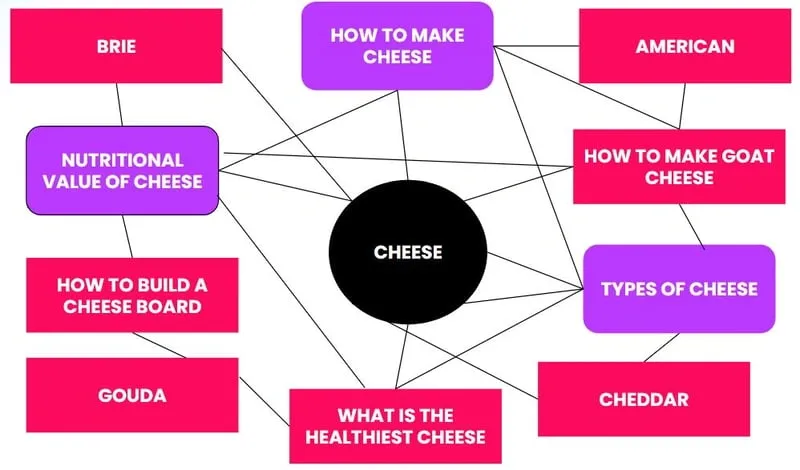
Strategic internal linking acts as the backbone of content hubs that work. Content hubs need specific linking patterns unlike regular websites:
- Hub to spoke links: The hub page should have contextual links to relevant spoke content. This makes it work more like a menu than a link farm
- Spoke to hub links: Each spoke must connect back to its parent hub with natural anchor text that fits the content
- Spoke to spoke links: Related spoke pages should link to each other when it makes sense
Search engines understand your site better through this connected structure. Users find content without hassle. When one page performs well, it shares its authority with connected pages.
On-page SEO for hub and spoke pages
Content hubs need careful site architecture optimization. Your hub pages should sit close to the homepage in URL structure. Direct links from main navigation help search engines see the hub’s importance.
Spoke pages need URL patterns that show their connection to the hub. Landing pages work better for keywords with purchase intent rather than blog posts. Blog content suits research-focused keywords better.
Readers should scan long content easily. Jump links and expandable tabs break up text blocks. Clear H2 headings and bullet lists make dense information digestible and keep visitors reading longer.
Using breadcrumbs and CTAs effectively
Breadcrumbs show users where they are in your content structure. These navigation aids appear as horizontal link lists with “>” symbols below main navigation.
Simple breadcrumbs pack powerful benefits. They help users find their way, reduce bounce rates, and tell search engines about your site structure. Mobile versions can use shorter breadcrumb trails to save space while staying useful.
Purpose-driven CTAs guide visitors to take action after reading your content. Skip generic “read more” links. Your CTAs should point users to related hub content or conversion points. This approach strengthens engagement and builds trust signals naturally.
Measuring Success and Scaling Trust
B2B content hubs need constant measurement and strategic scaling to excel at building trust through content. Your hub’s success depends on tracking its effects after launch.
Track engagement and conversions
Success metrics for content hubs should reveal audience engagement and business results. The most valuable KPIs include:
- Traffic metrics: Page views, unique visitors, and traffic sources
- Engagement indicators: Average time on page, bounce rates, and pages per session
- Conversion measurements: Email sign-ups, lead magnet downloads, and direct sales
Mid-funnel engagement deserves special attention since “this is where [most hubs] should be showing success and value, not just leads”. Successful content hubs increase average pages per session from 1.5 to 3.2, which shows deeper audience connection.
Update content based on performance
Content refreshes help maintain relevance and boost performance. A study revealed that 42% of marketers saw better content marketing value after updating existing content. Many teams skip this vital step.
Quarterly audits should guide performance-driven updates by identifying:
- Content that needs fresh information
- Content that needs optimization
- Top-performing content ready for expansion
Content types and topics that drive strong engagement should shape your content calendar.
Expand into new topics and languages
Building trust means reaching more audiences through topic expansion and language options. Native language content builds trust effectively, as 76% of online visitors prefer content in their mother tongue.
Gen Z and millennial consumers’ trust grows when content feels relevant to them – 67% confirm this. Multilingual capabilities create tailored content that appeals across cultural lines.
Translation management systems streamline content localization. Teams can launch regional campaigns faster, cutting time-to-web from weeks to hours.
Conclusion
Content hubs represent a fundamental change in B2B marketing strategy. They offer much more value than traditional blogs ever could. This piece shows how these structured content ecosystems substantially build trust with potential clients and boost SEO performance.
The real value of content hubs comes from showing detailed expertise on topics your audience cares about. Your content organized in a thoughtful hierarchy tells visitors and search engines that you really know your field. This approach lines up perfectly with Google’s EEAT principles and positions your brand as a trusted authority.
The right structure depends on your business needs and content goals. You can choose between hub and spoke, topic gateway, content library, or a hybrid model. Whatever framework you select, planning remains key. A clear roadmap will give your hub systematic growth. You need to define core topics, audit existing content, and create a phased plan without overwhelming your team.
Good content becomes a great experience through technical optimization. Strategic internal linking, careful on-page SEO, and smart navigation with breadcrumbs work together. These elements boost user experience and search visibility. Search engines see these as quality indicators.
Your success metrics become the blueprint to scale. Traffic numbers, engagement data, and conversion rates show which content appeals most to your audience. These findings help update and expand your hub based on real performance data.
Trust forms the foundation of all B2B relationships. Content hubs give you a unique framework to show expertise, keep messaging consistent, and guide potential clients through their decision-making trip. Companies that become skilled at this approach will without doubt outperform competitors who still use outdated content strategies.
Unlock the secrets of B2B conversions at GrowLeads.io. Start building trust today!
FAQs
Q1. What is a content hub and why is it important for B2B SEO?
A content hub is a centralized, organized destination on a website that provides comprehensive information on specific topics. It’s important for B2B SEO because it improves user experience, enhances engagement, and demonstrates expertise, which helps build trust with potential clients and improves search engine rankings.
Q2. How does a content hub differ from a traditional blog?
Unlike traditional blogs that organize content chronologically, content hubs structure information based on topical relationships. This makes it easier for users to find related information, increases average session duration, reduces bounce rates, and improves overall engagement metrics.
Q3. What are the key elements to consider when planning a content hub?
When planning a content hub, focus on defining your core topic and subtopics, auditing existing content for potential reuse, and creating a phased content roadmap. This approach allows for strategic implementation and helps maintain quality standards across all content pieces.
Q4. How can I optimize my content hub for both SEO and user experience?
Optimize your content hub by implementing strategic internal linking, applying on-page SEO best practices for hub and spoke pages, and using breadcrumbs and effective CTAs. These elements improve navigation for users and help search engines understand your site’s information hierarchy.
Q5. What metrics should I track to measure the success of my content hub?
To measure the success of your content hub, track traffic metrics (such as page views and unique visitors), engagement indicators (like average time on page and bounce rates), and conversion measurements (including email sign-ups and lead magnet downloads). Pay special attention to mid-funnel engagement metrics, as these often indicate the hub’s true value and success.

Leads SEO and the GEO/AEO work that wins organic and AI-answer visibility.