
B2B Buyers Psychology: Insights from CRO Data for Better Conversions

B2B buyers psychology reveals unexpected contradictions. Business decisions might seem purely logical, but the data tells a different story. Emotional factors play a huge role in B2B purchasing and affect conversion rates directly. A user takes just eight seconds deciding if your landing page fits their needs, which shows how first impressions matter greatly.
B2B conversion rate optimization (CRO) produces amazing results when we learn about buying behavior psychology. The numbers speak for themselves. About 96% of B2B marketers call segmentation their quickest way to boost conversion rates. Companies that invest in CRO see a 95% success rate in generating positive ROI, which makes this strategy almost a guaranteed win.
Our analysis of thousands of user sessions found fascinating patterns in B2B buyers psychology and website interactions before they make decisions. This piece dives into what the data shows about buyer psychology and practical ways to boost your conversion rates. You’ll see real-world examples that turned casual visitors into loyal clients. The results are impressive, from landing page improvements that boosted leads by 141% to insights explaining why 43% of organizations face challenges with lead data collection. These findings will help you create a stronger CRO strategy.
Why understanding buyer psychology matters in B2B
“To win customer preference and loyalty, B2B marketing leaders must demonstrate that their brands deliver personal value through emotional messaging.”
, Gartner, Global research and advisory firm
Your B2B buyers aren’t the purely logical decision-makers you might expect. Their psychological makeup influences every step of their buying experience. Understanding this psychology helps improve your conversion rates.
Shorter attention spans, longer decisions
B2B marketers today face a puzzling situation. The average person’s attention span in the digital world has dropped to just 8.25 seconds. Yet B2B purchase decisions have become more complex than ever. Buyers typically look at 3-7 pieces of content before they reach out to sales teams, even with such brief attention spans.
This creates an interesting challenge. While 75% of B2B buyers want to avoid sales representatives, they keep “looping” back through six buying tasks throughout their experience. They spend only 17% of their time meeting potential suppliers. This makes every interaction crucial.
The emotional side of rational buyers
Research reveals something unexpected about B2B psychology. 71% of buyers who find personal value in a product end up buying it. Personal value affects buyers twice as much as business value does.
Many think B2B decisions come from informed exercises. However, Harvard Business School found that 95% of decision-making happens in the subconscious mind. Google and CEB discovered B2B customers build stronger emotional connections with vendors compared to B2C relationships.
We focused on B2B purchases because they carry higher stakes. These decisions affect both the company and the buyer’s career. One analyst puts it well: “If they’re a B2B buyer, they’re purchasing something on behalf of their organization… It’s a different relationship in the purchase process than if they were buying something for themselves personally”.
How trust and risk shape B2B decisions
Trust determines whether B2B deals succeed. Forrester’s research shows buyers are twice as likely to recommend companies they trust. They’re also nearly twice as likely to pay more to keep working with trusted vendors.
B2B buyers use “defensive decision making” to evaluate options. Researchers found seven trust factors that drive buying decisions:
- Competence
- Consistency
- Dependability
- Accountability
- Empathy
- Integrity
- Transparency
Competence, consistency, and dependability rank highest across industries[74]. North American B2B buyers rate these three factors at 30%, 17%, and 19% respectively as their top priorities.
Trust becomes vital since B2B deals often involve large investments and long-term partnerships. Building trust through multiple reliable sources creates what experts call a “chorus of voices” that strengthens positive perceptions.
What CRO data reveals about B2B buyer behavior
 Data analysis from conversion rate optimization tools gives us a glimpse into B2B decision-makers’ minds. We can understand their thinking patterns and decision processes at a granular level by studying how prospects interact with your digital assets.
Patterns in scroll depth and click behavior
Scroll depth shows how far visitors read your content, measured as a percentage of page length or pixels. B2B buyers’ trips rarely reach the bottom of pages due to competing priorities or distractions. Your content stops resonating at specific points that show consistent drops in participation.
Click heatmaps reveal the exact spots where visitors interact most often. “Hot spots” (usually red) show areas of high participation. These visualizations often uncover unexpected patterns. B2B buyers click on non-clickable elements that show confusion or completely ignore important CTAs. These patterns help us see which messages or offers truly fascinate professional decision-makers.
Common drop-off points in the buyer trip
Conversion funnels expose clear bottlenecks where prospects leave. Our analysis reveals high bounce rates on specific landing pages, low participation with certain content types, and major conversion drops at particular funnel stages. These exit points represent moments when the user experience fails to line up with the buyer’s psychological needs.
The broader user flow helps map your prospects’ path from entry to exit and highlights common routes and exit points. This data points to friction spots in the navigation experience.
What heatmaps and session recordings tell us
Move heatmaps track mouse movement patterns that relate to attention. Random movements often point to confusion, a sign that your messaging needs clarity or your navigation needs work. Session recordings capture real visitors’ actions on multiple pages and reveal usability problems that combined data might miss.
These recordings show specific hesitation behaviors, repeated clicks, erratic scrolling, or back-and-forth navigation. B2B buyers’ uncertainty in the decision process becomes clear through these behaviors. This insight proves valuable since they need confidence to move forward.
Applying psychological insights to improve B2B conversion rates
“The paradox of choice is that having more options can lead to less satisfaction and lower sales.”
, Barry Schwartz, Author of The Paradox of Choice
Psychological insights turned into real strategies are the life-blood of B2B conversion rate optimization that works. Your digital experience can match your buyers’ decision-making once you know how they think.
Reducing friction in key decision moments
Friction hurts customer experience in B2B buying by a lot. Research shows companies can increase conversion by 35% by making their checkout process simpler. Many businesses create roadblocks throughout the customer experience without realizing it.
Common friction points include:
- Hard-gated content requiring extensive forms
- Messy content libraries that bury valuable information
- Missing next steps or recommended content
- Complicated checkout processes
One expert puts it this way: “Every time a buyer cannot find the content they are looking for, that bounce represents a lost chance, because you may never get another chance to convert that prospect”. Making these friction points smoother doesn’t just help users, it helps your bottom line too.
Using social proof to build trust
Trust shapes B2B purchasing decisions. About 79% of B2B buyers need social proof to make choices. Customer testimonials stand out as the most effective content marketing approach. The numbers back this up, 89% of B2B marketers say testimonials convert better than any other content.
Social proof works best when you:
- Put customer reviews and testimonials front and center
- Show impressive user statistics where they matter
- Add expert endorsements from industry leaders
- Include media mentions from respected publications
- Showcase best-selling products or services
Tech products need expert testimonials. IT decision-makers trust expert feedback more than general online reviews.
Tailoring CTAs to match buyer intent
Your call-to-action text should speak to what prospects need right now. Skip generic “Learn More” buttons. Create CTAs that reflect what buyers want based on their signals.
Look at intent data through:
- Content interactions that show specific interests
- Search queries that tell you the buying stage
- Digital engagement patterns that reveal readiness
Make your CTAs personal by mentioning content they’ve read and addressing their pain points. A prospect who keeps coming back to a product page might need a demo or comparison guide right then.
Simplifying forms without losing lead quality
Form optimization needs balance. You want key information without making people quit. More form fields mean fewer completions. Yet good information helps you follow up better.
B2B lead capture forms work best with 3-5 fields. Start with basics like name, business email, and company name. Get more details later through follow-up contacts.
Optional fields help. So do smart forms that change based on answers and auto-fill features that save time while keeping lead quality high. Quick follow-up matters, start your sales process right after someone fills out a form.
Examples of conversion rate optimization based on buyer psychology
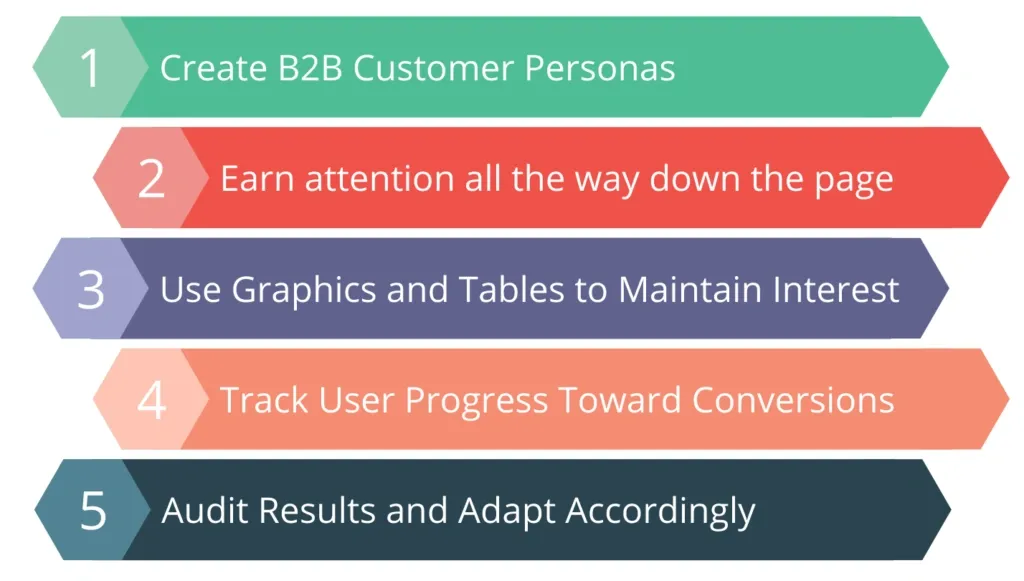
Ground examples show how buyer psychology leads to measurable business outcomes. Specific cases demonstrate that small, psychology-informed changes create the most important conversion improvements.
Case: Changing CTA language to reduce anxiety
B2B purchases naturally create decision anxiety. Companies can improve results by using strategic language that minimizes this concern. An industrial supply company replaced their standard “Request a Quote” button with “See Pricing Options – No Commitment Required.” This simple change addressed buyers’ common fear of getting locked into sales conversations too early. The anxiety-reducing click-trigger boosted conversion rates by 20% by acknowledging customer hesitation.
These click-triggers help reduce B2B buyer anxiety consistently:
- “No credit card required” (for trials)
- “Cancel anytime” (for subscriptions)
- “Next day shipping” (for physical products)
- “30-day money-back guarantee” (risk reduction)
Case: Reordering content to match decision flow
A SaaS platform’s team analyzed their CRO data and noticed users kept scrolling back to find pricing information after viewing features. They arranged the page to show core benefits first, followed by transparent pricing with ROI calculators. This natural arrangement matched visitors’ decision-making process. Lead form submissions increased by 57% because the content followed buyers’ natural thought progression.
Case: Using testimonials to overcome objections
A B2B technology provider’s prospects resisted their premium pricing. Instead of reducing prices, they placed customer testimonials that tackled this concern head-on. These testimonials highlighted measurable ROI and long-term cost savings from implementations. The price objection disappeared quickly. One executive noted: “When prospects see similar companies talking about 40% efficiency improvements, the price objection dissolves almost immediately.”
Another company faced resistance from prospects who already worked with competitors. They featured testimonials only from customers who had used those competing services before. This targeted approach increased registrations by 150% by addressing their buyers’ specific psychological barriers.
What this means for your CRO strategy
Let’s put our understanding of psychology in B2B buying decisions to work and create a practical CRO strategy. Your conversion approach needs systematic implementation that we can refine based on psychological principles.
B2B decisions come from emotions – that’s what the most successful CRO strategies recognize. Studies show emotions drive 95% of purchasing behavior, while logic just helps justify these choices afterward. Your optimization efforts should create emotional connections while providing rational justification.
Each landing page needs one goal per page. Your pages should serve a single purpose that matches specific buyer needs. When you add multiple competing calls-to-action, you create decision paralysis – a choice paradox that hurts conversion.
Your CRO data shows where prospects stop or leave their path. These friction points need immediate attention. The data proves that a one-second delay in page load time can reduce conversions by 7%. Technical performance serves as a psychological trust signal, not just an SEO factor.
The psychological principles should guide your CRO testing protocol:
- Test anxiety-reducing language in CTAs
- Experiment with different social proof placements
- Vary form lengths to find your conversion sweet spot (typically 3-5 fields)
- Implement A/B testing methodically, focusing on one element at a time
Trust factors play a crucial role in conversions. Buyers are twice as likely to pay premium prices when they trust their vendors. You can build credibility through testimonials and case studies that showcase measurable benefits.
Your buyers expect personalization. Research shows 86% of B2B buyers expect organizations to understand their specific needs and priorities. You can make use of AI-powered segmentation to deliver customized experiences that boost conversion rates.
Simple designs and copywriting don’t drive CRO success. The key lies in matching your digital experience with B2B buyers’ decision-making process. A thoughtful mix of psychological principles and continuous testing helps your conversion strategy evolve to meet your buyers’ emotional and rational needs.
FAQs
Q1. How does understanding buyer psychology impact B2B conversion rates?
Understanding buyer psychology is crucial for B2B conversion rates as it helps tailor the buying experience to match decision-making processes. By addressing emotional factors and reducing friction points, businesses can significantly improve their conversion rates and build stronger customer relationships.
Q2. What key insights does CRO data reveal about B2B buyer behavior?
CRO data provides valuable insights into B2B buyer behavior, including patterns in scroll depth and click behavior, common drop-off points in the buyer journey, and user interactions revealed through heatmaps and session recordings. This information helps businesses optimize their websites and content to better align with buyer needs and preferences.
Q3. How can B2B companies use social proof to build trust with potential buyers?
B2B companies can build trust through social proof by showcasing customer testimonials, displaying user statistics, featuring expert endorsements, highlighting media mentions, and emphasizing best-selling products or services. These elements help validate the company’s offerings and reduce perceived risk for potential buyers.
Q4. What strategies can be used to simplify lead capture forms without compromising lead quality?
To simplify lead capture forms while maintaining lead quality, businesses can limit the number of fields to 3-5, make certain fields optional, implement dynamic forms, and use data enrichment to pre-fill information. This approach reduces user effort while still collecting essential information for effective follow-up.
Q5. How can B2B companies tailor their CTAs to match buyer intent?
B2B companies can tailor their CTAs by analyzing intent data from content interactions, search queries, and digital engagement patterns. This allows for personalized CTAs that reference specific content the prospect has consumed and address demonstrated pain points, increasing the likelihood of conversion.

Builds the demand intelligence, automation, and deliverability systems behind Growleads pipeline.