Multi-Touch Attribution Guide: From Confusion to Clarity for B2B Tech
 Multi-touch attribution has become vital for modern marketing teams. About 50% of companies now use it in their strategies. We’ve watched the customer journey become more complex, particularly in B2B tech. Research shows 90% of people who own multiple devices switch between screens to finish tasks. This makes single-touch attribution models fall short.
B2B marketers don’t deal very well with implementing multi-touch attribution modeling, despite its value. The customer’s path to purchase keeps evolving alongside new privacy policies, which creates major hurdles. But the advantages are clear – multi-touch attribution marketing shows you the whole customer experience. It helps calculate ROI better across channels and lets you allocate budgets more intelligently. This piece will help you understand multi-touch attribution clearly. You’ll learn how different attribution models work and discover which tools fit B2B tech marketing needs best.
What is Multi-Touch Attribution and Why It Matters in B2B Tech
Modern data-driven marketing makes tracking purchase decision influences complex. Multi-touch attribution emerges as a marketing approach that credits multiple touchpoints during the customer’s experience. This provides vital insights into campaign effectiveness for channels of all sizes.
Understanding the move from single-touch to multi-touch
Single-touch attribution gives all conversion credit to one interaction, usually the first or last touchpoint. A customer who buys after clicking a Facebook ad means Facebook gets 100% of the credit. This simplification fails to capture modern buying experiences.
Multi-touch attribution values multiple interactions throughout a customer’s path to purchase. A prospect might find your product through Google search, interact with social media, and convert after clicking a display ad. Each of these three touchpoints receives proper credit.
The rise from single-touch to multi-touch attribution mirrors changes in consumer behavior and technology. Customers interact with brands on many devices and channels, which creates complex, non-linear paths to purchase. The key differences include:
- Single-touch models: Target first or last interaction and overvalue activities like paid search
- Multi-touch models: Share credit across multiple touchpoints and acknowledge each step’s value
- Data utilization: Multi-touch uses advanced analytics and machine learning to analyze customer interactions
Companies that implement multi-touch attribution can measure channel performance better, allocate marketing budgets wisely, and make data-driven decisions.
How B2B customer experiences differ from B2C
B2B purchases stand out from B2C transactions in complexity and duration. Research shows 6 to 10 people participate in B2B buying decisions. About 33% of B2B organizations have sales cycles longer than six months. The decision-making process involves more than four stakeholders in 63% of B2B purchases.
B2C transactions might follow a simple path like clicking an Instagram ad and buying right away. B2B journeys include multiple stages: website visits, product reviews, webinar attendance, sales representative interactions, and purchase decisions.
B2B relationships need longer sales cycles, multiple stakeholders, and detailed decision-making processes. Enterprise software purchase decisions take about 17 weeks on average. Implementation requires 6 to 12 more months. This extended timeline creates many touchpoints that shape the final decision.
B2B marketing attribution must recognize business purchasing’s shared nature. B2C targets individual buyers with direct purchasing power. B2B customers want partnerships and tools that fit their specific needs. Some of the most powerful touchpoints happen during phone calls and meetings with team members, interactions that traditional attribution models often miss.
Traditional attribution’s failure in B2B
B2B tech companies find traditional attribution models inadequate. Single-touch and simple multi-touch models oversimplify the customer’s experience. They focus on one or two touchpoints instead of offering a complete view. This narrow approach creates problems when tracking B2B tech purchases that naturally use multiple channels and stages.
Traditional attribution cannot track anonymous browsing behavior. Users often research tools privately, which makes accurate buying journey tracking difficult. Website visitor identification becomes essential because these untrackable touchpoints remain hidden otherwise.
Dark social or dark funnel activity poses another challenge, untracked interactions through Slack, WhatsApp, and direct messages. Team members might share software information via Slack that leads to a purchase. Traditional attribution would likely misattribute this conversion to “Organic Search”.
Multiple stakeholders in B2B create additional complexity. Different roles prefer different channels, technical buyers might want documentation while executives read ROI content. Account-level tracking becomes vital because individual-level tracking creates major blind spots.
Traditional attribution models create data silos and fragmentation. Information spreads across CRM systems, marketing automation platforms, web analytics, and ad platforms. Critical data points get lost between systems. This fragmentation prevents the unified customer journey view that B2B marketing attribution needs.
B2B tech companies now realize they must move beyond traditional attribution. This transformation helps them understand their marketing investments’ true effect and optimize complex customer acquisition processes better.
Exploring the Main Multi-Touch Attribution Models
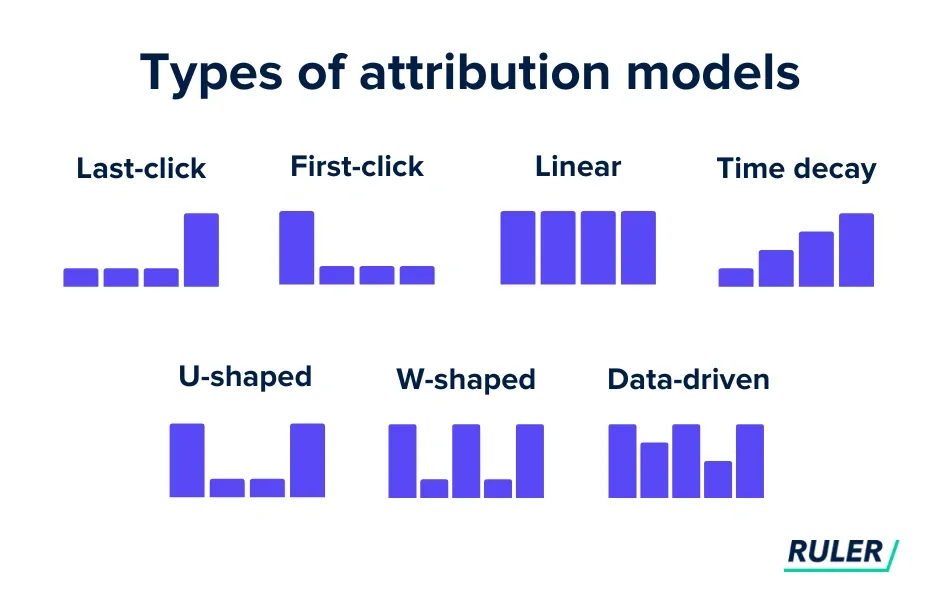
Image Source: Ruler Analytics
Marketing performance measurement and optimization can change dramatically based on the attribution model you choose. B2B tech companies must overcome specific challenges to determine which touchpoints deserve conversion credit. Marketers can make better decisions about resource allocation by understanding the differences between attribution models.
Linear model
The linear attribution model gives equal credit to every touchpoint throughout the customer’s trip. Each interaction receives the same weight regardless of timing, which creates a balanced perspective.
This model works best for B2B companies with longer sales cycles where multiple touchpoints contribute to conversion. Studies show about 25% of marketers choose linear attribution, making it one of the most popular methods.
Benefits of linear attribution:
- Acknowledges all marketing channels equally
- Ideal for B2B go-to-market teams seeking balanced credit distribution
- Perfect starting point for companies new to multi-touch attribution
- Removes bias toward specific funnel positions
All the same, linear attribution has its limits. The model cannot identify the most influential touchpoints, which might result in inefficient budget allocation. Marketing expert Avinash Kaushik raises a valid point: “if [earlier touchpoints] were magnificent, why did they not convert?”
Time decay model
Time decay attribution gives more weight to touchpoints closer to the final conversion. Recent interactions typically influence purchase decisions more than earlier touchpoints, and this model reflects that reality.
Credit diminishes gradually for earlier interactions based on timing. A recent email campaign might receive 50% of the credit, while the original ad might only get 20%.
B2B tech companies with complex sales cycles find this model valuable because final touchpoints often require substantial investment. Companies can identify which channels excel at closing deals rather than just creating awareness.
U-shaped model
The position-based model, also known as U-shaped attribution, allocates 40% credit each to the first and last touchpoints. The remaining 20% gets distributed among middle interactions.
This 40/20/40 split recognizes how brand discovery and final conversion triggers shape customer decisions. The credit distribution creates a “U” shape when graphed, hence its name.
B2B tech companies that invest heavily in both top and bottom-funnel marketing activities prefer this balanced approach. Middle-funnel touchpoints serve as support rather than decisive factors in conversion.
W-shaped model
W-shaped attribution builds on the position-based approach by focusing on three key milestones: first interaction, lead creation, and opportunity creation. Each milestone receives about 30% credit, with other interactions sharing the remaining 10%.
Industry data shows 10.4% of companies use W-shaped attribution because it highlights key conversion points. B2B tech companies with well-defined sales funnels where leads move through clear stages find this model particularly effective.
Key benefits include:
- Enhanced visibility into funnel performance
- Recognition of crucial mid-funnel conversion points
- Precise tracking of important milestones
- Better understanding of which channels excel at specific funnel positions
Companies with longer, complex buying journeys that rely heavily on nurturing activities benefit most from this model.
Custom and algorithmic models
Custom attribution lets marketers control credit distribution based on their specific business needs. Research shows 4.8% of businesses create custom attribution models tailored to their customer journey.
Algorithmic attribution represents the most advanced approach. It uses machine learning and predictive analytics to determine optimal credit distribution. These models learn and adjust continuously based on performance data, unlike rule-based approaches.
B2B tech companies with complex, multi-channel marketing strategies gain several advantages from algorithmic models:
- Adapting to changing customer behaviors automatically
- Removing human bias from attribution decisions
- Analyzing patterns across large datasets
- Uncovering non-obvious relationships between touchpoints
More organizations now move toward custom and algorithmic models as B2B customer journeys become more complex. These flexible approaches overcome the limitations of standardized attribution frameworks.
Benefits of Multi-Touch Attribution for B2B Marketing Teams
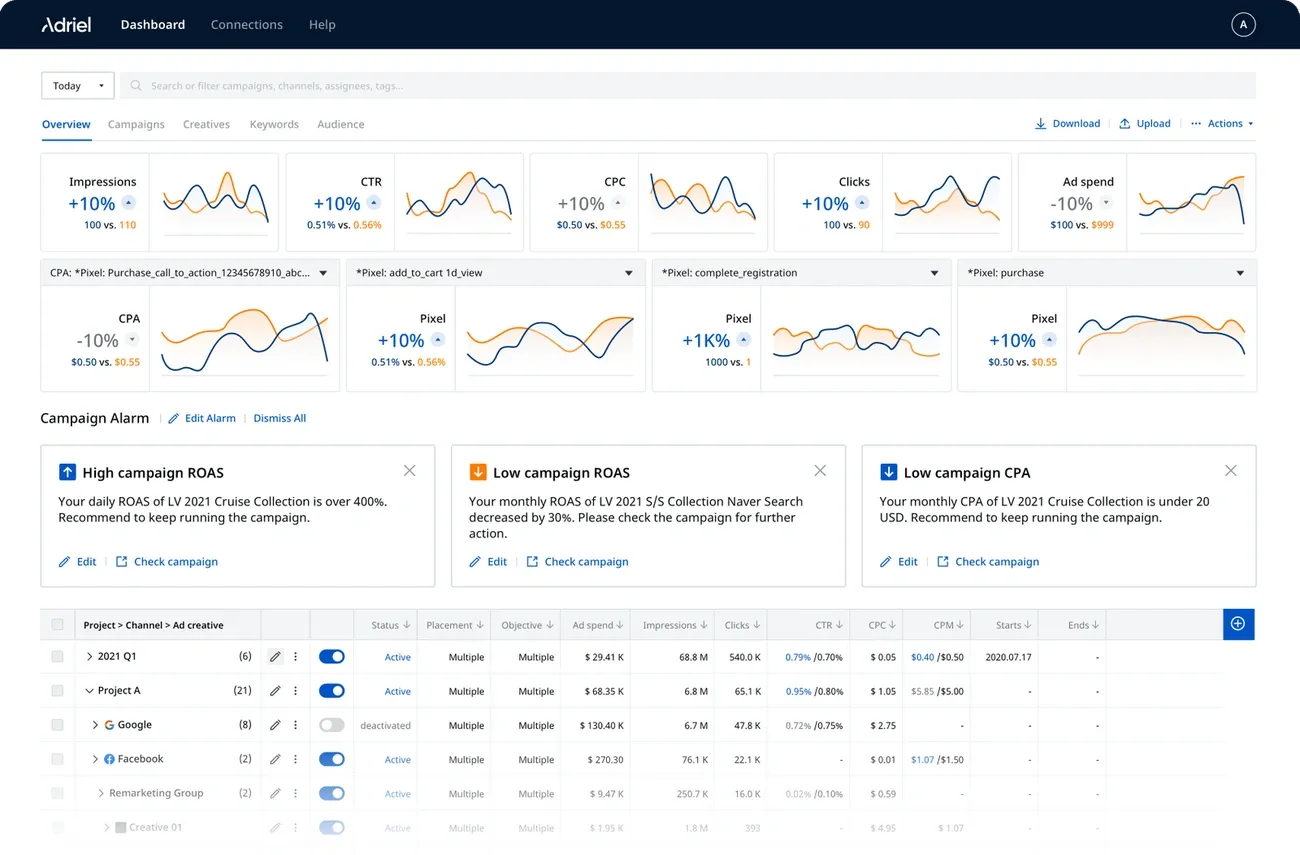
Image Source: Adriel
Multi-touch attribution gives B2B tech companies measurable advantages to maximize their marketing investments. A Nielsen study shows marketing analytics can boost ROI by up to 20%. This sophisticated attribution has become vital for evidence-based teams.
Better budget allocation
Marketing teams know how to optimize their spending through multi-touch attribution based on actual performance data. They can distribute resources strategically instead of relying on gut instincts or outdated assumptions.
Multi-touch attribution shows key insights about channel effectiveness throughout the funnel:
- Channels might provide essential awareness that starts the customer’s trip, even if they seem ineffective in last-click models
- Sub-channels with higher cost-per-lead often deliver better cost-per-deal metrics
- Early-funnel touchpoints deserve investment as they play vital supporting roles, though they rarely get “last click” credit
B2B companies make smarter decisions about resource allocation using attribution data. Marketing teams can expand their event strategy with confidence if attribution shows webinars consistently generate high-quality leads.
Improved lead quality and nurturing
Multi-touch attribution substantially improves lead quality by revealing the touchpoint combinations that create valuable prospects. Marketing teams can tailor strategies that guide prospects from awareness to conversion based on data showing which channels work best at each funnel stage.
Teams can identify engagement patterns that signal higher purchase intent through multi-touch attribution. Marketers prioritize prospects who show behaviors linked to successful deals by analyzing historical conversion patterns. To cite an instance, prospects have a 75% higher chance of converting when they download technical specifications and attend product demos within two weeks.
Marketing teams create personalized content sequences that match actual customer paths rather than assumptions about prospect movement through the funnel.
Cross-functional team alignment
Multi-touch attribution creates a shared language between marketing and sales departments that typically operate separately. LinkedIn reports 87% of sales and marketing leaders say these teams working together drives critical business growth.
Both teams see how marketing efforts contribute to the sales pipeline through attribution data. This encourages mutual understanding and cooperation. Sales teams see which campaigns strike a chord with key accounts while marketing learns which leads close more often. Teams now have a common framework to evaluate success, which helps resolve long-standing tensions.
Attribution data connects departments by providing objective metrics that show marketing’s revenue contribution. Teams can work together on strategic planning and execution with this shared viewpoint.
Enhanced ROI tracking
Multi-touch attribution gives a clearer picture of marketing’s effect on the bottom line. Complex B2B sales processes with long cycles often get missed by traditional methods.
Teams can connect marketing interactions to revenue through multi-touch attribution to:
- Calculate the true ROI of various channels and campaigns
- Identify touchpoint combinations that speed up deals
- Justify marketing investments to stakeholders confidently
- Show marketing’s direct revenue contribution
Marketing performance evaluation has transformed, focusing on business outcomes rather than surface-level metrics like clicks and impressions. B2B marketing attribution shows which activities drive results instead of spreading resources across every channel.
Challenges in Multi-Touch Attribution Modeling
B2B tech companies face several hurdles with multi-touch attribution modeling despite its clear benefits. Companies need to understand these challenges to develop strategies that give accurate insights into marketing performance.
Data fragmentation and silos
Data fragmentation remains a major roadblock to attribution success. Most marketers use six or more different tools to collect performance data. This creates a scattered digital world that makes analysis difficult. Marketing technologies don’t always connect with sales platforms like CRM systems. This disconnect leaves important prospect and customer data isolated.
Companies can’t see the complete picture without proper data integration. IDG Connect research shows 59% of marketers struggle most with accurate data collection and centralization. B2B companies find it hard to link marketing activities to sales outcomes without a complete view of customer interactions.
Different departments might adjust attribution models to protect their budgets. This political aspect often creates attribution conflicts instead of shared insights.
Privacy regulations and cookie loss
Privacy regulations have reshaped the scene dramatically. GDPR, CCPA, and browser technologies like Intelligent Tracking Prevention (ITP) have made user tracking substantially more complex across the web.
These privacy changes affect multi-touch attribution in multiple ways:
- Shortened cookie lifespans (often seven days or less)
- More user opt-outs create incomplete datasets
- Cross-site tracking capabilities disappear
- Customer experience fragments due to consent requirements
B2B marketers now struggle with broken customer experience data, especially during longer sales cycles that last beyond cookie expiration. Many users remain unknown due to privacy settings and ad blockers, even with advanced tracking.
Offline and multi-device tracking gaps
B2B purchase decisions often involve offline interactions that digital attribution tools can’t capture. Standard attribution models miss phone calls, in-person meetings, and trade shows – all vital touchpoints.
Cross-device tracking poses another big challenge. Users switch between devices throughout their purchase experience. This makes it hard to maintain consistent user identities. One source explains, “If users interact with your brand on multiple devices without being logged into their Google accounts, GA4 may treat these interactions as separate users”.
Attribution windows create more complications. Most systems use fixed timeframes (30-90 days). These work well for short sales cycles but miss key early interactions for B2B tech companies with longer buying processes.
Model selection confusion
B2B marketers still find it challenging to pick the right attribution model. Each model has its limits and biases. Organizations often end up with inconsistent methods and metrics because of this confusion.
Complex attribution models make it hard to get everyone on board. Teams struggle to explain sophisticated approaches to stakeholders who have different levels of technical knowledge. This communication gap can weaken trust in attribution insights.
Attribution models work only as well as their input data. Models can mislead marketers instead of showing the path to improvement when they use data that doesn’t match real customer journeys.
How to Overcome Common Attribution Challenges
Attribution problems need systematic approaches instead of quick fixes. Your marketing effectiveness picture becomes clearer when you use these strategies after identifying attribution challenges.
Standardizing data collection methods
Clean, consistent data forms the foundation of successful multi-touch attribution modeling. Your collection methods should:
- Use consistent tracking parameters (like UTM tags) across all marketing channels
- Set clear naming conventions for campaigns across platforms
- Run regular data audits to remove duplicate records
- Create internal guidelines and standards for attribution methodologies
Data governance is vital for standardization. Teams assigned to maintain data integrity prevent attribution manipulation that happens when departments compete for budget. Data management tools streamline collection and integration while keeping quality high.
Integrating online and offline touchpoints
A complete view of the customer’s trip emerges when digital and traditional marketing touchpoints connect. These integration strategies work well:
Call tracking software with unique phone numbers helps attribute offline conversations to specific marketing efforts. QR codes and custom promo codes in print, radio, and TV campaigns can trace offline participation back to online actions.
Customer Data Platforms (CDPs) act as central hubs that consolidate online and offline data into unified customer profiles. These platforms connect previously separate touchpoints and show how online ads might drive in-store purchases or how trade show interactions lead to website conversions.
Choosing the right attribution window
Attribution windows must match your typical sales cycle timeframe for touchpoints to receive proper credit. Standard 30-day windows don’t work for B2B tech companies with long decision times.
Your product type and customer decision-making process should determine your attribution window. High-value B2B tools need 90+ day windows to capture early-stage interactions that shape later decisions. Time decay approaches within these extended windows help give proper weight to touchpoints throughout the trip.
Training teams on attribution tools
The best attribution system needs proper adoption to succeed. These training strategies deliver results:
Clear documentation should explain how attribution models work and how to interpret data. Regular training sessions should focus on practical application rather than theory. Attribution insights should be available and actionable for all stakeholders, from marketing specialists to executive leadership.
Teams speak the same attribution language when you create a culture based on informed decisions. This shared understanding removes guesswork and finger-pointing between departments and creates alignment around marketing performance measurement.
Future of Multi-Touch Attribution in B2B Tech
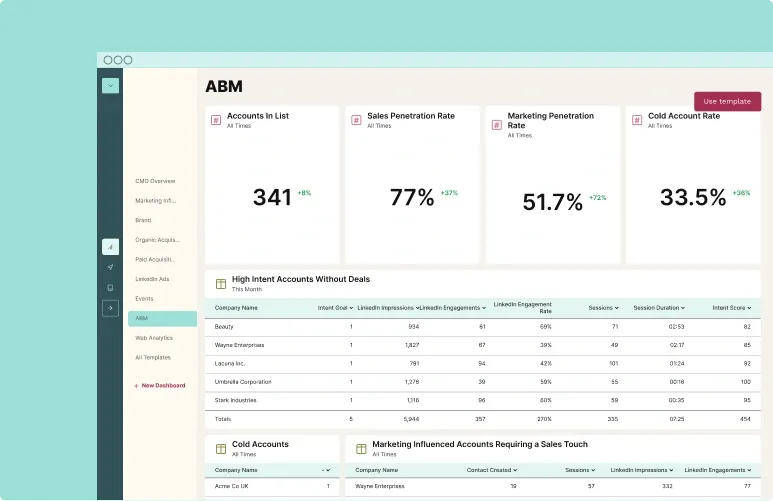
Image Source: HockeyStack
The digital world of multi-touch attribution keeps changing quickly because of new technology and customer behavior patterns. B2B tech companies lead the way by using these state-of-the-art tools to learn about their marketing effectiveness.
AI and machine learning in attribution
Machine learning (ML) has changed how B2B companies look at attribution modeling. These technologies analyze big amounts of customer interaction data to predict future behaviors without explicit programming. ML algorithms boost multi-touch attribution in several key ways:
- They handle complex data sets from multiple customer interactions across channels
- They learn from new data continuously to adjust predictions live
- They find non-linear customer paths that traditional models miss
- They create individual-specific attribution models for specific customer segments
Advanced ML approaches like Markov chain models, survival analysis, and deep learning neural networks give B2B marketers a new way to understand customer behavior patterns.
Rise of first-party data strategies
First-party data attribution has become crucial as third-party cookies face extinction. Marketers can now track conversions using their own CRM data collected through owned channels. Companies that use first-party data strategies have achieved impressive results:
Coca-Cola tracked offline advertising results using loyalty program data, while Airbnb learned about digital campaign performance through platform-collected information. The change toward first-party data brings many benefits including accurate conversion tracking, closed-loop attribution, and deeper audience segment insights.
Real-time attribution and predictive insights
Speed creates competitive advantage in attribution analysis. Live reporting systems help marketers adjust campaigns instantly based on performance data. Predictive modeling helps spot influential touchpoints and forecast conversion likelihood based on customer’s attributes and behaviors.
Integration with CRMs and CDPs
Customer Data Platforms (CDPs) and CRM integration create a clear view of the customer’s path. This integration connects separate touchpoints and shows how different interactions affect conversions. Companies that combine data from multiple sources understand customer behavior better across all touchpoints.
Conclusion
Multi-touch attribution represents the most important rise in how B2B tech companies measure marketing effectiveness. This piece shows how complex B2B purchasing experiences need sophisticated approaches to distribute credit across multiple touchpoints. Moving beyond simple single-touch models helps marketers gain deeper insights into what drives conversions.
Implementing multi-touch attribution offers benefits nowhere near simple coverage. Better budget allocation, improved lead quality, arranged cross-functional teams, and accurate ROI tracking lead to measurably better marketing outcomes. Data fragmentation, privacy regulations, and tracking gaps don’t deal very well with standardized collection methods and thoughtful integration strategies.
AI and machine learning will revolutionize attribution modeling. First-party data strategies become vital in the changing digital world. B2B tech companies that embrace these changes gain tremendous competitive advantages. Companies that implement multi-touch attribution successfully gain visibility into past performance and analytical insights that shape future strategy.
Whatever attribution model you select, moving away from oversimplified approaches captures B2B customer’s complex experiences. Perfect attribution remains an aspirational goal rather than a fully achievable reality. Each step toward sophisticated measurement brings your marketing team closer to utilizing data for decision making.
Track what really drives conversions. ▶︎ Get clarity with growleads.io
FAQs
Q1. What is multi-touch attribution and why is it important for B2B tech companies?
Multi-touch attribution is a marketing approach that assigns credit to multiple touchpoints along the customer journey. It’s crucial for B2B tech companies because it provides a comprehensive view of complex, lengthy sales cycles involving multiple stakeholders and touchpoints, enabling more accurate ROI tracking and smarter budget allocation.
Q2. How does multi-touch attribution differ from traditional single-touch models?
Unlike single-touch models that assign all credit to one interaction (typically first or last), multi-touch attribution distributes credit across multiple touchpoints. This approach better reflects the reality of modern B2B buying journeys, which often involve numerous interactions across various channels before a purchase decision is made.
Q3. What are some common challenges in implementing multi-touch attribution?
Common challenges include data fragmentation across multiple tools, privacy regulations limiting tracking capabilities, difficulties in capturing offline interactions, and confusion in selecting the most appropriate attribution model. These issues can lead to incomplete or inaccurate attribution data.
Q4. How can B2B tech companies overcome attribution challenges?
To overcome attribution challenges, companies can standardize data collection methods, integrate online and offline touchpoints, choose appropriate attribution windows that match their sales cycles, and invest in team training on attribution tools. Additionally, implementing first-party data strategies and using AI and machine learning can enhance attribution accuracy.
Q5. What does the future hold for multi-touch attribution in B2B tech?
The future of multi-touch attribution in B2B tech is likely to involve increased use of AI and machine learning for more sophisticated analysis, a greater focus on first-party data strategies, real-time attribution capabilities, and deeper integration with CRMs and Customer Data Platforms. These advancements will enable more accurate, predictive, and actionable attribution insights.

Builds the demand intelligence, automation, and deliverability systems behind Growleads pipeline.