
What Every B2B Brand Should Know About Sales Process optimization Strategy

B2B sales are set to hit $3 trillion by 2027. This number is almost twice what we saw in 2021, according to Forrester.
Many companies find it hard to get their sales process optimization strategy right, despite this massive chance for growth. Our experience shows how tough it can be to tap into this potential without a well-laid-out sales approach.
Numbers paint a clear picture. Companies that stick to a standard sales process are 33% more likely to perform better. Businesses with formal sales processes grow 28% faster than those that wing it. But all new B2B customer deals except one take at least 4 months to close, and 46% need 7 months or more.
This long timeline makes sales process management crucial. Companies that line up their B2B sales strategy with modern buyer behaviors see impressive results: 7% higher revenue, 11% more representatives hitting targets, 25% more closed deals, and 26% fewer customer losses.
Marketing and sales teams often work in silos. While 82% of C-suite executives think these teams work together well, only 65% of sales professionals share this view. The situation looks worse as 79% of marketing leads never turn into sales because teams don’t nurture them properly.
This piece will head over to proven sales optimization process techniques that can revolutionize your approach. You’ll learn to close more deals and build a system that keeps delivering results in today’s digital world. Let’s explore what makes a sales optimization strategy work in the B2B space.
Understand the B2B Sales Process First
B2B sales optimization requires a deep understanding of its unique nature to create process improvements that work. The B2B sales landscape follows different rules than consumer sales and needs specialized approaches.
What makes B2B sales different from B2C
Professional buyers make rational, strategic decisions in B2B selling rather than emotional ones. Business purchases involve multiple stakeholders, 11 decision-makers per deal on average, sometimes reaching 20. This complex structure creates a very different sales environment.
The global B2B e-commerce market reached USD 9.00,74 trillion in 2023, much larger than the B2C market’s USD 6.4 trillion. These numbers show not just higher prices but larger order quantities that create bigger financial stakes for everyone involved.
B2B relationships aim for the long term instead of one-time transactions. A sales professional puts it simply: “I use a structured sales process with every single client”. This approach shows that B2B customers want strategic collaborations rather than simple product exchanges.
Why sales process optimization matters
Sales process optimization brings science to an otherwise artistic profession. Salespeople value their freedom, but successful ones follow systematic approaches based on evidence-based results.
Companies with optimized sales processes see remarkable results: 7% higher revenue, 11% more representatives meeting targets, 25% more deals closed, and 26% fewer customers lost. These numbers prove that a well-laid-out process boosts your bottom line directly.
A structured sales approach creates consistency across your team. Sales managers can identify bottlenecks, forecast accurately, and set realistic goals. Teams working without structure operate differently, making performance analysis nearly impossible and leaving valuable insights hidden.
How long sales cycles impact strategy
B2B sales cycles shape optimization strategies fundamentally. B2C purchases might happen instantly, but B2B sales cycles stretch across months, sometimes taking a full year. A newer study shows that the average manufacturing sales cycle takes 130 days from first contact to closed deal. The complete buyer trip from original research to purchase averages 379 days, up 16% since 2021.
Long timelines create unique challenges. Deals often slip due to internal bottlenecks, competing priorities, or lack of buy-in. B2B sales teams must evaluate prospects’ needs, authority, budget, and timing to avoid wasting resources on low-probability leads.
B2B sales optimization needs patience and persistence. Research shows that closing a B2B sale takes eight to ten attempts. C-level executives often need 12 to 14 contacts before making a decision. Any B2B sales strategy must handle these longer nurturing periods through automated touchpoints, relationship building, and strategic follow-ups.
Break Down the Sales Process into Key Stages
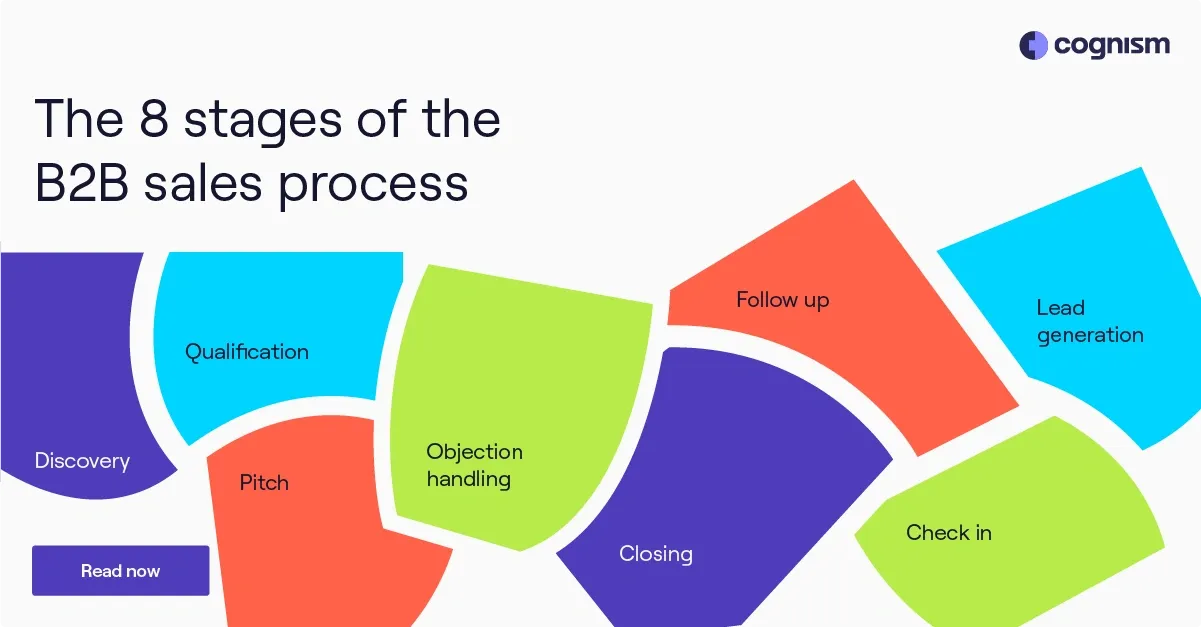 Your sales process optimization strategy works best when you understand each stage of your sales pipeline. A clear map of these stages helps your team spot bottlenecks. Your team can measure conversion rates and make improvements where they count.
Prospecting and lead generation
Every effective B2B sales strategy starts with finding potential buyers who really need what you offer. The original stage needs research into target markets to find promising leads through multiple channels. Sales teams use both online methods (LinkedIn, digital marketing campaigns, email) and offline approaches (conferences, expos, referrals) to find new prospects.
All the same, research shows that 50% of sales time gets wasted on unproductive prospecting. A well-laid-out approach with clear guidelines helps your team avoid this issue. Your team should set daily prospecting goals with specific numbers of calls and emails. This turns prospecting from a random task into a daily habit.
Qualification and discovery
The next vital step after finding potential leads is to figure out if they’re worth your time. Sales representatives connect with prospects during qualification to see if they’re serious buyers. This step matters because 79% of marketing leads never convert to sales.
BANT (Budget, Authority, Need, Timing) or MEDDIC (Metrics, Economic Buyer, Decision Criteria, Decision Process, Identify Pain, Champion) are frameworks many sales teams use to qualify prospects. Good discovery means asking smart questions like “What are your current business growth goals?” or “What are the key challenges you face in your industry?”. These questions show whether your solution lines up with what prospects need.
Pitching and presenting
Your solution presentation comes after qualifying prospects and understanding their needs. A good pitch addresses the prospect’s pain points instead of just listing features. Your product’s problem-solving abilities and concrete results should be the focus to make the biggest effect.
B2B buyers hear dozens of sales pitches each month, so standing out is significant. Your presentations should be brief, about 10-12 slides with 20-30 words per slide works best. Customer testimonials, case studies, and metrics that show your product’s results are a great way to get attention.
Handling objections
The average salesperson hears about 10 objections daily. Here’s something interesting: only 27% of sales representatives can overcome objections effectively. Those who do it well can achieve close rates up to 64%.
Top sales professionals don’t get defensive or rush to offer discounts. They see objections as chances to strengthen their value proposition. The LAER method, Listen, Acknowledge, Explore, Respond, is the quickest way to handle objections:
- Listen actively to understand the concern
- Acknowledge the objection to build trust
- Explore mechanisms with thoughtful questions
- Respond with a tailored solution addressing their specific concern
Closing and follow-up
The closing stage wraps up the deal after handling all objections. This might mean sending a proposal, negotiating terms, or signing contracts. Salesforce reports that 79% of business buyers need a salesperson who acts as a trusted advisor, someone who truly adds value to their business.
Quick follow-up makes a huge difference. Sales people who follow up within an hour are seven times more likely to qualify leads. Most sales need 8-10 follow-up attempts. C-level executives often need 12-14 contacts before deciding. Set up a regular follow-up cadence (like following up 2 days after first contact, then 7 days later) to get the best results.
Where Sales Process Optimization Makes the Biggest Impact
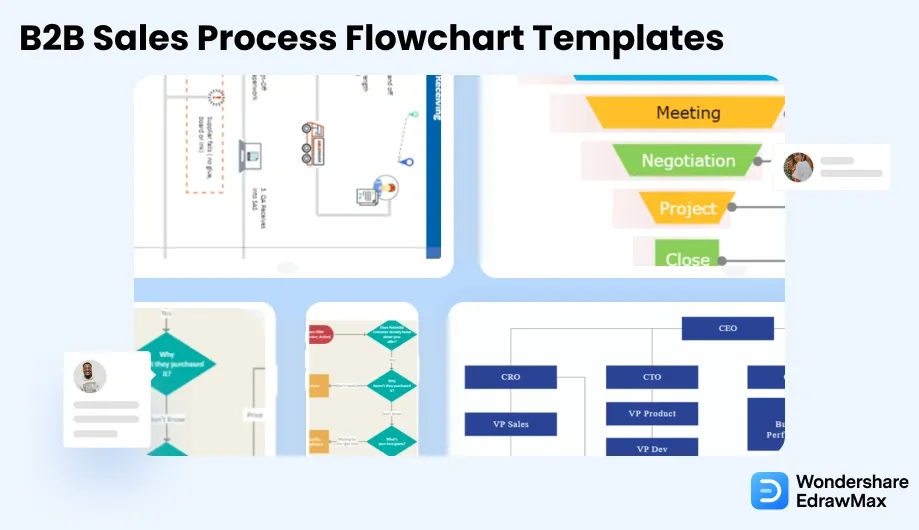
Sales process efficiency depends on identifying the right areas to improve. My work with B2B companies shows four key areas where optimization yields the best returns on investment.
Reducing time spent on unqualified leads
Unqualified leads drain resources in organizations quietly. About 56% of B2B sales organizations never verify leads before sending them to sales teams. The situation looks worse as 61% of B2B marketers send all leads straight to sales, though only 27% qualify. Sales teams waste valuable time on prospects who rarely convert.
Lead qualification criteria based on BANT (Budget, Authority, Need, Timeline) frameworks cut down this waste. Your team’s time with qualified prospects directly boosts your bottom line. A B2B startup found success by narrowing their target from general “B2B startups” to a specific niche. Their qualified lead percentage grew by 18%.
Improving conversion rates at each stage
Each pipeline stage benefits from careful optimization. The average B2B website conversion rate sits between 2-5%, but good optimization can boost it to 10% or higher. Small changes add up fast – a company saw their conversion rate jump 500% by simplifying their form fields.
Successful optimization relies on visitor segmentation, customized experiences, and simple conversion paths. Baymard Institute reports that 22% of customers quit processes they find too complex. Your conversion metrics improve when you remove extra form fields and streamline the buying experience.
Shortening the sales cycle
The B2B sales process takes 25% longer now than five years ago. Sales leaders need to compress these cycles fast. About 43% of them report longer cycle times while only 16% see better results.
A shorter sales cycle brings many benefits: better cash flow, accurate forecasting, and optimal resource use. Companies speed up sales through stakeholder engagement (multithreading), planned conversations with clear goals, and automated repetitive tasks. Efficient sales processes naturally lead to shorter cycles.
Lining up sales and marketing teams
Sales and marketing teams’ misalignment creates big optimization opportunities. The C-suite thinks these teams work well together – 82% believe they’re aligned. Yet 65% of sales and marketing professionals say otherwise. This gap leads to confused lead definitions, pipeline issues, and wasted effort.
Companies with strong sales-marketing alignment close 67% more deals and keep 58% more customers. These teams thrive on shared goals, metrics, and strategies. CRM systems and regular joint planning help build this foundation. Everyone works toward common revenue goals this way.
Tools and Techniques to Improve Sales Process Management

The right tools can turn abstract sales principles into results-driven systems. Here are the technologies that will boost your B2B sales management success.
Using CRM and automation tools
Modern sales optimization starts with a solid CRM system that puts all customer data in one place. Your team can track interactions and see where prospects are in the sales process through this central hub.
Sales analytics connected to your CRM shows live performance tracking and helps you close deals faster by showing pipeline health. Sales AI takes care of routine tasks so your representatives can build relationships instead of entering data.
Sales execution software makes your entire process smooth. It shows your pipeline status, handles repetitive work, and helps speed up deal closure.
Implementing lead scoring systems
Lead scoring ranks prospects by their conversion potential and helps teams focus on promising opportunities. Companies that use this method see up to 70% better lead generation ROI than those who don’t.
Standard lead scoring looks at direct information like industry type, job role, and company size along with behavior data such as website visits and email engagement. Companies with more leads use predictive scoring to find hidden patterns between various factors and results. This automatically calculates scores for new prospects.
The best scoring models use decision tree classification and logistic regression to study past conversion patterns. These scores update automatically in your CRM based on interactions and give live insights to your sales team.
Creating mutual action plans
A mutual action plan (MAP) serves as a shared roadmap between sellers and buyers. It lists all steps needed to move deals forward. The document specifies tasks, timelines, and who’s responsible.
MAPs cut down confusion by creating one source of truth that both sides update regularly. They create urgency through clear responsibilities and connect tasks to ROI. This approach shifts focus from closing sales to delivering value for the client’s organization.
Tracking key sales metrics
The right metrics give a clear view of how individuals and teams perform. Customer acquisition cost (CAC), win rate, and churn rate are crucial indicators.
Sales data becomes valuable when you turn it into action. Clear goals and KPIs help measure success against competitors and spot trends. Connecting metrics across platforms shows the full picture of sales and marketing performance, which guides strategy decisions.
Future-Proofing Your Sales Optimization Strategy
B2B sales is changing faster than ever. Your business needs smart strategies to stay competitive and adapt to new technologies and buyer needs.
Incorporating AI and predictive analytics
AI has altered the map of B2B sales through task automation and better customer insights. Sales teams that use AI tools see amazing results: 50% increase in leads and appointments, 40-60% reduction in costs, and 60-70% decrease in call time. Companies using advanced analytics can improve their EBIT margins by up to 15%. Evidence-based personalization delivers 5-8x ROI on marketing spend.
Your AI integration should focus on these areas:
- Automating CRM updates and routine follow-ups
- Qualifying leads through behavioral analysis
- Forecasting sales outcomes with better accuracy
Predictive analytics boosts decision-making by analyzing past data to spot patterns and predict customer behaviors. These tools help sales teams focus on valuable opportunities and adjust their approach to each client’s needs.
Personalizing outreach at scale
Buyers today expect tailored interactions, with 80% of consumers wanting customized experiences. Email personalization has become a must, not an option. Personalized campaigns drive up to 6x higher transaction rates.
Your personalization strategy should start with your ideal customer profile (ICP). Look at your current customers and focus on the ones who get the most value from your product. Get both numbers-based data (revenue, location, team size) and quality insights (buying processes, motivations, pain points).
Your CRM becomes the central hub to utilize customer data. It stores details about contact interactions, priorities, and decision cycles. You can maximize results by using behavioral, temporal, and contextual personalization based on prospect actions, timing needs, and situations.
Adapting to changing buyer behavior
B2B buying has changed at its core. Buyers now complete 70% of their decision-making process before they talk to sales. 80% of sales interactions will happen through digital channels by 2025.
Digital-first sales enablement has become crucial. Your website, content library, and self-service resources should give complete product insights and verification. Modern buyers want smooth experiences from first contact through after-sale support.
Trust stands above everything else. Buyers have endless choices and rely on peer recommendations, third-party reviews, and real-life success stories to verify decisions. Case studies, testimonials, and transparent practices are now the foundations of sales success.
What B2B Brands Should Take Away
Transforming Your B2B Sales Approach Through Process Optimization
The numbers tell a clear story, companies with optimized sales processes generate 7% higher revenue, close 25% more deals, and keep 26% more customers. This piece explores why strategic sales process management forms the foundations of green B2B growth.
B2B sales operates differently from consumer transactions. Sales cycles run longer and multiple stakeholders make the experience complex. Breaking down your sales process into clear stages, from prospecting to closing, helps you spot where changes will make the biggest difference.
Your immediate focus should be on four key areas: proper lead qualification, better conversion rates at each pipeline stage, shorter sales cycles, and marketing-sales coordination. Small improvements in these vital areas add up quickly over time.
The right tools turn abstract strategies into real results. CRM systems, automation, lead scoring, and mutual action plans cut wasted effort. These tools provide informed insights that help make better decisions.
Looking beyond current solutions reveals emerging trends. AI and predictive analytics reshape B2B sales possibilities. Personalization at scale has become crucial, not optional. Buyer behavior keeps changing too. Self-service research now dominates early purchase decisions.
Sales process optimization builds lasting competitive advantage. A well-laid-out approach backed by technology that matches modern buyer behavior sets your company up for success, whatever market conditions arise. Optimizing your sales process can’t wait until tomorrow, it needs to happen now.
FAQs
Q1. What are the key stages of an effective B2B sales process?
An effective B2B sales process typically includes prospecting and lead generation, qualification and discovery, pitching and presenting, handling objections, and closing and follow-up. Each stage is crucial for moving potential customers through the sales funnel and requires specific strategies for optimization.
Q2. How can sales process optimization impact a B2B company’s performance?
Sales process optimization can significantly improve a B2B company’s performance by increasing revenue, improving conversion rates, shortening sales cycles, and enhancing customer retention. Companies with optimized sales processes often see 7% higher revenue, 25% more closed deals, and 26% fewer lost customers.
Q3. What tools are essential for improving B2B sales process management?
Essential tools for improving B2B sales process management include CRM systems, automation tools, lead scoring systems, and mutual action plans. These tools help centralize customer data, streamline processes, prioritize leads, and create shared roadmaps between sales teams and buyers.
Q4. How is AI transforming B2B sales strategies?
AI is revolutionizing B2B sales by automating routine tasks, providing deeper customer insights, and enhancing decision-making through predictive analytics. Companies implementing AI in their sales processes have seen significant improvements, including a 50% increase in leads and appointments and a 40-60% reduction in costs.
Q5. What should B2B brands focus on to future-proof their sales optimization strategy?
To future-proof their sales optimization strategy, B2B brands should focus on incorporating AI and predictive analytics, personalizing outreach at scale, and adapting to changing buyer behaviors. This includes leveraging data-driven insights, creating customized experiences for prospects, and embracing digital-first sales approaches to meet evolving customer expectations.

Runs the sales process, lead qualification, and client delivery that turn signals into qualified meetings.