What Every B2B Brand Should Know About Lead Generation Companies

You need a steady stream of quality leads to grow your B2B business.
That’s no surprise when about 50% of marketers rank lead generation as their top priority. But here’s the reality, without effective lead generation, your sales pipeline dries up. No leads means no conversions, no customers, and ultimately, your business stagnates.
We’ve watched countless B2B companies transform their growth trajectory with the right lead generation approach. The typical B2B lead generation process typically spans between one and three months, requiring multiple touchpoints before conversion. But don’t let that timeline discourage you, the payoff is worth it.
Just look at the numbers: SEO-generated leads close at an impressive 14.6% rate. Interactive content captures attention 81% more effectively than static materials. And here’s a missed opportunity, only 11% of sales professionals actively ask for customer referrals, even though 92% of consumers trust recommendations from friends.
The real question isn’t whether lead generation matters, it’s how to implement tactics that actually deliver results. Should you build capabilities in-house or partner with specialized lead generation companies? This guide will walk you through everything you need to know about finding and working with the right partner for your specific business needs.
Let’s get started 👇
What do lead generation companies actually do?
Did you know that 85% of B2B marketers consider lead generation their #1 challenge? It’s no wonder so many companies struggle with finding qualified prospects. This is where specialized lead generation companies step in to transform your business development efforts.
Understanding their role in the B2B lead generation process
Lead generation companies aren’t just vendors, they’re strategic partners that identify ideal customers for your product or service and convince them to buy. They fill the crucial gap between your business and potential clients by generating leads with the highest chance of becoming loyal customers.
These specialists make your sales cycle more efficient by zeroing in on the strongest prospects with the best conversion potential. The process usually starts with building awareness and interest through various channels, then capturing contact information via sign-ups, newsletters, or gated content like webinars and ebooks.
But they do more than just find prospects. Lead generation companies help build predictable pipelines that form the foundation for revenue growth. They’ll help with everything from discovering your Total Addressable Market to building brand awareness and providing accurate, up-to-date contact information for leads.
How they differ from internal sales teams
The main differences between outsourced lead generation and in-house teams boil down to specialization, speed, and scalability. Lead generation partners give you immediate access to experienced business development representatives who already know how to generate high-quality leads.
While internal teams might take months to build and train, outsourced agencies can launch campaigns within 14 days and deliver appointments within the first 30 days. Plus, they offer the flexibility to scale efforts up or down without worrying about hiring needs or HR headaches.
From a financial perspective, outsourcing often makes more sense as it eliminates hidden costs of building in-house teams. Lead generation agencies provide management, BDRs, and complete tech stacks all wrapped into a monthly retainer, reducing your expenses by up to 75% compared to in-house solutions.
That said, internal teams do have their advantages, like direct control and deep alignment with company culture. They can develop specialized knowledge tailored to your unique business model over time.
Common services offered by lead gen agencies
Modern lead generation companies do far more than just gather contact information. Their services typically include:
- Market research and analysis to spot trends and potential growth areas
- Email marketing with personalized messaging tailored to specific recipient needs
- Content creation including blog posts, whitepapers, and case studies to position your company as an industry leader
- Social media strategy for platforms like LinkedIn where your B2B prospects hang out
- Lead nurturing through various stages of the sales funnel
- Performance tracking and analysis to continuously improve campaign effectiveness
Many agencies also offer specialized services like appointment setting, where they not only identify prospects but book qualified meetings directly on your calendar. Some provide both outbound tactics (cold calling, email outreach) and inbound methods (content marketing, growth hacking), creating an omnichannel approach to lead generation.
The best lead generation partners tailor their strategies to your specific industry and business goals instead of using one-size-fits-all solutions. This customization ensures that campaigns resonate with your ideal customer profile and bring in the highest quality leads possible.
Types of B2B Lead Generation Companies
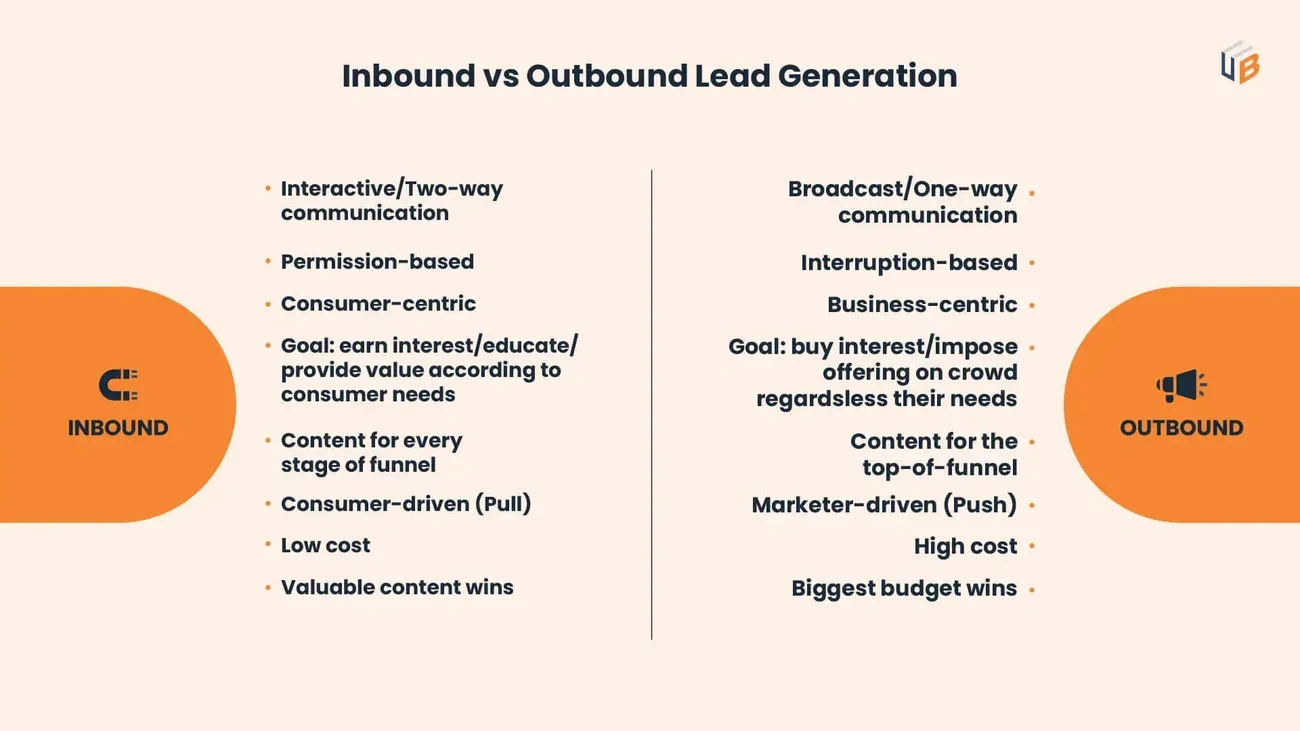
Image Source: UnboundB2B
When shopping for B2B lead generation partners, you’ll quickly discover not all companies offer the same approach or results. Finding the right fit means understanding the fundamental differences in how these companies operate and specialize.
Let me break down the main types so you can make a smarter choice for your business needs.
Outbound-Focused Agencies
These companies take a proactive approach, directly pursuing potential customers on your behalf. Think of them as an extension of your sales team that handles the cold outreach you might not have time for.
Companies like CIENCE Technologies and Belkins excel at outbound strategies including email campaigns, cold calling, and social selling. Their teams typically include dedicated Sales Development Representatives (SDRs) who handle the entire prospecting and qualification process.
Outbound agencies make the most sense when:
- Your internal team is drowning in their current workload
- You need to scale quickly without the headache of hiring
- You’re exploring new markets where you lack connections
For example, Belkins typically delivers between 100-400+ qualified appointments annually through their multi-channel approach. CIENCE offers similar services with specialized databases covering industries from education to financial services and biotechnology.
Inbound Marketing Specialists
Unlike their outbound counterparts, inbound lead generation companies focus on attracting prospects to you. They build systems that generate interest through content marketing, SEO, and strategic social media campaigns.
Companies like Pearl Lemon Leads use these techniques to cultivate warm leads who are already interested in what you offer. The big advantage? You build awareness and credibility, often resulting in warmer, more receptive leads.
The trade-off is time – inbound strategies typically take longer to show results but can deliver higher-quality leads who are already familiar with your brand.
Full-Service Lead Generation Firms
Why choose between inbound and outbound when you can have both? Full-service providers deliver end-to-end solutions covering the entire lead generation spectrum.
Callbox represents this approach well, offering integrated services from data enrichment to lead reactivation and targeted prospecting. Their campaigns typically blend website lead management, content syndication, SEO, and website improvements into a cohesive strategy.
Martal takes it even further by providing both SDRs and Sales Executives for businesses looking to outsource substantial portions of their sales process. These agencies essentially function as your complete external sales department.
Niche or Industry-Specific Providers
Some lead generation companies focus exclusively on particular industries or market segments. Their specialized knowledge can be invaluable when targeting specific sectors.
For instance, Martal Group specializes in generating leads for B2B technology companies within IT, SaaS, and telecom industries, maintaining four curated databases with approximately 100 million contacts. Similarly, Operatix positions itself as a leader in sales development specifically for B2B organizations seeking growth.
Industry-specific providers shine when entering complex markets with unique buying patterns or regulatory considerations. Their specialized expertise often translates to higher conversion rates since they understand the specific pain points and decision processes in your industry.
The best lead generation partner for your business will align with your specific goals, target audience, and preferred sales approach. Understanding these different categories is your first step toward making an informed decision about which type of company best fits your particular needs.
How to evaluate a lead generation company
Finding the right partner for your B2B lead generation strategy isn’t just about picking the company with the fanciest website. With so many options available, you need a systematic approach to identify partners that deliver quality leads, not just high volumes.
Key performance indicators to look for
When evaluating lead generation companies, focus on metrics that measure both quantity and quality:
- Conversion rate: This tells you how effectively a company turns website visitors into interested leads. Higher conversion rates suggest their messaging actually resonates with your target audience.
- Cost per lead (CPL): Calculate this by dividing your marketing costs by the number of leads generated. If your CPL is higher than industry standards, something’s not working efficiently.
- Lead-to-customer conversion: This directly shows a company’s ability to generate qualified leads who actually buy your products or services.
- Customer lifetime value (CLV): Know your average CLV before planning campaign budgets. If your customers stick around and spend a lot, it makes sense to invest more in acquiring each new lead.
Questions to ask during the vetting process
During your evaluation, don’t be shy about asking tough questions:
“How do you define and qualify leads?” This reveals whether their qualification criteria match your expectations. Follow up by asking about their average conversion rates and how they ensure leads fit your qualification criteria.
“What dashboards, reports, and analytics will be provided?” Robust reporting isn’t optional, it’s essential. Ask specifically about metrics like lead quality, response rate, and downstream conversion events.
“How do you stay compliant with privacy regulations?” With today’s strict data protection laws, understanding their compliance with GDPR and CCPA is non-negotiable.
Red flags to avoid
Watch out for these warning signs that should send you running:
Any company promising a specific number of leads each month is likely overselling. Lead generation isn’t a perfect science, and quality matters more than quantity.
Be suspicious of vague information about lead sourcing methods. Transparency about data gathering processes is essential for building trust.
If a company can’t show you solid performance tracking and reporting capabilities, how will you know if you’re getting your money’s worth?
Finally, ask for case studies relevant to your industry. No case studies? That usually means either lack of experience or poor results they’d rather not showcase. Request specific metrics like lead volume, conversion rates, and revenue impact for clients similar to your business.
With these evaluation tools in your arsenal, you’ll be better equipped to find a lead generation partner that delivers real business results, not just empty promises.
Best practices for working with a lead generation partner
“Make a customer, not a sale.”
, Katherine Barchetti, Retail entrepreneur and customer service expert
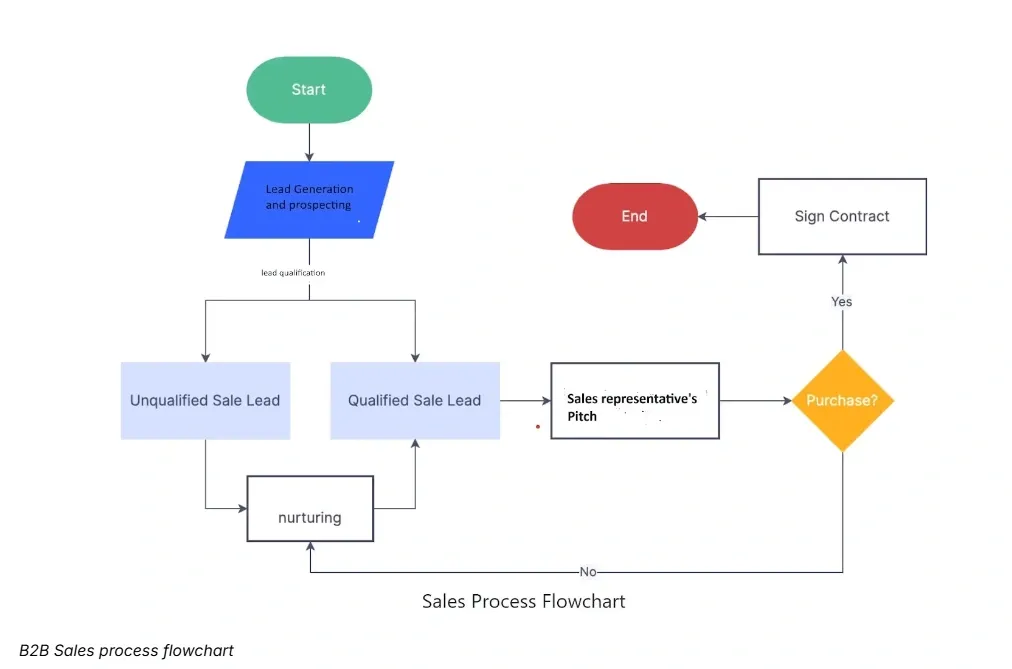
Image Source: Lyzr AI
“Make a customer, not a sale.”
, Katherine Barchetti, Retail entrepreneur and customer service expert
Finding the right lead generation company is just the first step. Making this partnership actually work takes strategic alignment, clear communication, and seamless integration with your existing systems.
Aligning on your B2B lead generation strategy
Want your partnership to succeed? Start by getting crystal clear on who your ideal customer really is. Sit down with your lead gen partner and define your Ideal Customer Profile (ICP) in detail, demographics, firmographics, needs, and pain points. This ensures both teams are hunting for the same prospects with a shared definition of what success looks like.
Remember, even the most experienced provider will face unique challenges with your specific market. Be ready to navigate this learning journey together, treating it as a collaborative process where you both gain valuable insights.
Setting clear expectations and goals
Don’t leave success to chance. Work with your lead generation partner to establish measurable goals and KPIs from day one. These might include lead volume, quality benchmarks, conversion rates, or specific revenue targets. When both sides understand exactly what you’re trying to achieve, you’ll see much better alignment.
Be explicit about which types of leads are most valuable to your sales process and your expected timeline for results. Did you know that B2B Sales Reps spend approximately 21% of their time (8.4 hours weekly) researching leads? That’s equivalent to 2.5 months annually. A good lead gen partnership should dramatically reduce this wasted time.
Maintaining communication and feedback loops
Consistency is key here. Set up a regular schedule of updates and review sessions, this keeps both teams aligned on goals and strategies. These meetings aren’t just checkboxes; they’re opportunities to discuss performance and make quick adjustments when needed.
Create systematic feedback channels between your in-house sales team and the outsourced lead generation team. This structured approach ensures continuous learning and helps refine lead qualification criteria over time.
Integrating with your CRM and sales process
Your lead generation efforts should seamlessly connect with your existing sales tools. Good lead gen software makes it easy to track where leads come from, which is essential for identifying which marketing campaigns actually deliver results.
Make sure your lead generation partner’s technology integrates with your CRM system. This integration creates a unified lead-to-customer view that maximizes efficiency and conversions. When everyone can see the complete journey, from first touch to closed deal, you’ll streamline follow-up and gain critical behavioral insights about your prospects.
When to consider outsourcing lead generation
Timing is everything when it comes to partnering with lead generation companies. The right moment can mean the difference between steady growth and stalled revenue. As your business evolves, watch for these key indicators that signal it’s time to bring in outside help.
Signs your internal team is stretched
Your sales team might be drowning in prospecting tasks without you even realizing it. Here are the warning signs to watch for:
- Your sales reps spend about 21% of their time (8.4 hours weekly) researching leads, that adds up to 2.5 months annually
- You’re seeing diminishing returns despite putting more effort into your current strategy
- Your marketing and sales teams can’t effectively connect with your target audience due to bandwidth limitations
- Buyer interest remains low despite your best internal efforts
When these red flags start appearing, it’s probably time to consider how outside expertise could breathe new life into your lead generation approach.
Scaling quickly without hiring
Outsourcing gives you incredible flexibility without the headaches of expanding your workforce. Consider this: hiring and training a new employee costs over $400,000 on average, not including salaries and benefits. Plus, full onboarding takes at least 90 days.
Compare that to outsourced lead generation, where you get immediate access to skilled professionals who can launch campaigns within 14 days and start delivering appointments within a month. This approach provides variable capacity to handle ups and downs in demand throughout your sales cycles.
Entering new markets or verticals
Moving into unfamiliar territory? This is a perfect scenario for bringing in specialized lead generation support. External providers significantly speed up your market entry process, giving you a competitive edge by capturing market share before your competitors can react.
These specialists know how to navigate local nuances and regulatory landscapes, allowing you to test new markets with minimal risk. Instead of committing major resources upfront, you can explore potential territories with part-time BDRs calling into test markets for just a few months.
The sweet spot for outsourcing lead generation is when you’re seeing some traction with new initiatives and have your messaging properly positioned. At this point, outside help can amplify what’s already working rather than trying to fix what’s broken.
What do lead generation companies actually do?
B2B lead generation is a major headache for most marketing teams, 85% of B2B marketers rank it as their #1 challenge. This is exactly where specialized lead generation companies step in to transform your business development efforts.
Understanding their role in the B2B lead generation process
Lead generation companies serve as strategic partners that identify ideal customers for your product or service and convince them to buy. They bridge the gap between your business and potential clients by finding leads most likely to become loyal customers.
These specialized firms make your sales cycle more efficient by focusing on prospects with the highest conversion potential. The process typically starts with creating awareness through various channels, then capturing contact information via sign-ups, newsletters, or gated content like webinars and ebooks.
Beyond just finding prospects, lead generation companies help build predictable pipelines for steady revenue growth. They assist with everything from mapping your Total Addressable Market to building brand awareness and providing accurate, up-to-date contact information.
How they differ from internal sales teams
The difference between outsourced lead generation and in-house teams comes down to three factors: specialization, speed, and scalability.
First, lead generation partners give you immediate access to experienced business development representatives who already know how to generate quality leads.
Unlike internal teams that might take months to build and train, outsourced agencies can launch campaigns within 14 days and deliver appointments within the first month. They also provide the flexibility to scale efforts up or down without worrying about hiring or HR costs.
Financially, outsourcing often makes more sense as it eliminates hidden costs of building in-house teams. Lead generation agencies provide management, BDRs, and complete tech stacks all included in a monthly retainer, reducing your expenses by up to 75% compared to in-house solutions.
That said, internal teams offer advantages like direct control and alignment with company culture. They can develop specialized knowledge tailored to your unique business model over time.
Common services offered by lead gen agencies
Modern lead generation companies provide services that go far beyond just gathering contact information. These typically include:
- Market research and analysis to identify trends and potential growth areas
- Email marketing with personalized messaging tailored to specific recipient needs
- Content creation including blog posts, whitepapers, and case studies to position your company as an industry leader
- Social media strategy for platforms like LinkedIn where your B2B prospects are active
- Lead nurturing through various stages of the sales funnel
- Performance tracking and analysis to continuously improve campaign effectiveness
Many agencies also offer appointment setting, where they not only identify prospects but book qualified meetings directly on your calendar. Some provide both outbound tactics (cold calling, email outreach) and inbound methods (content marketing, growth hacking), creating a multi-channel approach to lead generation.
The best lead generation partners tailor their strategies to your specific industry and business goals rather than applying one-size-fits-all solutions. This customization ensures that campaigns resonate with your ideal customer profile and generate high-quality leads.
Types of B2B lead generation companies
Not all lead generation companies are created equal. Finding the right partner means understanding the fundamental differences in their approaches and specializations. Let’s break down the main types and how they might align with your business goals.
Outbound-focused agencies
Outbound lead generation agencies focus on proactive prospect identification and direct outreach. These companies excel at cold outreach tactics and appointment setting, essentially functioning as an extension of your sales department.
Companies like CIENCE Technologies and Belkins specialize in outbound strategies including email campaigns, cold calling, and social selling. Their teams typically include dedicated Sales Development Representatives (SDRs) who handle prospecting, lead scoring, and qualification.
Outbound agencies work particularly well when:
- You need to scale quickly without internal hiring
- Your sales team lacks bandwidth for prospecting
- You’re entering new markets that require specialized expertise
For example, Belkins delivers between 100-400+ qualified appointments annually through tailored omnichannel strategies. Similarly, CIENCE provides robust outbound SDR solutions with curated lead databases for various industries from education to financial services to biotechnology.
Inbound marketing specialists
Inbound lead generation companies focus on attracting potential customers through content marketing, SEO, and social media strategies. Unlike outbound agencies, they create systems that bring leads to you rather than actively pursuing prospects.
Companies like Pearl Lemon Leads use content marketing, SEO, and social media to cultivate warm leads genuinely interested in your offerings. These specialists design campaigns that build brand awareness while simultaneously generating qualified inquiries.
Inbound specialists typically require longer timeframes to deliver results but often produce higher-quality leads. You build awareness and credibility, often resulting in warmer, more receptive leads.
Full-service lead generation firms
Full-service providers deliver end-to-end solutions covering both outbound and inbound methodologies. These comprehensive agencies handle everything from finding prospects to setting up sales meetings, allowing your team to focus primarily on closing deals.
Callbox represents this category, offering integrated services including data enrichment, lead reactivation, and targeted prospecting. Their approach typically combines website lead management, content syndication, on-page SEO, and website revamps into cohesive campaigns.
Martal exemplifies another full-service option, providing both SDRs and Sales Executives for businesses looking to outsource substantial portions of their sales process. These agencies essentially function as complete external sales departments.
Niche or industry-specific providers
Specialized lead generation companies focus exclusively on particular industries or market segments. Their deep understanding of specific sectors allows them to deliver highly relevant prospects within narrow target markets.
For example, Martal Group specializes in generating leads for B2B technology companies within IT, SaaS, and telecom industries, maintaining four curated databases with approximately 100 million contacts. Likewise, Operatix positions itself as a global leader in sales development specifically for B2B organizations seeking growth.
Industry-specific providers offer valuable advantages when entering complex markets with unique buying patterns or regulatory considerations. Their specialized expertise typically translates to higher conversion rates since they understand industry-specific pain points and decision-making processes.
The most effective lead generation partner aligns with your specific business goals, target audience, and preferred sales approach. Understanding these distinct categories helps you make informed decisions about which type of lead generation company best suits your particular needs.
How to evaluate a lead generation company
Choosing the right partner for your B2B lead generation strategy requires thorough evaluation. With so many options available, understanding key metrics and asking the right questions will help you identify a company that delivers quality leads rather than just high volumes.
Key performance indicators to look for
When evaluating lead generation companies, focus on metrics that measure both quantity and quality:
- Conversion rate: This fundamental metric shows how effectively a company turns casual visitors into interested leads. Higher conversion rates suggest their messaging resonates with your target audience.
- Cost per lead (CPL): Calculate this by dividing your marketing costs by the number of leads generated. A higher-than-normal CPL for your industry often indicates room for improvement.
- Lead-to-customer conversion: This directly reflects a company’s ability to generate qualified leads who actually purchase your products or services.
- Customer lifetime value (CLV): Understanding your average CLV is essential when planning campaign budgets. If your CLV is high, allocating more resources toward generating each new lead makes sense.
Questions to ask during the vetting process
During your evaluation process, ask potential partners:
“How do you define and qualify leads?” This reveals whether their qualification criteria align with your expectations. Subsequently, inquire about their average conversion rates and how they ensure leads match your qualification criteria.
“What dashboards, reports, and analytics will be provided?” Robust reporting should be a key deliverable from any partner. Additionally, ask about metrics like lead quality, response rate, and downstream conversion events.
“How do you stay compliant with privacy regulations?” With today’s stringent data protection laws, understanding their compliance with GDPR and CCPA is non-negotiable.
Red flags to avoid
Be wary of providers who make unrealistic guarantees. Any company promising a specific number of leads each month should raise immediate concerns. Look out for vague or non-existent information about lead sourcing methods – transparency about data gathering processes is essential.
Lack of performance tracking and reporting is another major warning sign. You can’t determine if services are delivering value without tracking results and the exact dollar value they bring to your business.
Finally, consider their track record and case studies. The absence of case studies indicates either lack of experience or reluctance to showcase actual achievements. Request specific metrics like lead volume, conversion rates, and revenue impact for clients in your industry.
With these evaluation criteria in mind, you’ll be better positioned to select a lead generation partner that aligns with your business objectives and delivers measurable results.
Best practices for working with a lead generation partner
“Make a customer, not a sale.”
, Katherine Barchetti, Retail entrepreneur and customer service expert
Successful partnerships with lead generation companies require more than just selecting the right provider. Maximizing your investment demands strategic alignment, clear communication, and seamless integration with your existing systems.
Aligning on your B2B lead generation strategy
The foundation of any successful outsourced lead generation campaign begins with a clear understanding of your ideal customer. Work closely with your partner to define your Ideal Customer Profile (ICP) in detail, including demographics, firmographics, needs, and pain points. This collaborative definition ensures both teams pursue the same objectives with a mutual understanding of what success looks like.
First, acknowledge that despite a provider’s experience, every client and market brings unique challenges. Be prepared to navigate this learning journey together, viewing it as a collaborative process where both parties gain insights.
Setting clear expectations and goals
Establish measurable goals and key performance indicators (KPIs) in partnership with your lead generation company. These might include lead volume, lead quality, conversion rates, or specific revenue targets. Clear objectives set the foundation for success and alignment between your business and the outsourced partner.
Moreover, discuss the types of leads most valuable to your sales process and expected timeline for results. According to Salesforce, B2B Sales Reps spend approximately 21% of their time (8.4 hours weekly) researching leads, equivalent to 2.5 months annually. Effective partnerships can dramatically reduce this time investment.
Maintaining communication and feedback loops
Commit to a structured schedule of updates and review sessions. This consistency ensures both teams remain aligned on goals and strategies. Regular meetings provide a forum to discuss performance and make informed adjustments.
Develop systematic feedback mechanisms between your in-house sales team and the outsourced lead generation team. This structured approach ensures continuous learning, leading to refinement of lead qualification criteria.
Integrating with your CRM and sales process
Good lead generation software should facilitate easy tracking of sources of leads, essential for identifying which marketing campaigns are working. Therefore, ensure your lead generation partner’s technology integrates seamlessly with your CRM system.
Ultimately, this integration delivers a unified lead-to-customer view that maximizes efficiency and conversions. Everyone gains complete visibility into lead origin, activities, and deal progress from first touch to close, streamlining follow-up and providing critical behavioral data.
When to consider outsourcing lead generation
Knowing exactly when to partner with lead generation companies can make the difference between steady growth and stalled revenue. As your business expands, certain indicators signal the perfect timing for outsourced lead generation.
Signs your internal team is stretched
Recognizing when your team has reached capacity is crucial for maintaining momentum in your B2B lead generation process. Key indicators include:
- Your sales representatives spend approximately 21% of their time (8.4 hours weekly) researching leads, equivalent to 2.5 months annually
- Your current strategy shows diminishing returns despite increased effort
- Your marketing and sales teams struggle to connect with your target audience due to capacity constraints
- You notice low buyer interest despite your best internal efforts
Once these warning signs appear, it’s time to consider how external expertise might reinvigorate your lead generation tactics.
Scaling quickly without hiring
Outsourcing provides remarkable flexibility without the burden of expanding your workforce. Consider that hiring and training a new employee costs over $400,000 on average, not including salaries and benefits. Plus, fully onboarding takes at least 90 days.
In contrast, outsourced lead generation delivers immediate access to skilled professionals who can launch campaigns within 14 days and begin delivering appointments within 30 days. This approach gives you variable capacity to handle sudden changes in demand throughout your sales cycles.
Entering new markets or verticals
Expanding into unfamiliar territory represents an ideal scenario for enlisting specialized lead generation support. External providers accelerate your market entry process significantly, giving you a competitive edge by capturing market share before your rivals.
These specialists navigate local nuances and regulatory landscapes effectively, allowing you to test new markets with minimal risk. Instead of committing substantial resources upfront, you can explore potential territories with part-time BDRs calling into test markets for just a few months.
Overall, the best time to outsource lead generation aligns with when you’re seeing traction in new initiatives and have positioned your messaging effectively.
Conclusion
Partnering with the right lead generation company can transform your B2B growth trajectory. Throughout this guide, we’ve explored how specialized agencies bridge the crucial gap between your business and potential clients, whether through outbound tactics, inbound strategies, or comprehensive approaches tailored to your specific industry.
The decision to outsource lead generation is strategic, not just tactical. Your business might benefit most from external expertise when your sales team spends too much time researching prospects, when entering unfamiliar markets, or when scaling operations without expanding headcount. These partnerships give you the flexibility to adapt quickly to market changes while keeping focus on your core business.
Success with lead generation partners depends heavily on establishing clear expectations from day one. Take time to define your ideal customer profile together, set measurable KPIs, and ensure seamless integration with your existing CRM systems. Regular communication channels that facilitate continuous feedback between your internal team and external partners are essential.
Remember that quality matters more than quantity when evaluating potential lead generation companies. Examine their track record, ask pointed questions about their qualification process, and watch for red flags like unrealistic guarantees or vague sourcing methods. The right partner will be transparent about their methods while delivering measurable results that align with your specific business goals.
The B2B lead generation landscape continues to evolve rapidly. Companies that effectively combine specialized external expertise with their internal strengths position themselves to capture market share ahead of competitors while building sustainable revenue pipelines. The investment in finding the right lead generation partner today will pay dividends in accelerated growth tomorrow.
Ready for more leads? Visit GrowLeads.io now to transform your strategy!
FAQs
Q1. What exactly do B2B lead generation companies do?
B2B lead generation companies identify and attract potential customers for your business. They use various strategies like market research, email marketing, content creation, and social media campaigns to generate qualified leads that are most likely to convert into customers.
Q2. How do lead generation companies differ from internal sales teams?
Lead generation companies offer specialized expertise, faster implementation, and scalability without the need for hiring and training. They can often launch campaigns within two weeks and deliver results within a month, whereas building an internal team may take several months.
Q3. When should a company consider outsourcing lead generation?
Companies should consider outsourcing when their internal team is stretched thin, they need to scale quickly without hiring, or when entering new markets. Signs include sales reps spending excessive time researching leads or diminishing returns on current strategies.
Q4. What are the key performance indicators to look for when evaluating a lead generation company?
Important KPIs include conversion rate, cost per lead, lead-to-customer conversion rate, and customer lifetime value. These metrics help measure both the quantity and quality of leads generated by the company.
Q5. How can businesses ensure successful collaboration with a lead generation partner?
Success depends on aligning on strategy, setting clear expectations and goals, maintaining regular communication, and integrating the partner’s processes with your CRM and sales systems. It’s crucial to define your ideal customer profile and establish measurable KPIs from the start.

Builds the demand intelligence, automation, and deliverability systems behind Growleads pipeline.