
SEO Basics for B2B SaaS Startups: A Beginner’s Guide That Actually Works (2026)

Many SaaS companies pour resources into ads and outbound sales but overlook SEO basics for B2B SaaS startups. This oversight means missing opportunities that could accelerate sustainable growth.
Your SaaS website probably has just a few content pages, which means you’re missing out on valuable Google ranking opportunities and market potential. Building a strong SEO presence creates lasting online visibility that attracts organic traffic and qualified leads consistently. Paid advertising might give quick results, but SEO delivers long-term value.
Small B2B marketing teams often find SEO daunting as they balance multiple priorities. The results make it worthwhile though – websites typically see improvements within 3-6 months. Competitive keywords might take 12+ months to rank well. Your competitors might spend heavily on temporary visibility, but you’ll build a foundation of evergreen content that ranks steadily. This ensures your business stays visible now and in the future.
B2B SaaS SEO differs from conventional approaches. Successful strategies don’t start with keyword research – they begin by answering real customer questions. This piece shows you how to implement SEO that works for your startup. The focus stays on quality leads and conversion rates instead of vanity metrics.
Want to reduce your reliance on paid ads and attract the right audience organically? Let’s tuck into practical SEO techniques crafted specifically for B2B SaaS companies.
Why SEO Matters for B2B SaaS Startups
“If your B2B SaaS business doesn’t appear in those initial results, you’re losing out on a huge chunk of revenue.”, MADX Digital Editorial Team, B2B SaaS SEO Agency
B2B SaaS companies don’t invest enough in SEO. They put less than 10% of their marketing budgets into organic strategies. Research shows SEO brings better long-term ROI than other channels. This gap creates a weak spot in your growth strategy that your competitors might already use to their advantage.
The cost of ignoring organic growth
Let’s look at a typical SaaS company with 50,000 yearly website visitors. If 5% become MQLs and 20% turn into customers at $500,000 ACV, not having SEO means losing about $2.5 million in yearly revenue. This isn’t just a number on paper, it’s real money your business loses every day.
The money impact gets bigger when you learn about customer acquisition costs. Companies without SEO spend 2.5 times more on paid ads to make up for missing organic traffic. SEO needs $5,000-$10,000 monthly to start, while paid channels need $15,000-$25,000 monthly for similar traffic. Paid channels also bring fewer conversions.
Putting off SEO creates a snowball effect. Your competitors build their organic presence and the gap gets wider. This makes future SEO work harder and more expensive. Fixing neglected SEO costs over $100,000 in just the first year.
Your brand becomes less visible beyond the lost revenue. You miss chances to rank for key terms, and potential customers might never find your solution. This happens even if your product perfectly fits their needs.
How SEO supports long-term lead generation
SEO brings real business results. It’s the top source of new leads for 43.4% of B2B SaaS companies. Paid ads stop working when you stop paying, but good SEO builds a steady stream of leads that keeps flowing long after you set it up.
SEO leads are better quality too. They cost 61% less than paid ad leads and often convert faster because people actively looked for a solution and found you. These leads convert better, 14.6% for organic traffic versus 1.7% for paid ads.
B2B buyers search for answers using specific “long-tail keywords.” These phrases might get fewer searches, but they attract people who know what they want. You reach potential customers at the perfect moment in their buying process by optimizing for these terms.
SEO helps your entire marketing system work better. Content that ranks well makes your social media, email campaigns, and sales talks more effective. Your paid ads work better too, thanks to what you learn from SEO research.
Your SEO investment grows over time. Each piece of optimized content keeps bringing traffic months or years later. This steadily lowers your customer acquisition costs while keeping qualified leads coming in.
Understanding the Basics of SEO for B2B SaaS
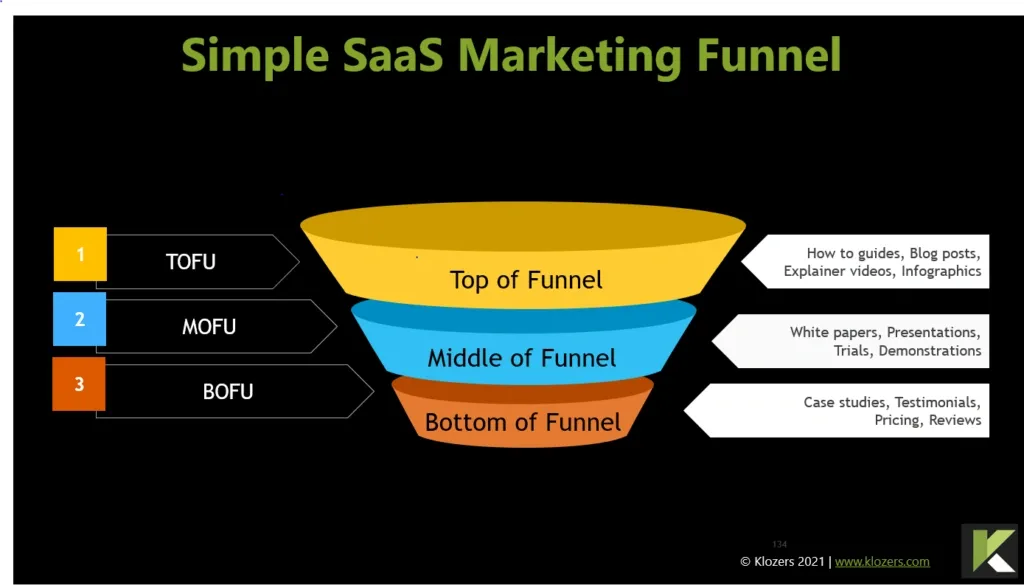
B2B SaaS SEO differs from traditional search optimization. You won’t find local business rankings or e-commerce product listings here. The focus lies on marketing software solutions to business audiences through extended sales cycles with technical decision-makers.
What is B2B SaaS SEO?
B2B SaaS SEO optimizes your software-as-a-service website to boost its visibility on search engines like Google and Bing. This targeted approach draws qualified leads through organic search and supports customers throughout their journey, from acquisition to retention.
To build a strong foundation, understanding B2B SaaS SEO is essential for aligning your content strategy with long sales cycles and high-intent buyer journeys.
B2B SaaS SEO targets multiple company decision-makers instead of individual consumers, unlike consumer-focused SEO. So, your content needs to speak to different personas, roles, and search requirements at once.
B2B SaaS SEO includes three core areas:
- On-page optimization: Meta titles, headers, keyword research, and content production
- Off-page optimization: Link building, social signals, and digital PR
- Technical optimization: Site speed, mobile responsiveness, indexability, and crawlability
The goal goes beyond just traffic, it’s about conversion. Research shows organic search leads have a 14.6% close rate, substantially higher than outbound leads.
How search engines assess your site
Search engines have changed how they assess B2B SaaS websites over the last several years. These ranking signals matter most in 2025:
E-E-A-T (Experience, Expertise, Authority, Trustworthiness) is vital, Google rewards websites that show firsthand experience and deep expertise. Content that displays authority and fact-checking performs better than generic blogs.
Core Web Vitals remain key ranking factors. Page speed, mobile usability, and interactivity directly affect your rankings. Sites with uninterrupted user experiences rank higher consistently.
Fresh content matters more than ever. Search engines favor up-to-date content, which means you need regular updates to older resources to stay relevant and authoritative.
Internal and external links help Google understand your site structure. Backlinks from authoritative sites boost your credibility, both essential for building topical authority in your niche.
The role of search intent in SaaS SEO
Search intent reveals why users make specific queries. Google’s main goal now is to identify and meet this intent.
B2B SaaS search intent typically falls into four categories:
Informational intent: Users want knowledge (e.g., “What is CRM software?”). These searchers need educational content that builds awareness.
Navigational intent: Users search for specific brands or sites (e.g., “HubSpot CRM”). They need content that helps with brand navigation.
Commercial investigation: Users compare options (e.g., “HubSpot vs. Salesforce”). They need content to assess alternatives.
Transactional intent: Users ready to act (e.g., “best small business CRM pricing”). These high-intent searches need conversion-optimized content.
Your content must match these intent types. Research shows Ahrefs boosted organic traffic to their core landing page by 677% in six months by matching content with search intent.
Your SaaS startup should focus on transactional and commercial investigation keywords. These keywords show higher buyer intent and deliver better conversion rates.
Building a Keyword Strategy That Aligns with the Funnel
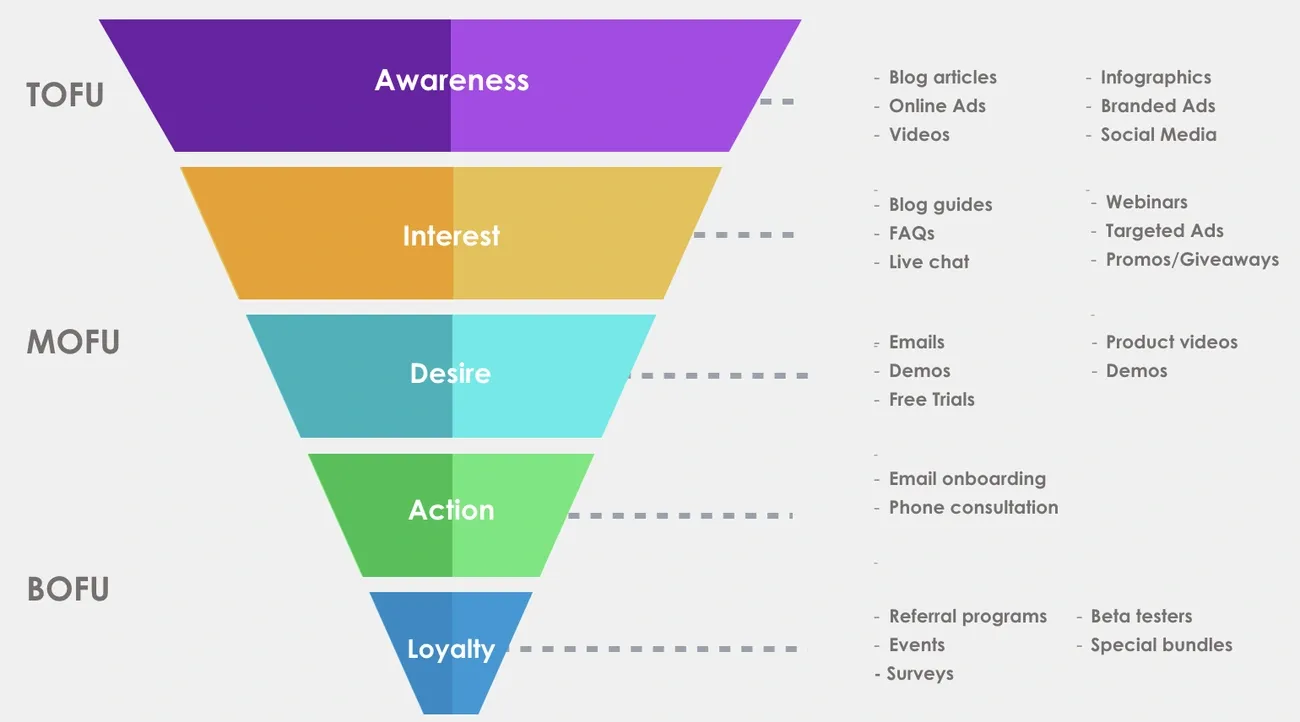
A successful keyword strategy depends on understanding how your audience moves through their buying process, not just targeting high-volume search terms. Content that matches user intent at each funnel stage results in better conversion rates and qualified leads.
Top-of-funnel: Awareness keywords
Your prospects research problems at the top of the funnel without looking to buy. Educational content addressing broad industry challenges works best here. Hard sells will drive visitors away. These awareness keywords show higher search volumes but lower purchase intent.
Target keyword types at this stage include:
- Informational queries (“what is project management”)
- Industry symptoms and pain points
- Educational topics related to your niche
Your target audience isn’t actively seeking solutions 95% of the time. Your goal should focus on building awareness and authority rather than immediate conversion.
Middle-of-funnel: Solution-aware searches
Prospects who make middle-funnel searches have defined their problems and are learning about potential solutions. They compare options and need detailed information. A survey shows that 43% of marketers use success stories, 38% rely on product overviews, and 36% choose case studies to convert leads at this stage.
Effective middle-funnel keywords include:
- Comparison terms (“best project management tools”)
- Solution-focused queries (“how to implement employee monitoring”)
- Feature-specific searches related to pain points
Bottom-of-funnel: High-conversion terms
High-intent prospects ready to make purchasing decisions use bottom-funnel keywords. These terms show lower search volumes but deliver much higher conversion rates. Organic traffic converts at 14.6% compared to just 1.7% for paid ads. SEO-driven leads cost 61% less than paid advertising leads.
These high-intent keywords should be your first priority as they create the fastest path to revenue. Focus on:
- Transactional queries (“pricing,” “discount code”)
- Competitor comparison searches (“alternatives to [competitor]”)
- Specific use case terms (“project management for remote teams”)
Using customer conversations for keyword ideas
Your own sales conversations serve as an untapped goldmine for keyword research. B2B buyer research happens 70% of the time in Slack channels, peer groups, and sales calls, areas keyword tools can’t track.
Sales calls show prospects describing problems in their natural language. They often use specific phrases that indicate high purchase intent. Content based on these conversations converts 2-3x better than generic informational pieces.
This approach works best when you:
- Record and analyze sales and support calls
- Identify common pain points and the exact phrases used
- Create a “Pain Point Library” with direct quotes
- Turn these insights into long-tail keywords
These [customer-derived keywords] [link_3] might show low search volume in tools. However, they match what your ideal buyers search for and end up bringing more qualified leads.
Core SEO Tactics to Get Started
 “The companies winning at SEO in 2025 aren’t just ranking for keywords.”, RevenueZen Editorial Team, B2B SaaS SEO Strategy Experts
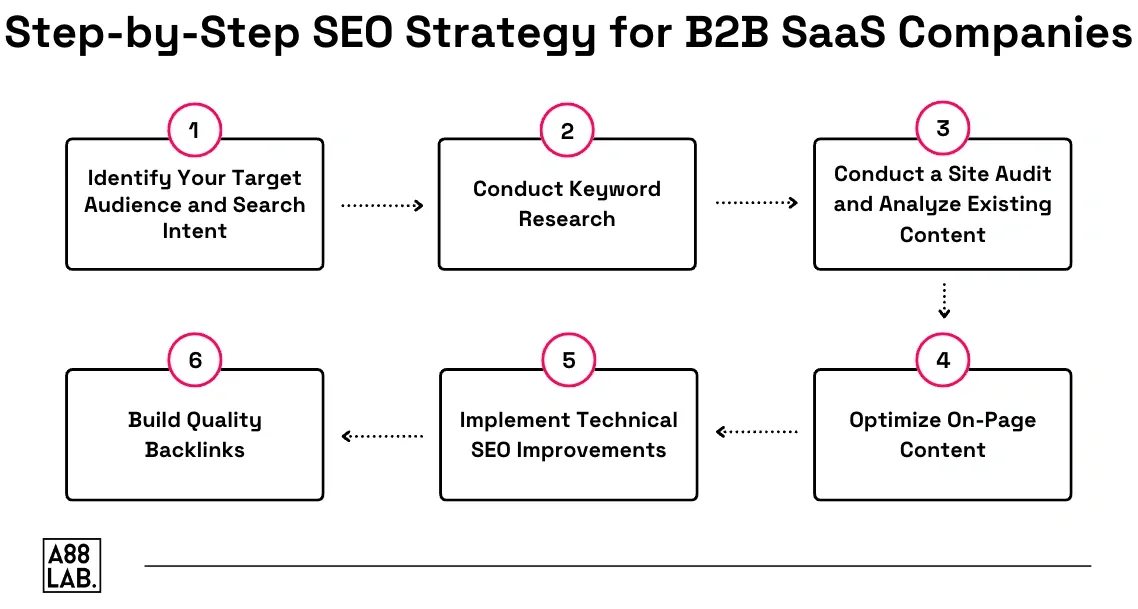
Your next priority should be putting SEO tactics to work after understanding your target keywords. A systematic approach will give you the best results while using resources wisely.
On-page SEO: Titles, headers, and structure
B2B SaaS startups need strong on-page SEO as their foundation. Place your focus keyword near the start of title tags and keep them under 60 characters to avoid search result cutoffs. Meta descriptions work as your sales pitch in search results, so limit them to 155 characters.
Header tags help create a logical content hierarchy. Use H1 once per page and naturally weave keywords into H2s and H3s. Your URLs should be descriptive yet brief – skip stop words like “and” or “the.” Search engines and users respond better when you place relevant keywords in the first 100 words of well-structured content.
Technical SEO: Speed, mobile, and indexing
Good technical SEO lets search engines crawl and index your site properly. Core Web Vitals should be your priority – these are Google’s metrics that measure page experience, loading speed, interactivity, and visual stability.
Site speed matters for rankings and user experience. Pages need to load in under three seconds. Google’s mobile-first indexing makes mobile-friendliness essential. Your sitemap shows search engines the most important pages, while robots.txt guides crawlers about what to index or skip.
Content strategy: Pages that convert
Quality content powers successful SaaS SEO. Start with bottom-of-funnel content since these users are closer to converting. Show your product solving specific problems through screenshots and clear instructions.
Match each page to the right stage of the buyer’s trip. Bottom-funnel pages generate quick conversions. Middle-funnel content teaches solution-aware prospects, and top-funnel content builds awareness and authority.
Off-page SEO: Backlinks and authority signals
Off-page SEO strengthens your site’s authority through external validation. Backlinks from trusted industry websites serve as confidence indicators for search engines. Writing guest posts on relevant platforms proves your expertise and brings targeted traffic to your site.
Brand mentions boost recognition and trust, even without links. Social listening tools help you track these mentions to keep a positive reputation and quickly respond to feedback.
Quick Wins and Long-Term SEO Habits
A long-term SEO strategy is significant, but quick wins create immediate momentum for your B2B SaaS startup. These approaches help you use existing resources more efficiently and deliver faster results without much extra investment.
Optimizing existing pages for faster results
Your existing content often produces faster results than new pages. Search engines have indexed these pages already, and some may have accumulated backlinks. Research shows 76% of page views and 92% of leads come from older content.
You should look for underperforming pages that show promise. The best candidates rank in positions 6-15 for target keywords or show declining traffic in Google Search Console. These “striking distance” pages need less work to reach top positions, where more than half of searchers click.
After finding these pages, update their statistics, enhance keyword optimization, and add more depth to the content. Google’s Helpful Content Update from mid-2022 now rewards content that gives original insights instead of just repeating common information.
Creating comparison and alternative pages
B2B SaaS startup’s most effective bottom-of-funnel opportunities come from comparison pages. These pages connect with prospects who actively compare solutions and are ready to make purchasing decisions.
Effective keyword frameworks include:
- “[Competitor name] vs [your brand name]”
- “[Competitor name] alternative”
New startups with little brand recognition can still benefit from these pages by joining discussions about established competitors. Sales cycles move faster because these pages address common objections that prospects usually bring up during calls.
Tracking performance with the right tools
Your SEO efforts need proper measurement to learn what works well. Google Analytics shows user behavior and identifies your most effective pages. A connection with Google Search Console helps you find which queries bring traffic and spot any crawling issues.
Tools like Ahrefs or Semrush give detailed insights into keyword performance, competitor activity, and backlink profiles. SurferSEO or Clearscope help optimize your content against top-ranking competitors.
Regular monitoring reveals new opportunities to adjust your strategy. Automated reports track positioning changes and content performance over time, which helps you improve your SEO results continuously.
Conclusion
Drive Sustainable Growth Through SEO
A solid SEO strategy helps B2B SaaS startups move away from paid acquisition dependency to build sustainable organic growth engines. This piece shows how SEO is different for SaaS companies compared to standard approaches. It needs to line up with buyer experience stages and specific intent patterns instead of just pursuing high-volume keywords.
Resource-constrained startups should balance quick wins with long-term strategies. Target high-intent bottom-funnel keywords first to get faster conversions. At the same time, build foundation content that addresses your prospects’ questions at every stage. So your SEO efforts will generate immediate returns and build compound value over time.
Technical fundamentals matter just as much as content quality. Search engines favor websites that give users exceptional experiences through fast loading times, mobile optimization, and logical information architecture. Regular audits of these elements will give your content proper visibility in search results.
Optimizing existing content often brings faster results than creating new pages. This method utilizes pages already indexed by search engines, often with built-up authority signals. Data shows that most leads come from older content, which makes regular content updates crucial for SEO maintenance.
SEO needs time – usually 3-6 months to see initial results. But this wait is worth it when you consider the lasting benefits: lower acquisition costs and better quality leads that convert more readily than paid channels. Your competitors might buy temporary visibility through ads, but your growing foundation of organic traffic brings qualified prospects to you consistently.
Start using these SEO basics today to cut down your paid advertising costs while building a sustainable lead generation engine for your B2B SaaS startup.
Explore essential SEO strategies for B2B SaaS startups to enhance traffic and drive growth.
FAQs
Q1. What are the key components of a successful B2B SaaS SEO strategy?
A successful B2B SaaS SEO strategy includes keyword research aligned with the buyer’s journey, on-page optimization, technical SEO improvements, content creation that matches search intent, and building quality backlinks. It’s important to focus on both quick wins and long-term tactics to drive sustainable organic growth.
Q2. How long does it typically take to see results from SEO efforts for a B2B SaaS startup?
Generally, B2B SaaS startups can expect to see initial traction from their SEO efforts within 3-6 months. However, more competitive keywords may take 12+ months to rank effectively. It’s important to remember that SEO is a long-term strategy that provides compounding returns over time.
Q3. What are some quick SEO wins for B2B SaaS companies?
Quick SEO wins for B2B SaaS companies include optimizing existing content, creating comparison and alternative pages targeting competitors, and focusing on bottom-of-funnel keywords with high conversion potential. These tactics can often yield faster results than creating entirely new content.
Q4. How does B2B SaaS SEO differ from traditional SEO approaches?
B2B SaaS SEO focuses on addressing the unique complexities of marketing software solutions to business audiences throughout longer sales cycles. It targets multiple decision-makers within a company, aligns content with specific stages of the buyer’s journey, and emphasizes solution-aware and high-intent searches rather than just high-volume keywords.
Q5. What tools are essential for tracking SEO performance in B2B SaaS?
Essential tools for tracking B2B SaaS SEO performance include Google Analytics for user behavior analysis, Google Search Console for query data and crawl issues, and specialized SEO tools like Ahrefs or Semrush for comprehensive keyword and competitor analysis. Regular monitoring with these tools helps identify new opportunities and adjust strategies for continuous improvement.

Leads SEO and the GEO/AEO work that wins organic and AI-answer visibility.