10 Ways to Improve Your B2B Lead Generation Services Strategy
 B2B marketers rank lead generation as their biggest challenge, with 85% struggling to get it right. My experience shows that a robust B2B lead generation services framework determines success or failure in this space.
The reality hits hard – your sales pipeline needs effective B2B lead generation services to survive. Most B2B buying journeys (93%) begin with online searches, which makes content marketing a vital part of getting B2B leads. Your business’s survival depends on mastering this essential process.
Statistics paint a clear picture. LinkedIn stands out by producing 80% of B2B leads online with a 2.74% conversion rate. Tailored experiences make 80% of potential clients more likely to buy. On top of that, interactive content captures attention better than any static content that ever spread online – 81% of marketers confirm this fact.
These 10 tested strategies will change your lead generation approach completely. Successful B2B companies have tested each method thoroughly, from creating precise customer profiles to setting up advanced tracking analytics. These significant tactics will help fill your pipeline with qualified prospects quickly.
Develop a Clear Ideal Customer Profile (ICP)

Image Source: Productive Shop
The success of any b2b lead generation services starts with knowing your target audience. Quality leads remain the top priority for 78% of B2B businesses. A well-defined Ideal Customer Profile (ICP) isn’t optional anymore – it’s a must-have.
Your ICP describes the perfect company that fits your products or services. It works at the company level, unlike buyer personas that focus on individuals. This helps you target organizations that could become valuable, long-term clients.
Key features of an ICP
A complete ICP has significant elements that help you spot and prioritize potential clients:
- Firmographic data: Industry, company size, revenue, location, and legal structure
- Technographic information: Existing technology stack and adoption patterns
- Pain points and challenges: Specific problems your solution addresses
- Budget and purchasing power: Financial ability to invest in your offering
- Decision-making process: Understanding of how they evaluate and purchase tools
The quickest way to find your ICP is to look at your most successful existing accounts. Search for patterns among clients with the highest customer lifetime value or those who keep coming back.
Benefits of defining your ICP
A clear ICP brings measurable benefits across your organization. High-growth companies make ICP a vital part of their marketing and sales strategy. This results in better lead generation and qualification processes.
A well-defined ICP lets you focus on winning high-quality leads instead of chasing unqualified prospects. Your pipeline fills with better-qualified opportunities, helping you meet sales goals consistently.
Companies that match your ideal profile stay longer. The numbers back this up – companies with arranged sales and marketing teams see 36% higher customer retention rates and 38% higher sales win rates.
Tools to build your ICP
These powerful tools can make ICP development easier:
- CRM systems like HubSpot let you segment customer data based on your ICP criteria. This enables targeted marketing campaigns and personalized communication.
- Web analytics tools such as Leadfeeder help capture B2B leads from inbound traffic. They show who visits your site and what they search for.
- Intent data platforms combine data points and evidence-based insights about user behavior to identify active prospects.
- Brand tracking and experience management tools give an explanation of how different segments see your brand. This helps understand ideal customers better.
Best practices for refining ICP
Your ICP should grow with your business. Here are proven ways to keep it relevant:
Update your ICP template regularly. Your target customer profile might change as your company expands.
Customer feedback and website traffic analysis can reveal new patterns. The pages that generate most interest and visitor sources help choose the right marketing channels.
Revenue data shows which customers bring the highest lifetime value. Patterns in successful deals can improve your ICP.
Don’t target roles without buying power. To name just one example, if you sell IT tools, focus on IT directors rather than finance teams. This ensures your message reaches actual decision-makers.
A clear ICP becomes the life-blood of an effective b2b lead generation services strategy. It attracts qualified prospects and turns them into loyal customers.
Use Visitor Identification Tools to Capture Anonymous Traffic

Image Source: B2B lead generation – LeadRebel
Did you know that 70-80% of people who visit your website stay anonymous and never fill out forms or reach out to your team? These hidden visitors could be a goldmine for your b2b lead generation services framework.
Key features of visitor identification
Your website visitors can be identified through several methods:
- IP tracking matches visitors’ IP addresses to company networks through reverse DNS lookup. This reveals organization names and locations
- Cookie tracking follows users as they browse multiple pages. It builds engagement profiles over time
- Browser fingerprinting spots unique visitors based on their device characteristics. This creates a consistent identifier that stays the same across browsing sessions
Advanced tools combine these methods with data enrichment to give detailed insights. These tools can tell the difference between company-level identification (which businesses visit) and individual-level identification (specific people within those companies).
Benefits of identifying anonymous visitors
Your anonymous traffic turns into applicable leads when you identify visitors. This gives you several strategic advantages:
You can spot buying intent signals quickly. Sales teams can focus on reaching out to the most interested prospects.
Your customer engagement improves through customized experiences. Understanding how visitors behave helps create content that appeals to them.
Sales and marketing efforts line up better. Both teams see the same visitor data. Marketing delivers qualified leads while sales teams talk to prospects with relevant insights.
These tools help you do “warm outreach” instead of cold calling. The numbers prove it works: warm outreach gets 21-34% open rates compared to cold emails at 15-24%.
Tools to use for visitor tracking
Several powerful platforms can spot your anonymous traffic:
Leadfeeder excels at identifying companies even with remote workers. It filters out bots and low-quality traffic automatically while giving GDPR-compliant visitor insights. They can identify up to 67% of B2B accounts that visit your website.
Factors.ai connects to a database with over 50B+ IP addresses and identifies up to 64% of visitors. They track engagement across websites, G2 reviews, and LinkedIn ad impressions at account level.
Warmly works with HubSpot and utilizes existing cookies. This removes the need for extra outbound emails to identify prospects.
Best practices for implementation
Here’s how to get the most from your visitor identification system:
Focus on specific channels, regions, and high-intent pages first. Target about 1,000 high-value accounts. This helps you fine-tune your strategy before expanding.
Connect with your CRM to manage all accounts well. Create new company records with “Website Visitor Identification” as the source. Update intent signals for existing accounts without creating duplicates.
Group identified accounts by engagement levels. Run targeted LinkedIn campaigns and send the top 10% most engaged accounts to your sales team right away.
Check your entire funnel’s performance after three months. Track metrics like identified accounts, engagement rates, meeting bookings, and pipeline contribution.
Create High-Value Whitepapers and Case Studies

Image Source: Callbox
B2B companies rank whitepapers and case studies among their most powerful lead generation tools. The Content Marketing Institute reports that 90% of successful content marketers put their audience’s information needs ahead of promotional messages.
Key features of whitepapers and case studies
Whitepapers serve as detailed, research-driven documents that solve specific industry problems:
- Data-backed analysis from credible sources
- A well-laid-out format with executive summary, problem statement, and solution
- An authoritative voice that builds intellectual influence
- Standard length of 5-10 pages with supporting visuals
Case studies bring success stories to life:
- Stories that follow a problem-solution-results flow
- Client-centered narratives where customers become heroes
- Clear metrics showing measurable results
- Quick reads (2-4 pages) with visual elements
Benefits of using them in B2B lead generation
Your company gains industry authority through whitepapers. B2B sales teams now rank case studies as their third most valuable content type, just behind email newsletters and blog posts.
These assets attract quality leads naturally. Ungated case studies build credibility, while gated whitepapers help capture details from interested prospects. The leads you get are usually closer to making their final decision.
B2B buyers need solid evidence. Quality research helps potential clients justify big purchases that impact their business operations.
Tools to design and distribute them
Microsoft Word works great to draft whitepapers, while Adobe InDesign lets you create professional layouts. SurveyMonkey helps collect fresh research data. Canva makes it easy to create eye-catching graphics that boost your case study narratives.
Distribution channels include:
- Email newsletters to your subscriber base
- Guest posts on industry sites
- Social media previews and post series
- Landing pages with contact forms
Best practices for content creation
Your whitepaper needs a logical flow. Brian Boys, who has written whitepapers for 25 years, says “each section must convince the reader on a particular point and compel them to read the next section”.
The content should educate rather than sell. Position yourself as the trusted source for valuable insights.
Case studies work better as stories than reports. Give them a clear beginning, middle, and end with measurable results.
Charts and graphs make complex information easier to understand and create natural breaks in text.
Launch Targeted LinkedIn and Google Ads Campaigns

Image Source: LinkedIn
LinkedIn is the most effective social media platform for B2B lead generation, according to 77% of B2B content marketers
, Content Marketing Institute, Leading authority on content marketing research and education
LinkedIn and Google Ads are the two advertising giants you need in your B2B lead generation toolkit. Google rules 91% of the search engine market while LinkedIn connects 930 million professionals worldwide. These platforms work together perfectly to bring in quality B2B leads.
Key features of paid ad campaigns
Each platform has its own unique way of targeting that creates a detailed strategy when combined:
- Google Ads targeting: We focused on intent-based or “what” targeting that looks at specific keywords and search behaviors showing interest in your solution
- LinkedIn targeting: You can target based on “who” – looking at professional traits like job titles, industries, company sizes, and member skills
The ad formats look quite different on each platform. Google gives you text-based search ads, visual display ads, and video options across its properties. LinkedIn lets you use sponsored content, message ads, text ads, and dynamic ads built for professional settings.
Benefits of LinkedIn and Google Ads
Google Ads shines when it comes to catching people who are ready to buy through bottom-of-funnel targeting. It helps you reach users who are actively looking for tools and want to convert high-intent prospects.
LinkedIn gives you better access to decision-makers. About 80% of its users make business decisions. This makes it a great tool for B2B marketers who want to reach specific professional groups.
The best results come from using both platforms together. Studies show that combining LinkedIn and Google campaigns creates a complete strategy that helps prospects throughout their buying experience. LinkedIn builds awareness at the top of the funnel while Google captures conversions at the bottom.
Tools to manage ad campaigns
You’ll find several specialized tools to help you get the most out of your campaigns:
B2Linked helps you target audiences on LinkedIn more effectively. Terminus lets you target across platforms using both LinkedIn data and customer lists up to 10,000 accounts.
Superads breaks down how your ads perform across 15+ creative areas to help you improve before scaling up. Tools like Factors.ai give you immediate analytics across platforms to help optimize based on data.
Best practices for targeting and ROI
You should test different versions of your ad elements including formats, headlines, and calls-to-action. This data-driven approach helps your campaigns perform better over time.
Retargeting works really well for B2B. Send people from LinkedIn to your website, then retarget those visitors through Google Ads to keep your message in front of them. This cross-channel approach keeps your brand visible while people make their decisions.
LinkedIn campaigns with click-through rates below 1% work better with manual CPC bidding. Those above 1% do better with CPM bidding. Research shows that higher bids don’t necessarily mean better lead quality.
Use Lead Scoring to Prioritize Prospects
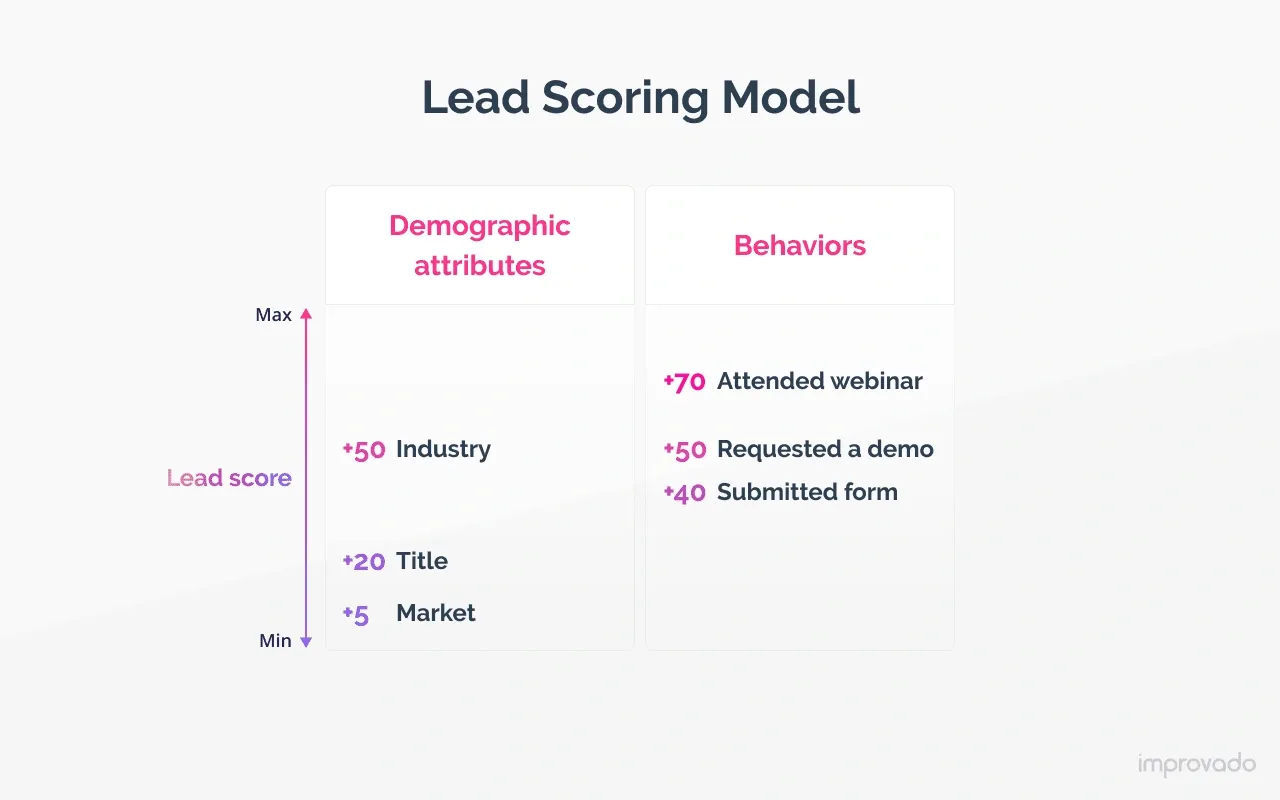
Image Source: Improvado
Lead scoring is a vital part of any B2B lead generation service that works. Statistics show that only 10% of leads become customers. A well-laid-out system to prioritize prospects helps streamline sales processes.
Key features of lead scoring
Lead scoring systems rank prospects based on specific attributes and behaviors. Sales teams can focus on leads that are more likely to convert. These systems include:
- Dual scoring dimensions – A mix of “fit” (how well they match your ICP) and “engagement” (how they interact with your content)
- Point-based evaluation – Numbers assigned to actions and characteristics
- Customizable criteria – Scoring models that adapt to your business needs
- Live updates – Scores that change based on ongoing interactions
Benefits of prioritizing leads
Lead scoring brings clear advantages to your sales process. Sales teams work more efficiently by focusing on high-potential prospects.
Marketing and sales teams line up better with a shared framework for lead qualification. This teamwork boosts sales win rates by up to 38%.
Teams save time by avoiding unqualified leads, which increases win rates by a lot. Your focus on prospects who show genuine interest leads to higher conversion rates and a stronger sales pipeline.
Tools for lead scoring
Modern platforms can automate and boost your lead scoring:
HubSpot lets you customize lead scoring models that match your business goals. Their system uses advanced algorithms and machine learning to fine-tune scoring.
Marketo offers a complete lead qualification system. You can assess prospect interest levels with default scores you can adjust.
Salesforce gives you predictive lead scoring capabilities that focus on conversion timing. AI analyzes large data volumes to find patterns.
Best practices for scoring models
Your existing customer base provides valuable insights. Look for successful client patterns to identify what matters most.
Your model should include both demographic and behavioral criteria. Demographic data shows fit, while behavioral scoring gives significant context about engagement.
Without doubt, negative scoring matters just as much. Poor fit indicators like mismatched industries or actions showing disinterest deserve negative points.
Your scoring model needs regular assessment and updates. Markets change and so do customer behaviors, making this ongoing process vital.
Implement Marketing Automation for Nurturing Leads
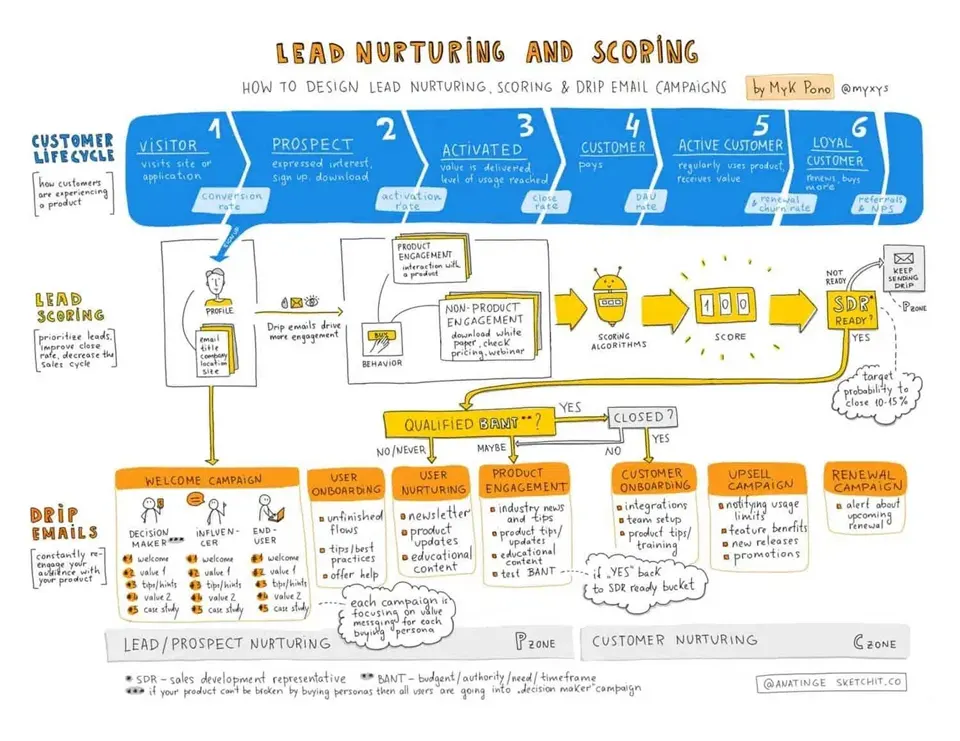
Image Source: Salesdorado
Marketing automation is the life-blood that powers your B2B lead generation services framework once prospects have been identified and scored. B2B companies that use marketing automation see a remarkable 451% increase in qualified lead volume. This makes it essential for modern B2B companies.
Key features of marketing automation
Marketing automation platforms come with several core capabilities. We focused on audience segmentation based on behavior and demographics to create targeted campaigns. These systems respond automatically to prospect behaviors like form completions or email link clicks.
The detailed platforms merge with CRM systems to manage data better. This creates a smooth flow of information between marketing and sales teams. Both departments work with the same up-to-date information thanks to this two-way connection.
Benefits of automating lead nurturing
Your lead nurturing process will improve significantly with automation:
- Improved efficiency – The system increases reach with minimal manual effort and no lead gets overlooked
- Consistent communication – Automated workflows keep steady contact without gaps
- Higher conversion rates – Personalization boosts conversion rates by delivering content based on individual priorities
- Better sales alignment – AI-driven scoring helps marketing and sales teams arrange their focus on accounts most likely to buy
Companies that use marketing automation create 20% more sales opportunities. Their nurtured leads make 47% larger purchases.
Tools to use for automation
The B2B marketing automation digital world has several powerful platforms:
HubSpot offers workflows that connect nurturing campaign elements, including CTAs, personas, and emails. Smart lists of qualified leads appear through its lead scoring features using selected criteria.
Marketo Engage works as a central hub to plan and execute omnichannel campaigns, from batch emails to advanced multi-step nurturing sequences. The platform utilizes AI for lead scoring and gives sales teams valuable buyer insights.
Best practices for email sequences
Email remains the life-blood of effective lead nurturing. These time-tested best practices are significant:
The 80/20 rule should guide your nurturing sequences – 80% provides value while only 20% asks for a sale. This strategy keeps you from seeming too promotional.
Your emails need to be brief and focused on one topic per message. Prospects will understand exactly what action you want them to take.
The sequences should progress gently between messages. Each email builds on previous communications logically. This creates a compelling story that guides prospects through your sales funnel.
Host Webinars to Educate and Convert Leads
Image Source: OneIMS
Webinars have become powerful tools in B2B lead generation services. Recent studies show they keep audiences engaged for an average of 55 minutes. This makes them highly effective at capturing attention in today’s digital world.
Key features of webinars
B2B webinars include several distinct elements. They offer interactive features like polls, Q&As, and live chats that encourage two-way conversations with prospects. Most platforms let viewers watch content live or on-demand, which extends reach beyond the original broadcast. The best webinars use screen-sharing for demonstrations and include customized registration pages with automated recording capabilities.
Benefits of webinars in B2B lead generation
Webinars excel at qualifying leads through clear commitment. A prospect who spends 30 minutes watching your webinar shows stronger buying intent than someone who just browses content. Trust is a vital factor, 43% of B2B buyers make defensive purchases, but webinars counter this by building expertise and authority. They also generate valuable data through audience interactions that help categorize leads for customized follow-up.
Tools to host webinars
These platforms excel at B2B lead generation:
- Livestorm: Browser-based platform with no downloads needed, offers breakout rooms, customized branding, and audience engagement tools
- Zoom Webinars: Perfect for high-quality video, large broadcasts, and direct YouTube streaming
- ON24: Focuses on interactive features and detailed analytics for webinar lead generation
- Demio: Built for revenue teams with simple registration processes
Best practices for engagement
You can make your webinars more effective with these proven tactics. Educational content works better than promotional material, 66% of B2B companies host webinars, so unique insights help you stand out. Your audience needs segmentation for targeted follow-ups, especially between attendees and non-attendees. Lead scoring based on engagement metrics like questions and poll participation helps track interest. Automated registration, reminders, and follow-ups ensure consistent communication throughout the buyer’s trip.
Use Retargeting and Remarketing Campaigns
Image Source: OneMoreLead
Retargeting is a vital tactic in any effective B2B lead generation services framework. Statistics show that 98% of website visitors don’t convert on their first visit. B2B buyers need multiple touchpoints before making a decision, which makes reconnecting with potential clients essential.
Key features of retargeting
B2B companies use sophisticated technologies to reach out to prospects again:
- Pixel-based retargeting: Places JavaScript code (pixels) on your website to track visitors and show them targeted ads across the web
- List-based retargeting: Uploads existing email lists or CRM data to target specific individuals
- Social media retargeting: Reaches prospects on platforms like LinkedIn based on previous brand interactions
- Email retargeting: Connects with users who opened email campaigns but haven’t taken desired actions
Benefits of remarketing for B2B
B2B retargeting produces exceptional results because:
B2B sales cycles take months, and retargeting will give your brand constant visibility throughout the decision process. B2B purchases need multiple stakeholders with different priorities, so you can tailor messages for each role.
These targeted approaches help B2B retargeting outperform B2C retargeting by 147% on average. The click-through rates for retargeted ads are 10 times higher than standard display ads.
Tools to run retargeting ads
Several powerful platforms aid effective retargeting campaigns:
LinkedIn works best for B2B audiences with its strong professional targeting. Google Ads gives extensive reach across websites and apps. AdRoll brings multiple platforms under one dashboard to simplify campaign management. Criteo works with 1,000+ premium publishers and reaches 750 million daily users.
Best practices for conversion
Your retargeting campaigns will work better when you:
Create clear audience segments based on website behavior and timeframes. Set frequency caps to prevent ad fatigue since users don’t like seeing too many ads. Keep your creative elements fresh to maintain engagement. Match your landing pages perfectly with ad content.
Whatever approach you choose, balance your content, 50% should provide value while 50% can ask for conversion actions.
Build Strategic Partnerships and Co-Marketing Campaigns
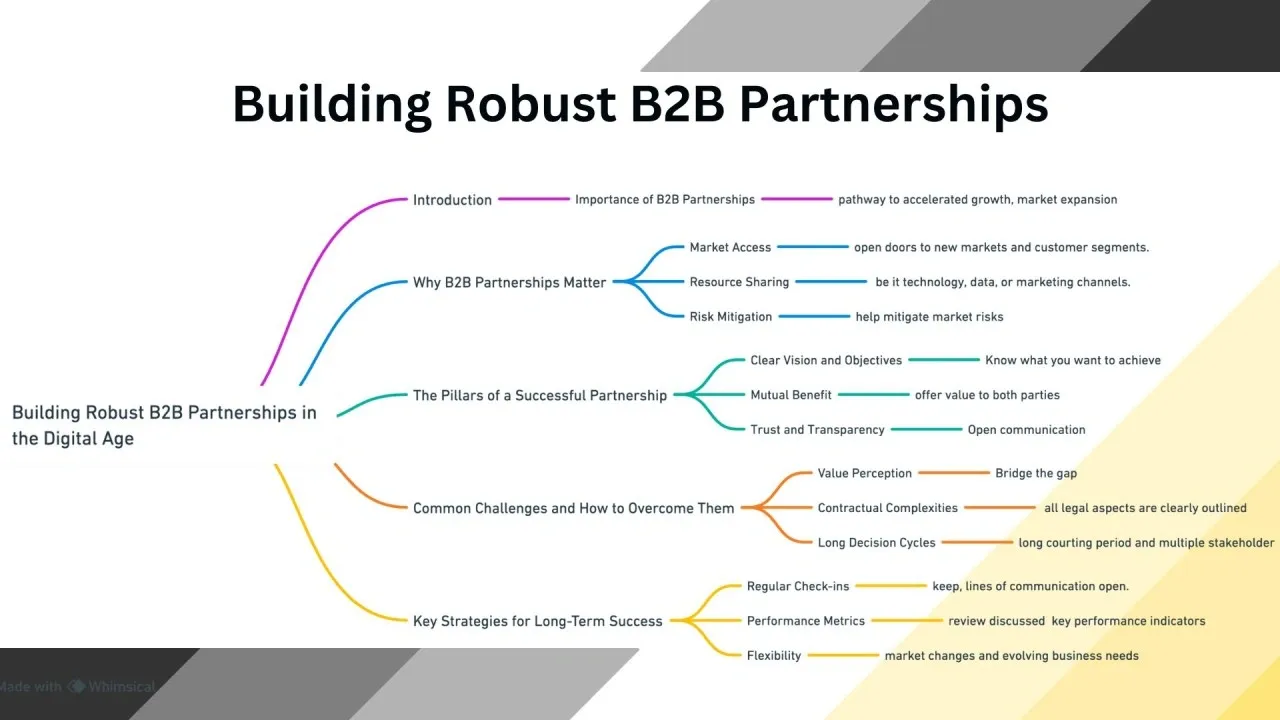
Image Source: LinkedIn
“B2B buyers typically follow companies of their interest and, specifically, their founders and C-Suite executives.
, Digital Silk, Digital strategy and web development agency specializing in B2B marketing
Strategic collaborations are the foundations of advanced b2b lead generation services framework. These collaborations create powerful growth opportunities through shared efforts. A recent survey shows 54% of senior business leaders reported partnerships that drive over 20% of their total company revenue.
Key features of co-marketing
Co-marketing initiatives offer unique elements that boost lead generation:
- Shared resources – Partners contribute expertise, technology, and finances to achieve mutual success
- Co-branded content – Joint webinars, whitepapers, and marketing campaigns that utilize both brands‘ credibility
- Audience expansion – Access to each partner’s customer base doubles your reach
- Risk mitigation – Shared costs and resources help expansion into unfamiliar territory
Benefits of strategic partnerships
Strategic alliances deliver measurable advantages for lead generation. Research shows 68% of consumers can make purchasing decisions after seeing co-marketing campaigns, before talking to sales.
Partnerships boost market positioning by combining strengths and resources. These collaborations make shared innovation possible by pooling expertise. The greatest value comes from accessing new customer segments – 78% of B2B businesses consider quality leads their main goal.
Tools to manage partnerships
Partnership management works better with specialized tools:
- Partner Relationship Management (PRM) software – Manages contracts, lead distribution, and performance tracking
- CRM systems – Customer information and interactions need this essential tool
- Communication platforms – Slack or Microsoft Teams enable direct collaboration between partners
- Marketing automation – HubSpot and similar platforms support segmentation and individual-specific campaigns
Best practices for collaboration
The core team should identify suitable partners with complementary skills who share similar values and target groups. Successful partnerships need clear communication channels and mutual goals to line up interests and build trust.
Mutually beneficial agreements should solve problems or create opportunities for both parties. The team must implement standardized processes that quickly scale to maintain quality and performance.
Track and Analyze Lead Generation Metrics
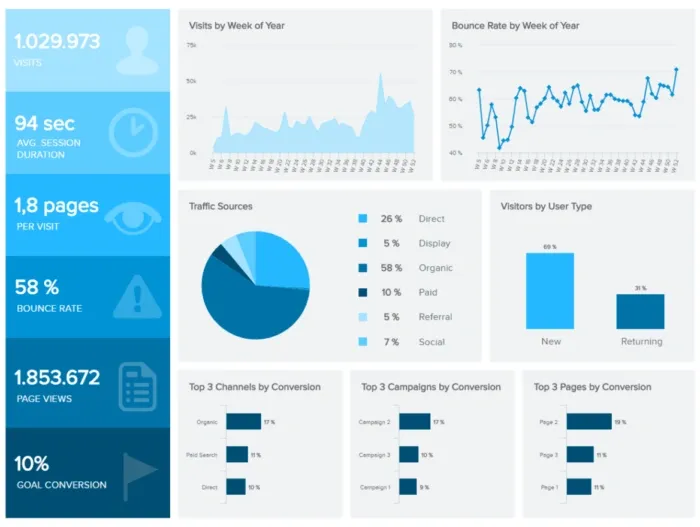
Image Source: LeadFuze
Analytics and measurement are the life-blood of any complete B2B lead generation services framework. Marketing teams face a major hurdle – 61% say getting traffic and leads is their biggest challenge. The right metrics can turn raw data into practical insights.
Key features of lead gen analytics
Lead generation analytics systematically collects and interprets data about potential customers. These metrics stand out as the most significant ones to watch:
- Conversion rate: Shows what percentage of leads become customers and reflects how well campaigns work
- Cost Per Lead (CPL): Shows your spending to get each lead
- Lead quality: Assesses how likely a lead will convert through scoring or segmentation
- Meetings booked/attended: Gives a detailed picture of your lead generation strategy’s success
These analytics help spot bottlenecks when turning leads into paying clients. They also reveal which marketing channels bring in the most qualified prospects.
Benefits of data-driven decisions
Data reshapes decision-making across lead generation processes. Companies that exploit data-driven marketing are three times more likely to improve their marketing results substantially.
Precise metrics help identify and prioritize promising leads through scoring and engagement analysis. Data also powers targeted campaigns by breaking down audiences based on specific criteria. This boosts relevance and engagement rates.
Tools for tracking performance
Some platforms excel at lead generation analytics:
HubSpot offers detailed reporting with built-in lead scoring and automation features. LinkedIn delivers strong professional targeting with thorough analytics. Breadcrumbs specializes in lead scoring and provides conversion tracking with attribution models.
All-in-one tools exist, but most businesses succeed by starting small. They focus on vital metrics first.
Best practices for reporting
Your analytics work better when you assess them against standards and adjust strategies based on KPI insights regularly. Teams should set measurable targets like leads per month and track progress using analytics features.
Note that lead generation needs constant tracking, analysis, and optimization. A dashboard that everyone can check makes tracking results easier for your team.
Comparison Table
| Strategy | Key Features | Primary Benefits | Recommended Tools | Best Practices |
|---|---|---|---|---|
| Develop Clear ICP | • Firmographic data • Technographic information • Pain points • Budget info • Decision-making process |
• Quicker lead generation • Better qualified opportunities • Higher customer retention |
• HubSpot CRM • Leadfeeder • Intent data platforms • Brand tracking tools |
• Update ICP template regularly • Look at website traffic patterns • Get into revenue data • Target decision-makers |
| Use Visitor Identification | • IP tracking • Cookie tracking • Browser fingerprinting • Company-level identification |
• Shows buying intent signals • Boosts customer involvement • Lines up sales and marketing |
• Leadfeeder • Factors.ai • Warmly |
• Pick specific channels first • Blend with CRM • Group identified accounts • Review after 3 months |
| Create Whitepapers & Case Studies | • Deep analysis • Professional structure • Research-backed content • Visual elements |
• Builds expertise • Brings high-quality leads • Helps justify purchase decisions |
• Microsoft Word • Adobe InDesign • SurveyMonkey • Canva |
• Structure content clearly • Add educational value • Use storytelling approach • Add visuals |
| Launch LinkedIn/Google Ads | • Intent-based targeting • Professional attributes targeting • Multiple ad formats • Cross-platform integration |
• Meets existing needs • Reaches decision-makers • Creates full-funnel strategy |
• B2Linked • Terminus • Superads • Factors.ai |
• Run A/B tests • Use retargeting • Adjust bidding strategies • Track cross-channel results |
| Use Lead Scoring | • Dual scoring dimensions • Point-based evaluation • Custom criteria • Live updates |
• Makes sales more efficient • Boosts marketing-sales alignment • Saves time |
• HubSpot • Marketo • Salesforce |
• Study existing customers • Mix demographic/behavioral criteria • Use negative scoring • Check model regularly |
| Implement Marketing Automation | • Audience groups • Trigger-based actions • CRM integration • Simplified processes |
• Better efficiency • Steady communication • Higher conversion rates |
• HubSpot • Marketo Engage |
• Use 80/20 rule • Keep emails focused • Build sequences step by step • Keep engagement steady |
| Host Webinars | • Interactive parts • Live/on-demand options • Screen sharing • Registration pages |
• Qualifies leads through commitment • Builds trust • Creates valuable data |
• Livestorm • Zoom Webinars • ON24 • Demio |
• Make educational content • Group your audience • Add lead scoring • Set up auto-communications |
| Use Retargeting | • Pixel-based tracking • List-based targeting • Social media retargeting • Email retargeting |
• Stays visible • Reaches multiple stakeholders • Better click-through rates |
• LinkedIn • Google Ads • AdRoll • Criteo |
• Create clear segments • Set frequency limits • Update creative elements • Match landing pages |
| Build Strategic Collaborations | • Shared resources • Co-branded content • Audience growth • Risk sharing |
• Better market position • New segment access • Shared costs and resources |
• PRM software • CRM systems • Communication platforms • Marketing automation |
• Find matching partners • Keep clear communication • Build mutual benefits • Use standard processes |
| Track Lead Gen Metrics | • Conversion tracking • Cost per lead • Lead quality metrics • Meeting analytics |
• Makes decisions better • Helps prioritize leads • Enables targeted campaigns |
• HubSpot • Breadcrumbs |
• Check standards regularly • Set clear goals • Keep improving • Build simple dashboard |
Conclusion
These 10 B2B lead generation strategies will change your approach to finding and converting qualified prospects. In this piece, we’ve seen how a clear Ideal Customer Profile forms the foundations of all your targeting efforts. Visitor identification tools help capture otherwise anonymous traffic. High-value content like whitepapers and case studies build your authority and lead to higher-quality leads and greater trust from prospects.
LinkedIn and Google Ads campaigns work together to create a full-funnel approach that meets prospects at every stage of their trip. Lead scoring helps your team focus on the most promising opportunities and prevents wasted time and resources. Marketing automation improves this by nurturing relationships without manual intervention.
Webinars are powerful tools, especially when you have unmatched engagement time that positions your brand as an intellectual influence. Retargeting campaigns keep you visible during lengthy B2B buying cycles. Mutually beneficial alliances expand your reach to new audience segments.
Your ability to track the right metrics gives you the knowledge to refine your approach. The B2B digital world has its challenges, but these proven strategies give you a clear path forward. Note that successful lead generation isn’t about using a single tactic. You need to build a detailed framework where each element strengthens the others. Pick one or two strategies that line up with your current needs, then expand as you see results.
Need better leads? Discover top strategies at GrowLeads.io. Act now!
FAQs
Q1. What are some effective strategies to improve B2B lead generation?
Some key strategies include developing a clear ideal customer profile, using visitor identification tools, creating high-value content like whitepapers, launching targeted ad campaigns on LinkedIn and Google, implementing lead scoring, and hosting educational webinars. It’s also important to track metrics and continuously optimize your approach.
Q2. How can I use LinkedIn for B2B lead generation?
LinkedIn is highly effective for B2B lead generation. Optimize your company profile, share valuable content regularly, engage in relevant groups, use Sales Navigator for advanced prospecting, and consider running targeted ad campaigns. You can also use third-party tools to automate lead capture from LinkedIn profiles.
Q3. What role do webinars play in B2B lead generation?
Webinars are powerful lead generation tools for B2B companies. They provide an opportunity to showcase expertise, engage prospects for extended periods, and generate valuable data through interactions. Webinars help build trust and qualify leads based on their level of engagement and interest in your offerings.
Q4. How can retargeting improve B2B lead generation efforts?
Retargeting allows you to re-engage prospects who have shown interest but haven’t converted. It’s particularly effective in B2B due to longer sales cycles. Use pixel-based and list-based retargeting across platforms like LinkedIn and Google to maintain visibility, deliver tailored messaging to different stakeholders, and guide prospects through the decision-making process.
Q5. What metrics should I track to measure B2B lead generation success?
Key metrics to track include conversion rates, cost per lead, lead quality scores, and the number of meetings booked or attended. Also monitor channel-specific metrics like click-through rates for ads or engagement rates for content. Regularly analyze these metrics against benchmarks to identify areas for improvement and optimize your lead generation strategies.

Builds the demand intelligence, automation, and deliverability systems behind Growleads pipeline.