
Appointment Setting Metrics & 2026 Performance Benchmarks

Appointment setting goals in 2026 are best structured around 5 core metrics: meetings booked per week (target 18 to 25 for a full-time setter), show rate (target 65% to 80%), qualification rate of meetings that convert to SQO (target 40% to 55%), pipeline dollars generated per month (target $180K to $320K for mid-market B2B), and cost per meeting booked (target $180 to $280 blended). Setting goals on only meetings booked without the other 4 metrics encourages volume over quality and burns the downstream funnel. The 5-metric framework catches that failure mode before the AE team notices the drop in qualification rate.
Appointment Setting Goals: The 5 Metrics That Actually Predict Pipeline (2026 Benchmarks)
Setting appointment goals on meetings-booked alone is how you get a setter who books 30 meetings per week with a 32% show rate and 18% qualification rate. The setter hits quota. The AE team never closes a deal. Healthy appointment setting goals measure across 5 metrics, not 1.
Metric 1: Meetings booked per week (target 18-25 full-time)
Full-time setters booking below 15 meetings per week are under-capacity (list, copy, or motivation). Above 30 per week signals volume-over-quality behavior, usually paired with a weak downstream qualification rate. 18 to 25 is the sustainable range.
Metric 2: Show rate (target 65%-80%)
Show rate below 60% signals weak meeting qualification (setter took any meeting, not a real meeting) or weak reminder sequences. Above 80% is excellent and usually paired with 2 reminder touches: day-before and morning-of.
Metric 3: Qualification rate (target 40%-55% SQO conversion)
Of meetings that show, what percentage become SQOs (sales-qualified opportunities)? Below 35% means the setter is booking the wrong prospects. Above 55% is rare and usually signals an unusually strong ICP or under-booked capacity. 40% to 55% is the healthy range.
Metric 4: Pipeline dollars per month (target $180K-$320K mid-market)
The output metric that matters for the business. Setters under $150K per month of pipeline are not paying for themselves at most mid-market B2B economics. Above $320K usually signals either unusual ACV or a setter supporting multiple AEs.
Metric 5: Cost per meeting booked (target $180-$280 blended)
Total cost (setter salary + tools + list) divided by meetings that showed. Above $350 per meeting, the unit economics do not work for sub-$100K ACV. Below $150 per meeting usually signals a junior setter or unusually efficient tooling.
The weekly goal-setting template
Set weekly goals on metrics 1, 2, and 3 (meetings booked, show rate, qualification rate). Measure metrics 4 and 5 monthly because they require 4+ weeks of data to stabilize. A setter who hits metrics 1-3 for 4 consecutive weeks will naturally produce healthy numbers on metrics 4 and 5.
Sales teams face a major challenge when they try to build a working appointment setters framework. This first step can determine the success or failure of their entire sales strategy.
The numbers tell a concerning story. B2B decision-makers say 82% of sales reps aren’t ready to talk to potential customers. This becomes even more significant since 50% of buyers choose the vendor that responds first. Your team’s appointment setting process stands as the first big hurdle to closing deals.
Our years of experience have shown that traditional methods don’t deliver results anymore. Cold calling yields a mere 4.8% success rate. A well-laid-out framework and smart techniques can boost these numbers significantly.
Sales teams often miss the blend of science and art in appointment setting. It typically takes 8 attempts to reach a potential customer. Most reps give up after 2 or 3 tries. Your team needs the right appointment setting scripts and a systematic framework to achieve consistent wins instead of occasional success.
This piece walks you through 8 tested ways to enhance your appointment setter program in 2025. You’ll learn everything from creating tailored outreach strategies to using automation tools. These techniques help both newcomers and experienced teams that want to improve their process.
Define Clear Appointment Goals

“Goals for appointment setting act as a road map for how the program will be carried out.”
, SalesRoads, Leading B2B appointment setting and lead generation company
A roadmap paves the way to success in appointment setting. Your sales team needs direction to avoid making random calls. The foundations of any working appointment setters framework start with purposeful goals.
Clear appointment goals definition
Appointment setting goals are specific objectives that guide your sales team’s outreach efforts and help you track their success in securing meetings with potential clients. These goals serve as measures for your appointment setting program and set clear expectations for your sales development representatives (SDRs).
Your business should focus appointment setting goals on:
- Better sales pipeline quality that converts leads faster
- Higher revenue through increased return on investment (ROI)
- A more optimized sales funnel that connects marketing and sales
- Qualified leads matching your ideal customer profile
- Deeper relationships with potential customers
Precise appointment setting goals aren’t wishful thinking, they’re exact targets with defined parameters, metrics, and deadlines. They give you answers about what you want to achieve, when you expect results, and how you’ll measure success.
Why clear appointment goals matter
Clear appointment setting goals transform your sales operation in several ways. They create a blueprint for your team and set the right direction with expectations that reduce miscommunication. Your team works better when everyone understands their targets.
Your organization becomes more cohesive when appointment setting teams know their expectations. They make decisions that help other departments succeed. This arrangement creates unity throughout your sales organization.
Meeting defined goals gives your SDRs and managers a sense of achievement. The core team stays motivated and avoids burnout. Their energy stays high when they see their progress.
Clear goals let you track performance accurately. The Media Sales Report shows that 42% of managers believe their salespeople should schedule 8 or more appointments weekly, yet 52% of salespeople report scheduling only 1-3 appointments. This reality gap proves why measurable goals are crucial.
How to set clear appointment goals
The SMART framework gives you the quickest way to set appointment setting goals. This method makes your objectives Specific, Measurable, Achievable, Relevant, and Time-bound.
Specific: Your goals should answer these key questions:
- What do you want to achieve?
- Why does business growth need this?
- When will you see results?
- Where will implementation happen?
- Who takes responsibility?
- How will you implement the program?
Measurable: Track progress with these metrics:
- Call outcomes
- Appointments scheduled in timeframes
- Pipeline value from booked appointments
- Revenue from appointment-setting
- Meetings to Sales Accepted Opportunities (SAO) rate
Achievable: Set goals that challenge but don’t overwhelm your team. Think about your team’s abilities and resources. Your sales team’s feedback helps determine if goals are realistic.
Relevant: Your goals should match your organization’s vision and stimulate growth. See if your appointment setting strategy makes sense now and fits long-term plans.
Time-bound: Every goal needs start and end dates. Create realistic timelines by understanding SDR onboarding, lead prospecting, and appointment setting processes.
Time-bound goals create urgency that keeps your team focused on steady progress. Goals without deadlines stay abstract and lack motivation for achievement.
Note that you should review appointment setting goals regularly. Market changes and team growth might require goal adjustments. The key lies in maintaining clear, trackable objectives that push your team toward steady improvement in your appointment setting framework.
Research and Qualify Your Prospects

“Target the Right Prospects”
, Revnew, B2B appointment setting and lead generation company
No appointment setters framework works well without a full picture of prospect research. Research acts as your compass and guides every call, email, and meeting toward success. Random cold calling pales in comparison to a targeted approach that turns guesswork into precision.
Prospect research definition
Prospect research systematically identifies, analyzes, and qualifies potential clients before setting appointments. The process gathers relevant information about companies and decision-makers to see if they match your ideal customer profile (ICP). Good research blends data analysis with targeted investigation to reveal not just potential buyers, but the right ones for you.
The best appointment setters go beyond simple contact details. They look deeper to understand their prospects’:
- Industry fit with your offering
- Company size and revenue indicators
- Decision-making processes and stakeholders
- Current challenges and pain points
- Tech infrastructure that fits your solution
- Geographic locations you can serve
Why prospect research matters
Sales teams often skip detailed research and miss vital opportunities. Teams that put time into prospect research find it twice as effective as standard methods. This success comes from showing respect for the prospect’s time and proving you’ve done your homework instead of making generic pitches.
Companies that use evidence-based qualification methods typically create better customer experiences. Your appointment setting teams can focus on prospects who benefit from your product while providing enough value to make your business profitable.
Sales teams that stick to their ICP create high-quality target lists. They generate better qualified leads, run more effective marketing campaigns, and reduce their sales cycles by a lot. Time spent researching before reaching out means you work with prospects more likely to convert instead of wasting resources on poor-fit companies.
How to research and qualify prospects
The first step analyzes your current customers to spot patterns among your successful clients. This information builds the foundation of your appointment setting framework by showing which prospects deserve attention.
Your detailed ICP should include six vital traits:
- Industry fit: The prospect operates in sectors where your solution works best
- Financial capability: They can afford and maintain your offering
- Readiness to buy: A clear need exists for what you provide
- Growth potential: They show signs or plans to scale
- Organization size: Their employee count matches your target market
- Geographic location: They operate in areas you serve
Top appointment setters use qualification frameworks like BANT (Budget, Authority, Need, Timing) or CHAMP (Challenges, Authority, Money, Prioritization) to structure their research. These frameworks help evaluate each prospect’s potential consistently.
LinkedIn provides valuable information for B2B appointment setting. A prospect’s profile reveals their career path, professional network, and content engagement that might show shared values or interests. Your CRM system can score leads based on how well they match your ICP.
The qualification process works best when you listen more than you talk. This helps you discover real concerns and needs. You can then customize your appointment setting scripts to address specific pain points instead of giving generic pitches.
Note that quality leads often come from prospects who know your company. Website visitors, content downloaders, and event attendees deserve priority since these warm leads typically convert better.
Craft a Personalized Outreach Strategy

Personalization serves as a vital link between prospect research and successful appointments. Today’s hyper-competitive market has made generic outreach ineffective. Tailored communication captures attention and builds trust with potential clients.
Personalized outreach definition
Customizing your communications based on specific details about the prospect’s business, challenges, and goals defines personalized outreach in appointment setting. This approach goes beyond adding a prospect’s name to an email. You need to create customized experiences that show you’ve invested time to understand their unique situation.
Personalized outreach covers:
- Addressing prospects’ specific pain points and challenges
- Message content that matches industry, role, and company size
- Communication channels aligned to prospect priorities
- Solutions that fit their business context
- Outreach timing based on prospect behavior
Real personalization reads like a conversation crafted just for that prospect, not a template sent to thousands.
Why personalized outreach works
Numbers prove that personalization improves appointment setting results substantially. Personalized lead nurturing boosts conversion likelihood by 63%. Prospects who receive two messages, one generic and self-promotional versus another highlighting their achievements with personal addressing, pick the personalized option.
Research shows 80% of consumers buy more often when brands offer customized experiences. This happens because personalization shows respect for the prospect’s time and builds credibility. You become a trusted advisor rather than another salesperson by recognizing their specific challenges and addressing unique needs.
Your message stands out in a crowded inbox through personalization. Prospects who feel understood and valued are quick to react to your message and end up confirming appointments. Sales professionals report that customization during cold outreach triples the chances of prospect confirmations.
How to personalize your outreach
Start by utilizing prospect information from LinkedIn profiles, company websites, and recent news effectively. Look for achievements, challenges, or announcements you can mention in your outreach. One expert explains, “Research your prospect using information publicly available to you. Beyond simple website review, look at key stakeholders’ connections, their group memberships, and read third-party articles about your prospect”.
Create messages that speak to specific needs. Focus on how your solution fixes their particular challenges instead of listing generic features. To name just one example, see how tools like Copy.ai help generate hyper-personalized cold emails using advanced copywriting frameworks and prospect LinkedIn profiles.
Your communications should span multiple channels. Expandi lets you automate personalized outreach through email and LinkedIn, which doubles your chances of connecting with prospects. This approach helps you reach prospects through their favorite communication methods.
Smart timing of your outreach matters too. Base appointment scheduling on the prospect’s sales cycle stage and adjust follow-ups to match their engagement level. Give detailed information or personalized demos to highly engaged prospects. Share relevant case studies with lukewarm leads to build interest.
Effective personalization balances automation with authenticity. Tools make the process easier, but each message should feel specially crafted for that prospect. Your appointment setters framework will produce better results than generic approaches by combining informed insights with thoughtful customization.
Use Appointment Setting Scripts Strategically
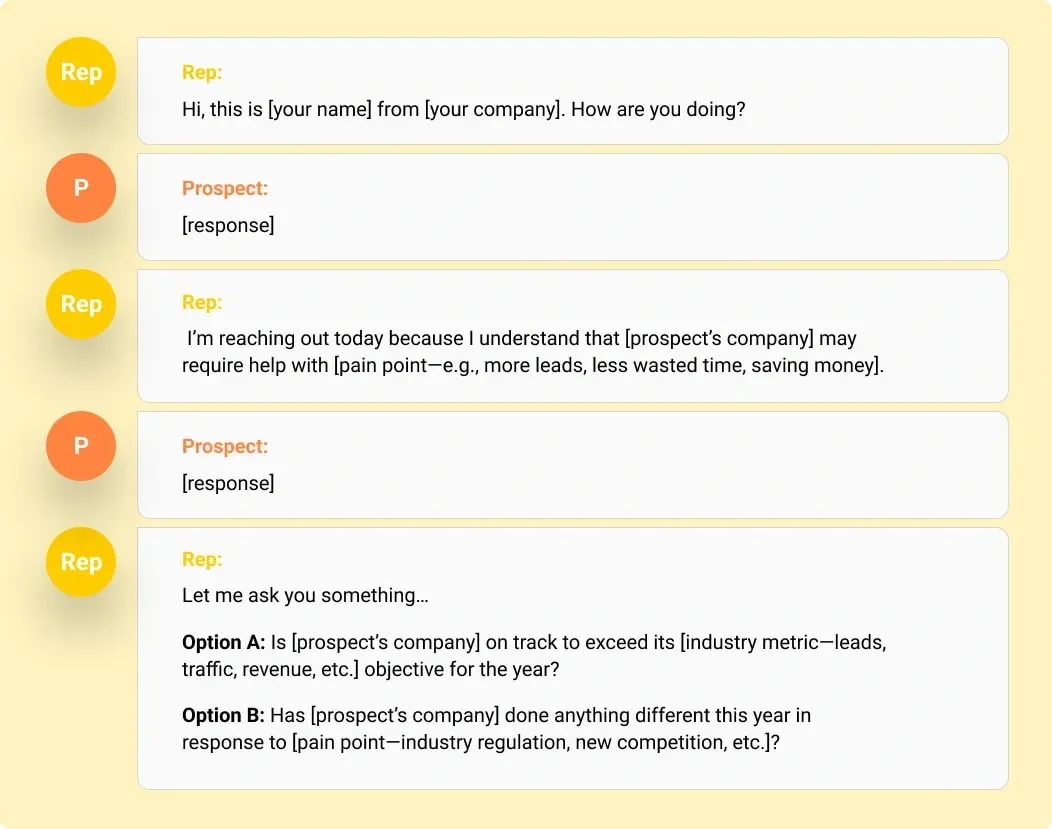
Scripts form the backbone of any effective appointment setters framework. Many sales professionals resist using scripts and call them restrictive. Yet the right scripts strengthen your team instead of limiting them.
Appointment setting scripts definition
Your appointment setting script works as a pre-written conversation guide that outlines key elements of successful appointment calls. These scripts don’t lock you into rigid dialog. They serve as strategic frameworks that help your sales development representatives (SDRs) guide conversations with confidence.
A well-laid-out script has these vital components:
- Opening statement that introduces you and your company
- Brief elevator pitch highlighting your value proposition
- Qualifying questions to assess prospect fit
- Responses to common objections
- Clear call-to-action to schedule the appointment
Unlike theater performances with full scripts, good appointment setting scripts give structure while letting natural conversation and personal touches flow.
Why scripts improve consistency
The right scripts transform your appointment setting results in many ways. We ensured message consistency across your sales team. Your appointment setters need comprehensive script libraries to stay consistent, professional, and quick during every call.
Scripts take the guesswork out of conversations. Your team members can focus on building rapport and booking more appointments instead of making up responses or missing key points. This structure builds confidence, something prospects notice right away.
On top of that, scripts lay the groundwork to measure results. Your team’s similar conversation structures let you track metrics like appointment setting rates, the percentage of calls that end in scheduled appointments. These measurements show which script elements bring the best outcomes.
How to write and use effective scripts
Scripts that convert start with one key insight, they should be living documents that change based on real-life results. The best scripts share these traits:
Your scripts need the right goal. Selling your product remains your ultimate aim. But during an appointment call, you just need to secure that meeting. This laser focus shapes how you open, close, and handle objections.
The script should have pre-qualifying questions that build a consultative conversation. These questions gather information and determine if the prospect deserves an appointment. They turn potential interrogations into natural dialog.
Your scripts should fit different scenarios. Sort them by lead type (cold, warm, referral) and situation (follow-ups, objection handling) so they’re easy to find. This setup helps your team pick the right approach quickly.
Scripts work best as frameworks, not rigid text. One expert puts it well: “The script isn’t meant to be read verbatim. Instead, it acts as a framework reps can use to structure their conversations, while also leaving room to switch things up based on their own selling style and the prospect’s responses”.
Practice makes perfect, your team will guide conversations more naturally as they master these frameworks while keeping the script’s core structure intact.
Anticipate and Handle Objections
Objections aren’t roadblocks, they’re signposts pointing to a chance. Smart appointment setters know that “I’m not interested” or “I don’t have time” doesn’t end the conversation. These responses mark the start of a meaningful dialog.
Objection handling in appointment setting
The process of handling objections means addressing the concerns prospects raise during original conversations. Good responses can ease these concerns while moving the appointment forward. Unlike closing objections, appointment setting objections focus on getting prospects to agree to learn more rather than make an immediate purchase decision.
Common objections appointment setters face include:
- “I’m too busy right now”
- “Just send me your information”
- “We already use a provider for that”
- “We don’t have budget for this”
- “I’m not the right person to speak with”
Smart objection handling turns these barriers into stepping stones. Customers who raise concerns are actually closer to the end of the sales pipeline than those who stay silent. Sales teams that solve buyer objections can achieve close rates as high as 64%.
Why objection handling builds trust
Here’s something surprising – objections give you the perfect chance to build rapport with prospects. We eased concerns by showing genuine care about the prospect’s needs, whatever the fit might be.
Objections show involvement, prospects wouldn’t raise concerns about something they find irrelevant. Your direct acknowledgment of their concerns shows respect for their viewpoint and lets them feel heard and understood.
Good handling of objections shows your expertise and preparation. A confident response to challenges without defensiveness positions you as a trusted advisor rather than just another salesperson.
How to prepare for and respond to objections
Preparation is the life-blood of handling objections well. Start by listing all objections you usually hear. Add both universal objections (like budget or timing concerns) and industry-specific challenges.
Role-playing exercises help teams prepare better than anything else. Research shows that role-playing can improve sales performance by up to 20%. Team members who practice both sides of objection conversations develop natural responses to tough situations without the pressure of live calls.
The LAER framework helps respond to objections:
- Listen actively to understand the full objection
- Acknowledge the concern to demonstrate empathy
- Explore deeper using open-ended questions
- Respond with a tailored solution
Quick responses to objections matter a lot. Unresolved concerns grow stronger over time, so don’t wait until the final stages. Ask questions like “Do you have any concerns about X?” to spot and solve potential roadblocks early.
Your approach needs empathy at its core, whatever technique you choose. Understanding rather than contradiction creates the safety prospects need to stay open to your appointment setting framework.
Leverage Automation and Scheduling Tools
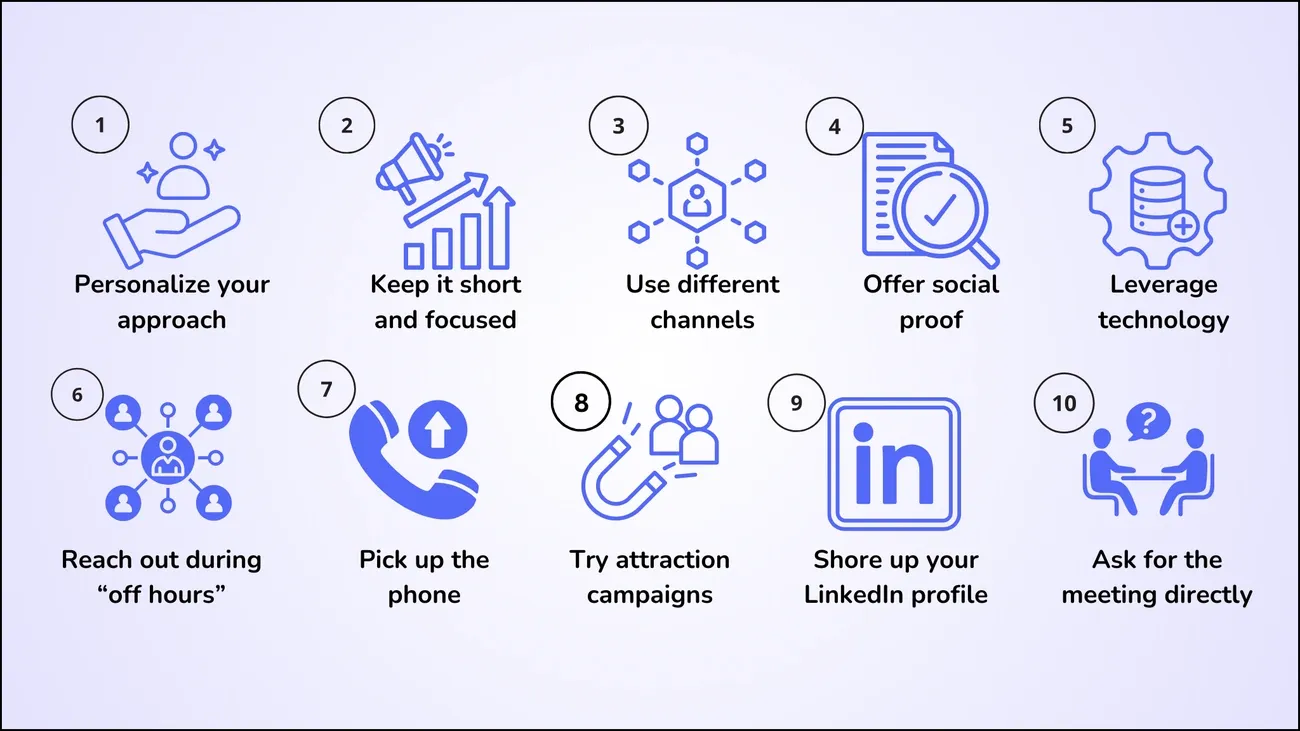
Time is your most valuable asset in sales, but many teams waste it on manual scheduling. Your appointment setters framework needs automation to streamline processes and eliminate tedious back-and-forth communication that comes with traditional appointment setting.
Automation in appointment setting
Appointment scheduling automation has digital tools that streamline booking through calendar integration, automated reminders, online booking, and unlimited appointment management. These tools work continuously behind the scenes and handle repetitive tasks while your sales team builds relationships.
Modern scheduling automation has:
- Self-scheduling options for prospects to book directly
- Calendar integration with platforms like Google and Outlook
- Automated reminder systems via email and SMS
- Immediate availability management across time zones
- Customizable booking widgets for websites and landing pages
Automation makes your appointment setting process substantially more efficient. A business that implemented automation shared: “By giving customers a straightforward, hassle-free way to book, we’re seeing more appointments, which ended up bringing more revenue, more deals, and more profit”.
Why automation improves efficiency
Automation brings substantial efficiency gains. We focused on eliminating administrative tasks from the sales team’s plate. One organization found that automating data flow to and from their CRM gave them back 23% of their day. The team could now focus on activities that matter more.
Timely reminders through automation reduce no-shows. Companies saw 30% fewer missed appointments within six months of using automated reminder systems.
AI-driven tools work around the clock to schedule appointments. This becomes especially valuable when leads come in outside regular business hours.
How to use automation tools effectively
Start by connecting your scheduling tools with your CRM system. This creates a complete view of customer information and appointment history that enables customized interactions. Unified CRM scheduling gives you access to contact details, histories, priorities, and previous meeting notes, a great way to get personalized service.
AI-driven analytics help optimize appointment times. These tools predict when clients book based on past behavior and help suggest the best time slots to increase conversion rates.
The human touch matters even with automation. Automation handles routine tasks well, but personal connections build trust and address complex issues better.
Top appointment setters use automation to improve their skills rather than replace them. This approach helps them give targeted advice and create stronger client relationships.
Build Trust and Rapport with Prospects
Trust is the life-blood of successful appointment setting. Prospects won’t give you their time, let alone their business, without believing you’re credible and genuinely want to help solve their problems.
Trust-building in appointment setting
The art of building trust in appointment setting goes beyond selling. You must establish credibility and show genuine interest in helping prospects. The first seven seconds of your call are make-or-break, a critical window where prospects decide to stay or hang up. Chris Voss, former FBI hostage negotiator, puts it well: “If you didn’t get someone to trust you as a human being in seven seconds, you’re toast”.
The most effective trust-building approaches include:
- Showing respect for their time by owning up to interrupting their day
- Demonstrating professionalism through confident communication and knowledge
- Building genuine rapport by connecting on common ground
- Focusing on understanding their challenges before offering tools
- Maintaining transparency about why you called
Note that appointment setting calls want to secure meetings, not close sales right away. One expert states it clearly: “The goal is to set an appointment, not to sell them something”.
Why trust increases conversion
Prospects become substantially more open to booking appointments once they trust you. Research shows companies that put emotional intelligence first see a 20% rise in sales. Teams that show empathy and social awareness on calls boost their conversion chances by 23%.
Trust drives conversion rates in several ways:
Prospects listen more closely to your value proposition instead of looking for ways to end the call. The resistance melts away.
On top of that, it creates psychological safety. Prospects feel comfortable discussing their challenges without worrying about pushy sales tactics. This openness helps you customize your approach to their needs.
You become an advisor rather than just another salesperson. One expert captures this perfectly: “By approaching each interaction with confidence, clarity, and a customer-first mindset, you build lasting relationships that lead to long-term business success”.
How to build rapport during calls
The approach to building rapport lies in sounding human, not robotic. Mix up your tone, pace, and word choice to create natural conversations, even with scripts. To cite an instance, asking for “27 seconds” of their time can catch attention and make the interaction more personal.
Active listening is the life-blood of rapport-building. You must truly hear prospects’ concerns and show understanding by:
- Acknowledging their viewpoint with phrases like “I can see why you feel that way”
- Repeating their main points to confirm understanding
- Asking questions that show real interest
- Letting them finish their thoughts
Emotional intelligence plays a vital role in building trust. Reading emotional cues in a prospect’s voice helps you adjust your style. To name just one example, see how validating concerns works better than pushing harder when you sense hesitation.
Social proof strengthens trust substantially. A quick mention of success stories relevant to the prospect’s situation shows credibility without bragging.
The core team knows that empathy lands appointments. Creating value for prospects matters more than hitting quotas. This genuine approach builds relationships that last well beyond the first call.
Follow Up with Precision and Purpose
A scheduled appointment marks the perfect end to a call. What happens next ended up determining your success. Even the most promising conversations at the time can fizzle without proper follow-up. This final stage is significant to your appointment setters framework.
Follow-up strategy definition
A follow-up strategy helps you stay connected with prospects after your original contact. It uses planned, purposeful communications across multiple channels. Good follow-up builds relationships with potential customers and keeps your sales process moving. It helps address concerns and increases conversion rates by a lot.
Follow-up isn’t an afterthought – it’s where “the true power lies” in B2B appointment setting. It helps turn interested prospects into committed clients. They stay motivated throughout the sales cycle while seeing you as someone committed to their success.
Why follow-up timing matters
Quick action is vital. Research shows higher qualification rates happen when you follow up soon after your first interaction. You should respond within 24-48 hours. This shows you care and captures maximum interest.
Long gaps between messages can kill momentum. Spacing is important too. Too many follow-ups overwhelm prospects. Too few let interest fade away. The best approach creates a rhythm that keeps you visible without becoming annoying.
How to follow up effectively
You need a comprehensive approach to convert appointments:
- Personalize every interaction – Your follow-ups should address specific pain points and needs from your original contact. Custom messages work better than generic ones.
- Employ multiple channels strategically – Use email, phone calls, LinkedIn and maybe direct mail to reach prospects. Multiple channels prevent messages from getting buried in busy inboxes.
- Provide value consistently – Share educational materials, case studies, or industry insights that match prospects’ interests instead of just selling. This makes you a trusted advisor.
- Structure a deliberate timeline – Plan specific timing (like 2-3 emails in week one, 1-2 in week two) and adjust based on engagement.
Note that persistence pays off. Studies show you typically need eight follow-up attempts to get a prospect’s attention.
Comparison Table
| Method | Main Goal | Core Components | Benefits | Implementation Tips | Success Metrics |
|---|---|---|---|---|---|
| Define Clear Appointment Goals | Create a roadmap for your appointment setting program | SMART framework, specific parameters, timeframes | Sets clear direction, reduces miscommunication, arranges organizational goals | Apply SMART criteria (Specific, Measurable, Achievable, Relevant, Time-bound) | Pipeline quality, ROI, sales funnel efficiency |
| Research and Qualify Prospects | Find and analyze potential clients before reaching out | ICP analysis, BANT/CHAMP frameworks, prospect data collection | Works twice as well as standard approaches, saves resources | Look for 6 vital traits (industry fit, financial capability, readiness, growth potential, size, location) | Lead quality scores, prospect-to-client conversion rates |
| Craft Tailored Outreach | Build unique communications based on prospect details | Custom messaging, prospect-specific content, multi-channel approach | 63% higher conversion rates with tailored nurturing | Check prospects on LinkedIn, study company websites, read recent news | Response rates, engagement levels |
| Use Appointment Setting Scripts | Guide talks while keeping natural flow | Opening statements, elevator pitch, qualifying questions, objection responses | Keeps messages consistent, removes guesswork | Use scripts as guides not rigid text, adapt for different scenarios | Appointment setting rates, script effectiveness metrics |
| Anticipate and Handle Objections | Address client concerns early | LAER framework, objection response library, role-playing exercises | Can reach 64% close rates when handled well | List common objections, practice responses through role-play | Objection resolution rate, conversion after objection |
| Use Automation Tools | Speed up booking processes and cut manual tasks | Calendar integration, automated reminders, online booking capabilities | Saves 23% of daily time, cuts no-shows by 30% | Connect with CRM, add AI-driven analytics | Scheduling efficiency, no-show rates |
| Build Trust and Rapport | Build credibility and real connections | Professional communication, active listening, emotional intelligence | 20% rise in sales with emotional intelligence focus | Make first 7 seconds count, show understanding, add social proof | Trust indicators, relationship strength metrics |
| Follow Up with Precision | Keep prospects engaged after first contact | Multi-channel approach, value-added content, structured timeline | Better qualification rates with quick follow-up | Reach out within 24-48 hours, share educational materials | Response rates, conversion from follow-up |
Conclusion
Building a successful appointment setter’s framework needs smart strategy, not outdated methods. A clear set of goals creates the roadmap your team needs. Getting a full picture of prospects can double your effectiveness. Your standard outreach becomes meaningful conversations through personalization, which drives 63% higher conversion rates. Well-crafted scripts deliver consistent messaging without sounding mechanical. The right approach to handling objections builds trust rather than creating barriers.
Your team saves up to 23% of their day with the right automation tools. This valuable time goes into building relationships instead of managing administrative work. Companies that prioritize emotional intelligence have seen their sales climb by 20%. Trust serves as the cornerstone of successful appointment setting.
Your follow-up strategy plays a crucial role in the process. Note that it takes about eight attempts to get a prospect’s attention, according to studies. The real power of your appointment setting framework emerges when all elements work together seamlessly.
Our team at GrowLeads has refined these approaches over the last several years. We’ve watched businesses achieve soaring wins by implementing these strategies step by step. Pick one area where your current process needs improvement. Then add more elements as your team gains confidence and expertise.
What appointment setting challenge will you tackle first?
Boost your lead strategy today! Explore appointment secrets at GrowLeads.io.
FAQs
Q1. What is the earning potential for appointment setters?
Appointment setters can earn substantial income, with some even becoming millionaires annually. Their success primarily depends on their ability to generate quality leads and secure valuable appointments, which can result in significant commissions for the sales team.
Q2. How can I improve my effectiveness as an appointment setter?
To be an effective appointment setter, consider the prospect’s time zone, ask for permission to speak, research the company beforehand, show genuine interest, avoid excessive pressure, utilize technology, support your claims with evidence, and prioritize leads who have previously interacted with your company.
Q3. What are some key strategies for making successful sales appointments?
To excel at sales appointment calls, thoroughly research your prospect, choose convenient call times, avoid appearing desperate, use the prospect’s past actions for better outreach, build strong rapport, and handle objections skillfully.
Q4. What is the first crucial step in setting a successful appointment?
The key first step to a successful appointment is having a clear focus on the right goal. In appointment setting, this means concentrating on getting the prospect to commit to continuing the conversation, rather than trying to close a sale immediately.
Q5. How important is personalization in appointment setting?
Personalization is crucial in appointment setting. Crafting individualized outreach based on prospect details can lead to 63% higher conversion rates. This involves customizing messages, creating prospect-specific content, and using a multi-channel approach to engage potential clients effectively.
Appointment Setting Goals: FAQ
What are realistic appointment setting goals for a full-time B2B setter?
The 2026 benchmark for a full-time B2B appointment setter is 18 to 25 booked meetings per week, 65% to 80% show rate, 40% to 55% qualification rate on shown meetings, and $180K to $320K of pipeline dollars generated per month. Setters hitting all 4 ranges consistently are top-quartile performers. Most setters hit 2 of 4 ranges, which is the signal to investigate which metric is weak and why.
How do I set appointment setting goals that do not backfire downstream?
Set goals across 5 metrics, never 1. A goal on meetings-booked alone encourages volume over quality and produces setters who hit quota but starve the AE team of real pipeline. Setting goals on meetings booked plus show rate plus qualification rate catches the volume-over-quality failure pattern before it shows up as closed-won misses 90 days later.
How often should appointment setting goals be reviewed and adjusted?
Weekly review of metrics 1 to 3 (meetings, show rate, qualification rate) with the setter. Monthly review of metrics 4 and 5 (pipeline dollars, cost per meeting) with the sales leader. Quarterly recalibration of the benchmark ranges themselves based on ICP shifts and sales cycle changes. Setters running on 6-month-old goal ranges are usually measuring against outdated ICP assumptions.

Runs the sales process, lead qualification, and client delivery that turn signals into qualified meetings.