
ABM Strategies for B2B Lead Generation

87% of marketers who use ABM B2B lead generation say it performs better than all their other marketing investments.
These numbers point to a major shift in marketing. Traditional lead generation casts a wide net, hoping to capture leads. But ABM strategies for B2B take a different approach, focusing on specific high-value accounts that align with your business goals. Companies with mature account-based marketing programs now attribute up to 73% of their total revenue to these highly focused efforts. In short, a solid B2B ABM strategy doesn’t just improve outcomes, it transforms them.
The stats speak for themselves. Around 77% of marketers say they’ve experienced revenue growth from ABM strategies, and organizations now dedicate nearly 28% of their total marketing budgets to ABM. By creating personalized experiences tailored to each account, ABM lead generation accelerates sales cycles and builds deeper relationships with decision-makers.
ABM also bridges the gap between sales and marketing. It naturally aligns both teams around the most valuable opportunities, making sure everyone works toward the same revenue goals. A well-executed ABM strategy outperforms other marketing tactics in 97% of cases, making it not just effective, but essential for modern B2B success.
Ready to shift from volume to value? Let’s break down how you can launch precise, data-backed campaigns that connect with the right accounts at the right time, and radically improve your lead generation efforts.
Why ABM B2B Marketing Needs a Different Approach
Traditional marketing tries to get as many leads as possible and filters them through a long sales process. ABM brings a radical alteration in how B2B companies get and acquire customers.
The change from broad lead generation to focused involvement
ABM and traditional B2B marketing differ mainly in their funnel structure. Instead of casting a wide net, ABM flips the funnel entirely. As Jon Miller puts it, “Traditional demand generation is like fishing with a net for leads. You don’t care which specific ‘fish’ you catch, you only care if you catch enough. Account Based Marketing is more like fishing for named accounts with a spear”.
This flipped approach limits prospects at the top of the funnel. You focus on finding and connecting with specific target accounts that match a defined Ideal Customer Profile (ICP) rather than maximizing lead numbers. This targeted strategy lets you create deeper personal connections and build relationships.
ABM also changes how sales and marketing teams work together. Traditional approaches often pass leads to sales, which can create gaps. But ABM brings these teams together from day one, as they jointly pick target accounts. Teams that work together this way naturally line up their marketing with sales goals.
B2B companies with complex sales cycles and multiple stakeholders find this alignment valuable. Marketing budgets get focused on accounts with real revenue potential instead of spreading thin across questionable leads.
How laser-focused ABM gets better ROI
The numbers backing ABM are impressive. Over 75% of respondents reported substantially or somewhat higher ROI with ABM compared to traditional B2B marketing. Another study showed that ABM gets better ROI than other marketing activities in 97% of cases.
What makes these returns so good? ABM’s precision cuts out wasted effort on unqualified leads. You put your marketing resources, budget, time, and talent, where they matter most by picking high-value accounts.
Personalization is a vital part of ABM’s success. Decision-makers engage more when they get content made just for them. Nearly three-quarters of surveyed global customers expect better personalization when they share personal data with businesses. ABM delivers by creating relevant buying experiences with custom messages and content.
ABM also creates a smoother pipeline. B2B businesses selling expensive services to enterprise clients see clearer business results with this targeted approach. One company that switched to ABM saw their conversion rates soar.
This approach ended up focusing on lifetime value over quick sales. You create steady revenue streams by building stronger connections with key accounts. The targeted nature of ABM lets you use resources better on accounts that really count.
ABM’s effectiveness comes from its measurement capabilities too. You can track campaign performance better with fewer target accounts compared to traditional lead metrics. This makes it easier to show value and improve your strategy over time.
Building a Data-Driven B2B ABM Strategy

Solid data foundations make ABM work. A practical B2B ABM strategy does more than just spot potential customers. It helps you organize and prioritize accounts based on their conversion likelihood, so you can use your resources better.
Gathering and proving account data right
Building a complete ideal customer profile (ICP) is the life-blood of any successful ABM strategy. This profile digs deeper than simple demographics to understand what makes your perfect customer tick. Look at your most successful accounts to spot common traits in these companies.
Your ICP needs multiple data types to paint a full picture:
- Firmographic data: Company size, industry, revenue, employee count, and location
- Technographic data: Current technology stack and potential compatibility with your solutions
- Engagement data: Past interactions with your content and marketing efforts
The data quality matters just as much. Your initial data might have gaps or be outdated. Research shows companies should check their account data every six months to stay accurate. Regular data checks will give you precise targeting throughout your campaigns.
Using intent signals to prioritize accounts
Intent data shows which accounts are actively looking for solutions like yours. This insight changes your targeting from “who might buy someday” to “who wants to buy now.”
First-party intent comes straight from your channels, website visits, content downloads, and sales questions. Third-party intent tracks online activity across publisher networks and industry sites, giving you a broader view of what accounts care about.
These signals help you spot accounts showing real buying behavior. Strong intent signals mean accounts are further along in their buying trip, so they need quick attention.
You need systems to track when target accounts research topics about your solution. Accounts with strong intent should get priority whatever their size or original score, their current interest often means more than other factors.
Tiering accounts for resource allocation
Account tiering helps you group accounts by their potential value to focus your resources. This method recognizes a simple truth: not all accounts need equal attention.
A three-tiered system works best:
Tier 1 (Strategic ABM): Your highest-value accounts that perfectly match your ICP get this spot. These accounts deserve personal one-to-one marketing, dedicated teams, and custom campaigns. Most companies keep Tier 1 to about 10 accounts to stay focused.
Tier 2 (ABM Lite): Accounts that match your ICP well but might bring less immediate revenue belong here. BDRs rather than AEs usually handle these accounts. They get targeted campaigns but need fewer resources than Tier 1.
Tier 3 (Programmatic ABM): This broader group includes accounts meeting simple ICP criteria. They get more automated, adaptable approaches while keeping some personalization.
This tiered approach puts your best resources on accounts most likely to convert. Remember that tiers can change, accounts move up or down based on their engagement levels and intent signals.
Your ABM success depends on clear tier criteria and sales and marketing teams working together on these priorities.
Designing Campaigns That Speak to Decision Makers
Success in ABM depends on direct communication with purchase decision-makers. Enterprise customers have complex buying cycles with multiple stakeholders. Research shows each account has about seven decision-makers. Your campaigns need strategic planning and a personal touch to appeal to each stakeholder.
Mapping content to different buyer personas
Buyer personas represent your ideal customers in fictional form. They go beyond basic descriptions to reveal what potential clients think about when they face problems your product solves. Detailed personas help you customize your message to specific pain points. This targeted approach leads to transaction rates six times higher than generic content.
Marketing and sales teams must line up their understanding of the target audience and their buying decisions to implement ABM well. This teamwork helps create persona-based maps that put buyers at the heart of your ABM strategy. Your content then speaks to individual viewpoints at every stage from awareness to decision.
Creating multi-touch, multi-channel experiences
B2B buying committees need 15 to 20 touches per decision-maker to be influenced. This could mean up to 200 touches per account. Sales representatives get only 5% of a buyer’s time during their trip. This makes multi-channel marketing crucial.
A winning ABM approach uses these channels strategically:
- Digital engagement: Email sequences, targeted social ads on LinkedIn, account-specific landing pages, and AI-powered chatbots
- Content syndication: Distributing valuable content across multiple platforms
- Direct outreach: Personalized emails and LinkedIn messages
- Offline touchpoints: Direct mail, gifting, in-person events, and webinars
This multi-channel strategy surrounds decision-makers with consistent messaging whatever platform they use to research solutions. A cohesive experience builds credibility and speeds up the buying process.
Examples of personalized outreach that works
Creative campaigns often leave lasting impressions. GumGum won T-Mobile’s account by creating a custom comic book for their CEO. RollWorks achieved 41% success by sending “Door Opener Kits” to tier-two and tier-three accounts.
Small gestures pack a punch too. You could donate to your prospect’s favorite cause and explain why you chose it. Local business gift cards make thoughtful presents for prospects. Even name-personalized microsites create meaningful connections.
The most effective ABM outreach shows you understand your prospect’s specific needs instead of sending generic pitches.
Scaling and Automating Your ABM Efforts
Your ABM program’s growth depends on expanding beyond a few target accounts. This progress means moving from manual campaigns to smart automation that keeps personalization while reaching more accounts.
The right time and approach for automation
Smart automation fits best in your ABM strategy during the “walk phase” once your core processes are 10-12 months old. Your focus should be on automating basic elements instead of the entire program:
- Routine interactions first – Automate repetitive tasks like data entry, first contact emails, and follow-up scheduling
- Data processing and updates – Set up systems that keep data accurate without manual updates
- Campaign orchestration – Let automation handle multi-channel campaign timing and messaging
Choose automation that boosts human interactions rather than replacing them. A marketing executive explained, “Automation saves your team time and money while widening the impact of your campaigns and increasing the likelihood of a successful sale”.
Scaling personalization effectively
Keeping authenticity while expanding reach becomes the main challenge in scaling ABM. A tiered strategy works well:
One-to-One ABM (highest personalization): Mix standard elements with custom touches for strategic accounts. Your deepest personalization should go to top-tier accounts that deserve individual attention.
One-to-Few ABM (balanced approach): Build campaigns with common elements for similar accounts and add targeted personalization based on specific needs.
One-to-Many ABM (broader reach): Use automation and dynamic content to reach larger account groups with relevant messaging.
Modular content frameworks are great for all tiers, create content with interchangeable sections that address specific industries or pain points. This method turns ABM “from a simple marketing tactic into a strategic powerhouse, fluent in meeting diverse client needs while maintaining high standards of participation.
Selecting effective ABM platforms and tools
The best ABM platform should give you tools to identify, connect with, and convert accounts. Popular platforms include:
Demandbase One™ – An enterprise-grade solution that combines first and third-party data to spot in-market accounts and automate actions across marketing channels
RollWorks – Links account-based insights with multi-touch advertising and sales outreach to create pipeline and speed up sales cycles
Terminus – Complete platform that helps teams start personalized campaigns and run multi-channel ABM for better engagement
Look for tools with strong intent data tracking, cross-channel campaign orchestration, personalization features, and smooth CRM integration when choosing platforms. Technology should boost, not replace, ABM’s human element, your goal is to keep personalization high while expanding your reach.
Tracking, Analyzing, and Improving Campaign Performance
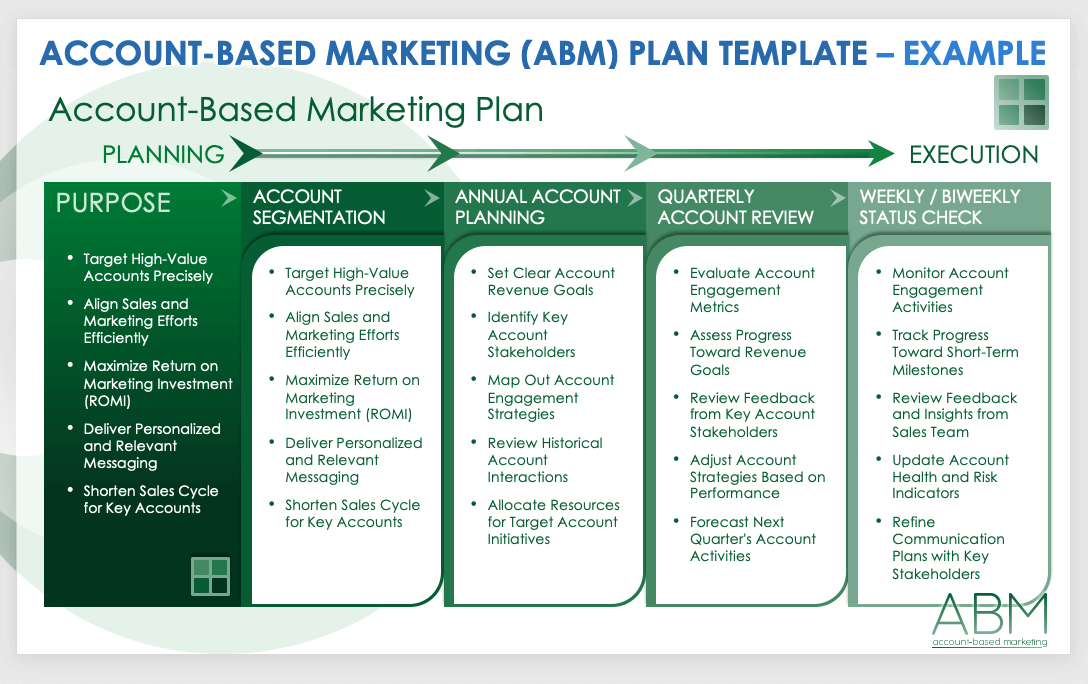
Your ABM success metrics need to be different from traditional lead generation approaches. A good measurement system confirms your work and provides vital insights that help you improve continuously.
Essential KPIs for ABM lead generation
The right KPIs help your ABM work deliver measurable results. Terminus State of ABM 2020 reveals revenue generation, pipeline generation, and meetings/demos scheduled as the top three metrics to measure ABM success. Only 9% of companies with fully integrated ABM programs still use lead generation as a KPI.
Your focus should be on these high-impact metrics:
Account engagement score shows how target accounts interact with your content and messaging. Your score has email open rates, webpage visits, content downloads, and digital ad click-through rates. This monitoring helps you spot accounts with genuine interest and content types that gain the most traction.
Pipeline velocity shows how quickly accounts move through your sales funnel, from first touchpoint to opportunity, then to close. This metric reveals where accounts get stuck or drop out so you can step in when needed.
Revenue metrics cover customer lifetime value, average deal size, and total revenue from target accounts. These numbers show ABM’s effect on your bottom line, and top-performing ABM programs achieve a 7:1 return on investment.
Using feedback loops to optimize targeting
Feedback loops help transform ABM from a static approach into a dynamic system that keeps improving. You should identify key touchpoints where customer feedback matters most, post-engagement surveys, support interactions, or follow-ups after major milestones.
Regular feedback collection through surveys, interviews, and NPS assessments is essential. Your analysis of this data reveals useful patterns that can shape your ABM strategy.
Customer input should drive real changes in your messaging, value propositions, or customer experiences. Let customers know how their feedback shaped your approach. This builds trust and encourages them to stay involved.
Common pitfalls to avoid in ABM measurement
Companies often hurt their ABM success through measurement mistakes. Lead generation metrics can leave your team discouraged and damage trust in the program, even when it succeeds. Your metrics should match specific business goals to keep tracking efforts focused and meaningful.
Poor data quality wastes resources and results in inaccurate targeting. Your database needs regular updates and cleaning. Data enrichment tools can fill information gaps.
Clear KPIs must exist from the start to track success. Without proper metric tracking and campaign analysis, improvement areas remain hidden. Live dashboards that monitor your ABM KPIs allow continuous tracking and quick adjustments when needed.
Conclusion
Transforming Your B2B Lead Generation with Strategic ABM
Account-based marketing has changed how B2B companies acquire customers. ABM turns the traditional marketing funnel upside down. It focuses resources on high-value accounts instead of casting wide nets. The results are impressive – 87% of marketers rate ABM as their top-performing strategy. Organizations attribute up to 73% of their total revenue to these efforts.
Your ABM success starts with a solid strategy. Build detailed ideal customer profiles, analyze intent signals, and implement tiered account strategies to use resources well. Your campaigns should strike a chord with multiple decision-makers. Create persona-based content and deliver it through connected channels. These channels include customized emails, LinkedIn outreach, direct mail, and engaging webinars.
Automation becomes crucial as your program grows. It helps you scale while keeping that personal touch. The right tech stack lets your team reach more accounts without losing authentic connections that make ABM work. The measurement is different from regular lead generation. You should track account engagement, pipeline velocity, and revenue metrics rather than lead volume.
Starting ABM might look daunting at first, but the rewards are nowhere near the effort required. Companies that run successful ABM campaigns see shorter sales cycles, higher close rates, and better ROI compared to traditional marketing.
Start today by defining your ideal customer profile and picking 5-10 target accounts for your pilot program. Your ABM strategy will become a powerful driver of B2B growth through continuous improvement and optimization.
Learn how to execute hyper-targeted account campaigns for effective ABM B2B lead generation strategies.
FAQs
Q1. What is Account-Based Marketing (ABM) in B2B lead generation?
Account-Based Marketing is a targeted B2B strategy where sales and marketing teams collaborate to engage high-value accounts. It focuses on creating personalized campaigns for specific companies rather than casting a wide net for leads, aiming to convert these accounts into long-term customers.
Q2. How does ABM differ from traditional marketing approaches?
ABM flips the traditional marketing funnel by focusing on specific high-value accounts rather than generating a large volume of leads. It emphasizes quality over quantity, allowing for more personalized engagement and typically resulting in higher ROI compared to broad-based marketing efforts.
Q3. What are the key components of a successful ABM strategy?
A successful ABM strategy includes building detailed ideal customer profiles, analyzing intent signals, implementing tiered account strategies, creating persona-based content, and delivering multi-channel campaigns. It also involves close alignment between sales and marketing teams throughout the process.
Q4. How can companies maintain personalization while scaling their ABM efforts?
Companies can maintain personalization at scale by adopting a tiered approach: using high-touch personalization for top-tier accounts, balanced personalization for mid-tier accounts, and leveraging automation and dynamic content for broader reach. Modular content frameworks and the right ABM platforms can also help maintain relevance while expanding reach.
Q5. What metrics should be used to measure ABM success?
Key metrics for measuring ABM success include account engagement scores, pipeline velocity, and revenue metrics such as customer lifetime value and average deal size. Unlike traditional lead generation, ABM focuses less on lead volume and more on the quality of engagement and actual revenue generated from target accounts.

Builds the demand intelligence, automation, and deliverability systems behind Growleads pipeline.