How to Master PPC Budget Pacing Strategies: A B2B Marketer’s Guide for 2026

Did you know that B2B companies should spend between 2-5% of their revenue on marketing? I get it, managing this budget effectively makes all the difference between PPC budget pacing strategies’ success and watching your ad spend go down the drain.
Trust me, as a B2B marketer myself, I know firsthand how tricky PPC budget pacing can be. You’re juggling multiple campaigns across different platforms, and with the average social media user now bouncing between 6.6 platforms, budget allocation gets messy fast. I’ve seen plenty of performance marketers struggle with campaign-level budget management, turning pacing and optimisation into a real headache.
Here’s something that caught my attention: 88% of B2B brands doubled down on digital marketing after COVID-19, yet so many still haven’t figured out how to pace their budgets properly. This digital shift isn’t slowing down either eMarketer’s research shows B2Bs will put nearly half their total ad budget into digital channels by 2024.
Let’s be honest, without a solid budget pacing formula, even your most creative PPC campaigns will fall flat. Whether you’re trying to handle Google Ads budget pacing or coordinate spending across multiple channels, proper pacing ensures your campaigns deliver consistent results from start to finish.
I’m going to walk you through proven PPC budget pacing techniques that will boost your ROI while helping you dodge common pitfalls. From picking the right pacing model to making real-time adjustments, you’ll discover strategies that tackle the specific challenges we B2B marketers face in 2025.
Understand the Role of PPC Budget Pacing Strategies
Budget pacing isn’t just a nice-to-have feature – it’s the backbone of effective PPC campaign management. I’ve seen firsthand how tracking and controlling the rate at which campaigns consume their budget directly impacts results, especially for us B2B marketers dealing with complex buying cycles and niche audiences.
Why pacing matters in B2B campaigns
For B2B marketers, budget pacing is a whole different ballgame. First off, our campaigns typically involve longer sales cycles than B2C efforts, making a consistent presence crucial throughout the buyer’s journey. When I’ve managed campaigns with sloppy pacing, I’ve missed opportunities during critical decision-making moments.
B2B audiences also don’t behave the same year-round. “Q4 is obviously jam-packed with holidays where B2B audiences won’t be particularly active”. So our pacing strategies need to account for these ups and downs to stay efficient.
On top of that, B2B PPC campaigns often target smaller, specialized markets with higher costs-per-lead. “The cost of targeting decision-makers in competitive industries can quickly add up, cutting into profit margins”. With these high stakes, getting your budget allocation right becomes even more critical.
The timing of your campaign launch changes everything too. I’ve learned this the hard way – launching mid-month completely shifts your calculations: “If you launch your ads on January 15, you will have to pace your campaigns to roughly USD 625.00 per day“ for a $10,000 monthly budget. This gets even trickier when you factor in business type and platform selection.
Common pitfalls in unmanaged PPC budgets
Without proper pacing, I see campaigns crash and burn in several predictable ways:
- Budget depletion too early: “Poor budget planning can kill campaigns before they build momentum”. This happens when marketers underestimate auction prices or don’t align spending with market conditions.
- Insufficient learning period: “All campaigns need to fulfill an algorithmic learning period”. Cutting campaigns short means algorithms don’t gather enough data to optimize performance.
- Platform misalignment: I’ve watched many marketers spread their limited budgets too thinly across multiple platforms. “Small budgets divided among Google Ads, Microsoft Ads, Facebook, and other channels usually result in poor performance everywhere”.
- Ignoring time-zone differences: “Targeting regions with a huge time difference within the same campaign may result in hitting the daily budget at the time of audience inactivity”. When this happens, entire audience segments never even see your ads.
- Failure to monitor regularly: “One of the biggest reasons spend issues can quickly grow out of control is lack of frequent and consistent oversight of campaign performance”. Daily and weekly monitoring stops small issues from becoming budget disasters.
The negative effects snowball fast. “An expensive week can lead to a shortfall for the month, which can then turn into a quarter of missed targets”. These pacing mistakes often explain why many B2B campaigns show zero sales uplift despite pouring money into ads.
I don’t treat budget pacing as an afterthought – it’s the framework supporting every other aspect of campaign performance. Proper pacing ensures your campaigns maintain consistent presence and provides the structure needed for strategic optimization. This is particularly crucial in B2B marketing where each click costs a pretty penny.
Set Clear Goals Before You Pace
Here’s something I’ve noticed time and again – too many B2B marketers rush into campaign implementation without setting clear targets first. Trust me, without precise objectives, you’re basically creating campaigns that burn through budgets with little to show for it.
Define your revenue and lead targets
First things first – what are you really trying to accomplish? Ask yourself: Are you going for brand awareness, generating leads, or driving direct sales? Your answer shapes your entire pacing strategy, as each goal needs a different approach to budget allocation.
I always recommend using SMART objectives (specific, measurable, attainable, relevant, and time-bound). This framework turns those vague goals into something you can actually work with:
- Specific: Nail down exact numbers – like 50 leads or $10,000 in revenue
- Measurable: Pick KPIs you can actually track, not fluffy metrics
- Attainable: Be realistic about what’s possible in your market
- Relevant: Make sure your PPC goals connect directly to business outcomes
- Time-bound: Set clear deadlines for hitting your targets
For B2B specifically, don’t just chase lead volume. I’ve learned to focus on metrics like cost per high-intent lead, lead-to-conversion rate, and pipeline contribution. This way, your budget pacing supports real business outcomes, not just vanity metrics that look good in reports.
Map goals to funnel stages
Different funnel stages need different goals – seems obvious, right? But I can’t tell you how many clients apply the same goals to all campaigns regardless of where they sit in the marketing funnel.
For awareness campaigns, you’ll want to focus on impression share and engagement. These typically need wider reach and higher frequency of ad impressions. When you get to consideration-stage campaigns, shift to tracking landing page visits and content downloads. For decision-stage campaigns, keep your eye on demo requests or pricing inquiries.
I’ve found it works best to create separate campaigns for each funnel stage, each with their own KPIs. Your awareness campaign might target 50,000 impressions by a specific date, while your decision-stage campaign focuses on keeping acquisition costs under a certain threshold.
Use historical data to model spend
Don’t ignore what’s already happened – your past performance provides crucial context for realistic goal-setting. When planning, I always analyze previous campaigns to spot:
- Spend and revenue patterns across different quarters
- How performance fluctuates seasonally
- CPC trends by keyword category
- Conversion rates for different campaign types
If you’re aiming for brand awareness, historical data helps you estimate the budget you’ll need for impression targets based on your average CPCs. For lead generation, your past conversion rates tell you how many clicks you’ll need to hit your lead goals, which then determines your budget requirements.
This data-driven approach helps you avoid nasty surprises like underestimating costs or setting performance expectations that are completely unrealistic – both of which can derail your pacing strategy before you even get started.
Build a PPC Budget Pacing Strategy
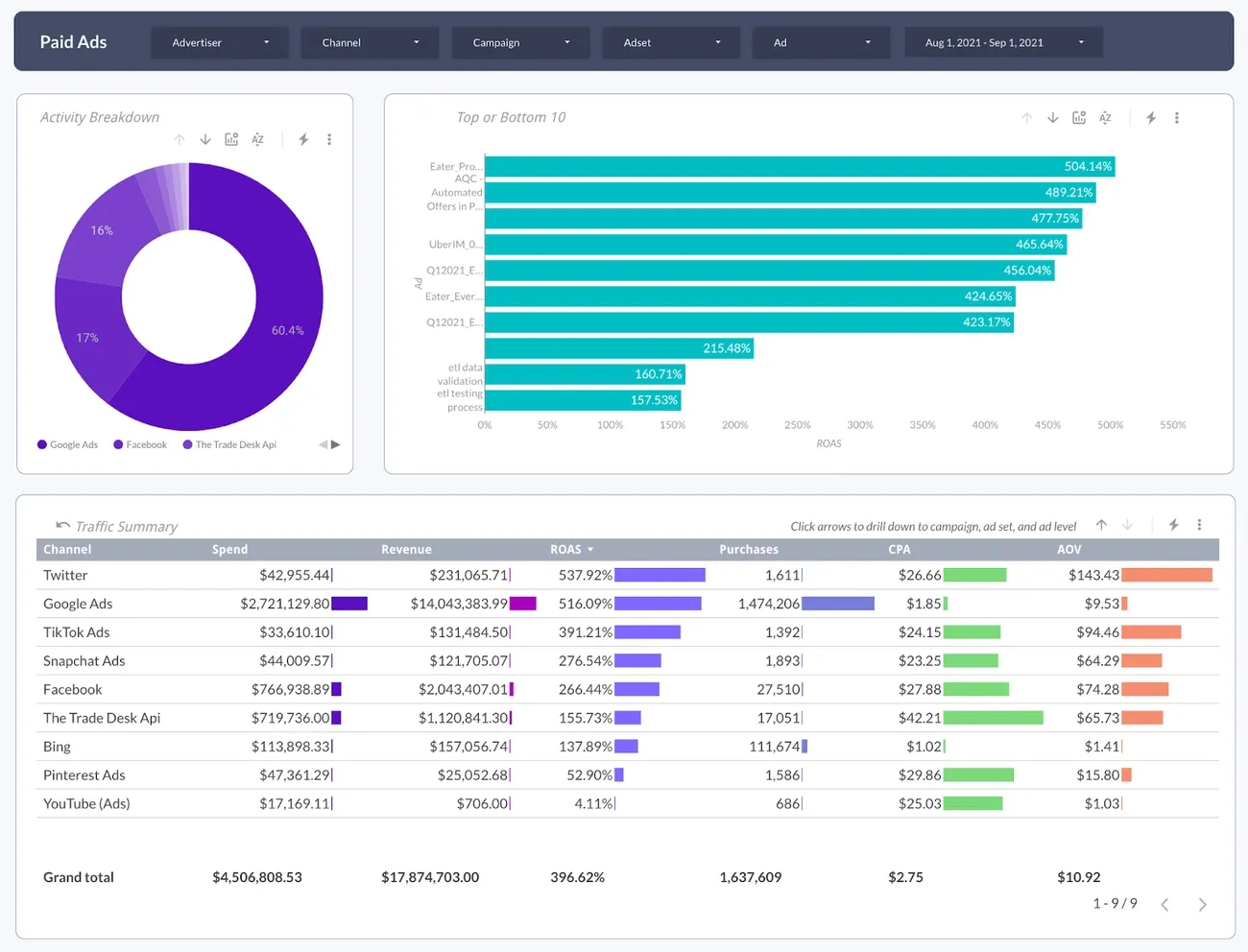
Image Source: Improvado
Once you’ve got your goals figured out, it’s time to create a PPC budget pacing strategy. Trust me, with the right approach, you’ll get way more bang for your buck across all your campaigns.
Choose a pacing model: linear vs. front-loaded
I’ve tried various pacing models over the years, but they basically fall into two main categories. Linear (or evenly distributed) pacing allocates roughly equal amounts of spend each day of your campaign. This works great for maintaining consistent presence – perfect for most B2B campaigns where you need steady lead generation.
On the flip side, front-loaded pacing puts more money at the beginning of your campaign. After you’ve hit the halfway point time-wise, you’ll have used about 66.7% of your budget, with the rest spread across the second half. I love this approach when launching new products or services where making a big splash right out of the gate matters.
Some campaigns do better with a third option, front and back-loaded pacing, where you concentrate spending at both the beginning and end, with lighter spending in the middle. Kind of like bookends for your campaign.
Apply a budget pacing formula
When I’m putting this into practice, I rely on this super straightforward budget pacing formula:
Daily Spend Target = Monthly Budget ÷ Total Days in Month
To check if you’re on pace, just calculate: Ideal Spend to Date = Daily Spend Target × Number of Days Passed
Then evaluate your status: Actual Spend to Date ÷ Ideal Spend to Date. If you get more than 1, you’re overspending; less than 1 means you’re underspending.
For B2B campaigns that bounce around day to day (which is totally normal), I usually look at a 7-day average instead of single-day data when projecting future spend. This gives me a clearer picture of what’s really happening.
Align pacing with campaign duration and seasonality
Seasonality is huge for B2B pacing. I recommend ramping up your budget bit by bit as peak seasons get closer, focusing your money on keywords that have worked well in the past.
Just don’t slash budgets too quickly after peak periods end – you could miss out on late-cycle opportunities if you suddenly disappear. I always try to think at least one season ahead when planning pacing.
For seasonal stuff, Google Ads’ Performance Planner is your friend – it helps predict outcomes based on past performance and market trends. Also, always keep a buffer in your pacing strategy, I usually set aside 10-15% of total budget, to handle unexpected CPC jumps during competitive periods.
At the end of the day, your pacing strategy needs to match your business goals. Whether you go with even distribution for steady visibility or front-loading for initial impact, make sure your approach fits your specific B2B sales cycle.
Monitor and Adjust in Real Time
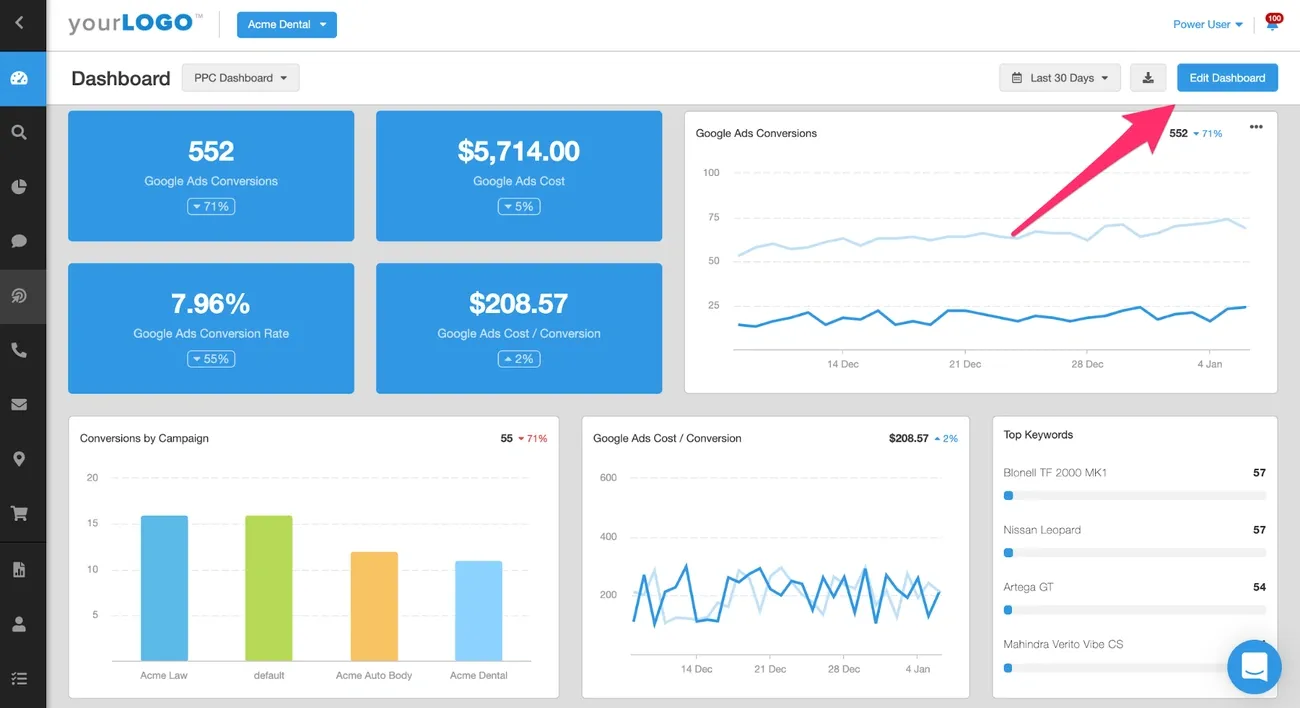
Image Source: AgencyAnalytics
Real-time monitoring turns your budget management from reactive to proactive. I couldn’t run successful PPC campaigns without constant vigilance – the “set-it-and-forget-it” approach just doesn’t cut it.
Track daily and weekly spend
Ever wonder how often you should check your campaign performance? Well, it depends on your spend level. I’ve found that tracking across multiple time frames gives you the full picture. Daily checks catch those sudden spikes that can wreck your budget, while weekly reviews reveal the broader patterns.
For campaigns with significant spend, I check performance multiple times daily. For smaller campaigns, daily reviews usually do the trick.
Here’s something that caught me off guard when I first started: Google can exceed your daily budget on certain days, creating uneven spending patterns. Now I know these fluctuations often follow predictable seasonal patterns, insights that are gold for future budget planning.
To keep proper tabs on your spend:
- Create a structured monitoring schedule based on campaign size
- Look for unusual spending patterns across days of the week
- Document seasonal trends specific to your industry
I’ve seen it happen too many times – without frequent monitoring, spend issues spiral out of control. An expensive week cascades into monthly shortfalls, and before you know it, you’re dealing with quarterly performance gaps.
Use expected vs. actual pacing metrics
The simple formula I swear by for tracking pacing status is:
Pacing Status = Actual Spend to Date / Ideal Spend to Date
It’s straightforward: greater than 1 means you’re overspending; less than 1 means underspending; close to 1 means you’re on track. This calculation instantly clarifies your campaign’s financial health.
But don’t just look at where you are now. I always use projection metrics to forecast end-of-period spending. For example, if you’ve spent $350 of a monthly $1,200 budget after just one week, when weekly spend should be $300, you’ll blow through your budget without adjustments.
Tools to automate PPC budget pacing
OK, so I may be biased, but automation tools have completely changed how I manage budgets. Platforms like Adalysis give you instant spending overviews and alert you about overspending or underspending across accounts, campaigns, or shared budgets.
The best tools offer features like:
- Customizable alert thresholds when specific budget percentages are reached
- Automated campaign pausing when thresholds are hit with scheduled reactivation
- Projected performance changes when adjusting budgets
- Identification of campaigns losing impression share due to budget limitations
Some platforms even use AI-powered algorithms that automatically adjust daily budgets, keeping campaigns paced evenly throughout their lifecycle. This prevents both premature budget depletion and end-of-month underspending, problems I see constantly in B2B marketing.
Optimize for Performance, Not Just Spend
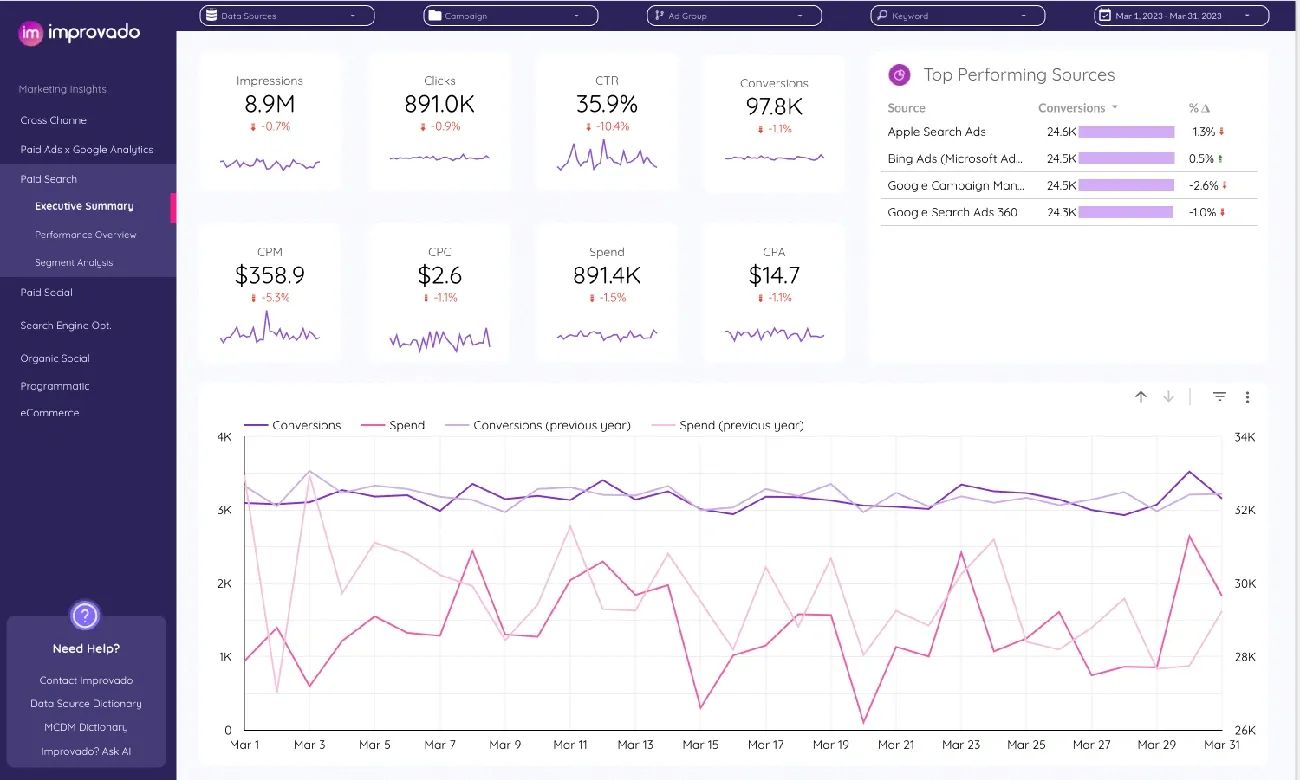
Image Source: Improvado
Let me tell you something – strategic budget allocation can turn ordinary PPC campaigns into serious revenue engines. I’ve noticed that the best B2B marketers focus on results, not just managing spend. This takes more than basic budget monitoring; it requires some sophisticated techniques.
Shift budget based on channel performance
The top PPC marketers I know don’t stick to rigid monthly allocations. Instead, they constantly evaluate which channels deliver the best results and shift funds accordingly. For example, if your Facebook ads are crushing it while LinkedIn or Google are just so-so in a given month, pump more money into Facebook and adjust as performance shifts.
The same goes for campaign-level allocation. Say your plumbing campaign is beating CPA targets while electrical services are underperforming – temporarily move some budget to plumbing until you fix the electrical services results.
For B2B specifically, I recommend breaking campaigns into funnel stages (awareness, consideration, decision) and adjusting budgets based on which stage is giving you the highest ROI right now. This funnel-based approach makes sure you’re putting your money behind the right audience at the right time.
Incorporate CRM data for deeper insights
Your CRM is a goldmine of information that can seriously boost your budget pacing strategy. When you connect your ad platforms with your CRM, you can see which campaigns truly drive customer lifetime value (LTV), not just initial conversions.
Want high-impact optimization? Focus on CRM data points like:
- Job titles, company size, and revenue for B2B targeting
- Purchase patterns and lifetime value for budget prioritization
- Conversion rates by customer segment to inform your bidding strategies
This connection can reveal some eye-opening insights. For instance, a campaign with a higher acquisition cost might actually deliver customers with substantially higher lifetime value, making it more profitable in the long run. I’ve had great success uploading CRM-based customer match lists to Google and LinkedIn to create high-value audience segments.
Avoid over-optimization traps
Here’s something interesting – you can actually over-optimize in PPC. Making too many changes at once – even if each one seems smart on its own – can tank your performance and make troubleshooting nearly impossible.
I see this trap spring when marketers:
- Implement multiple bid adjustments that multiply errors
- Create excessively granular product groups without enough data
- Drive maximum CPC too low, resulting in “limited” campaign status
To avoid these pitfalls, I stick to implementing one significant change per week (or every two weeks for low-spend accounts), giving enough time to evaluate the impact before making another adjustment. This measured approach might seem slower at first, but it prevents that downward spiral where undoing changes becomes a nightmare.
Make Budget Pacing Work for You in 2025
Let’s talk about what’s coming in 2025. PPC budget pacing is getting way easier thanks to new tech. I’ve been watching this space closely, and AI-assisted tools are absolutely changing the game for us B2B marketers trying to stay ahead.
Embrace AI-Driven Budget Management
AI tools are doing something pretty amazing now – they’re putting your PPC spend data into context against things like shifting consumer behavior and global events, giving you a much clearer picture of how efficiently you’re spending. This tech crunches massive data sets in seconds, delivering insights when you need them – super important for complex B2B campaigns where timing is everything.
What should you look for in these platforms? I recommend focusing on:
- Smart bidding features that auto-adjust to maximize your conversions
- Budget recommendations built on your historical performance
- Target CPA/ROAS capabilities that optimize bids while respecting your budget limits
Balance Automation with Human Oversight
Here’s the thing though – automation isn’t meant to be set-and-forget. Even the smartest systems need quality data to work with. “Algorithms may over-prioritize low-margin conversions or underbid on new products lacking data”. That’s why we B2B marketers need to:
- Keep a close eye on those automated campaigns
- Feed your systems with quality lead data straight from your CRM
- Get those offline conversions imported to “teach the machine”
I’ve seen too many marketers blindly trust the algorithms and wonder why their results tank. Don’t be that person.
Implement Cross-Platform Budget Flexibility
The days of rigid monthly budget allocations are over in 2025. You’ve got to be nimble with your approach. “Flexibility across platforms is equally critical. Budgets shouldn’t be locked into fixed channel splits”.
When you’re reconciling those monthly budgets, always track what you actually spent versus what you planned to spend. Even small monthly underspends add up fast, if you budget $10,000 but only spend $9,800, that extra $200 can give your next month’s campaigns a nice boost.
Did you know platforms now let you move unspent budget to future months? This means you can focus on high-performing campaigns or key sales periods when they matter most. Now every dollar works toward actual results, not just hitting arbitrary percentage targets.
In 2025, winning at budget pacing means combining smart allocation strategies with solid tracking systems and platform-specific insights, all guided by human oversight of your automation tools.
FAQs
Q1. What is PPC budget pacing and why is it important for B2B marketers?
PPC budget pacing is the strategic allocation and management of ad spend over time. It’s crucial for B2B marketers because it ensures consistent campaign presence throughout longer sales cycles, prevents premature budget depletion, and maximizes ROI by aligning spend with market conditions and business goals.
Q2. How can I choose the right pacing model for my B2B PPC campaigns?
Consider your campaign objectives and sales cycle. Linear pacing works well for consistent lead generation, while front-loaded pacing is ideal for new product launches or when initial market impact is crucial. Analyze your historical data and industry seasonality to determine the most effective model for your specific needs.
Q3. What tools can help automate PPC budget pacing?
Several tools can assist with budget pacing automation, including platforms that offer customizable alert thresholds, automated campaign pausing, and AI-powered algorithms for daily budget adjustments. Look for tools that provide instant spending overviews, notify you of over or underspending, and offer projected performance changes based on budget adjustments.
Q4. How often should I monitor my PPC campaign spending?
For campaigns with significant spend, it’s recommended to check performance multiple times daily. Smaller campaigns typically require daily reviews. Implement a structured monitoring schedule based on your campaign size, and look for unusual spending patterns across days of the week and seasonal trends specific to your industry.
Q5. How can I optimize my PPC budget for performance rather than just managing spend?
Focus on dynamically allocating your budget based on channel and campaign performance. Incorporate CRM data to gain deeper insights into customer lifetime value and segment performance. Adjust budgets based on which funnel stages yield the highest ROI. However, avoid over-optimization by implementing one significant change at a time and allowing sufficient evaluation periods.

Runs paid acquisition across Google, LinkedIn, and Meta for B2B pipeline.