
Why Most B2B Lead Generation Companies Fail (And How to Pick Winners in 2026)

Are you pouring money into lead generation campaigns that just don’t deliver? You’re not alone.
Around 50% of marketers consider lead generation one of their top priorities, and for good reason. Lead generation companies and their strategies form the backbone of any successful B2B growth plan. I’ve watched countless businesses struggle with this critical process, dumping cash into campaigns that return disappointing results.
Here’s the harsh reality. Without effective lead generation, you’ve got no leads flowing through your sales pipeline, no conversions, no customers, and ultimately, no business growth. It’s that simple.
B2B sales cycles typically last between one and three months with multiple touchpoints, making a strategic approach essential. Surprisingly, only 11% of sales professionals actively ask for referrals, despite the fact that customers referred by friends have a 16% higher lifetime value. Did you know SEO-generated leads boast a 14.6% closing rate? Or that paid advertisements can deliver up to 200% ROI when done right?
I’ve spent years analyzing what separates the winners from the losers in this space. The difference isn’t just about tactics, it’s about understanding the fundamental shift in how B2B buyers make decisions today.
In this guide, I’ll reveal why most lead generation companies fail to deliver results and show you exactly what to look for when choosing a partner that will actually drive growth for your business in 2025.
Why Most B2B Lead Generation Companies Miss the Mark
I’ve analyzed hundreds of B2B lead generation programs over the years, and I keep seeing the same problems. Despite big promises, most lead generation companies deliver disappointing results. There are three critical failures that repeatedly sink even well-funded campaigns.
Lack of clear buyer personas
Did you know that 60-70% of marketers admit they don’t truly understand their buyers? This shocking statistic explains a fundamental problem – when you try to appeal to everyone, you end up connecting with no one. Your B2B audience faces 6,000-10,000 marketing messages daily, making generic approaches practically invisible.
The numbers don’t lie here. Companies that exceed their lead and revenue goals are four times more likely to use detailed buyer personas compared to those who miss targets. Furthermore, 93% of companies that surpass their goals segment their database by persona.
These aren’t just abstract concepts – they deliver tangible results:
- 56% of companies create higher quality leads using buyer personas
- 36% report shorter sales cycles
- 24% generate more leads overall
Without understanding who your ideal customer is, you can’t address their specific challenges or position your solution appropriately. Rather than developing this critical foundation, many lead generation companies dive straight into tactics, consequently setting themselves up for failure from the start.
Overreliance on outdated tactics
Many B2B lead generation companies continue relying on generic outreach strategies that fail to connect with today’s decision-makers. They focus on quantity over quality, flooding pipelines with low-fit contacts that create friction throughout the organization.
Another major pitfall? Dependence on a single lead generation channel. When algorithms change, budgets shift, or response rates drop, your entire pipeline stalls. Additionally, outdated websites and poor landing page optimization make negative impressions on potential buyers, actively deterring conversions.
The most successful lead generation strategies combine multiple approaches tailored to different buyer personas. Some prospects respond better to phone calls, particularly in commercial industries like roofing or HVAC, whereas tech industry decision-makers often prefer email communication. A multi-channel strategy provides resilience and reaches different types of buyers through their preferred channels.
Failure to align sales and marketing
Perhaps the most devastating issue is the widespread misalignment between sales and marketing teams. According to Harvard Business Review, a staggering 90% of sales and marketing professionals report misalignment in strategy, process, culture, and content marketing. This disunity directly impacts business performance and customer experience.
The consequences are severe. In LeanData’s survey:
- 51% of marketers rated communication between teams as unsatisfactory
- 38% of sales reps are unaware of marketing’s goals
- 68% of marketers say up to half their qualified leads are ignored by sales
- 48% of sales professionals don’t trust marketing’s pipeline numbers
This disconnect creates a broken lead handoff process where marketing passes leads with little context, leaving sales unprepared to engage effectively. Marketing blames sales for poor conversion rates, while sales questions lead quality – all while potential customers fall through the cracks.
Without alignment, your audience receives inconsistent messages and experiences a disjointed buyer journey. Even the best lead generation strategy fails when these fundamental teams operate in silos rather than as a unified force driving business growth.
The Hidden Costs of a Broken Lead Generation Process
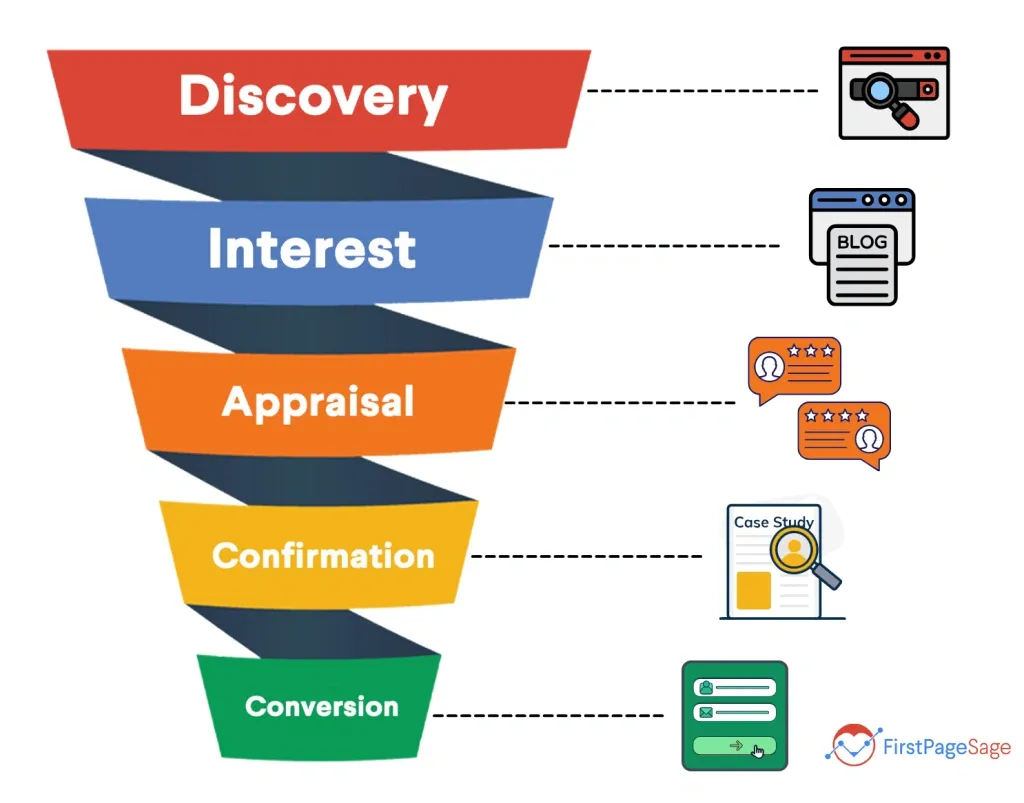
Image Source: First Page Sage
Do you know how much money you’re leaking through broken lead generation processes? I bet it’s more than you think.
Most businesses don’t see the full picture. Behind every missed opportunity, there’s real revenue slipping away that could have fueled growth. And trust me, the financial impact extends far beyond mere inconvenience.
Wasted ad spend and low ROI
Let’s talk about where the bleeding starts – with marketing budgets that deliver less and less. Studies show companies estimate that 10-25% of their marketing budget simply evaporates due to poor data quality.
This isn’t just about wasted dollars, it’s about opportunity cost too. For every dollar you spend acquiring low-quality leads, you’re taking money away from channels that could bring in genuine prospects.
Here’s the brutal truth: if your marketing team is operating with outdated strategies or misaligned goals, you might as well be burning half your marketing budget. The math is straightforward, if you’re spending thousands on Google Ads, SEO, or content marketing without proper follow-up systems, you’re getting a fraction of the return you should.
Even worse? Organizations with aligned sales and marketing teams experience an average 32% revenue growth, while misaligned companies typically see a 7% decline. An ineffective strategy isn’t just wasting money, it’s actively destroying value.
Poor lead quality and sales friction
But there’s another hidden cost beyond wasted budgets: what it does to your sales team. Did you know sales reps spend nearly 50% of their time on unproductive prospecting, chasing leads that will never convert? This creates a vicious cycle where sales simply starts ignoring marketing-generated leads altogether.
The numbers tell a sobering story. When companies send leads directly to sales, only 27% are actually qualified. Just imagine your sales team’s frustration when three out of four leads they contact aren’t ready or suitable for your offering. This friction doesn’t just hurt morale, it damages the critical relationship between sales and marketing.
Plus, manual processes for entering lead information into CRMs significantly slow everything down. This inefficiency makes the problem even worse, reducing conversion chances and creating unnecessary admin work.
Missed opportunities from slow follow-up
Here’s what really kills me: the cost of delayed response times. The data couldn’t be clearer: you are 100 times more likely to connect with a lead if you respond within 5 minutes compared to waiting 30 minutes. Even more critically, you’re 21 times more likely to qualify that lead with a 5-minute response versus waiting half an hour.
Yet the typical reality? It’s shocking. The average B2B lead response time is a sluggish 42 hours, with about half of all companies taking up to five days to respond, if they respond at all. This delay is absolutely catastrophic since 78% of customers ultimately purchase from the company that responds first.
Let me put this in perspective for you. Imagine a business generating 500 monthly leads with a 10% close rate and $2,000 average deal size. If poor follow-up processes mean only half those leads receive proper attention, that’s $50,000 in monthly revenue lost, adding up to a staggering $600,000 annually. All because of something as seemingly simple as response time.
What Winning B2B Lead Generation Companies Do Differently
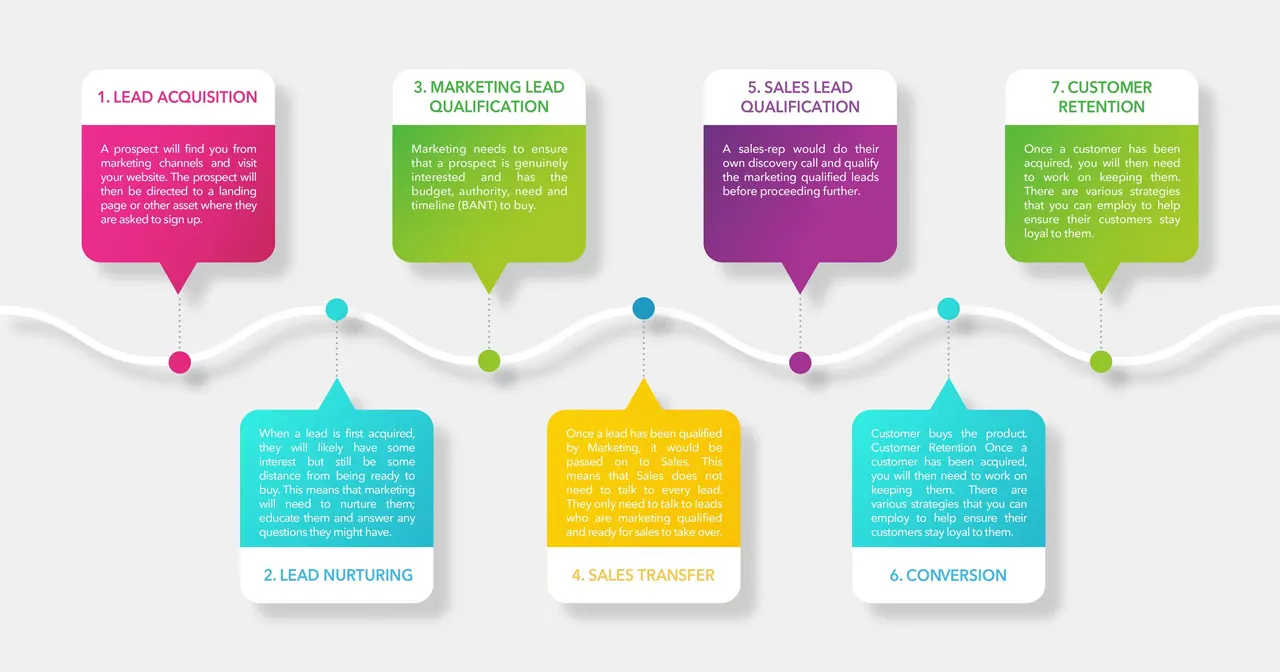
Image Source: Salespanel
After spending years analyzing the top performers in this space, I’ve spotted four key things that separate the winners from the losers in B2B lead generation. Let me show you what really makes the difference.
They build around the buyer journey
The best lead generation companies get something fundamental: 57% of the B2B buyer journey occurs before prospects ever speak to sales. Think about that for a second. More than half the buying decision happens before your sales team even enters the picture!
Instead of just pushing products (like most companies do), these winners map their entire strategy to the three stages buyers actually go through: awareness, consideration, and decision.
What does this look like in practice? They create different content for each phase:
- Educational stuff during awareness
- Detailed solutions during consideration
- Validation content at the decision stage
Here’s something interesting: Forrester’s research shows that personalization targeted to specific needs works best during early discovery, while organization-based personalization becomes more impactful closer to purchase. The best companies understand this shift and adapt accordingly.
They personalize content and outreach
Want to know why some lead generation companies crush it while others fail? Personalization. The winners prioritize this because 80% of prospects consider personalized experiences important. They know generic outreach just doesn’t cut it anymore.
These companies go way beyond just sticking someone’s name in an email. They:
- Analyze behavior signals to predict what kind of interaction will work best
- Customize content based on industry, job role, and prior engagement
- Segment audiences using actual data, not guesswork
Does this approach actually work? You bet. Salesforce found that high-performing marketing teams are significantly more likely to use web personalization. This leads directly to better lead quality and higher conversion rates. Not rocket science, just smart business.
They test, measure, and iterate constantly
The winners in this space never stop improving. They get that most campaigns don’t fail, they simply weren’t optimized.
These companies test everything. Email subject lines, landing page elements, call-to-action buttons, nothing is sacred. They let their audience behavior guide what stays and what goes.
Every decision is backed by data. The top performers implement analytics across their entire funnel, tracking everything from lead volume to source performance. As one expert puts it, “Let the audience tell you what works. Data doesn’t lie”.
With this approach, they can make quick adjustments that steadily improve results. No more guessing games or “we’ve always done it this way” thinking.
They integrate sales and marketing workflows
Here’s perhaps the biggest differentiator: winning lead generation companies tear down the walls between sales and marketing. They understand that sales and marketing alignment leads to average revenue growth of 32%, while misaligned companies typically see a 7% decline.
Instead of treating lead generation as separate functions handled by different teams who barely speak to each other, they create unified workflows. Both teams share:
- Data
- Goals
- Customer insights
This starts with regular communication channels and developing metrics both teams actually care about. They connect their CRM and marketing platforms so all customer engagements are automatically recorded and visible to both teams. The result? Seamless handoffs and consistent experiences for potential customers.
How to Evaluate a B2B Lead Generation Partner in 2025
Looking for a B2B lead generation partner who actually delivers? It’s not as simple as picking the company with the flashiest promises or most impressive case studies.
I’ve analyzed countless providers, and I’ve found four crucial evaluation criteria that separate genuine growth partners from companies that will waste your time and budget.
Ask for strategy, not just tactics
The best lead generation partners start with strategy, not technology. Despite there being over 14,000 marketing technology solutions available today, successful partners understand that “strategy first, technology second” must be their guiding principle.
When you’re talking to potential partners, ask about their strategic approach before getting into specific tactics. What’s their philosophy? How do they approach different markets?
A telling indicator is their employee composition. Companies with a sales-heavy team structure operate fundamentally differently than those investing primarily in editorial, technology, and customer success roles. This difference reveals their underlying philosophy, whether they prioritize quick wins or sustainable results.
Look for transparency in reporting
Transparency is the bedrock of any successful lead generation partnership. Did you know 94% of B2B customers prefer companies that demonstrate sincerity and openness in their operations?
When evaluating potential partners, ask for sample reports. How do they track metrics? What happens when things don’t go as planned?
Trustworthy lead generation companies willingly share detailed performance data, including how many leads were rejected during quality control and why. They should provide visibility into lead production metrics that most providers typically hide. They should also clearly explain their data privacy practices, particularly regarding GDPR and CCPA compliance.
Check for industry-specific experience
Success in one industry rarely translates directly to another. Before committing to a partner, verify whether they’ve built expertise in your sector and truly understand your target audience.
I recommend testing their audience claims firsthand:
- Subscribe to their newsletters
- Review their content quality
- Secret-shop their landing pages to experience exactly what your potential leads will see
Then, request customer referrals specifically from clients targeting similar audiences as you. Quality partners will connect you with reference customers who can talk concretely about pipeline and revenue results, not just lead volume.
Evaluate their tech stack and integrations
Finally, make sure their technology infrastructure aligns with your needs. Studies show companies spend between 20-40% of their marketing budget on technology. You want that investment going toward complementary systems, not creating technical headaches.
Key integrations to verify include:
- CRM systems (like HubSpot, Pipedrive, Salesforce)
- Marketing automation platforms
- Analytics tools
- Sales enablement solutions
Also ask how they assess their own technology. The best partners regularly audit their martech stack using criteria like impact, usage, adoption, integration capabilities, and investment level.
Lead Generation Best Practices to Adopt Now

Image Source: SlideTeam
Want to get ahead of your competition? Start by implementing proven lead generation tactics that give your business an immediate edge while avoiding those costly mistakes everyone else makes.
Research shows that lead generation is a top priority for 85% of B2B companies, with six out of ten marketers citing it as their biggest challenge. I’ve seen this firsthand. Let me show you how to excel where others struggle.
Create high-value lead magnets
Let’s be honest – nobody wants another generic PDF that collects digital dust. The foundation of effective lead generation starts with content that actually solves real problems.
Did you know that cheat sheets (34%), checklists (27%), and ebooks (24%) achieve the highest conversion rates? That’s because they deliver immediate value rather than simply collecting contact information.
Want something even better? Try creating interactive tools. Mini calculators and assessment quizzes don’t just capture leads – they drive 70% higher conversions than passive content.
Your lead magnet should directly address specific pain points in your audience’s journey. Think templates, guides, or resources that provide an immediate solution. Give them something they can use right now, not just information to read later.
Use multi-channel outreach
Relying on a single channel is like putting all your eggs in one basket – dangerous. When your email domain faces technical issues or your LinkedIn account gets restricted, your entire pipeline stalls. Multi-channel approaches provide insurance against these risks.
Here’s what research confirms: buyers inhabit different spaces. Some prefer LinkedIn discussions, others respond best to email, while certain industries still favor phone calls.
By implementing a structured sequence across channels, you’ll simultaneously increase visibility and discover each prospect’s preferred communication method. Just make sure you maintain consistent messaging across platforms while adapting content formats to suit each channel’s unique environment.
Score and segment leads effectively
Not all leads are created equal. Lead scoring transforms how you prioritize follow-up efforts by assigning numerical values (typically 1-100) to leads based on specific behaviors and demographics.
For example, someone downloading your product demo earns a higher score than someone just visiting your homepage. Makes sense, right?
At the same time, effective segmentation divides your database into meaningful subgroups. Companies that surpass revenue goals are four times more likely to use detailed segmentation.
This approach enables hyper-personalized outreach that acknowledges different businesses have different budgets, decision-makers, and pain points. One size definitely doesn’t fit all in B2B lead generation.
Automate follow-ups without losing the human touch
Speed kills in lead generation – but in a good way. You’re 100 times more likely to connect with leads when responding within 5 minutes versus waiting 30 minutes. Yet the average B2B response time stretches to a dismal 42 hours. Yikes!
Automated lead follow-up systems solve this timing problem while maintaining personalization. Research shows 82% of consumers want more human interaction during sales processes.
The ideal automation incorporates personalized touches across channels – confirming form submissions via email while simultaneously initiating a call connection with an available representative. It’s about being prompt AND personal.
Track performance with clear KPIs
If you can’t measure it, you can’t improve it. Measuring performance with the right metrics illuminates what works and what needs adjustment.
Effective KPIs include conversion rates, cost per lead (CPL), lead quality scores, and sales velocity. These metrics provide accountability and help redirect resources from underperforming channels.
I particularly recommend focusing on attribution – understanding which channels produce your highest-value customers. This insight allows you to optimize your marketing budget around the most productive sources rather than spreading resources thinly across every platform.
Which of these best practices are you already implementing? And which ones could transform your lead generation results?
FAQs
Q1. What are the key challenges in B2B lead generation?
The main challenges include relying on outdated tactics, lack of engagement and content optimization, budget constraints, finding ideal customers, converting and nurturing leads, and accurately tracking ROI. Many companies struggle to adapt their strategies to evolving buyer behaviors and technologies.
Q2. How is AI transforming B2B lead generation?
AI is revolutionizing B2B lead generation by automating manual tasks, improving lead accuracy, and enhancing personalization. Companies adopting AI-powered lead generation software can significantly reduce workload, target prospects more precisely, and create more tailored outreach – all critical factors for success in modern B2B sales.
Q3. What strategies are effective for B2B lead generation in 2025?
Successful strategies combine AI automation with personalized outreach. Key approaches include using smart data segmentation, predictive analytics, multi-channel engagement, and consistent follow-ups. Leveraging tools that offer robust solutions for targeting and automation, while maintaining a personal touch, is crucial for generating quality leads.
Q4. Why is lead generation so important for B2B businesses?
Lead generation is vital for B2B growth as it enables companies to differentiate their brand, connect with potential customers, and guide them through the purchasing journey. It helps businesses build a pipeline of qualified prospects, ultimately driving revenue growth. Despite its importance, many marketers still find effective lead generation to be one of their biggest challenges.
Q5. How can companies choose the right B2B lead generation partner?
When selecting a lead generation partner, companies should verify that the partner owns their audience, investigate their company structure, focus on lead quality over quantity, examine their technological capabilities, and ensure values alignment. It’s also crucial to request customer references from clients targeting similar audiences and to evaluate the partner’s ability to deliver concrete pipeline and revenue results

Builds the demand intelligence, automation, and deliverability systems behind Growleads pipeline.