
Why Email Scrubbing Guide Could Be Your Best Growth Lever in 2026

Open rates above 20% are considered strong in most industries, but countless businesses fall short of this benchmark. Why? The hidden culprit behind disappointing email performance isn’t your brilliant content or catchy subject lines, it’s your neglected subscriber list.
Did you know that poor email list hygiene directly tanks your deliverability, engagement, and conversion rates? This isn’t just a minor inconvenience, it’s actively sabotaging your marketing results.
Email scrubbing (cleaning your list) isn’t just busywork. It’s a powerful growth lever that significantly boosts your sender reputation and campaign performance. Companies with clean email lists see dramatically higher engagement rates and better ROI from their email marketing efforts.
Think about it: every bounced email, spam complaint, or perpetually disengaged subscriber chips away at your sender reputation. Instead of broadcasting to thousands of unresponsive contacts, proper list scrubbing helps you focus your resources on subscribers who actually want to hear from you.
Let’s be clear, implementing email list hygiene best practices isn’t merely tidying up a database. You’re strategically positioning your business for improved deliverability, engagement, and ultimately, conversion.
In this guide, we’ll walk through everything you need to know about cleaning your list effectively in 2025. From understanding the true cost of dirty data to selecting the right email scrubbing services for your specific needs, you’ll learn exactly how to turn this overlooked practice into your secret weapon for growth.
What Email Scrubbing Really Means in 2025
“Regular email list cleaning ensures your marketing messages reach valid email addresses. It avoids spam folder traps and boosts your deliverability.”
, GetWPFunnels, Email Marketing Platform and WordPress Funnel Builder
Email scrubbing has evolved considerably by 2025, going far beyond simply removing a few bad email addresses. Today, it encompasses identifying and eliminating poor-quality and risky contacts while maintaining your most valuable audience connections.
After analyzing six billion emails, data shows only 57% of all email addresses remain valid and non-risky. This rapid decay rate occurs because people change jobs, abandon accounts, or use temporary addresses. Furthermore, major providers like Gmail (with 1.8 billion users) regularly purge inactive accounts to combat spam and phishing.
How do you know when your list needs scrubbing? Watch for these key indicators:
- Bounce rates exceeding 2% (industry experts consider this the danger threshold)
- Declining engagement metrics (lower open and click-through rates)
- Increasing spam complaints
- Disengaged subscribers who no longer interact with your content
Your sender reputation, measured on a scale from 0 to 100, plays a decisive role in email deliverability. According to Sender Score, a reputation below 80 clearly indicates email hygiene issues, potentially resulting in deliverability problems or completely blocked messages.
Professional email scrubbing offers several technical advantages. First, it identifies and removes harmful contacts like spam traps (which appear normal but devastate your sender reputation when triggered). Additionally, it handles catch-all domains and de-duplicates your list, removing redundant entries that skew your metrics.
Most importantly, the results speak for themselves. According to HubSpot research, regularly cleaned email lists experience up to 50% higher open rates. Through proper scrubbing, companies maintain bounces under 1%, dramatically improving deliverability.
Modern email scrubbing employs sophisticated tools like real-time validation APIs that check every new signup instantly, blocking harmful data before it contaminates your list. This proactive approach prevents list deterioration instead of merely reacting to it.
In 2025’s email marketing landscape, scrubbing serves as preventive maintenance rather than damage control. Regular cleaning demonstrates to Internet Service Providers (ISPs) that your emails are credible and targeted, ultimately improving your sender score. Given that email data decays faster than most marketers realize, implementing consistent cleaning protocols has become essential for maintaining effective communication channels with your audience.
Why Dirty Lists Hurt More Than You Think

Let’s be honest, maintaining a clean email list isn’t just good practice, it’s essential for survival. Neglecting list hygiene actively sabotages your marketing results. Research shows that email data decays at an alarming rate of 22% annually as people change jobs, abandon accounts, or switch email providers. This rapid decay creates a cascade of problems that hit your bottom line hard.
Lower open and click rates
Have you ever wondered why your engagement metrics keep dropping despite your amazing content? Dirty lists packed with disengaged subscribers are the likely culprit.
When your emails consistently go unread by a chunk of your audience, email providers like Gmail and Outlook take notice. They start filtering your messages to spam folders, even for people who previously engaged with your content. It’s a nasty downward spiral: lower engagement triggers more filtering, which further reduces visibility.
Email security filters aren’t dumb. They prioritize senders with high open and click rates, viewing them as more trustworthy. When you keep sending to inactive subscribers, you damage this perception. Even worse, marketing emails with open rates below 15% signal to providers that you’re pushing unwanted content, potentially affecting deliverability across your entire list.
Higher bounce and spam complaints
Industry experts consider bounce rates exceeding 2% the danger zone that immediately threatens your sender reputation. Hard bounces, emails that can’t be delivered due to permanent issues like invalid addresses, must be removed immediately to protect your deliverability.
Spam complaints? They’re even more dangerous. A complaint rate of just 0.1% on a single campaign is a massive red flag. Recent research shows that 20% of deliverability issues come directly from excessive complaints. Every complaint signals to mailbox providers that your content is unwanted, triggering them to filter your future messages more aggressively.
Wasted spend on disengaged contacts
Beyond the reputation damage, dirty lists drain your marketing budget. Most email service providers charge based on list size, meaning you’re literally paying to maintain subscribers who will never engage. This waste extends beyond direct costs, you’re investing valuable time and creative resources developing content for an audience that won’t see or respond to it.
Think about the opportunity cost here. According to research, 65% of business comes from existing customers, while acquiring new ones costs up to seven times more. By wasting resources on contacts who no longer engage rather than nurturing active subscribers, you’re essentially ignoring your most valuable audience segment.
Regularly cleaning your email list isn’t just routine maintenance, it’s a strategic necessity for protecting deliverability, improving engagement metrics, and ensuring your marketing budget delivers maximum impact. Proper email list hygiene helps identify these issues before they damage your reputation and tank your results.
Email List Cleaning Best Practices You Should Follow

Let’s get practical. A clean email list doesn’t happen by accident. You need a solid approach to ensure your marketing messages hit the right inboxes while keeping your sender reputation pristine. Here are the tactics that actually work.
Set a regular cleaning schedule
The foundation of good list management? Consistency. Email marketing experts recommend scrubbing your list at least twice a year. But if you’re sending frequently or managing a massive list, you’ll need more regular maintenance. After big campaigns or when you notice engagement dropping, it’s time for a clean.
Some situations scream for immediate action, inheriting an old list, switching email providers, or preparing for a critical campaign launch. Pro tip: Set calendar reminders so list cleaning becomes a strategic marketing activity rather than an afterthought.
Use double opt-in to prevent bad data
Yes, double opt-in adds friction to signups. But it’s your first line of defense against poor-quality contacts. When subscribers must confirm their interest through a follow-up email, you’re building a stronger list from day one.
Surprisingly, over 50% of marketers still skip double opt-in methods. Big mistake. This simple step dramatically cuts down bot signups, typos, and those devastating spam traps that inevitably contaminate your list. Plus, internet service providers view double opt-in as a signal that you’re following legitimate sending practices.
Segment based on engagement
Dividing your audience by how they interact with your content is essential for targeted messaging. Here’s how to slice up your list:
- Email enthusiasts (opened/clicked within 7 days)
- Recently engaged (active within 8-60 days)
- Becoming inactive (61-180 days without engagement)
- Disengaged (no activity beyond 180 days)
This segmentation approach helps maintain your sender reputation since inbox providers watch engagement patterns like hawks. It also enables you to deliver personalized content matched to each subscriber’s interest level.
Run re-engagement campaigns
Don’t just delete inactive subscribers, try reconnecting first. Send targeted emails to folks showing no activity for 90+ days with subject lines like “We miss you” or “Are you still interested?”.
For best results, create a multi-message sequence spaced several days apart. Each message should highlight your value while offering clear paths to either re-engage or unsubscribe. The ones who stay silent after these attempts? Now you can confidently remove them.
Make unsubscribing easy
Here’s a counter-intuitive truth: making it easier to leave actually improves list health. Most countries legally require clear unsubscribe options, yet many marketers try to hide these links. The result? Frustrated subscribers just mark messages as spam instead.
Since February 2024, Gmail and Yahoo now require one-click unsubscribe options in email headers. Embrace this approach, it shows respect for subscriber preferences while shielding your sender reputation from harmful spam complaints.
How to Automate Email Scrubbing Without Losing Control
Let’s face it, manually cleaning your email lists is a time-consuming hassle that often gets pushed to the bottom of your priority list. Thankfully, automation tools have transformed what was once a tedious task into a streamlined, consistent system that works around the clock.
Use marketing automation workflows
Marketing automation platforms now offer sophisticated workflows specifically designed for list maintenance. These systems help you build cleaning sequences that run without constant supervision.
I’ve seen great results with platforms like GetResponse, which lets you create templates that automatically identify and remove disengaged contacts based on predetermined criteria. ActiveCampaign offers a similarly straightforward approach with a simple three-step process: create an automation with an “Unsubscribe from all lists” action, search for inactive subscribers, and add them to your automation workflow.
The strategic advantages go beyond basic cleaning:
- Tagging and scoring systems measure engagement levels and trigger appropriate actions
- Segmentation capabilities organize subscribers based on behavior patterns
- Time-saving automations free your team to focus on content creation rather than data management
Set triggers for inactivity
The key to effective automation? Setting appropriate triggers that kick off your cleaning processes. Most successful systems use time-based inactivity thresholds as primary triggers.
MailerLite identifies subscribers who haven’t opened emails for approximately six months as inactive. Once flagged, you can set up triggers to:
- Wait a specific period (180 days is standard) to track inactivity
- Check if subscribers have clicked or opened recent emails
- Apply custom tags like “Inactive” to filtered contacts
- Trigger re-engagement sequences automatically
For HubSpot users, you can create workflows with “list membership” as the enrollment trigger, selecting stale contacts or bounced email lists as criteria. This approach ensures that cleaning happens systematically rather than sporadically.
Integrate with your CRM or ESP
The final piece of the automation puzzle involves connecting your email cleaning processes with your broader marketing ecosystem. At Growleads, we’ve found that most email service providers now offer built-in scrubbing capabilities that simplify this connection.
GMass, for instance, provides automatic bounce management, preventing future emails to addresses that have previously bounced. Tools like Mailfloss integrate with over 35 Email Service Providers, including Mailchimp, HubSpot, and ActiveCampaign, enabling seamless daily list cleaning.
I’m particularly impressed by webhook integrations that enable cross-platform automation. Through incoming webhooks, you can send data from external tools straight into your email platform. This creates a synchronized ecosystem where “removal conditions” triggered in one platform automatically update subscriber status everywhere else.
Spoiler alert ⚠️: The most successful automation strategies aren’t “set it and forget it.” You’ll still need regular check-ins to ensure your rules match your evolving business goals. But with the right setup, you’ll spend minutes monitoring your list health rather than hours manually cleaning.
Top Email Scrubbing Services to Try in 2025
Let’s face it, not all email verification tools deliver the same results. The right scrubbing service makes all the difference between mediocre and exceptional campaign performance. We’ve analyzed five standout email verification services worth your attention in 2025.
NeverBounce
Founded in 2013, NeverBounce has built an impressive track record, serving over 125,000 companies with its verification system. They offer three core tools that work together: bulk email cleaning, real-time verification, and automated list cleaning through their Sync feature. What makes them stand out? Integration capabilities across 80+ platforms, creating a truly seamless workflow.
Performance highlights: They claim 99.9% accuracy with a 97% deliverability rate. When it comes to processing speed, expect 10,000 emails to take roughly 3-10 minutes.
ZeroBounce
ZeroBounce takes a more holistic approach to email deliverability. They go beyond basic verification, offering inbox placement testing, blacklist monitoring, and email finding capabilities. Their innovative catch-all validation system really shines, assigning reliability scores from 0-10.
Unique advantage: You’ll get 100 free credits monthly (compared to NeverBounce’s one-time 10 credits), though they charge more per verification than some competitors.
EmailListVerify
Operating since 2003, EmailListVerify wins on affordability, you can verify 10,000 emails for just $24. Their platform includes several useful free tools too: an email health checker, blacklist checker, and MX lookup tools.
Speed factor: They process 10,000 emails in about 75 minutes, significantly faster than what you’d typically see in the industry.
Kickbox
Kickbox focuses on deliverability beyond basic verification. Their platform provides thorough validation alongside a proprietary Sendex™ score for each email. While not the cheapest option, they back their results with something competitors don’t, a 95% deliverability guarantee.
Integration edge: Connects with 30+ top marketing platforms including Klaviyo, Iterable, and HubSpot.
Clearout
As a newer player (founded 2019), Clearout has quickly made a name for itself with AI-powered validation that conducts 20+ verification checks. They’ve solved a problem many others struggle with, detecting spam traps and validating challenging domains like AOL and Yahoo with 96%+ accuracy.
Pricing advantage: Get 10,000 emails verified for $58, substantially less than Kickbox’s $80 for the same volume.
📌 Tip: When choosing between services, prioritize accuracy over speed. A slightly slower service that properly identifies risky emails will save you more in the long run than a blazing-fast one that misses critical problems.
How Email Scrubbing Drives Real Growth
“A well-maintained email list reduces the risk of being blacklisted by email service providers like Mail Mint, Constant Contact or HubSpot. It ensures your emails consistently reach the inbox.”
, GetWPFunnels, Email Marketing Platform and WordPress Funnel Builder
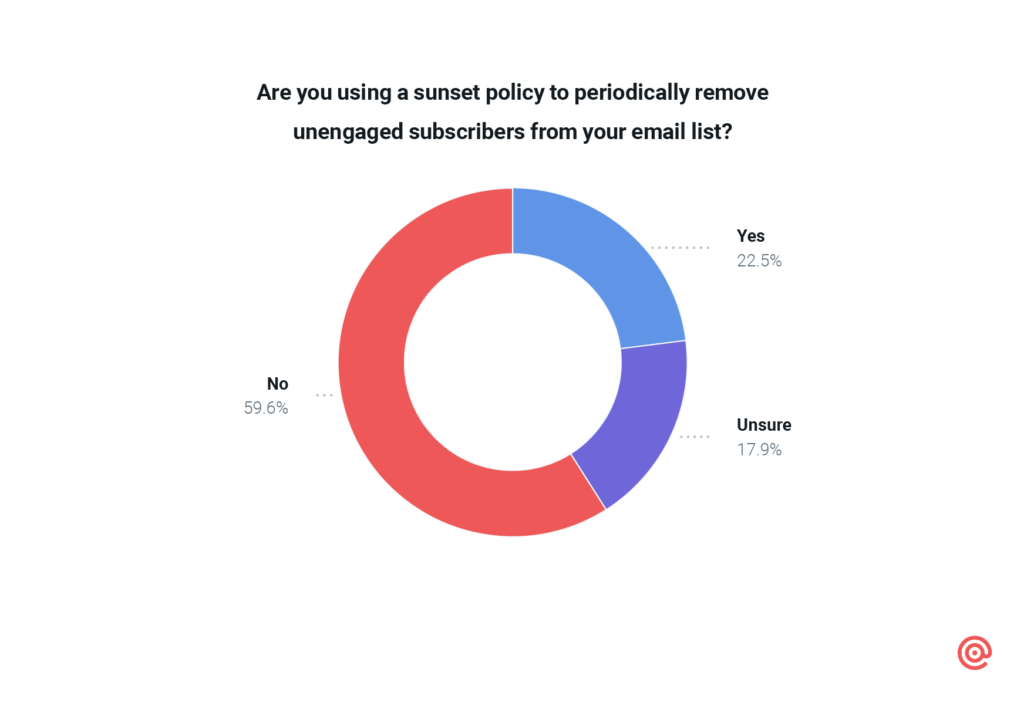
Let’s get real. Email scrubbing isn’t just about maintenance, it’s a powerful growth catalyst for your marketing efforts. When you consistently clean your list, you’ll see measurable benefits that directly impact your bottom line.
Improves sender reputation
Think of your sender reputation as your email marketing credit score. It determines whether your messages land in inboxes or get dumped in spam folders. According to Sender Score, a reputation below 80 signals serious email hygiene issues, potentially leading to deliverability problems or completely blocked messages.
Clean lists generate fewer bounces and spam complaints, sending positive signals to ISPs. Your sender score climbs, and deliverability rates improve across all campaigns. The numbers don’t lie, regularly scrubbing your list can boost deliverability rates by up to 25%.
Boosts ROI by focusing on active users
Want to stop wasting money? Email list cleaning directly impacts your financial returns. Since most email platforms charge based on subscriber count or email volume, removing inactive contacts immediately cuts costs. You’ll only invest in reaching people who actually care about your messages.
The results tell a compelling story: regularly cleaned email lists experience up to 50% higher open rates. This translates to substantially better ROI, especially considering email marketing already delivers an average return of $36 for every $1 spent. By focusing your budget on engaged subscribers, you’re squeezing maximum value from every marketing dollar.
Supports better personalization and targeting
With a clean email list, your personalization strategies work dramatically better. Once you’ve removed inactive addresses, you gain crystal-clear insights into your audience’s genuine preferences. You’ve built a foundation for accurate segmentation.
High-quality subscriber data lets you create tailored communications that align with specific interests. This personalized approach builds stronger connections with recipients, ultimately driving more conversions. Plus, targeted messaging shows subscribers you respect their preferences, fostering long-term trust and engagement.
When you consistently implement proper email hygiene practices, you create a virtuous cycle: better deliverability leads to improved engagement, which enhances sender reputation, further boosting deliverability. This ongoing process transforms your email list from a static database into a dynamic, high-performing growth engine.
Conclusion
Email scrubbing isn’t just routine maintenance, it’s a strategic growth investment that directly impacts your bottom line. We’ve walked through how proper list hygiene translates to real business outcomes that you can measure. Clean lists deliver up to 50% better open rates and dramatically improved deliverability.
Here’s the thing: broadcasting your carefully crafted messages to disinterested subscribers wastes your resources and damages your sender reputation. Email scrubbing helps you focus where it matters. Every bounced email and spam complaint you eliminate strengthens your standing with email service providers, creating a positive feedback loop that continuously improves performance.
The success of your email marketing hinges on data quality. Implement a consistent cleaning schedule, use double opt-in methods, and run strategic re-engagement campaigns before removing inactive subscribers. These steps transform your list from a liability into a powerful asset.
The tools and services we’ve discussed give you practical ways to maintain this quality without overwhelming your team. No need to tackle this challenge manually when automation can handle the heavy lifting.
Email marketing still delivers an impressive $36 return for every $1 spent, but only when your messages actually reach engaged recipients. Make email scrubbing a cornerstone of your growth strategy instead of an afterthought.
I know it feels counterintuitive to remove subscribers from your hard-earned list. But trust me, focusing exclusively on quality contacts ultimately drives stronger relationships, better conversions, and sustainable business growth. Your future marketing results will thank you.
FAQs
Q1. What is email scrubbing and why is it important in 2025?
Email scrubbing is the process of cleaning and maintaining your email list by removing invalid, inactive, or risky contacts. It’s crucial in 2025 because it improves deliverability, engagement rates, and overall email marketing performance.
Q2. How often should I clean my email list?
It’s recommended to clean your email list at least twice a year. However, depending on your list size and campaign frequency, you might need to do it more often. Consider cleaning after major campaigns or when you notice significant drops in engagement metrics.
Q3. What are the consequences of not cleaning my email list?
Neglecting to clean your email list can lead to lower open and click rates, higher bounce rates and spam complaints, wasted spending on disengaged contacts, and damage to your sender reputation. This can ultimately result in poor deliverability and reduced marketing effectiveness.
Q4. How can I automate the email scrubbing process?
You can automate email scrubbing by using marketing automation workflows, setting triggers for inactivity, and integrating your email cleaning processes with your CRM or ESP. Many email platforms offer built-in tools for list maintenance and cleaning.
Q5. What are some top email scrubbing services to consider in 2025?
Some top email scrubbing services to consider in 2025 include NeverBounce, ZeroBounce, EmailListVerify, Kickbox, and Clearout. Each offers unique features and pricing models, so it’s worth comparing them to find the best fit for your needs.

Builds the demand intelligence, automation, and deliverability systems behind Growleads pipeline.