10 Ways To Improve Your Lead Generation Strategies

Are you struggling to generate quality leads for your business? You’re not alone. Four in five marketers surveyed say it’s their number one priority. Here is a lead generation strategies-framework that can improve your lead generation strategies.
I get it. The pressure is real. You might think you know which channels bring in the most leads, 95% of marketers believe they do, but actually converting those prospects into customers? That’s where things get tricky. Did you know it takes between 6 to 8 touches just to generate a qualified sales lead? This makes your lead generation strategies more crucial than ever.
Want to know what works? Intent data is huge right now, 99% of large companies are already using it. And personalization? About 90% of marketers say it significantly impacts their profitability. The right framework can completely change your results.
Sound good so far? It’s got plenty more going for it, too. Let’s dive into 10 practical ways you can boost your lead generation tactics and start turning more of those prospects into valuable customers. I’ve compiled strategies that actually work, not just theory.
Use Sales Intelligence Tools
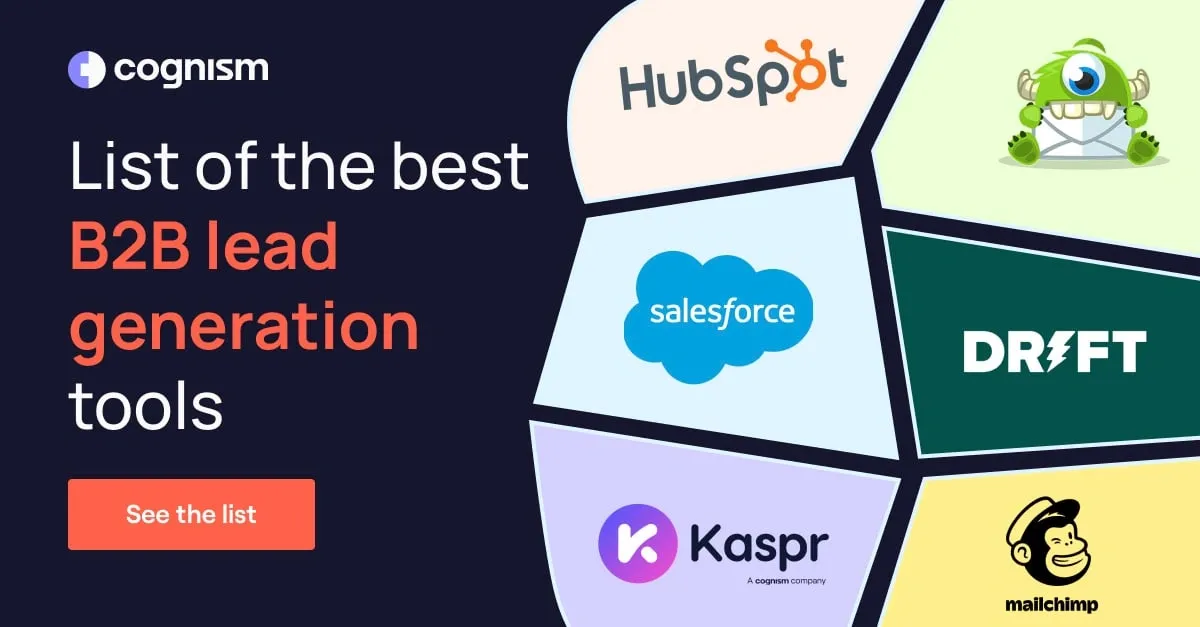
Image Source: Cognism
Looking to supercharge your modern lead generation efforts? Sales intelligence tools should be at the top of your list.
These tools aren’t just nice-to-haves anymore, they’re essential components in any serious lead generation framework. They gather and analyze data about potential clients, giving your team actionable insights to find those high-quality leads and personalize your outreach.
Use Sales Intelligence Tools for lead enrichment
Ever tried working with incomplete lead data? It’s frustrating, right?
Lead enrichment changes the game by transforming those partial profiles into comprehensive ones. With the right tools, you can automatically collect and analyze data about leads with missing information, creating complete profiles that drive conversion.
How does it work? These tools pull data from multiple sources, social media, email campaigns, third-party providers, to build complete customer profiles. This gives you deeper insights into potential customers so you can tailor your strategies with precision.
Many modern tools are now using AI to keep lead information fresh. Clearbit, for example, has recently beefed up its offerings with AI-native features specifically for lead data enrichment. ZoomInfo SalesOS is another great option, giving you access to one of the largest contact databases out there while automatically updating with fresh information.
Use Sales Intelligence Tools for segmentation
Let’s talk segmentation, it completely transforms how you approach lead generation.
Instead of treating all prospects the same (which we know doesn’t work), segmentation tools help you categorize leads based on specific attributes. This isn’t just theory, it’s a practical approach that drives real results.
You can segment your customers in several powerful ways:
- Behavioral segmentation: based on purchasing behaviors or click patterns
- Demographic segmentation: using characteristics like gender, age, or profession
- Psychographic segmentation: categorizing by interests, values, or lifestyle
- Needs-based segmentation: grouping by pain points or preferences
The best solutions combine number-crunching analytics with behavioral insights. This dual approach gives you the business intelligence you need to hit your KPIs while creating user experiences that your competitors can’t match.
Use Sales Intelligence Tools for CRM integration
If you’re not integrating your sales intelligence with your CRM, you’re missing out on a huge opportunity.
This integration creates a unified source of truth, making it easier to track leads, understand customer needs, and tailor your strategies effectively. The advantages for your lead generation framework are substantial.
A properly integrated system automatically syncs data between platforms, cutting down on manual entry and reducing errors. Your sales intelligence tool collects information from customer interactions, contact details, email addresses, and puts it all in one central place.
Plus, this integration allows for more personalized outreach. Your sales reps can access relevant details about their leads, reference previous conversations, and nurture prospects accordingly. A well-informed team provides better solutions faster, improving customer experiences across the board.
When picking your tools, look for platforms that integrate smoothly with your existing sales applications, your CRM, automation tools, and prospecting environments. The right combination will strengthen your overall lead generation strategy.
Simplify Your Lead Capture Forms

Image Source: LeadSync
Are you losing potential leads because your forms are too complicated? You probably are. Form complexity is one of the biggest roadblocks to successful lead capture. With nearly half of all web traffic now coming from mobile devices, the way you design your forms directly impacts both your conversion rates and lead quality.
Simplify Your Lead Capture Forms for mobile users
Let’s talk mobile optimization. It’s not just a nice-to-have anymore – it’s absolutely essential. The research backs this up: mobile-friendly forms can boost completion rates by up to 50% compared to clunky, non-optimized ones.
Want to create forms that actually work on mobile? Here’s what you need to do:
- Design responsive layouts that automatically adjust to different screen sizes, so users don’t have to pinch or zoom to fill out your form
- Enlarge buttons and input fields for easy tapping – nobody wants to struggle with tiny buttons that lead to frustration and form abandonment
- Use single-column layouts that let users scroll straight down instead of zigzagging across the screen
- Increase font size because what looks fine on desktop often becomes microscopic on mobile
Here’s something that might surprise you – page load time can make or break your form completion rates. When load time jumps from one second to ten seconds, the chance of a mobile visitor bouncing increases by a whopping 123%. That’s why optimizing speed is just as important as the design itself.
Simplify Your Lead Capture Forms for higher conversions
Did you know that the number of fields in your form can dramatically impact your conversion rates? Forms with just 3-5 fields can achieve nearly a 50% increase in conversions. I’ve seen this work firsthand. Take Unbounce – they swapped their 11-field monster form for a streamlined 4-field version and saw form submissions skyrocket by 160% with zero difference in lead quality.
If you absolutely need more information, here’s my advice:
First, try multi-step forms that break complex information collection into digestible chunks. The results can be staggering – one company saw conversion rates jump from a measly 0.96% to an impressive 8.1%. That’s a 743% improvement! Why does this work? Multi-step forms create less psychological friction than intimidating single-page forms.
Second, think about form placement. Forms positioned “above the fold” (visible without scrolling) can increase conversions by up to 94% compared to those hidden below. Keep your landing page clean and uncluttered to keep visitors focused on completing your form.
Third, don’t underestimate your call-to-action button. The generic word “submit” is a conversion killer. Instead, use action phrases like “Get Started” or “Download Now” that clearly communicate what happens next.
For the best results, keep testing different form elements, field counts, button text, layouts, to see which combinations convert best. Through continuous improvement, your lead capture forms [link_10] will become conversion powerhouses within your overall lead generation strategy.
Leverage Intent Data for Targeting
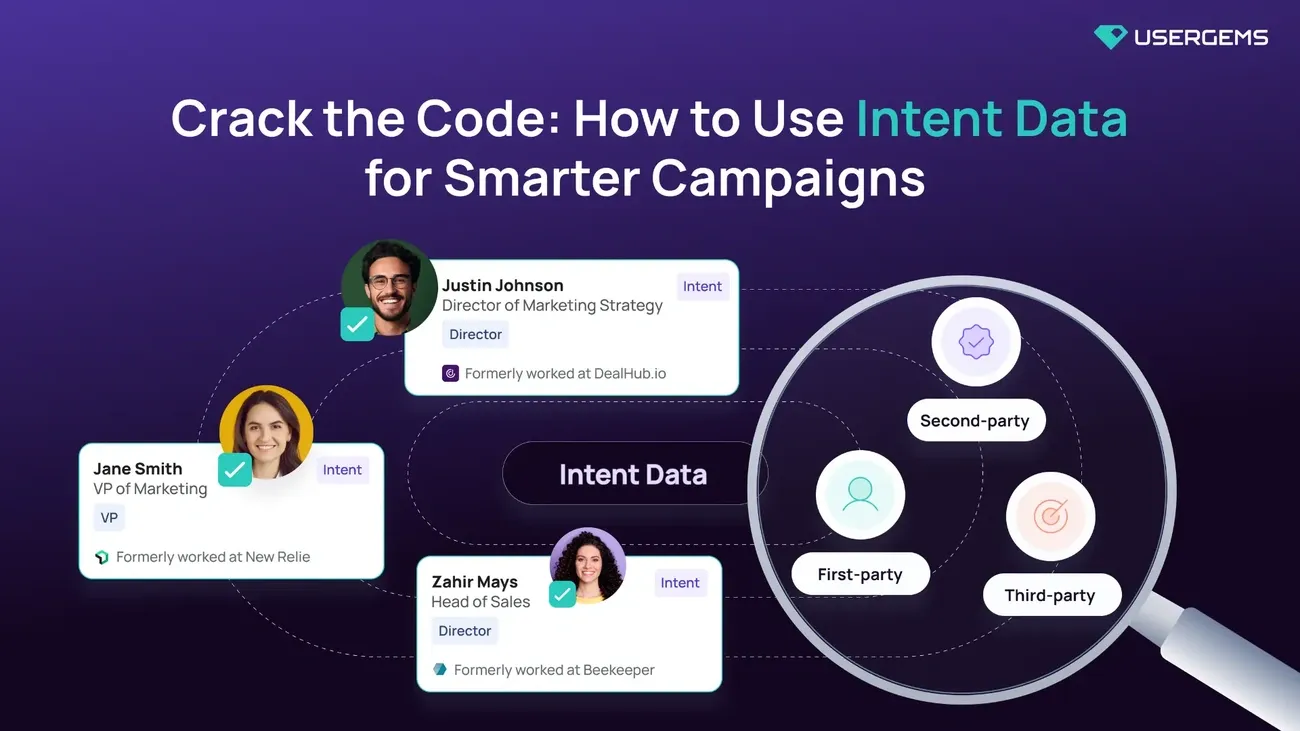
Image Source: UserGems
Did you know that 67% of the buyer’s journey now happens digitally? That’s a huge shift. Intent data has become one of the most powerful weapons in your lead generation arsenal. By tracking how potential customers behave online, you can spot exactly who’s ready to buy and when to reach out.
Leverage Intent Data for Targeting buyer signals
Buyer signals are like digital footprints [link_13] your prospects leave behind while researching solutions. These come in two flavors: explicit signals (when someone fills out a form) and implicit signals (like when they keep visiting your pricing page).
What can your team actually identify with this data? Let me break it down:
- You’ll spot which companies are actively researching your solution before they even reach out
- You’ll see specific interests and behaviors that show how ready a prospect is to buy
- You’ll get signals from both your website and across the wider web, giving you the full picture of what prospects are researching
I’ve seen this work wonders. Imagine discovering that several people from the same company have checked out your homepage, solutions page, and pricing page multiple times in just two weeks. That’s not random browsing, that’s a buying signal you can confidently act on.
Leverage Intent Data for Targeting personalization
With intent data, you can kiss those generic sales pitches goodbye. Instead, you’ll craft messages that speak directly to what your prospects care about right now. About 80% of companies say intent data significantly helps them prioritize accounts for personalized outreach [link_14].
Think about it this way. When you know exactly which features a prospect has been researching, you can highlight those specific benefits instead of guessing what might interest them. You can share case studies from their industry and deliver content that matches exactly where they are in their buying journey.
Here’s a real example I love: if you notice a prospect has viewed several blog posts about cloud security, you can segment them into your “cloud security interest group” and send them custom whitepapers on that specific topic. No more spray-and-pray marketing!
Leverage Intent Data for Targeting campaign timing
Timing isn’t just important, it’s everything. Intent data gives you real-time insights into buyer behavior [link_15], so you can reach out exactly when prospects are most likely to respond.
Instead of working with outdated info from weeks or months ago, you’ll know precisely when someone is actively looking for solutions like yours. Hit them with your message during these peak interest moments, and watch your response rates climb.
What’s even better? Intent-based timing helps you find that low-hanging fruit, accounts showing clear buying signals that might have slipped under your radar otherwise. By constantly monitoring these signals, you can sync your outreach with when prospects are actually ready to buy, not just when your marketing calendar says it’s time for a new campaign.
Run Retargeting and Remarketing Campaigns
Let’s talk about winning back lost opportunities. Did you know retargeting campaigns can capture up to 10% of those conversions you’d otherwise kiss goodbye? That’s a big deal for any lead generation framework.
I love retargeting because it focuses on people who already showed interest in what you’re selling. These aren’t cold prospects – they’re warm leads who just need a little nudge.
Run Retargeting and Remarketing Campaigns on social
Social media is perfect for reconnecting with prospects who slipped away. After all, that’s where they’re hanging out anyway. About 77% of B2B and B2C marketers are already using retargeting on Facebook and Instagram. There’s a good reason for that – it works.
What really gets results is something called sequential retargeting. Instead of bombarding people with the same ad over and over (annoying, right?), you show them different ads in a strategic sequence. Start with content that addresses their pain points, then follow up with ads featuring testimonials.
Take Casper, for example. They use dynamic product ads based on what you’ve already looked at on their site. They’re smart enough to include social proof like “2,000,000+ happy sleepers” to build trust. That’s the kind of approach that turns browsers into buyers.
Run Retargeting and Remarketing Campaigns with email
Email remarketing is a powerhouse – 80% of retail professionals say it’s their best tool for customer retention. What makes it so effective? You’re using behavioral and action-based information to create highly targeted messages.
To get the most from your email remarketing:
- Time it right – the sooner you follow up after they’ve shown interest, the better
- Segment your audience properly – you can’t send everyone the same message
- Always be testing – A/B testing tells you exactly what’s working and what’s not
Here’s something impressive – targeted emails perform nearly 40% better than general messages. Plus, good email remarketing can boost your overall conversions by 10%. This is especially handy for abandoned cart recovery, considering nearly 70% of shoppers ditch their carts before checking out.
Run Retargeting and Remarketing Campaigns with SMS
SMS might seem old school, but the numbers don’t lie. SMS remarketing boasts a mind-blowing 98% open rate, and over 90% of messages get read within three minutes. You just can’t beat that kind of immediate attention.
This near-instant response gives you a golden opportunity to reconnect with leads while your offer is still fresh.
For SMS that actually converts, I recommend:
- Personalizing each message based on their previous interactions with you
- Sending messages when people are most likely to engage
- Breaking your audience into segments based on their behaviors and demographics
Just remember, you absolutely need explicit consent before texting anyone. Besides being the right thing to do, it’s also required by regulations like GDPR and TCPA. Also, be careful not to overdo it – too many messages lead to customer fatigue and unsubscribes. Each text should include a crystal-clear call-to-action so your recipient knows exactly what to do next.
Use AI and Automation Tools
“By far the most efficient approach to deal with your leads is always to use a process that automatically brands you, supplies worth to your prospects, follows up with them and sorts out the uninterested people.”
, MLM Lead Generation, Industry thought leadership (MLM Lead Generation community)

Image Source: Alleo.ai
Struggling with lead prioritization? I get it. AI and automation tools are game-changers for lead generation companies. Did you know that 98% of sales team report that AI improves how they prioritize leads? It’s true! Businesses everywhere are jumping on these technologies to streamline their processes and spot high-potential prospects faster.
Use AI and Automation Tools for lead scoring
Ever wonder how some companies seem to know exactly which leads to focus on? That’s predictive lead scoring at work. It uses machine learning to analyze mountains of data and find patterns among leads that actually converted.
What makes AI-powered lead scoring different from old-school methods?
- It automatically ranks potential customers based on how likely they are to convert
- It kicks human bias to the curb through smart machine learning algorithms
- It keeps getting smarter as new data comes in
This stuff is seriously valuable. About 62% of marketers are now using artificial intelligence to boost their efficiency. When you implement AI lead scoring, your team can jump on those high-intent leads quickly while focusing resources on prospects most likely to convert.
Use AI and Automation Tools for chatbots
Want a lead generation system that works 24/7? That’s exactly what conversational chatbots do on your website. Despite what you might think, chatbots have actually become the preferred contact method for most potential customers. Here’s how these automated assistants help:
First, they spot potential leads among your site visitors by analyzing what they’re looking for.
Second, they grab contact information the moment someone shows interest, sending it straight to your CRM without any delay.
Third, they qualify leads based on engagement quality, so you only focus on prospects who are ready to buy.
Need proof? One company added a lead generation chatbot to their homepage and saw qualified leads jump by 10%. Not too shabby!
Use AI and Automation Tools for email workflows
Email automation is a massive time-saver, letting you set up triggered workflows that deliver the right content at exactly the right time. Setting this up doesn’t just save you hours, it actually speeds up how quickly you nurture your leads.
With automation, your systems handle scoring and qualifying leads automatically, freeing up your sales and marketing teams from tedious manual tracking. The real gold here is getting access to real-time data about open rates, scroll maps, and which links got clicked, giving you actionable insights to keep improving your approach.
Plus, you can personalize communication at scale, which used to be impossible. Your system can track what leads do on your website and trigger relevant emails based on specific actions. Say a prospect checks out your product page but doesn’t buy, your automation tool can follow up with a timely email offering a special deal. Smart, right?
Offer Live Demos and Consultations
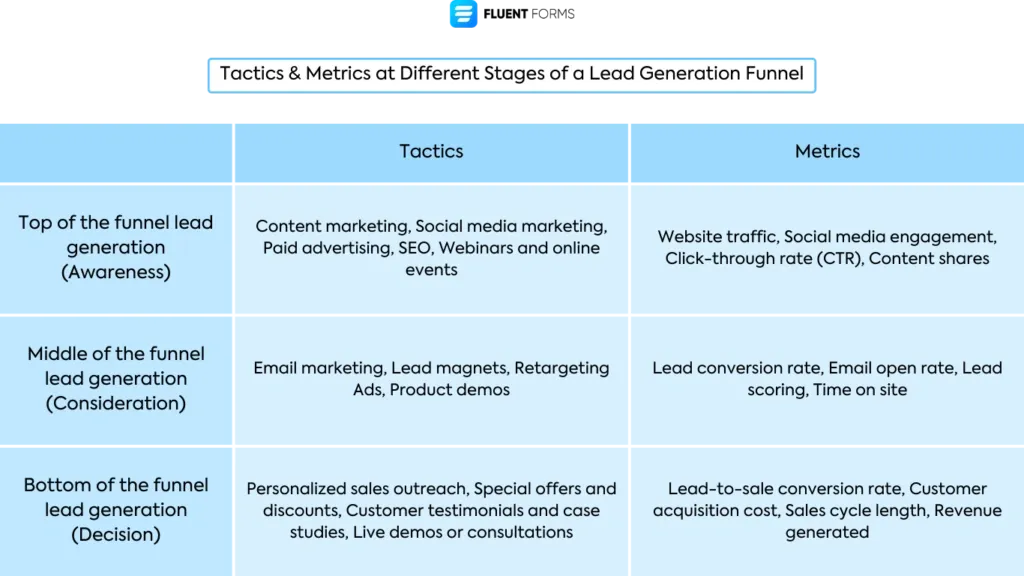
Image Source: Fluent Forms
Have you ever noticed how a personalized demo can completely change a prospect’s perspective? I’ve seen it happen countless times. Product demonstrations create immediate impact in any lead generation framework, increasing sales by up to 2x in some cases. These interactive experiences let your prospects see exactly how your solution solves their specific challenges.
Offer Live Demos and Consultations for personalization
Want to know the secret to great demos? It’s all about preparation. Research your audience thoroughly to understand their challenges, goals, and preferences. Don’t just give them a generic walkthrough – craft presentations that highlight features addressing their specific needs.
When you personalize demos, you’re showing prospects they matter to you. I’ve found this approach builds stronger customer relationships and leads to more effective sales interactions. Plus, using industry-specific terminology during your demonstrations creates rapport and connects with prospects on a deeper level.
Think about it – when a prospect gets dozens of plain emails, which one stands out? The one with a “See How It Works” link to an interactive demo creates curiosity and encourages them to engage more deeply with what you’re offering.
Offer Live Demos and Consultations for feedback collection
Live demos aren’t just about showing off your product – they’re perfect opportunities to collect immediate feedback. After prospects interact with your customized demo, ask for their input through surveys, interviews, or interactive analytics. Then use that feedback to keep improving your approach.
Here’s something I’ve learned the hard way: questions and objections during demos aren’t problems, they’re teaching moments. Each question gives you a chance to showcase how effectively your product meets their needs. So prepare your team to handle objections professionally by acknowledging concerns and explaining how your solution resolves them.
For maximum effectiveness, treat feedback as an ongoing cycle. Analyze metrics like engagement patterns, drop-off points, and CTA click-through rates to identify what resonates with your audience. This continuous improvement process will steadily enhance your demonstration strategies, giving you better lead quality and conversion rates throughout your sales funnel.
Create and Promote Video Content
Did you know over 80% of marketers say videos have directly helped boost their sales? It’s true. Video content is one of the most powerful weapons in your lead generation arsenal. These dynamic visual stories create stronger connections with your potential customers at every stage of your sales funnel.
Create and Promote Video Content for YouTube SEO
YouTube isn’t just a video platform, it’s the world’s second-largest search engine. This makes optimizing your videos absolutely crucial for lead generation success.
Want to maximize your YouTube SEO effectiveness? Start with thorough keyword research. Figure out exactly what terms your potential leads are searching for, then work those keywords into your video titles, descriptions, and tags. Don’t forget custom thumbnails, did you know 90% of top-performing videos use them to grab attention and boost visibility?
Basic optimization is just the beginning, though. Audience engagement dramatically impacts your rankings. Encourage viewers to comment, subscribe, and give your content a thumbs up. YouTube pays close attention to these engagement signals when deciding which videos to promote.
You could also partner with industry influencers to expand your reach. This strategy positions you as a thought leader in your space and gets your content in front of new audiences who already trust the influencer’s recommendations.
Create and Promote Video Content for product demos
Product demo videos are especially valuable for complex B2B offerings. They help build awareness and interest by showing exactly how your solution addresses specific pain points.
The most effective product demonstrations follow three simple rules:
- Keep content concise, videos under two minutes retain viewer attention best
- Focus on clear value propositions instead of drowning viewers in technical details
- End with compelling calls-to-action that guide viewers toward their next steps
Production quality matters tremendously here. Clean visuals, clear audio, and professional editing create a polished final product that builds credibility for your brand. Think about it, would you trust a company whose videos look like they were shot on a flip phone from 2005?
Create and Promote Video Content for social sharing
Videos consistently outperform other content types across social platforms. Just look at TikTok’s explosive growth with its short-form video format! Social videos generate substantial engagement through likes, comments, and shares because people naturally gravitate toward video content more than text or static images.
The major social networks offer fantastic targeted advertising tools based on viewer interests. This enables you to reach precisely the right audience for your lead generation efforts. Just remember that platform-specific optimization matters, Instagram videos need different dimensions than those on X (formerly Twitter), while TikTok content should be shorter than what you’d post on YouTube.
Social video isn’t just about creating content, it’s about creating the RIGHT content for each platform where your audience spends their time.
Build Strategic Partnerships and Networks
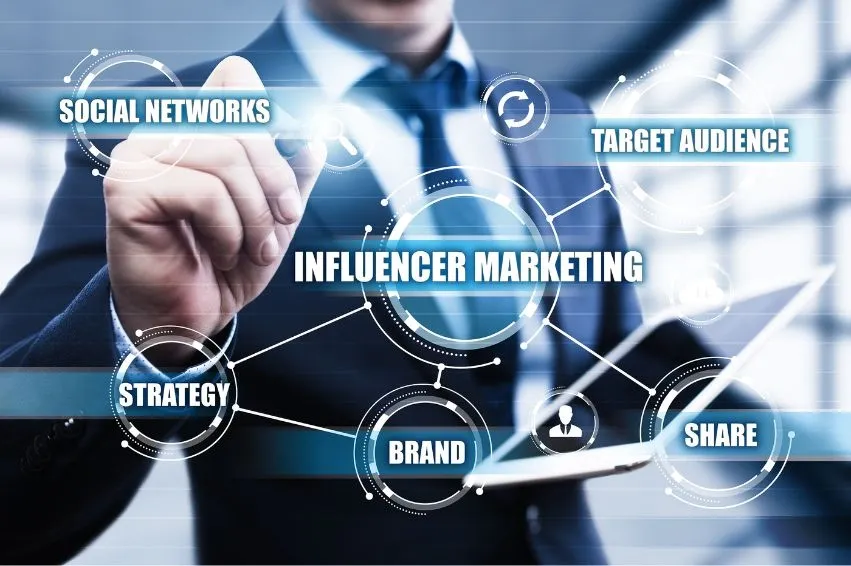
Image Source: Toptal
Looking to expand your lead generation without blowing your budget? Strategic partnerships might be your answer. They’re not just nice to have, they’re a cornerstone of effective lead generation that lets you tap into external networks for qualified leads without paying the full price of traditional marketing.
Think about it, partnership marketing gives you increased visibility, wider reach, and access to new customer segments at a fraction of what you’d typically spend. It’s like getting a marketing multiplier effect.
Build Strategic Partnerships and Networks with influencers
I’ve seen influencer marketing work wonders for lead generation. Did you know that 86% of consumers say authenticity is a crucial factor in deciding which brands they like? That’s huge! These partnerships work because an influencer’s audience already trusts their recommendations.
When you’re picking influencers to partner with, don’t just chase big follower counts. Here’s what actually matters:
- Brand alignment trumps follower size every time
- Look for genuine passion and expertise in their niche
- Double-check that their audience demographics match your target market
The best influencer collaborations I’ve seen involve authentic product reviews paired with unique discount codes or affiliate links. Yes, setting up micro-influencer campaigns takes work, but the payoff is worth it, you’ll get enhanced credibility and reach audiences you couldn’t tap into before.
Build Strategic Partnerships and Networks with industry experts
Influencers aren’t your only option. Forming strategic alliances with established businesses, trade associations, and universities creates powerful lead generation opportunities too. These partnerships let you tap into complementary networks while keeping costs lower than traditional sponsorships.
I’m particularly fond of strategic alliances with non-competing businesses that target similar customers. You both win, you can refer qualified leads to each other. Joint ventures are another great option, allowing you to share marketing efforts, resources, and expertise. You’re essentially dividing the workload while multiplying the results.
For the best results, focus on project-oriented partnerships rather than simple sponsorships. Co-marketing campaigns, joint content creation, and collaborative events typically generate higher-quality leads than anything you’d do on your own. Plus, these partnerships facilitate referral business, and we all know people trust recommendations from sources they already know and respect.
Don’t forget that networking, both online and offline, remains fundamental to building these relationships. Regular participation in industry events and targeted outreach to potential partners creates opportunities for meaningful connections that drive real lead generation results.
Use Gated Content to Capture Leads
“Content is the fuel for your lead generation efforts.”
, Dayna Rothman, VP of Marketing, EverString; Author and B2B marketing expert
“Content is the fuel for your lead generation efforts.”
, Dayna Rothman, VP of Marketing, EverString; Author and B2B marketing expert
Did you know that about 80% of B2B content marketing assets are gated? It’s true. Gated content is absolutely crucial in any modern lead generation framework. The concept is simple but powerful – offer something valuable in exchange for contact information, creating a win-win situation between you and your potential clients.
Use Gated Content to Capture Leads with eBooks
eBooks are amazing for positioning yourself as an authority in your industry. They typically run between 5,000 to 10,000 words, giving you plenty of space to dive deeper than you could in a regular blog post. I’ve found they work especially well for B2B companies targeting knowledge-hungry prospects in industries like software development, marketing, or HR.
Want to maximize your lead capture with eBooks? Create a compelling landing page that clearly states the benefits with bullet points highlighting key takeaways. Keep your form simple – asking for just the essential information dramatically increases completion rates. Remember, every extra field you add can lower your completion rate, so you need to find that sweet spot between gathering necessary data and making the experience frictionless for users.
Use Gated Content to Capture Leads with webinars
Webinars have exceptionally high perceived value because they feel more exclusive than downloadable PDFs. These interactive presentations are perfect for complex products or services where live interaction helps build trust. All it takes is a quick form fill – usually just name, job title, and email – and participants get access to valuable information that addresses their specific challenges.
One approach I really like is offering on-demand webinar access like Zapier does. After registration, users get a unique link to an hour-long webinar complete with chat transcripts, polls, and Q&A from actual attendees. This respects people’s time while still providing substantial value – exactly what you need for effective lead generation.
Use Gated Content to Capture Leads with checklists
Don’t underestimate checklists! They may be the simplest form of gated content, but they’re highly effective. Their concise nature actually works in their favor – many users prefer downloading them over lengthier resources precisely because they’re easier to digest. These practical tools outline specific steps to achieve a particular goal, delivering immediate value.
For the best results, identify common problems your audience faces, then create straightforward solutions in checklist format. Even though they’re short, they still need to deliver substantial value. Be concise yet thorough, making sure users can achieve their goals with your guidance. This approach works exceptionally well when embedded within related blog content that already ranks for relevant keywords.
A/B Test and Optimize Lead Generation Tactics
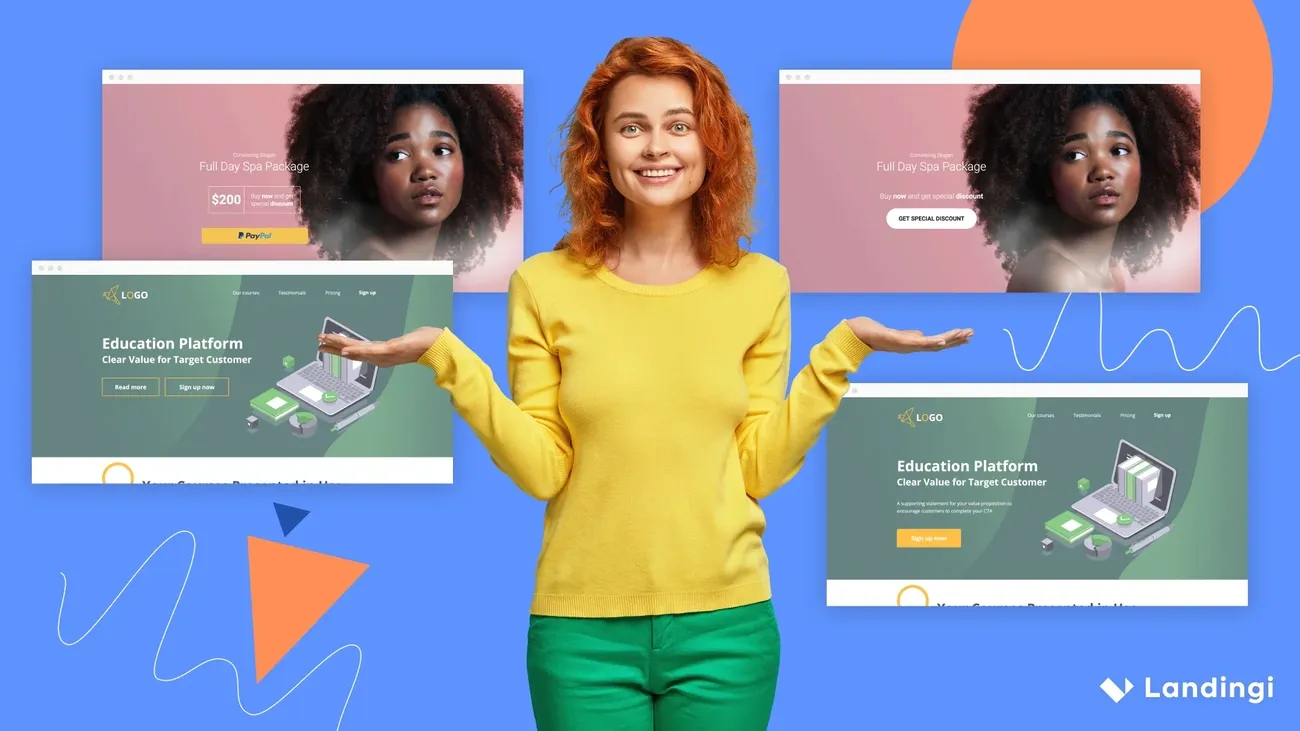
Image Source: Landingi
Want better conversions without spending more on marketing? A/B testing is your answer. Businesses that regularly test their lead generation tactics see incredible improvements. I’m talking about conversion increases of 10% to 50% just by making small tweaks to elements that influence how users behave. That’s a serious return for minimal effort.
A/B Test and Optimize Lead Generation Tactics for forms
Let’s talk about forms – they’re often the final hurdle between you and a new lead. Finding that sweet spot between form length and information gathering is tricky. Shorter forms typically get more submissions, but longer forms often bring in higher-quality leads. Did you know that forms with just 3-5 fields convert 20-25% better than those with 10+ fields? That’s a significant difference.
Here’s what you should be testing:
- Field types (radio buttons versus drop-downs)
- Required versus optional fields
- Single-column versus multi-step layouts
Remember, each additional field you add increases the chance someone will abandon your form. Focus your testing on the elements that will directly impact your conversion goals.
A/B Test and Optimize Lead Generation Tactics for CTAs
Your call-to-action buttons are like conversion gateways – they deserve serious attention. I once saw a case where changing button text from “Order Information” to “Get Information” boosted conversions by 21%. That’s not a typo – 21% from changing a single word! Button color, size, and placement can have similarly dramatic effects on your click-through rates.
For the best results, test different action verbs in your CTA text. Words that clearly communicate value will consistently outperform generic phrases like “Submit”. You should also test button placement to see whether above-the-fold or in-context positioning works better with your specific audience.
A/B Test and Optimize Lead Generation Tactics for landing pages
Optimizing landing pages creates ripple effects throughout your entire lead generation process. By testing different headlines, layouts, and visual elements, you’ll discover which format most effectively converts your visitors. Good news – optimized layouts can improve lead conversion rates by 10-15%, directly boosting your ROI from digital campaigns.
Start your testing journey with high-traffic pages to gather data quickly. I also recommend using heat maps to see where visitors click most frequently, then prioritize testing those elements first. This systematic approach to improving landing pages through data-driven decisions creates a continuous improvement cycle that steadily enhances your lead generation results.
Comparison Table
Looking for a quick summary of all these lead generation strategies? I’ve put together this handy table so you can see everything at a glance. Sometimes I find it’s easier to compare approaches side-by-side when making decisions about what might work best for your business.
| Strategy | Main Benefits | Key Features/Components | Implementation Tips | Reported Statistics/Results |
|---|---|---|---|---|
| Use Sales Intelligence Tools | Enhanced lead data quality, better targeting | Lead enrichment, Segmentation, CRM integration | Integrate with existing CRM, Use AI-native features, Focus on data synchronization | Not specifically mentioned |
| Simplify Lead Capture Forms | Higher conversion rates, Better mobile experience | Mobile responsiveness, Multi-step forms, Progress indicators | Use 3-5 fields, Implement real-time validation, Position above the fold | Forms with 3-5 fields achieve 50% higher conversion rates; Multi-step forms improved conversion from 0.96% to 8.1% |
| Leverage Intent Data | Better prospect identification, Improved timing | Purchase intent signals, Behavioral tracking, Real-time insights | Monitor both explicit and implicit signals, Track cross-platform activity | 80% of companies report intent data helps with account prioritization |
| Run Retargeting Campaigns | Recover lost conversions, Improved engagement | Social media retargeting, Email remarketing, SMS campaigns | Time campaigns strategically, Segment audiences properly, Personalize messages | Captures up to 10% of lost conversions; SMS has 98% open rate |
| Use AI and Automation Tools | Improved efficiency, Better lead prioritization | Lead scoring, Chatbots, Email workflows | Implement predictive scoring, Use 24/7 chatbots, Set up automated workflows | 98% of sales teams report AI improves lead prioritization |
| Offer Live Demos & Consultations | Stronger customer relationships, Direct problem-solving | Personalized presentations, Interactive demos, Feedback collection | Research audience thoroughly, Prepare for objections, Collect immediate feedback | Increases sales by up to 2x |
| Create Video Content | Higher engagement, Better conversion rates | YouTube SEO optimization, Product demos, Social sharing | Keep videos under 2 minutes, Use custom thumbnails, Focus on value propositions | 80% of marketers report videos directly help increase sales |
| Build Strategic Partnerships | Expanded reach, Cost-effective marketing | Influencer partnerships, Industry expert collaborations, Network building | Prioritize brand alignment, Focus on project-oriented partnerships | 86% of consumers value authenticity in brand partnerships |
| Use Gated Content | Qualified lead capture, Authority building | eBooks, Webinars, Checklists | Create compelling landing pages, Keep forms concise, Provide immediate value | 80% of B2B content marketing assets are gated |
| A/B Test & Optimize | Continuous improvement, Data-driven decisions | Form testing, CTA optimization, Landing page testing | Test high-traffic pages first, Use heat maps, Focus on key conversion elements | Changes can yield 10-50% conversion improvements |
I recommend bookmarking this table or keeping it handy as you start implementing these strategies. The statistics column is particularly eye-opening – just look at those conversion improvements from simple A/B testing or the incredible 98% open rate for SMS campaigns!
Conclusion
You’ve made it through all ten strategies! I hope you’re feeling ready to tackle your lead generation challenges with these proven approaches.
Let me be straight with you – I know implementing all of these at once might seem overwhelming. Don’t worry about that. Start with the strategies that address your biggest pain points right now.
Is your website suffering from high form abandonment? Focus on simplifying those lead capture forms first. Struggling with lead quality? Intent data implementation should be your priority.
Remember that improving lead generation isn’t a one-and-done deal. It requires continuous tweaking and refinement. A/B testing your forms, CTAs, and landing pages gives you the hard data you need to make smart adjustments – ones that can boost conversion rates by 10-50%. That’s nothing to sneeze at!
The real magic happens when these strategies start working together. Your sales intelligence tools enhance personalization, which improves your retargeting effectiveness, and suddenly you’ve created a powerful system that consistently delivers qualified leads.
My advice? Take a good look at your current lead generation performance. Identify where you’re falling short, then apply these strategies one by one. I’m confident your company will start seeing significant results when you execute with purpose and precision.
Which strategy are you going to implement first? Whatever you choose, just get started – your future customers are waiting. Ready to enhance your lead strategy? Visit GrowLeads.io for expert guidance now!
FAQs
Q1. What are some effective ways to improve lead generation?
To enhance lead generation, focus on creating compelling content, optimizing your website for search engines, leveraging social media platforms, and implementing targeted email marketing campaigns. Additionally, use sales intelligence tools, simplify lead capture forms, and utilize AI-powered chatbots to engage potential customers 24/7.
Q2. How can businesses leverage intent data for better lead targeting?
Intent data helps identify prospects actively researching solutions similar to yours. By analyzing online behavior and purchase signals, you can personalize outreach, time your campaigns more effectively, and prioritize accounts showing genuine interest. This approach allows for more relevant and timely engagement with potential leads.
Q3. What role does video content play in modern lead generation strategies?
Video content is crucial for engaging potential leads, with over 80% of marketers reporting that videos directly help increase sales. Create product demos, optimize for YouTube SEO, and share across social platforms. Keep videos concise, focusing on clear value propositions to capture and maintain viewer interest.
Q4. How important is A/B testing in optimizing lead generation tactics?
A/B testing is vital for continually improving lead generation efforts. By systematically testing elements like form designs, call-to-action buttons, and landing page layouts, businesses can achieve conversion rate improvements of 10-50%. Focus on high-traffic pages and use data-driven insights to make informed optimizations.
Q5. What are the benefits of using gated content for lead capture?
Gated content, such as eBooks, webinars, and checklists, is an effective way to capture qualified leads by offering valuable resources in exchange for contact information. This strategy not only helps build your email list but also positions your company as an industry authority. Ensure the content provides immediate value to encourage form completion.

Builds the demand intelligence, automation, and deliverability systems behind Growleads pipeline.