10 Proven Outsource Sales Framework Tactics That Actually Work in 2026

Struggling with your outsource sales framework? The frustration is real. The global HR outsourcing market continues to grow at an impressive 8.69% CAGR until 2024. Success requires the right approach.
My experience shows how sales outsourcing revolutionizes businesses. McKinsey reports that companies using informed sales approaches achieve a 2-5% increase in sales and reduce costs by 10-15%. The right outsource sales company partnership eliminates expenses for salaries, benefits, training, and onboarding. Companies that maintain brand consistency see a 33% increase in revenue compared to others.
Successful B2B outsourced sales demands persistence. Sales conversion typically needs 8 touchpoints, while customer conversion requires 7 to 13 interactions. Companies with a standard sales process generate 18% more revenue growth than those without one.
In this piece, I’ll share 10 proven tactics to build an effective outsourced sales force that delivers results. These strategies help businesses boost sales productivity by up to 14.5% and reduce marketing overhead by 12%. Let’s delve into transforming your sales outsourcing approach.
Assess Your Sales Readiness

Image Source: SalesPipe
You must understand where you stand before starting any outsource sales framework. A sales readiness assessment gives you the starting point you need for successful sales outsourcing.
What it is
Sales readiness shows how prepared your team is to close deals and work with customers. At the time of outsourcing, you need to assess if your current capabilities, processes, and resources are ready for an outsourced sales force.
This assessment covers product knowledge, market understanding, sales skills, and access to relevant resources. You need to look at your internal capabilities and find gaps that an outsource sales company should fill. Sales readiness helps you assess if your salespeople know how to have productive conversations throughout the buyer’s trip.
Key components include:
- Current sales team capability assessment
- Process and workflow assessment
- Technology and infrastructure readiness
- Market and customer understanding
- Performance metrics and measures
Why it works
Looking at your sales readiness before outsourcing brings real benefits. Studies show that people forget 70% of training information within a week and 87% within a month. A full picture stops this knowledge gap when moving to an outsourced sales force.
More, executive buyers say that all but one of these sales meetings they attend waste their time. This expresses why your outsourced team needs proper preparation to succeed.
Sales readiness works because it shows exactly where you’re starting from. Companies that invest in sales readiness make better decisions. They create flexible training programs that grow and measure success in their sales operations.
Then, companies that provide services meeting or exceeding sales reps’ expectations see better quota attainment, with a potential increase of 16.2%.
How to implement it
You need a systematic approach to implement sales readiness assessment:
First, look at your current sales team’s skills and knowledge through:
- Surveys or interviews that gage confidence in various sales scenarios
- Analysis of performance metrics to find trends and patterns
- Observation of sales calls or role-playing exercises
Second, find specific areas that need improvement. This helps you spot knowledge gaps to address before or during the outsourcing transition.
Third, let a prospective outsourcing partner do their own assessment. Their outside view helps find gaps in your sales processes and ways to improve.
Fourth, set clear performance goals and tracking metrics. These become your baseline to measure your outsourced sales force’s success.
Fifth, create structured onboarding and training plans based on what you learned. Good onboarding programs help new hires become productive 62% faster.
Finally, set up ongoing monitoring and adjustment systems. Sales readiness needs constant assessment and fine-tuning.
Your assessment should match your overall business strategy. Forrester points out that sales readiness gives salespeople the knowledge and skills they need for customer conversations throughout the buyer’s trip.
Set SMART Sales Goals
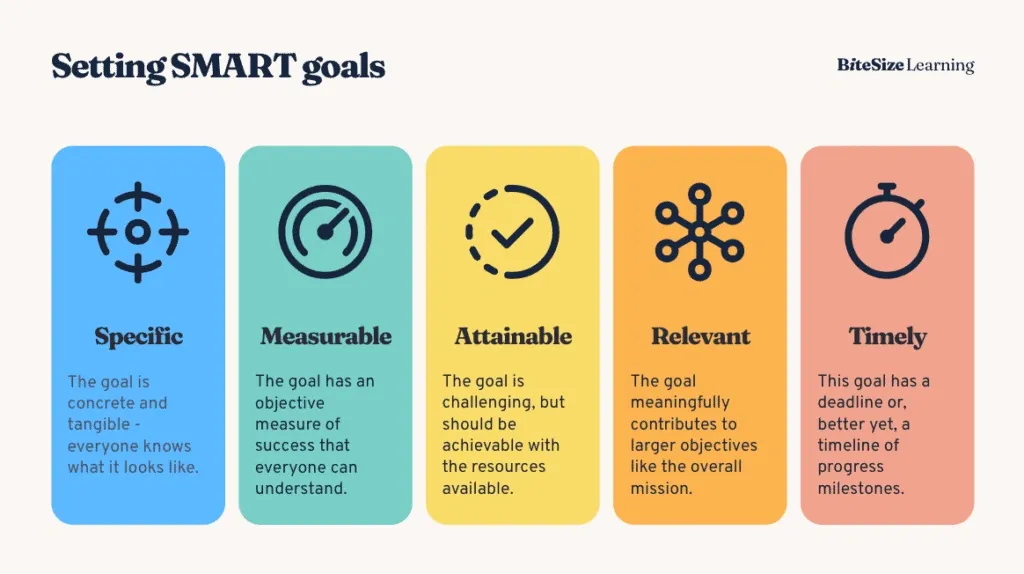
Image Source: Genius
Clear goals are the life-blood of any outsource sales framework that works. Your most talented outsourced sales force will struggle to deliver results without well-defined objectives.
What it is
SMART goals offer a well-laid-out approach to setting objectives in sales outsourcing. The acronym stands for:
- Specific: Clear objectives that leave no room for confusion
- Measurable: Trackable standards you can monitor
- Achievable: Realistic targets based on actual data
- Relevant: Lined up with broader business objectives
- Time-bound: Deadlines that drive action
Your outsource sales company might set targets like “Increase B2B sales by 20% in the next quarter” or “Secure at least 10 qualified meetings per month”. These precise metrics replace vague directives like “increase sales” with practical objectives everyone understands.
SMART goals bring clarity to your outsourced sales operation. Rather than telling your team to “do better,” you set concrete targets such as “Schedule 30 product demos monthly” or “Increase close rate from 20% to 25%”.
Why it works
SMART goals create measurable effects on outsourced sales teams. Teams using SMART goals show 40% lower turnover and 35% higher involvement. This framework keeps your outsourced sales force motivated, focused and accountable.
SMART objectives build a solid foundation for your sales outsourcing efforts. They remove ambiguity and help your team understand what success looks like.
Many businesses struggle with setting sales targets. They look at previous years’ revenue and add a reasonable growth rate, without considering market volatility or other variables. SMART goals help you avoid this issue by making you think about all relevant factors.
Organizations that use SMART objectives report faster onboarding for new hires. This becomes crucial when you work with an outsourced sales force.
How to implement it
Your SMART goals journey starts with current sales data analysis. Look at your past 3-6 months of metrics, including conversion rates, sales cycle lengths, and average deal sizes. This data provides your baseline for setting measurable improvement goals.
Implementation follows these steps:
- Assess your business situation: Think about factors that affect revenue quarter-by-quarter. Does your business have seasonal patterns? Do you have recurring revenue streams? Does it run on contracts?
- Look at economic factors: Learn what’s happening in your industry that could affect revenue. Do you work in volatile markets? How fierce is your competition?
- Review revenue per rep: Look at what each representative generated before to set realistic expectations.
- Get team input: Your frontline employees might point out variables you haven’t considered.
- Set up tracking systems: Use CRM dashboards to monitor measurable outcomes.
Three levels of review help ensure your goals stay relevant:
- Weekly tactical check-ins for immediate pipeline health
- Biweekly pipeline audits to analyze stalled deals
- Quarterly strategic reviews to check progress toward annual targets
Whatever your specific targets, they should match your company’s overall priorities. An outsourced sales team needs well-defined sales goals to line up their efforts with your business needs.
Of course, flexibility matters, adjust your goals when performance drops below targets or market conditions change dramatically.
Choose the Right Outsource Sales Company

Image Source: Aristo Sourcing
The right partner can make or break your outsource sales framework. A strategic collaboration speeds up growth, but the wrong match will drain your resources.
What it is
Sales outsourcing lets you hand over sales resources and management duties to an external team. They handle everything from recruiting and payroll to commissions and training. The best outsource sales company brings expertise you might not have in your current team.
Your ideal sales outsourcing partner should know your industry inside out. They need proven methods and tech capabilities that match your needs exactly. These partners do more than just execute – they guide you to optimize your sales process.
This setup gives companies a “fixed” sales cost instead of the unpredictable expenses that come with building their own team. Quality providers can put well-trained sales teams in place within 45 days. That’s nowhere near the time it takes to build one from scratch.
Why it works
The best outsource sales company gives you access to specialized skills without heavy overhead costs. This works especially when you have new services to launch, unknown markets to enter, or ongoing turnover problems.
Great partners bring real-world experience from working with different clients. They know your industry and understand customer pain points and competition. This knowledge helps them spot problems early, adapt quickly, and create custom approaches that match your goals.
These 3-year old companies already have sales processes, recruitment channels, and management systems ready. Their setup helps you reach the market faster and deliver consistent results.
How to implement it
You need a well-laid-out process to pick the right partner:
Start by checking potential partners’ track records through client stories and case studies. Look for teams that have at least three years of success in building and launching sales teams.
Next, review their tech capabilities – CRM integration, data systems, and new technology adoption. Their setup should grow smoothly with your business.
Then, arrange your company’s culture with the outsourcing partner. Long-term success depends on shared values and goals that promote better communication.
Really break down their data privacy measures if they’ll handle sensitive customer data. Check that they follow all relevant rules to avoid legal issues.
Last, do a complete background check. Look at their financial health and legal compliance. Ask for references from clients who spend similar amounts on contracts.
Remember – the cheapest option rarely gives the best results. Focus on what they can do, their expertise, and potential revenue boost along with the costs.
Establish Seamless Communication Channels
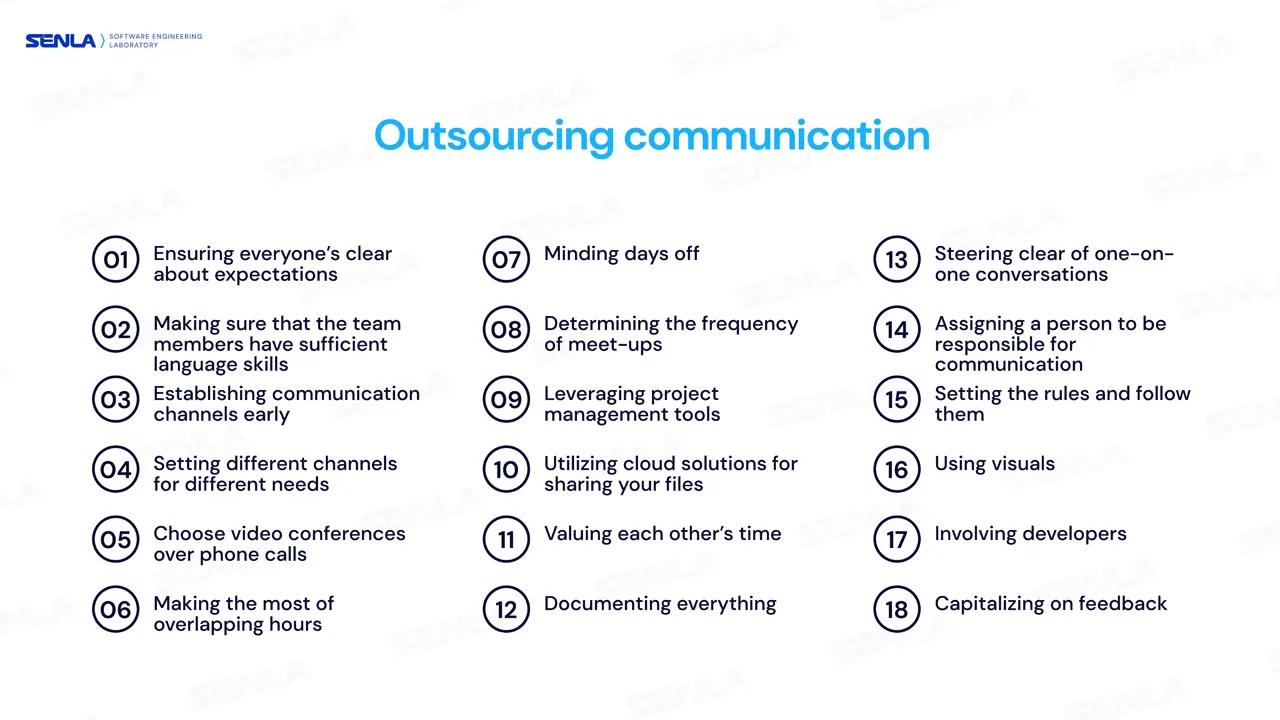
Image Source: SENLA
Communication is the backbone of any successful outsource sales framework. Your best-laid plans can quickly unravel without proper channels connecting your team with external partners.
What it is
Continuous connection channels in sales outsourcing are dedicated pathways and protocols between your organization and your outsourced sales force. These channels let teams share clear, consistent information across geographical locations.
A powerful communication framework has:
- Channel selection: Specific platforms for different interactions (email for reports, messaging for quick questions, video for meetings)
- Protocol development: Clear expectations about response times and communication frequency
- Tool integration: Technology that connects both teams naturally
The right channels must match specific exchanges. To cite an instance, teams use email for formal reports, messaging platforms for quick updates, and video conferencing for deeper discussions.
Why it works
Strong communication channels directly affect outsourcing success. Data shows that 71% of employees value effective communication to boost productivity and involvement. Companies using proper communication protocols see revenue increases of approximately 20-25% through outsourced sales.
Clear communication builds trust in partnerships. Both parties can set expectations and stick to plans. Teams can also improve continuously as market needs change, which makes your outsourced sales operation more adaptable.
Poor communication remains one of the biggest reasons outsourcing fails. This leads to delays, errors, and broken promises. A structured communication approach creates the foundations for lasting success.
How to implement it
Here’s how to create continuous communication channels:
- Choose communication tools based on your needs:
- Immediate messaging: Slack, Microsoft Teams
- Video conferencing: Zoom, Google Meet
- Task management: Trello, Asana, Jira
- Document collaboration: Google Drive, Notion
- Pick main contact points in both organizations to connect teams.
- Set clear expectations about:
- Response times for different communication types
- Meeting schedules and formats
- Reporting structures and deadlines
- Hold regular check-ins to track progress, solve issues, and adjust expectations.
- Handle time zone differences by:
- Adjusting working hours to create overlap
- Scheduling key meetings during shared hours
- Keep records of key discussions with meeting agendas and detailed notes.
Secure communication practices become vital when outsourcing sensitive operations like finance or IT.
Build Scalable Sales Processes
Scalable processes are the foundations of any successful outsource sales framework. The right systems let your sales operation grow without adding costs or complexity.
What it is
Scalable sales processes work as well-laid-out, repeatable frameworks. They help sales operations handle bigger workloads without losing quality or performance. Your outsourced sales force can adapt to market changes while staying consistent.
A truly scalable process includes these key parts:
- Well-laid-out workflows for lead qualification, outreach, and follow-up
- Clear documentation of best practices
- Automation of repetitive tasks
- Integrated technology systems
- Clear metrics to assess performance
Scalability gives you the flexibility to adjust resources, processes, and strategies when markets change. Your systems should handle current needs and grow naturally as your business expands.
Why it works
Scalable processes bring real benefits to outsourced sales teams. Companies with mature sales processes make 133% more revenue than those without. Organizations with well-laid-out sales processes grow 15% faster than those taking unstructured approaches.
Flexible, scalable processes help businesses expand their sales operations to meet growth needs. Studies show that good pipeline management alone can boost revenue growth by 15%.
These processes make outsourcing work better. B2B companies using outsourced teams close deals 28% faster because of better targeting and outreach strategies. A proper workflow helps teams stay in sync no matter where they work or how fast the business grows.
How to implement it
Here’s how to build truly scalable sales processes for your outsourced team:
- Map your current process – Write down each step in your sales workflow to spot bottlenecks and ways to improve. This shows what works and what doesn’t.
- Standardize lead qualification – Set clear rules to prioritize prospects who are more likely to buy. This saves time and keeps teams focused on valuable opportunities.
- Integrate technology solutions – Use tools like:
- CRM platforms (Salesforce, HubSpot)
- Sales engagement automation (Outreach, Salesloft)
- AI-powered analytics (Gong, Chorus)
- Create documented workflows – Build step-by-step guides for each sales function that outsourced teams can follow.
- Establish performance metrics – Keep track of conversion rates, sales cycle length, and pipeline value to measure success.
- Build automation – Let technology handle routine tasks so your outsourced sales force can focus on what matters.
All the same, note that scalability needs constant fine-tuning. Regular reviews help you assess and improve processes as you grow.
Train Your Outsourced Sales Force Thoroughly

Image Source: RAIN Group
Quality training sets exceptional outsourced sales teams apart from average ones. Your brand ambassadors need more than simple scripts to achieve meaningful results.
What it is
A full picture of training outsourced sales teams requires detailed knowledge transfer that gives external teams the tools to represent your brand with confidence. This extends beyond quick onboarding sessions and has sections on in-depth product knowledge, customer pain points, competitive positioning, and brand voice that lines up with your company.
The core elements of detailed training has:
- In-depth product and service training
- Customer persona analysis
- Ground sales scenarios and objection handling
- Company culture and values immersion
- Continuous learning opportunities
Quality training connects outsourced teams with internal knowledge, which lets representatives interact naturally with prospects instead of reading from generic scripts.
Why it works
The investment in detailed training affects business results directly. Studies show 76% of employees stay with companies that offer continuous learning and development. The organizations that use proper training techniques see clear benefits in efficiency, revenue, and customer satisfaction metrics.
Yes, it is true that companies without proper training priorities face generic customer interactions, wrong information sharing, lost sales opportunities, and damaged customer trust. The right training programs help outsourced teams become productive 21% faster than their in-house counterparts.
Training creates a connection between your business goals and your outsourced representatives’ work. This ensures consistent brand representation at every customer touchpoint.
How to implement it
These steps help create effective training:
- Develop well-laid-out onboarding – Create detailed programs about products, messaging, customer profiles, and industry landscape. Add interactive elements like live demos and role-playing exercises.
- Employ different training methods – Use multiple approaches:
- AI-powered training with automated quality assurance
- On-job training with real scenario simulations
- E-learning platforms for self-paced development
- Gamification to boost engagement and knowledge retention
- Establish mentorship programs – Connect new team members with experienced sales professionals who offer guidance and practical advice.
- Provide ongoing education – One-time training doesn’t work. Regular refreshers, workshops, and coaching sessions keep skills sharp as markets change.
- Implement performance tracking – Track key metrics to spot knowledge gaps and offer targeted coaching where needed.
Successful outsourced sales partnerships view training as an ongoing investment in relationship building and performance improvement rather than a one-time event.
Leverage Sales Technology and CRM Tools
Technology serves as the backbone of any outsource sales framework in today’s digital world. The right tools can turn average performance into exceptional results.
What it is
Sales technology and CRM tools for outsourced teams combine integrated systems that organize, automate, and synchronize customer interactions throughout the sales cycle. These platforms work as the operating system for modern sales teams and combine essential capabilities like contact management, built-in calling, email automation, and analytics.
Customer Relationship Management (CRM) software stands at the heart of these systems. This central hub tracks all prospect interactions, simplifies processes, and keeps customer data organized. Salesforce reports that 80% of business leaders use CRM systems as “a single source of truth for their customers”.
Key components typically include:
- Lead management and scoring systems
- Sales automation tools for repetitive tasks
- Analytics and reporting dashboards
- Communication integration (email, calling, messaging)
- AI-powered insights and recommendations
Why it works
The right technology brings measurable results for outsourced sales operations. CRM systems boost sales by up to 29%, with an average return of $8.71 for every dollar spent. Advanced analytics give deep insights into customer behavior, which improves decision-making and enables tailored approaches.
Outsourced teams using these tools close leads 28% faster through refined targeting. Sales technology also increases efficiency by automating administrative tasks. About 57% of sales professionals spend 3-10+ hours weekly using CRM tools.
Technology creates transparency between your business and outsourced partners. This visibility helps both parties stay aligned on goals and strategies while you retain control throughout the sales process.
How to implement it
Your outsourced sales force needs proper technology integration:
CRM integration should work smoothly between your systems and your outsourced partner’s platform. This creates a unified view of customer interactions across channels.
Your specific business model should guide tool selection. Look beyond feature lists to find solutions that match your unique workflow.
AI-powered capabilities provide deeper insights. These tools analyze thousands of data points to better understand prospect needs and optimize follow-up timing.
Automation handles routine tasks like follow-ups and data entry. Your outsourced team can then focus on high-value activities like relationship building.
Clear metrics and reporting dashboards track performance immediately, which enables quick strategy adjustments.
The human element remains crucial. Technology should improve, not replace, human communication. Regular check-ins and shared dashboards keep teams aligned.
Track Performance with Meaningful Metrics
Measuring success is crucial for any high-performing outsource sales framework. Teams need solid tracking methods because even the best strategies can fail without them.
What it is
A data-driven, logical approach helps monitor and evaluate your outsourced sales team’s activities. Sales performance management (SPM) uses metrics-driven practices and advanced analytics tools to optimize results.
Key performance indicators typically include:
- Conversion rates: Shows how well leads become customers
- Response time: Shows how quickly teams reach new prospects
- Sales quality: Shows performance against set criteria
- Sales qualified leads (SQLs): Shows lead quality and buying intent
These metrics reveal the team’s performance and let managers make strategic changes based on real results instead of guesswork.
Why it works
Data-driven performance tracking brings great results. Companies that use SPM hit and exceed their yearly quotas. Their revenue grows faster through better sales processes.
Metrics-driven outsourcing builds trust between partners. Both sides work harder toward making money when they agree on specific KPIs early on. On top of that, immediate analytics help providers stay focused on their targets.
The outsourcing company should train continuously and measure performance against unique metrics. Top-performing companies serve as a measure for success. This outside viewpoint helps teams accept improvement plans more easily.
How to implement it
You need several strategic steps to track performance well:
Start with strong financial basics. Your company should make USD 1-5 million yearly before expanding internationally through outsourcing.
Set clear revenue goals and figure out what lead generation KPIs you need. Link these KPIs to your business goals to see if outsourcing gives you the results you want.
Watch both early signs (calls made, emails sent, meetings scheduled) and final results (win rate, renewal rate, total revenue). This helps predict future success.
Compare your performance with competitors through deep analysis. This shows problems, opportunities, and actions that make more money while cutting costs.
Foster a Collaborative Partnership
Success in an outsource sales framework needs more than contracts and processes. Your relationship with the external team makes all the difference in getting lasting results.
What it is
A collaborative partnership in sales outsourcing changes the usual client-vendor dynamic into a strategic alliance. This approach treats your outsourced sales team as an extension of your in-house operations. They become true partners with shared objectives and mutual investment in outcomes.
Collaborative partnerships thrive on these elements:
- Mutual respect and trust between organizations
- Open information sharing beyond simple requirements
- Joint problem-solving and strategic planning
- Shared accountability for results
Both parties work together to create practices that generate market value and achieve competitive advantages.
Why it works
Collaborative partnerships measurably affect business outcomes. Companies that use collaborative outsourcing get access to emerging technologies like Cloud and Robotic Process Automation. Research shows 93% of companies think about these technologies through collaborative partnerships.
These partnerships make shared knowledge transfer between teams possible. Teams learn continuously and improve their capabilities on both sides. Quality, regulatory compliance, and cybersecurity get better as outsourcing partners bring their expertise from various projects.
A Harvard Business Review study confirms that successful outsourcing partnerships build on clear communication, shared goals, and dedication to working together.
How to implement it
You can build truly collaborative partnerships with your outsourced sales force:
- Include outsourced teams in strategic discussions – Ask your external experts to join team meetings. Their recommendations can improve productivity, efficiency, and performance.
- Seek their insights for improvement – Use their rich experience as knowledgeable business resources. They can help plan and make changes to speed up your goals.
- Establish regular feedback channels – Build communication structures that let both sides share challenges and innovative solutions openly.
- Create shared incentive programs – Set up financial mechanisms that line up interests. Both parties stay focused on key performance areas despite business changes.
- Demonstrate mutual flexibility – Stay adaptable around relationship structures. This ensures they fit together and evolve as business needs change.
My experience shows that treating outsourced teams as valuable partners creates better alignment and stronger results over time.
Plan for Long-Term Sales Outsourcing Success
Image Source: SquadStack
Forward thinking separates thriving outsource sales frameworks from those that fizzle out after early success. Smart planning turns short-term wins into lasting competitive advantages.
What it is
Success in long-term sales outsourcing needs sustainable strategies that make your outsourced partnership better over time. This method builds flexible frameworks that adapt to market changes while delivering steady results.
Key components include:
- Managing strategic relationships beyond the first contract
- Ongoing innovation and technology integration
- Environmental and social responsibility goals
- Regular improvement and assessment systems
The planning changes focus from quick wins to building strong, flexible outsourcing relationships that create lasting value.
Why it works
Smart long-term planning delivers measurable business results. Companies that use shared outsourcing get access to new technologies like Cloud and Robotic Process Automation. About 93% of businesses look at these technologies through lasting partnerships.
Budget-friendly outsourcing helps organizations reach their economic, social, and environmental goals together. This integrated approach protects company reputation and builds strength in a market that cares about values.
Companies that see outsourcing as strategic rather than just transactional grow their global business process services by 6-8% yearly. This growth comes from constant innovation, data analysis integration, and specialized expertise development.
How to implement it
Here’s how to plan for long-term outsourcing success:
- Review outsourcing goals yearly to check how well they fit with business culture and update strategies.
- Put hybrid outsourcing models in place that mix onshore and offshore teams to tap into various talent pools.
- Make cybersecurity a priority through regular compliance checks and reliable security measures.
- Choose suppliers who meet eco-friendly standards to follow regulations and show dedication to responsible practices.
- Set performance standards against top companies to find ways to improve.
- Build shared reward programs that keep interests aligned during business changes.
- Hold regular strategy meetings to keep organizations working together.
Long-term success depends on seeing outsourcing as more than cost-cutting. It’s a mutually beneficial alliance that drives growth, innovation, and positive change.
Comparison Table
| Tactic | What It Is | Key Components | Main Benefits | Implementation Steps |
|---|---|---|---|---|
| Check Sales Readiness | Team’s readiness check for customer interactions | – Team skill assessment – Process review – Tech readiness – Market knowledge |
– Fills knowledge gaps – 16.2% improvement in quota attainment – Better decisions |
1. Check current skills 2. Find areas to improve 3. Review partners 4. Set goals 5. Create training plans |
| Set SMART Sales Goals | Clear way to set and track objectives | – Clear targets – Measurable standards – Doable goals – Relevant aims – Fixed deadlines |
– 40% lower turnover – 35% higher engagement – Faster onboarding |
1. Review business situation 2. Check economic factors 3. Study revenue per rep 4. Get feedback 5. Track progress |
| Pick Right Outsource Company | Finding the best external sales partner | – Industry know-how – Proven methods – Tech skills – Management systems |
– Lower overhead costs – Quick setup (45 days) – Expert skills access |
1. Check industry experience 2. Review tech abilities 3. Match culture fit 4. Check data security 5. Do background checks |
| Set Up Communication Channels | Clear paths for info sharing | – Pick channels – Set rules – Connect tools – Response times |
– 20-25% more revenue – Better output – Teams work better together |
1. Pick tools 2. Name contact people 3. Set clear rules 4. Plan check-ins 5. Handle time zones |
| Create Expandable Processes | Easy-to-repeat work methods | – Standard steps – Written guides – Automation – Connected tech – Success tracking |
– 133% more revenue – 15% faster growth – 28% quicker deals |
1. Map current steps 2. Set quality standards 3. Add technology 4. Design workflows 5. Set success measures |
| Train Well | Complete skill building | – Product learning – Customer understanding – Sales practice – Company values – Ongoing learning |
– 76% better retention – 21% faster learning – Brand consistency |
1. Create clear onboarding 2. Mix teaching methods 3. Start mentoring 4. Keep training going 5. Watch progress |
| Use Technology | Connected systems for customer management | – CRM systems – Sales automation – Data dashboards – Chat tools – AI insights |
– 29% more sales – $8.71 return per dollar – 28% faster cycles |
1. Connect CRM 2. Match tools to needs 3. Use AI features 4. Set up automation 5. Track results |
| Monitor Performance | Regular sales activity checks | – Deal rates – Response speed – Sales quality – SQL metrics – Analysis tools |
– Better quota results – Clear accountability – More revenue growth |
1. Set money basics 2. Pick goals 3. Choose KPIs 4. Add tracking 5. Compare to standards |
| Build Partnerships | Working together beyond basic business | – Mutual trust – Shared info – Joint plans – Shared goals |
– New tech access – Better knowledge sharing – Better compliance |
1. Join strategy talks 2. Ask for input 3. Create feedback loops 4. Share rewards 5. Stay flexible |
| Plan Future Success | Building lasting growth plans | – Building relationships – Adding new ideas – Being responsible – Checking progress |
– 6-8% yearly growth – Better stability – Stronger teams |
1. Check yearly goals 2. Mix work models 3. Focus on security 4. Pick lasting partners 5. Set standards |
Conclusion
These ten proven tactics will reshape how your outsourced sales force delivers results in 2025 and beyond. In this piece, each strategy builds on others to create a detailed framework that accelerates business growth. Sales readiness assessment builds your foundation. SMART goals establish clear direction. The right outsourcing partner, connected through uninterrupted communication channels, executes adaptable processes that deliver consistent results.
These strategies work by dealing with both immediate performance needs and long-term sustainability. Companies using such approaches see 29% sales increases, 28% faster lead-to-close cycles, and their revenue grows substantially. Your success comes from treating these tactics as interconnected elements of a cohesive strategy, not isolated techniques.
The numbers tell the story clearly. Businesses with mature sales processes generate 133% more revenue than those without well-laid-out approaches. Detailed training helps your outsourced team represent your brand authentically. Technology integration and performance tracking keep accountability strong throughout the relationship.
Note that sales outsourcing success needs both tactical excellence and strategic collaborations. Organizations that see outsourcing as a collaborative, long-term investment rather than just a cost-cutting measure achieve 6-8% annual growth in their global business operations. These well-developed partnerships deliver immediate results and create lasting competitive advantage in an increasingly complex marketplace.
Unlock your sales potential with proven tactics at GrowLeads.io today!
FAQs
Q1. What are the key components of an effective outsource sales framework?
An effective outsource sales framework includes assessing sales readiness, setting SMART goals, choosing the right outsourcing partner, establishing clear communication channels, and building scalable processes. It also involves thorough training, leveraging technology, tracking performance metrics, fostering collaboration, and planning for long-term success.
Q2. How can companies ensure their outsourced sales team aligns with their brand?
Companies can ensure alignment by providing comprehensive training on product knowledge, customer personas, and brand values. Establishing clear communication channels, sharing strategic goals, and fostering a collaborative partnership are also crucial. Regular performance tracking and feedback help maintain consistency in brand representation.
Q3. What role does technology play in outsourced sales success?
Technology plays a critical role in outsourced sales success. Implementing integrated CRM systems, sales automation tools, and analytics dashboards can increase sales by up to 29% and provide an ROI of $8.71 for every dollar spent. These tools enable better lead management, performance tracking, and data-driven decision-making.
Q4. How can businesses measure the success of their outsourced sales efforts?
Businesses can measure outsourced sales success by tracking key performance indicators (KPIs) such as conversion rates, response times, sales quality, and the number of sales qualified leads (SQLs). Implementing both leading indicators (e.g., calls made, meetings scheduled) and lagging indicators (e.g., win rate, total revenue) provides a comprehensive view of performance.
Q5. What are the benefits of long-term planning in sales outsourcing?
Long-term planning in sales outsourcing leads to sustainable growth and resilience. Companies implementing collaborative, long-term outsourcing strategies gain access to emerging technologies, achieve 6-8% annual growth in global business process services, and build stronger partnerships. It also enables businesses to adapt to market changes and maintain consistent performance over time.

Runs the sales process, lead qualification, and client delivery that turn signals into qualified meetings.