Why Most B2B Lead Generation Services Fail (And How to Succeed in 2026)

Here’s the truth: most lead generation services today miss the mark because they’re obsessed with quantity, not quality. Think about this, boosting your qualified lead volume by just 20% could potentially increase your income by the same percentage. That’s huge!
The secret? Combining inbound and outbound approaches that actually match your specific audience and buying cycle. LinkedIn is a goldmine here, generating 80% of B2B leads online with an impressive 2.74% visitor-to-lead conversion rate.
But remember, effective lead generation isn’t just collecting contact info, it’s building relationships that convert. This explains why 77% of marketers using automation software see more leads, with 80% turning more prospects into customers.
I’m going to break down exactly why most B2B lead generation efforts crash and burn, and share proven strategies that’ll set you up for success in 2025. You’ll learn how to:
- Develop buyer personas that actually work (not just fancy documents no one uses)
- Get your sales and marketing teams working together (finally!)
- Implement qualification processes that separate serious prospects from time-wasters
By the time you finish reading, you’ll have a clear roadmap for building a lead generation system that delivers consistent results while your competitors keep spinning their wheels with outdated approaches.
Why B2B lead generation services often fall short
Let me be straight with you – most B2B lead generation services fail to deliver because they’re missing the fundamentals. Without these core elements, even the priciest services leave you with nothing but empty pipelines and wasted budgets.
Lack of clear buyer personas
Ever tried to hit a target in the dark? That’s exactly what happens with poorly defined B2B buyer personas. It’s a nightmare scenario for sales and marketing teams. Without detailed personas, companies burn through resources targeting the wrong prospects and then wonder why deals aren’t closing.
The numbers don’t lie. Research shows that 71% of companies exceeding revenue and lead goals have documented personas. And marketers using these personas see 73% higher conversions from response to marketing qualified lead.
Despite these eye-opening stats, so many lead generation services skip proper persona development. They’ll grab some basic demographic information and call it a day, instead of digging into what really matters – prospect motivations, challenges, and decision-making processes. This superficial approach falls flat because it misses the essence of real decision-makers in B2B environments.
Over-reliance on outdated tactics
I see this all the time – lead generation services pushing the same tired tactics that just don’t work anymore. Take gated content, for instance. It once worked great, but now it often backfires. You’re basically setting up roadblocks that keep potential customers from accessing valuable information. According to research, this approach “sets up barriers that keep people from finding information that can trigger leads and conversions”.
And don’t get me started on generic cold outreach and unfocused content marketing. These traditional methods deliver poor results in today’s sophisticated marketplace. Services that don’t adapt to how buyers actually behave today are just wasting your budget on approaches that chase quantity over quality.
Poor alignment between sales and marketing
This one drives me crazy. The disconnect between sales and marketing teams absolutely cripples lead generation efforts. Would you believe 90% of sales and marketing professionals report misalignment in strategy, process, culture, and content marketing? This creates a vicious cycle – marketing generates leads that sales ignores, and sales complains the leads are garbage.
The fallout? It’s brutal: 51% of marketers rate communication between teams as unsatisfactory, and 53% of sales reps are unhappy with marketing support. Even worse, 68% of marketers say up to half of their marketing qualified leads are ignored or disqualified by sales. All this finger-pointing wastes time and money while killing potential revenue opportunities.
Neglecting lead qualification
Too many B2B lead generation services are obsessed with volume but completely ignore quality. They flood sales teams with low-quality prospects who either aren’t ready to buy or don’t fit the ideal customer profile at all. Research tells us only 25% of marketing-generated leads are high enough quality to advance to a sale.
Good lead qualification saves time and boosts conversion rates by helping teams focus on quality over quantity. When done right, qualification systems deliver 50% more sales-ready leads while cutting costs by 33%. Without structured frameworks like BANT (Budget, Authority, Need, and Timing), you’re just wasting resources chasing prospects who’ll never convert.
Want to build a B2B lead generation strategy that actually works? You need to tackle these four critical failure points head-on. Create detailed buyer personas, ditch the outdated tactics, get sales and marketing on the same page, and implement solid qualification processes. Do these things, and you’ll see a dramatic improvement in your lead generation results.
What is B2B Lead Generation and Why It Matters
Looking for the heart of business growth? It’s B2B lead generation. At its core, B2B lead generation involves identifying ideal potential buyers for your product or service and enticing them to purchase. I like to think of it as a strategic matchmaking process, finding businesses interested in what you offer, capturing their information, and nurturing these relationships until they convert.
Definition and Purpose
Let me be clear, B2B lead generation isn’t just about collecting contact details. This methodical process helps companies discover their Total Addressable Market (TAM), build a predictable pipeline, create relevant content, and increase brand awareness. Bottom line? Without leads, there are no sales, and without sales, there is no revenue.
For your sales and marketing teams, quality lead generation provides the foundation for everything else they do. Good lead data means better analytics, more accurate forecasting, and clearer performance measurement across departments. This makes it easier to spot weaknesses in your process and make smart adjustments.
How It Differs From B2C Lead Generation
B2B and B2C lead generation might seem similar on the surface, but trust me, they’re quite different in execution. B2B targets other businesses with longer, more complex sales cycles, while B2C focuses on individual consumers with shorter, more transactional processes.
Think about your B2B audience, typically business owners and key decision-makers within organizations. This naturally narrows your market compared to the broad B2C world. Plus, B2B purchases usually involve bigger financial commitments and multiple stakeholders, which stretches out the decision process.
The content requirements? Night and day difference. B2B content needs to be more informative, professionally worded, and solution-oriented. And when it comes to platforms, LinkedIn stands as the heavyweight champion for B2B lead generation, whereas B2C can spread across Instagram, Facebook, Twitter, and beyond.
The Role of MQLs and SQLs
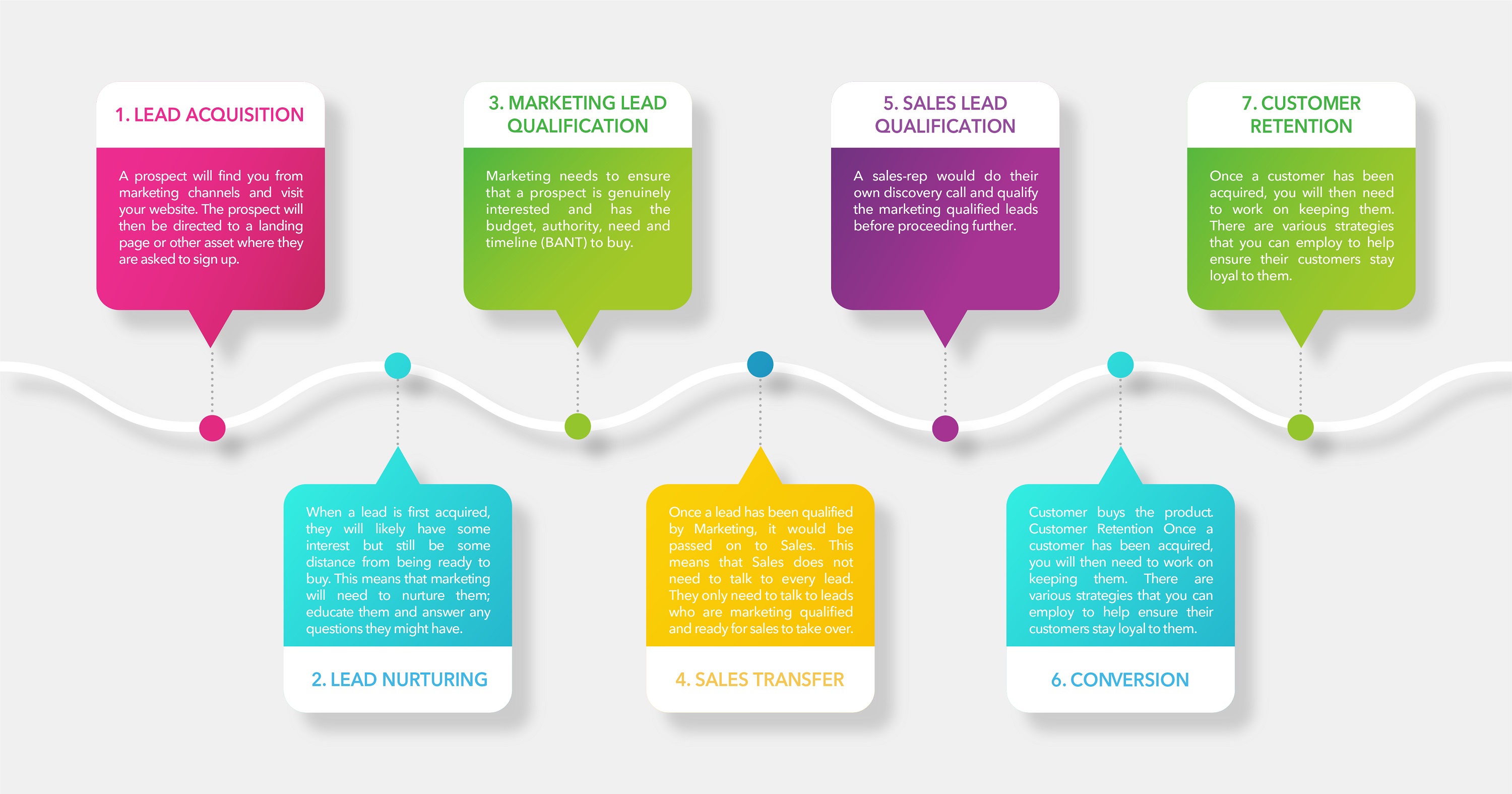
I couldn’t talk about lead generation without explaining the crucial difference between Marketing Qualified Leads (MQLs) and Sales Qualified Leads (SQLs).
MQLs have engaged with your marketing efforts and shown interest but aren’t ready to buy yet. These folks might have downloaded your whitepaper, attended your webinar, or visited your website multiple times. They’re interested, but still need nurturing.
SQLs, on the other hand, have moved further along and shown clear purchase intent. They’ve reached out to your sales team, requested demos, or explicitly asked about specific products. Did you know it typically takes about 12 points of contact to transform a prospect into a sales-qualified lead? That’s persistence!
This classification system isn’t just fancy terminology, it helps your team prioritize outreach and use resources efficiently. When sales and marketing align around these definitions, they connect with qualified leads 42% faster. Plus, tracking conversion rates between MQLs and SQLs shows you exactly where your funnel needs work.
The 3-step process behind successful B2B lead generation
 Want to know why some businesses nail lead generation while others fail miserably? I’ve found it all comes down to a simple three-step process. Let me walk you through each step that forms the backbone of a system that actually works.
Step 1: Define your ideal customer profile
You can’t hit a target you can’t see. That’s why creating an ideal customer profile (ICP) is non-negotiable. Your ICP describes the perfect company that would get maximum value from your product while bringing substantial value to your business. High-growth companies [link_8] make their ICP central to everything they do, which leads to more efficient demand generation and qualification.
How do you build an effective ICP? It’s easier than you think:
- Identify your “super users” – these are your current customers who are getting the most value from what you offer
- Look for patterns in their industries, company sizes, revenue, locations, and pain points
- Focus on customers with high lifetime value who stick around after that initial honeymoon phase
Your ICP should include six essential traits [link_9]: industry fit, money to spend, readiness to buy, growth potential, right-sized company, and geographical match. Once you’ve got this nailed down, use it to show how your solution addresses their strategic goals, fine-tune your targeting, and evaluate leads against real standards.
Step 2: Choose the right mix of inbound and outbound strategies
I get asked all the time: “Should I focus on inbound or outbound?” The answer? Both. While outbound often delivers quicker results, inbound builds long-term brand authority. Together, they’re unbeatable.
Think about it this way: inbound lead generation pulls people to you through content and campaigns. Your prospects decide when and how they want to engage. It uses search engines and social media to connect them with your content, building trust along the way.
Outbound, on the other hand, pushes messages to targeted audiences whether they’ve shown interest or not. You control when they see your ads or get your emails.
The big difference? With inbound, prospects choose how they engage; with outbound, you decide when they see your stuff. Both have their place, especially when you combine them strategically.
Step 3: Qualify and nurture leads effectively
This is where most companies drop the ball. Lead qualification separates serious buyers from time-wasters by scoring leads based on real signals of interest and fit. Look at both demographics (company size, industry, job title) and behavior (website visits, content downloads, email opens). This lets your sales team zero in on hot leads while nurturing the slower burners.
For qualification, I recommend using the BANT framework (Budget, Authority, Need, Timing). This means having actual conversations with open-ended questions that uncover pain points, decision processes, and timelines. Good qualification saves tons of time and boosts conversion rates by focusing on quality, not just quantity.
Once qualified, nurture those leads by:
- Sending personalized emails based on what they’ve done and shown interest in
- Sharing educational content that shows your product’s value
- Tackling objections before they become roadblocks
- Setting up automated workflows that keep the conversation going
The best nurturing happens across multiple channels, email, social media, webinars, and direct calls, all tailored to each buyer’s preferences. This helps fill knowledge gaps and empowers prospects to make confident buying decisions.
Follow this three-step process, and you’ll build a lead generation system that consistently delivers quality prospects who are actually ready to buy. Sound good so far? Let’s dive deeper.
Best B2B Lead Generation Strategies to Use in 2025
Looking to stay ahead of your competition in 2025? The B2B lead generation landscape is evolving fast, and what worked last year might not cut it anymore. I’ve identified six high-performing strategies that will separate industry leaders from companies still stuck in outdated methods.
Content Marketing and SEO
Let me tell you something – creating high-value content isn’t optional anymore, it’s essential. But here’s the twist: unlike old approaches that focused only on conversions, today’s content marketing needs to build loyalty first and generate leads second.
The secret? Aligning your content with search intent and buyer journey stages. Think about it:
- Awareness stage? Informational blog posts and tutorials work best
- Commercial intent searchers? They want case studies and testimonials
- Ready-to-buy prospects? Hit them with optimized landing pages
Start by setting SMART goals and doing proper keyword research to find what your audience is actually searching for. Then choose marketing channels that match where your audience hangs out. Remember – tell a story, don’t just present information. Nobody likes reading a data dump.
Account-Based Marketing (ABM)
ABM completely flips traditional lead generation on its head. Instead of casting wide nets and hoping for the best, ABM treats select accounts as markets of one. It’s hyper-focused and creates personalized experiences for specific decision-makers at your target accounts.
Most companies I work with implement three ABM approaches at the same time:
- One-to-one: Creating custom programs for individual high-value accounts
- One-to-few: Applying similar principles to groups of 5-15 accounts
- One-to-many: Scaling personalization across hundreds of named accounts
Sound good so far? The results speak for themselves: businesses using ABM see 38% higher sales win rates, 91% larger deal sizes, and 24% faster revenue growth. Those aren’t small improvements!
Social Selling and Community Engagement
By 2025, if you’re not building authentic relationships through social platforms, you’re already behind. Social selling transforms your sales team from pushy pitchers into trusted advisors who provide value before asking for anything back.
Did you know 78% of reps using social media outperform their peers? And businesses that prioritize social selling are 51% more likely to hit their sales targets? These aren’t just fluffy metrics – they translate directly to revenue.
LinkedIn is still king for B2B, but don’t ignore other platforms. Business leaders actually spend 74% more time on Facebook than other demographics. Weird, right? The winning formula is simple: listen before speaking, personalize your approach, focus on relationships, and consistently share valuable content.
Email Automation and Personalization
Email isn’t dead – not even close. Personalized emails that directly address recipient needs generate 72% response rates. That’s massive! And if you’re not using trigger-based messages, you’re missing out big time – they outperform standard blasts by 497%.
The key is segmentation. Use behavioral, firmographic, demographic, and technographic data to create hyper-targeted campaigns. When your content adapts to each recipient’s preferences, you’ll see 63% higher conversion rates. I’ve seen this work firsthand with clients who were ready to abandon email altogether.
Live Chat and Conversational Marketing
Live chat has grown up. What started as basic customer support has evolved into a powerful lead generation tool. By 2025, 80% of B2B sales interactions between buyers and sellers will happen in digital channels, making real-time engagement non-negotiable.
The impact on conversions is incredible – 99% of marketers using live chat reported increased conversion rates, with 14% seeing improvements exceeding 30%. Beyond just capturing leads, these tools give you valuable insights into what your customers actually want.
Video and Interactive Content
I’ve saved one of my favorites for last. Interactive content like assessments, calculators, quizzes, and personalized videos crushes static alternatives. These formats generate twice the conversions of passive content, with 87% of marketers agreeing they better capture attention.
What makes interactive content so powerful? It provides immediate value through personalized results, removing the friction typically associated with lead forms. For best results, connect these elements with your CRM to track interactions and personalize your follow-up based on engagement.
Which of these strategies are you currently using? In my experience, the companies that combine several approaches while maintaining a consistent focus on quality over quantity see the best results.
How to measure and improve your lead generation efforts
Want to know if your lead generation efforts are actually working? You need to measure them properly. Without good tracking systems, you’re basically flying blind, unable to tell which strategies drive results and which ones are just burning through your budget.
Lead scoring and grading
Lead scoring completely changed how my team prioritizes prospects. We assign point values to specific behaviors and attributes, which helps us focus on the hottest opportunities first. I look at both demographics (like company size and industry) and behaviors (website visits, content downloads, email clicks).
Here are two scoring models I’ve found incredibly valuable:
- Purchase intent scoring – This gives higher points for high-value activities like when someone visits your pricing page or requests a demo
- Predictive scoring – My favorite approach uses AI to spot patterns and predict who’s likely to convert. The best part? It gets smarter over time
Want to set this up yourself? Start by calculating your overall lead-to-customer conversion rate as a benchmark. Then look at your best customers, identify what they have in common, calculate close rates for each attribute, and assign points accordingly. It’s not rocket science, but it works.
A/B testing and optimization
I’ve eliminated a ton of guesswork from my lead generation by running A/B tests. This approach has consistently improved our key metrics without spending an extra dime on marketing.
You’d be amazed at what small changes can do, just tweaking a landing page headline can boost conversion rates by 10-30%. When I run A/B tests, I focus on high-impact elements like:
- Email subject lines and CTAs
- Landing page designs and messaging
- Ad copy variations
The big advantage? Making decisions based on actual data instead of hunches. For B2B websites specifically, this optimization process improves lead generation, user engagement, and conversion rates all at once.
Tracking ROI and conversion rates
If you can’t measure it, you can’t improve it. I track these metrics religiously:
Conversion Rate: This shows how effectively campaigns turn leads into customers. The formula I use is simple: number of sales ÷ number of leads × 100. This instantly reveals which strategies actually deliver results.
Customer Acquisition Cost (CAC): I calculate this as marketing spend ÷ number of new customers. My goal is keeping this as low as possible without sacrificing quality.
Revenue Attribution: This helps me track which specific marketing efforts drive actual sales, so I can allocate resources more intelligently.
Remember that B2B leads rarely convert after just one interaction. Don’t rely solely on last-click attribution, look at multi-touch models that show the full customer journey. And here’s a tip: include a “How did you hear about us?” field in your forms to capture self-reported data when your tracking systems miss something.
Common myths that hold back B2B lead generation success
Let’s talk about the stubborn myths that keep derailing B2B lead generation efforts. I’ve watched companies waste thousands on strategies that simply don’t work because they buy into these misconceptions. Time to bust them wide open so you can focus on what actually gets results.
More leads always mean more sales
Who doesn’t love seeing a massive number of leads flooding into their CRM? It feels productive, right? But here’s the cold, hard truth, research shows only 5-15% of all those inquiries actually become sales-ready opportunities.
I’ve seen marketing teams celebrate hitting lead quotas while their sales teams drown in low-quality prospects. It’s a total disconnect. High lead counts might look impressive in reports, but they often just indicate brand awareness, not actual sales potential.
The problem gets worse when marketers obsess over metrics like cost-per-lead. They completely miss what actually matters, pipeline impact. It’s like counting how many people walk into your store without tracking how many actually buy something. What’s the point?
Instead of chasing lead volume, track how many leads genuinely influence your sales pipeline. This cuts out the wasteful cycle where marketing hunts down unqualified prospects and sales wastes time sorting through them.
Cold outreach is dead
I hear this one all the time: “Cold calling is dead.” “Cold email doesn’t work anymore.” But the data tells a completely different story. Surprisingly, 27% of sellers report cold calls as “very effective” or “extremely effective,” and nearly 70% of buyers still accept these calls.
The confusion comes from mixing up bad outreach with the strategy itself. Cold calling isn’t spam, it’s simply reaching out to prospects before they’ve raised their hand. What makes modern cold outreach work is doing your homework, timing it right, and actually understanding what your prospect needs.
Here’s my take: there shouldn’t be any truly “cold” leads anymore. With all the research tools and intent data available today, your outreach should always be at least lukewarm, if not hot.
Automation replaces human connection
This might be the most dangerous myth of all. I get it, automation tools are amazing. They save time and scale your efforts. But 63% of B2B buyers say too much automation frustrates them and kills trust.
Think about it from your own experience. Don’t you hate getting those obviously automated messages that feel like they could’ve been sent to anyone? About 59% of consumers feel companies have lost the human touch in customer experience.
The sweet spot isn’t choosing between automation or human connection, it’s combining them strategically. Let automation handle the routine stuff while your team focuses on meaningful conversations. This is especially critical during those high-value interactions where building trust can make or break the deal.
How to build a future-ready lead generation system
Look, building a lead generation system that actually works isn’t about quick fixes or the marketing trend of the month. You need a framework that can roll with the punches as markets change and buyer behaviors shift. Let me show you how to create something that stands the test of time.
Invest in the right tools and platforms
First things first, you need a solid tech foundation. I’ve seen too many companies try to piece together disconnected tools and wonder why their data is a mess.
Start by connecting your CRM with your marketing platforms. This isn’t just a box to check, it should be thoughtfully designed with your sales team’s experience as the priority. After all, they’re the ones who’ll use it every day.
Here’s what I recommend including:
- Marketing automation tools (think Marketo, Pardot, or ActiveCampaign) to handle personalized outreach and lead scoring
- Analytics platforms like Google Analytics or Tableau to track where leads come from and where they drop off
- AI-driven prospecting tools that can spot buying signals in real-time
Don’t forget to build systems for gathering first-party data through things like webinars and interactive tools. This stuff is gold now that third-party data is getting harder to access.
Align teams around shared goals
You can have the fanciest tech stack in the world, but if your sales and marketing teams are playing different games, you’ll fail. I’ve watched countless lead gen efforts crash and burn because of misalignment.
Get everyone in the same room (yes, literally the same room if possible) for planning sessions. Hash out what “winning” looks like from each perspective, then create shared KPIs that bridge the gap.
Instead of marketing tracking website visits while sales counts calls, focus on metrics that matter to both, like:
- Customer acquisition cost
- Customer lifetime value
- Lead-to-customer conversion rates
And don’t just meet once and call it done. Schedule regular check-ins, at least every two weeks, to review progress and adjust as needed.
Continuously test, learn, and adapt
Want to know the secret of companies with killer lead gen systems? They’re never satisfied. They’re always testing, measuring, and improving.
Run A/B tests on everything that matters, email subject lines, landing pages, ad copy. This eliminates the “I think this will work better” guesswork that wastes so much time and money.
Create feedback loops between marketing and sales. I like setting up informal surveys where team members can share insights without the finger-pointing that usually happens when leads don’t convert.
Remember, small improvements add up. You don’t need to overhaul your entire system every quarter, consistent, data-driven tweaks will outperform massive changes every time. This creates a culture that can handle whatever the market throws at you.
Final Thoughts on Succeeding Where Others Fail
Let’s be honest, we’ve taken a deep dive into why so many B2B lead generation efforts crash and burn, even when companies throw tons of money at them. The verdict is clear: quality beats quantity every single time. When you obsess over lead volume, you create this frustrating cycle where your marketing team chases meaningless metrics while your sales team drowns in unqualified prospects.
Want to break free from this cycle? You’ve got to ditch those outdated approaches that just don’t work for today’s B2B buyers. Stop clinging to generic tactics. Instead, build personalized experiences based on detailed buyer personas, put solid qualification frameworks in place, and get your sales and marketing teams working toward the same goals.
Remember that three-step process I outlined? Define your ideal customer profile, blend inbound and outbound strategies, and qualify leads effectively. That’s your foundation. And don’t forget to measure everything, proper lead scoring, consistent A/B testing, and accurate ROI tracking will keep your strategies effective even as market conditions change.
As we head toward 2025, the companies that pull ahead will be the ones embracing strategic content marketing, personalized account-based approaches, authentic social selling, and interactive experiences that truly engage decision-makers. It’s pretty simple, adapt quickly or watch your competitors eat your lunch.
Building a future-ready lead generation system isn’t just about fancy tech, though that matters. It’s also about getting everyone in your organization pulling in the same direction. Invest in the right tools, create goals that both sales and marketing can rally behind, and commit to making small, data-driven improvements every day.
The businesses that thrive won’t be the ones with the biggest lead lists, they’ll be the ones that pursue quality leads, balance automation with human connection, and adapt based on real data, not assumptions. Follow the strategies I’ve laid out, and you’ll transform lead generation from a constant headache into a predictable system that consistently delivers qualified prospects ready to buy.
What are you waiting for? Revamp your lead strategy for 2025 with GrowLeads.io. Get started today!
FAQs
Q1. What are the most effective B2B lead generation strategies for 2025?
The most effective strategies include content marketing with SEO, account-based marketing (ABM), social selling, email automation with personalization, live chat and conversational marketing, and interactive video content. These approaches focus on delivering personalized experiences and building relationships with potential customers.
Q2. How can businesses measure the success of their lead generation efforts?
Businesses can measure success through lead scoring and grading, A/B testing and optimization, and tracking key metrics like conversion rates, customer acquisition costs (CAC), and revenue attribution. It’s important to focus on quality over quantity and use multi-touch attribution models to understand the full customer journey.
Q3. Why do many B2B lead generation services fail to deliver results?
Common reasons for failure include lack of clear buyer personas, over-reliance on outdated tactics, poor alignment between sales and marketing teams, and neglecting proper lead qualification. Successful lead generation requires a strategic approach that combines both quality and quantity.
Q4. Is cold outreach still effective for B2B lead generation?
Yes, cold outreach can still be effective when executed properly. The key is thorough preparation, perfect timing, and understanding the prospect’s needs. Modern cold outreach should be warmer and more relevant, leveraging research and intent data to personalize communications.
Q5. How can businesses build a future-ready lead generation system?
To build a future-ready system, businesses should invest in the right tools and platforms, align teams around shared goals, and commit to continuous testing, learning, and adaptation. This approach allows for flexibility in the face of changing market dynamics while maintaining a structured framework for consistent results.

Builds the demand intelligence, automation, and deliverability systems behind Growleads pipeline.