
The Ultimate Guide to Sales Follow Up Email Examples With High-Converting Leads

The response rate for sales follow up email examples sits at just 8.5 percent. These numbers might seem low for anyone trying to close deals.
But here’s the good news. Sales reps who send just one follow-up email see their response rates jump by 65%. Better yet, 80% of sales happen after 5-12 follow-ups. These numbers show why becoming skilled at creating sales follow-up email templates is a vital part of your success.
The sort of thing I love about this process is the psychology behind it. Your prospects build trust over time through repeated contact – that’s the mere exposure effect at work. On top of that, it activates reciprocity when you deliver value in each interaction, which makes prospects more likely to respond.
This piece will show you professional sales follow-up email examples that get results. You’ll learn to write attention-grabbing subject lines that people open. You’ll see how personalization can boost your success rates dramatically. We’ll also help you avoid common pitfalls and master techniques that lead to more closed deals.
Want to change your follow-up strategy and boost your results? Let’s explore!
What Makes a Sales Follow-Up Email Effective
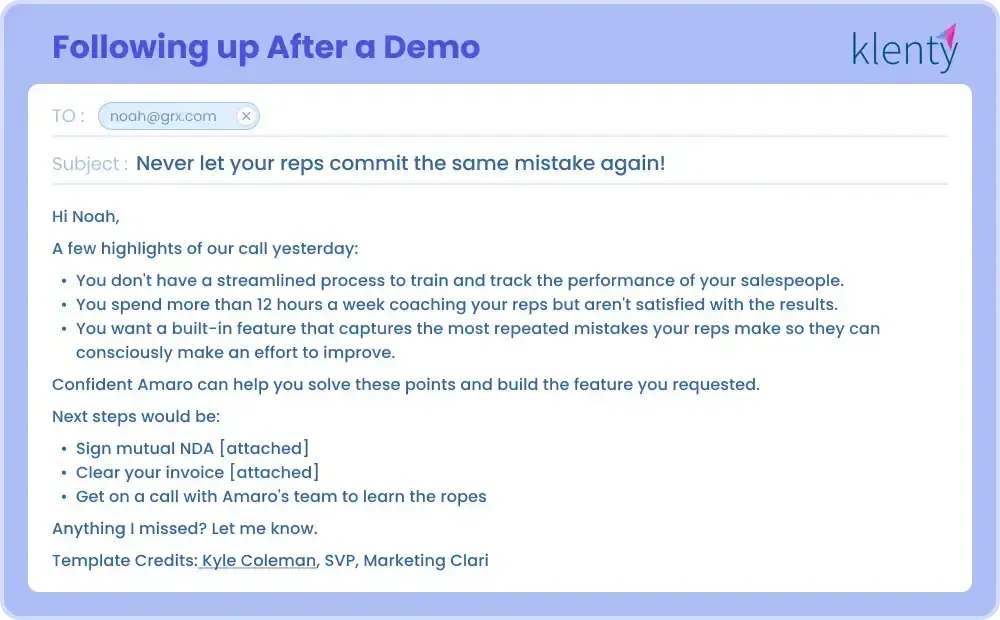
Your sales follow-up emails’ success depends on several key factors that can affect your conversion rates. Writing good follow-up emails isn’t just about being persistent, it’s about smart communication that appeals to your prospects when they’re most receptive.
Why timing matters
The right timing can make or break a sales follow-up email. Research shows that bad timing, whether too soon or too late, can affect your response rates. Sales professionals get the best results when they follow up within 24-48 hours after first contact.
Different situations need different timing approaches:
- After a discovery call: Within 24 hours
- After sending a proposal: 2-3 days
- For cold outreach: 3-5 days
- For meeting requests: 1 week
Data shows that keeping 3-4 days between follow-ups keeps prospects interested without overwhelming them. Response rates drop when you wait more than 4 days between messages.
The day’s timing plays a role too, you’ll get better responses from emails sent between 11am-1pm compared to early morning or late evening. This smart timing shows professionalism and keeps you in your prospect’s thoughts.
The role of personalization
Personal touches turn basic follow-ups into powerful sales tools. Emails with personal content can boost your response rates by an impressive 32.7%. People open emails with personalized subject lines 26% more often.
Good personalization does more than just add someone’s name. You can personalize based on:
- Mutual connections or networks
- Recent company developments or news
- Role-specific pain points and challenges
- Trigger events relevant to their business
- Content and resources aligned with their interests
A personalized email feels like a one-on-one conversation instead of mass communication. Research shows 71% of consumers expect individual-specific interactions from businesses, making this approach essential.
Understanding buyer psychology
Learning your prospects’ decision-making process makes follow-ups more effective. People buy based on emotions first, then use logic to back up their choices.
Trust building matters most during the customer’s trip. Studies reveal that 90% of consumers trust recommendations from people they know. That’s why mentioning shared connections in follow-ups works well.
Creating urgency or showing lack of availability drives action, urgency can increase conversions by up to 332%. Adding social proof helps people feel confident about making similar choices as others.
Talk about emotional benefits instead of just features. Focus on their hopes for improvement, desire for better efficiency, or fear of missing opportunities. Note that you’re not just selling a product or service, you’re selling the hope that your solution will help them achieve their goals.
You’ll create messages that truly appeal to prospects and guide them toward conversion by becoming skilled at timing, personalization, and the psychology of your sales follow-up emails.
How to Structure a Follow-Up Email
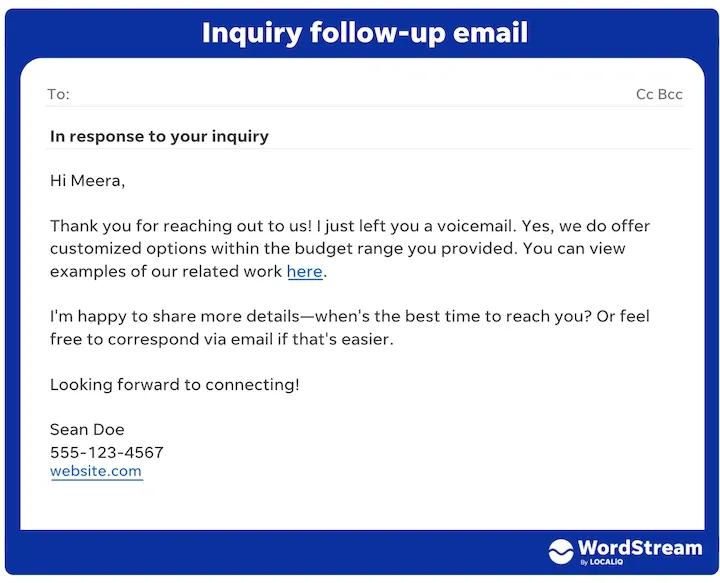
Sales follow-up emails can make or break your deals. A well-crafted email will give a lot better response rates and help you move prospects through your sales pipeline faster.
Crafting a compelling subject line
Your subject line acts as the gateway to your email. Without an attention-grabbing subject line, the rest of your message won’t matter. Studies show that personalized subject lines can increase email open rates by 26%. Keeping your subject line between 30-50 characters will give a better chance of delivery and readability.
Your follow-up emails can take several effective approaches:
- Continue the thread: Keep the original subject with “Re:” to remind them of your ongoing conversation
- Add context: “Following up on our call about [Project X]” signals relevance
- Create urgency: “Quick question about your web design” stands out in crowded inboxes
- Provide value: “Idea to improve [Metric] by 20%” piques interest and offers immediate value
Brevity is vital, but you should avoid vague or misleading subject lines. Research shows that straightforward, benefit-driven subject lines work better than clever but unclear alternatives.
Writing a clear and concise message
Your message needs to deliver once your subject line has done its job. Your follow-up emails should be concise and focused, ideally between 50-125 words.
Start with context that reminds the recipient of your previous interaction. Get straight to the point about why you’re following up. One expert explains, “It’s important to avoid making assumptions about what they remember”.
Structure your message body with:
- A brief reminder of your last interaction
- The specific reason for following up
- Value-added information or insights relevant to their needs
- A clear transition to your call to action
Your message should focus on providing value rather than just requesting action. Notwithstanding that, your writing should stay professional yet conversational, avoiding sales jargon or technical terms that might confuse your prospect.
Including a strong call to action
A clear call to action (CTA) should end every sales follow-up email to guide the recipient toward the next step. Emails with a single CTA performed 371% better than those with multiple CTAs, which shows how important focus is.
Your CTA should:
- Be specific: Instead of “Let me know your thoughts,” try “Would you be available for a 30-minute call next Tuesday at 2 PM?”
- Make it easy: Remove friction by providing calendar links or simple yes/no questions
- Create appropriate urgency: Studies show that urgency can increase conversion rates by up to 332%
- Keep it benefit-driven: Focus on what the prospect gains, not what you want
Your CTA should be between 4-8 words to get optimal click-through rates. On top of that, including an “easy out” can paradoxically increase response rates by showing respect for the recipient’s time and choice.
These three elements of your sales follow-up email, when structured carefully, will create communications that not only get opened but also drive the meaningful engagement needed to close more deals.
6 Sales Follow-Up Email Examples That Work
Sales follow-up emails become powerful tools when you customize them for each stage of the buyer’s trip. Let’s get into six tested templates that work well in different scenarios.
1. After a discovery call
Your email should highlight the value discussed and confirm next steps after a discovery call. Make it short and personal:
Subject: Your team rocks! Next steps ⬇️
“Hi [Name],
Thanks for meeting with me yesterday! I’ve attached a summary of our discussion about [specific challenge]. Based on what you shared, I believe we can help you [achieve specific result].
As promised, here are two customer examples with similar use cases to yours. Would Tuesday at 2pm work for our follow-up call?
Best regards,”
This template shows you paid attention and makes you a solution provider instead of just another seller.
2. After sending a proposal
You should follow up within 2-3 days after submitting a proposal:
Subject: Checking in on our proposal
“Hi [Name],
I wanted to follow up on the proposal I sent last [day]. If you have any questions about how we can help you [solve specific challenge], I’m happy to clarify.
Our clients typically see [specific result] within [timeframe]. Would it be helpful to schedule a quick call this week?
Regards,”
3. After a product demo
Your post-demo emails should restate benefits and tackle any remaining questions:
Subject: Take two 🎬
“Hello [Name],
It was a pleasure demonstrating how [product] can help with [challenge]. As we discussed, the key features that would benefit your team include:
- [Feature 1] to help you [specific benefit]
- [Feature 2] to solve [specific problem]
I’ve attached additional resources on [topic they showed interest in]. Would [day/time] work to discuss implementation?
Cheers,”
4. When there’s no response
This approach works well after several attempts:
Subject: Growth opportunities for [business name]
“Hey [Name],
Do you still need [specific solution] to help your business [achieve result]?
Happy to jump on a quick call to answer questions, or let me know if there’s a different contact I should approach.
Regards,”
The email stays direct but not pushy and offers clear value.
5. To re-engage a cold lead
You should focus on giving immediate value to prospects who’ve gone quiet:
Subject: Idea to improve [their metric]
“Hi [Name],
Since we last spoke, we’ve helped [similar company] achieve [specific result]. I thought of you because you mentioned facing similar challenges with [specific issue].
I’ve attached a quick resource that might help. Would you be open to a 15-minute conversation next week?
Best,”
6. Final breakup email
A breakup email creates urgency while keeping options open:
Subject: Closing the loop
“Hi [Name],
I’ve tried to reach you several times regarding [value proposition]. Since I haven’t heard back, I’ll assume the timing isn’t right.
If your priorities change, I’d still love to show you how we could help achieve [specific goal]. Otherwise, I’ll stop reaching out.
All the best,”
Response rates for breakup emails reach 33%, making them great tools to re-engage prospects.
These templates work as starting points. You can adapt each one to fit your needs while keeping their core elements intact.
Best Practices for Writing Follow-Up Emails
You need to master a few basic best practices to create effective follow-up emails. These emails can boost your conversion rates by a lot and help you retain control of professional relationships with prospects.
Keep it short and relevant
Brevity becomes your best friend when you write sales follow-up emails. Studies show follow-up emails work best between 50-125 words. This short format respects your recipient’s time and gets your message across clearly.
Your emails should stay relevant by:
- Focus on addressing specific challenges mentioned in previous conversations
- Include only essential information that moves the conversation forward
- Use bullet points for easier scanning when presenting multiple ideas
Most recipients just skim through long emails, so short messages help them understand your main points. Each follow-up should serve a clear purpose and add value beyond a simple check-in.
Use a friendly and professional tone
Your follow-up email’s tone will shape how recipients see you and your company. The right mix of friendly and professional builds rapport while showing respect.
Sales professionals don’t deal very well with tone. A professional yet conversational style works best – showing real interest in helping rather than pushing for a sale. The language should never sound pushy or desperate.
The right words combined with personal touches make your emails feel like real conversations instead of automated messages. Mentioning previous discussions shows you pay attention and builds trust.
Follow up consistently but respectfully
Persistence matters, but timing and frequency of follow-ups make the real difference. Research shows 2-3 follow-up emails give the best results. The first follow-up gets response rates about 40% higher than the original emails.
Space your follow-ups 2-3 days apart at first, then gradually increase the time between messages. Think over whether each new email adds fresh value before hitting send.
Boundaries matter in the long run. After several tries without response, send a final breakup email to close things respectfully while keeping future opportunities open.
Common Mistakes to Avoid in Follow-Up Emails

Sales follow-up emails often fail because of critical errors that hurt your chances of closing deals. You can improve your response rates and sales outcomes by spotting and avoiding these common mistakes.
Being too pushy or aggressive
Putting pressure on prospects rarely works well. Research shows that too many follow-ups can damage customer experience and brand reputation. Sales representatives often make the mistake of asking for immediate responses with phrases like “I need pricing immediately” or “Let’s schedule ASAP.” These approaches come across as disrespectful.
Here’s how to avoid sounding pushy:
- Wait 2-3 business days between cold outreach follow-ups
- Choose constructive language over demanding phrases
- Add an “easy out” that actually boosts response rates by showing respect
Sending generic or templated messages
Boring templates filled with “bizspeak” phrases like “at your earliest convenience” make your emails fall flat. About 44% of salespeople quit after just one follow-up, usually because their cookie-cutter messages don’t appeal to prospects.
Personalization matters a lot. One expert explains, “If you can’t avoid pre-written responses, use the right templates, and make sure the tone is as friendly and personal as possible”. Your recipients should feel like real people, not just tasks on your list.
Failing to provide value
The biggest mistake is sending follow-ups that offer nothing new. Your prospect doesn’t care that they haven’t replied, they care about what you can do for them. Chasing responses without adding value gives them no reason to write back.
Each follow-up should include relevant information that addresses your prospect’s needs. Share industry insights, helpful resources, or connect them with your in-house experts. Good follow-ups prove you want to solve their problems, not just make another sale.
These improvements will help your sales follow-ups stand out in busy inboxes and encourage genuine connections that lead to more closed deals.
Conclusion
Becoming skilled at sales follow-up emails will change your chances to close deals and build lasting client relationships. This piece shows how proper timing, personalization, and understanding buyer psychology are the foundations for email success. The structure of your follow-ups, from compelling subject lines to clear calls to action, plays a significant role in generating responses.
Your persistence will pay off. Most salespeople give up after just one follow-up, yet the numbers tell a different story. 80% of sales happen after 5-12 touchpoints. A strategic plan for your follow-up sequence can boost your conversion rates significantly.
Value should drive each communication. Your prospects want solutions to their problems, not just another response request. Delivering relevant insights consistently and avoiding common pitfalls like pushiness or generic messages will establish you as a trusted advisor instead of a typical salesperson.
These proven follow-up strategies deserve your immediate attention. Different approaches need testing, results need tracking, and your process needs refinement. Sales follow-up emails thrive on thoughtful execution and continuous improvement, you now have every tool to excel.
Unlock high-converting leads with our guide at GrowLeads.io. Start now!
FAQs
Q1. How can I make my sales follow-up emails more effective?
To improve the effectiveness of your sales follow-up emails, focus on timing, personalization, and providing value. Send your follow-up within 24-48 hours of initial contact, personalize the content based on your prospect’s needs, and include relevant information or insights that address their specific challenges.
Q2. What’s the ideal structure for a sales follow-up email?
A well-structured sales follow-up email should have a compelling subject line (30-50 characters), a clear and concise message (50-125 words), and a strong call-to-action. Start by reminding the recipient of your previous interaction, then get straight to the point about why you’re following up, and conclude with a specific next step or request.
Q3. How many follow-up emails should I send before giving up?
Research suggests that 2-3 follow-up emails yield optimal results, with the first follow-up generating response rates about 40% higher than initial emails. Space your follow-ups 2-3 days apart initially, gradually extending intervals as time passes. Remember, 80% of sales happen after 5-12 touchpoints, so persistence can pay off.
Q4. What are some common mistakes to avoid in sales follow-up emails?
Common mistakes in sales follow-up emails include being too pushy or aggressive, sending generic or templated messages, and failing to provide value. Avoid demanding immediate responses, using overly formal “bizspeak,” and sending follow-ups that don’t offer any new information or insights relevant to the prospect’s needs.
Q5. How can I politely close a sales email?
To politely close a sales email, keep your message concise and positive. Use language that conveys enthusiasm and confidence in the opportunity you’re presenting. Include a clear call-to-action that guides the recipient towards the next step, such as scheduling a call or reviewing a proposal. Always maintain a professional tone and offer to provide any additional information they might need.

Runs the sales process, lead qualification, and client delivery that turn signals into qualified meetings.