
B2B Lead Gen vs Demand Gen: Key Differences for 2026

Research shows 81% of buyers investigate brands on their own before talking to sales teams. Yet marketers often find it challenging to separate these two complementary strategies. The distinction between lead gen vs demand gen runs deeper than words. Demand gen creates awareness and interest at the top of the funnel. Lead gen finds and nurtures prospects who show interest already. These strategies work together like different stages of a journey that converts prospects into customers.
This distinction impacts your revenue directly. Lead gen vs demand gen affects how you approach building brand authority and generating quality leads. Take email marketing as an example – it generates $36 for every dollar spent when done right.
Smart marketers understand the unique value of lead gen vs demand gen. They measure success differently and use distinct approaches. Learning these differences could change your marketing outcomes in 2025. The time has come to stop using these strategies interchangeably.
Smart marketers understand the unique value of demand gen and lead gen. They measure success differently and use distinct approaches. Learning these differences could change your marketing outcomes in 2025. The time has come to stop using these strategies interchangeably.
Lead Gen vs Demand Gen: What’s the Real Difference?
B2B marketers still find it challenging to differentiate between lead generation and demand generation, even though their approaches and objectives differ fundamentally.
Definition of Demand Generation in B2B Marketing
Demand generation creates market awareness and interest in products or services. Your strategy should focus on building visibility among potential customers who might not realize they have a problem your solution can fix. Unlike quick-win tactics, demand gen makes your brand a 10-year old authority that creates lasting interest through intellectual influence, educational content, and market insights. Quick sales aren’t the goal. The real aim is to build an audience that values your expertise.
Definition of Lead Generation and Its Role
Lead generation captures and qualifies prospect information after establishing interest. This process transforms anonymous visitors into identifiable contacts through strategic content offers, landing pages, and conversion points. Your sales team just needs valuable contact information to involve prospects who show interest. Demand gen creates the appetite, while lead gen serves the meal and takes the dinner reservation.
Top-of-Funnel vs Bottom-of-Funnel Focus
These strategies sit at different points in your marketing funnel. Demand generation works at the top and creates broad awareness through ungated content, social media activity, and SEO-optimized blog posts. Lead generation operates near the bottom and uses targeted offers like product demos, free trials, and solution-specific webinars to convert interested prospects. Each method uses different metrics. Demand gen looks at reach and engagement, while lead gen measures form completions and conversion rates.
How They Interact in the Sales Funnel
These strategies complement each other throughout the buyer’s experience. Strong demand generation naturally supports your lead generation efforts by growing your potential audience. The trust built through demand gen activities helps prospects respond better to lead gen offers. Successful campaigns often mix both approaches. They start with educational content that builds awareness and gradually introduce conversion opportunities as interest grows. This partnership creates a steady pipeline of prospects who move from original awareness to qualified leads.
Goals and Metrics: What Each Strategy Aims to Achieve

Success in marketing depends on measuring what matters. Each strategy reveals different aspects of your customer acquisition story through its unique metrics.
Demand Gen KPIs: Awareness, Reach, and Engagement
B2B organizations must look beyond immediate conversions to track broader market interest when measuring demand generation effectiveness. Leading B2B companies prioritize strategic measurements that directly connect to revenue generation. Google’s research shows 89% of leading marketers use bottom-line indicators such as gross revenue, market share, and customer lifetime value.
Website traffic, social engagement rates, content performance, and brand sentiment serve as essential demand generation metrics. These numbers show how well you build awareness before prospects identify themselves. Your early campaigns should track “signs of life” metrics. Look for increased views from target accounts, engagement rates, and positive signals like direct messages that praise your content.
Your demand gen efforts should focus on pipeline metrics as they mature. “HIRO Pipeline” (High-Intent Revenue Opportunity) shows your demand generation efforts create real opportunities when deals close at 25% or higher.
Lead Gen KPIs: MQLs, SQLs, and Conversion Rates
Lead generation relies on concrete conversion metrics that show prospects moving through your funnel. Marketing Qualified Leads (MQLs) and Sales Qualified Leads (SQLs) stand at the center of these metrics.
MQLs represent leads that actively engage with your content or show behaviors that match your ideal buyer profile. SQLs go further by meeting specific criteria that make them ready for sales. The MQL to SQL conversion rate shows how well your marketing team qualifies leads. Studies of hundreds of companies reveal the average Lead to Opportunity conversion rate is 13%. Website leads convert at 31.3%, while email campaigns convert at just 0.9%.
Cost per lead (CPL), cost per acquisition (CPA), and lead velocity help understand efficiency. Companies generate $5.44 in revenue for every $1.00 spent on lead generation campaigns. This 444% ROI shows how lead generation multiplies growth.
How to Measure ROI for Each Approach
Lead generation and demand gen need different approaches to calculate ROI effectively. Lead generation uses a simple formula: ROI = (Net Profit / Cost of Lead Generation) x 100. This percentage shows performance clearly.
Demand generation needs more complex ROI measurements because of longer sales cycles, multiple touchpoints, and indirect benefits like brand awareness. Modern approaches include:
- Multi-touch attribution models that value all touchpoints
- Customer Lifetime Value (CLV) measurements that show long-term revenue effects
- Closed-loop analytics that connect marketing efforts to sales results
Google Analytics with CRM integration helps track the complete customer trip. You can map website behavior, conversion paths, and revenue sources. This detailed view captures the true effect of both strategies beyond immediate conversions.
Tactics in Action: What Smart Marketers Actually Do
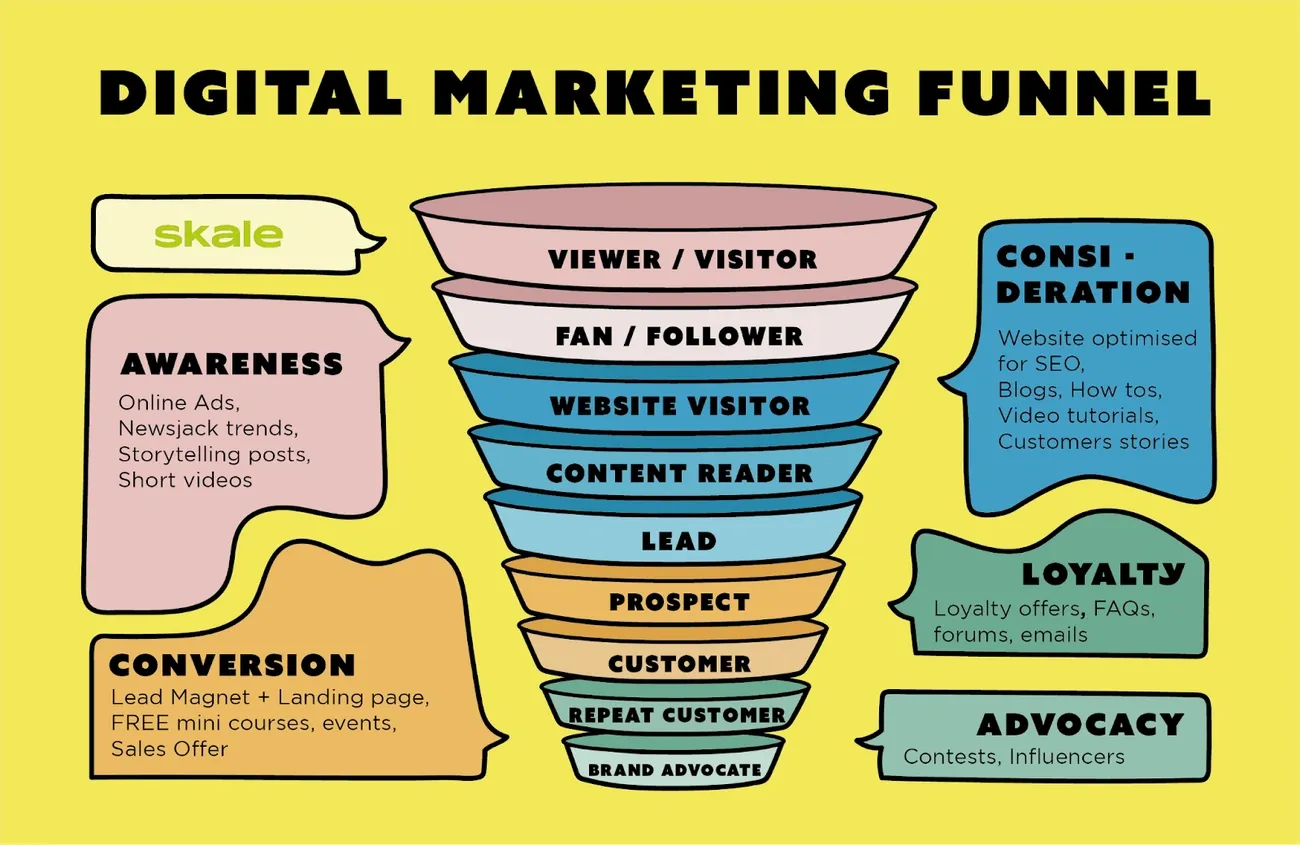
Smart marketers use different tactics for each strategy and understand how they work together in the customer’s trip. Success or failure of your campaigns depends on how well you execute the details.
Demand Gen Tactics: Social, SEO, and Authority
You need visibility where your audience hangs out to generate demand effectively. Social media has become essential, and 60% of B2B marketers say it’s their best channel to drive revenue. LinkedIn works great for B2B companies as a platform to share longer authority content. TikTok and YouTube help build brand awareness through educational content that solves audience problems.
SEO-focused content is the life-blood of demand generation. Creating valuable search-optimized content helps you show up when prospects look for tools to industry challenges. This approach brings new traffic and positions your brand as a trusted resource.
Authority content helps you establish industry expertise. Research shows that 58% of decision-makers spend over an hour each week reading authority content. Business decision-makers have given projects to companies based on their authority content 60% of the time.
Lead Gen Tactics: Gated Content, Webinars, and CTAs
Gated content and lead generation are the foundations of getting contact information from visitors in exchange for valuable resources. The best lead magnets include:
- Research reports and whitepapers (people see these as valuable)
- Interactive tools like quizzes or calculators
- Email courses and specialized templates
- Free trials or product demos
Webinars bring in qualified leads, especially when they focus on education rather than sales. 81% of buyers surveyed said content affected their buying decisions by a lot.
Good CTAs help convert visitors. Companies run A/B tests on landing pages 60% of the time to make them work better. Web forms are the most effective lead generation tool for almost 50% of marketers.
Examples of Campaigns That Combine Both
HubSpot shows this combined approach well. They share free social media content to build awareness and offer gated templates like social media calendars to generate leads. Adobe’s CMO.com platform gives free industry insights to build authority and provides deeper gated resources for specific marketing challenges.
When to Use Free vs Gated Content
Your position in the marketing funnel should determine whether you gate content. Top-of-funnel awareness content works better without gates to reach more people and help with SEO. Free content builds brand recognition while gated content captures leads from people who want deeper tools.
Research shows B2B marketers choose more carefully what content to gate. The best approach gates middle and bottom-funnel content at the time visitors are in the “Think” or “Do” phase of their trip, after they know about both the problem and your brand.
Choosing the Right Mix for Your B2B Strategy
Businesses must make smart choices about demand generation and lead generation based on their goals and market position. The right combination helps avoid wasted marketing budgets and builds a steady pipeline growth.
When to Prioritize Demand Gen Over Lead Gen
Cognism’s marketing team found that there was a stark difference in conversion rates. They needed 25 inbound leads versus 500 content marketing qualified leads (MQLs) to close a deal. Their inbound leads brought in 85% of closed-won revenue, while content leads only generated 15%. These numbers show why companies should change their focus toward demand generation.
Your business should focus on demand generation when you enter new markets or when customers need education before buying. This strategy works well with B2B buying cycles that have multiple decision-makers. Companies with low brand awareness or those competing against dominant search results should build authority through demand gen activities first.
How to Line Up Both with Your Sales Cycle
The best way to start is by connecting strategies to each stage of your buyer’s trip. Early awareness stages call for demand generation tactics that reach wide audiences. Your lead generation techniques should kick in as prospects move toward consideration and decision stages.
Customer insights about conversions and sales processes play a vital role in successful integration. Your CRM must track opportunity stage, pipeline source, lead source, and campaign conversion points. These metrics help teams understand which activities bring the highest-quality conversions.
Common Mistakes When Balancing the Two
Many companies make the critical error of chasing lead quantity instead of quality. B2B companies often stuff their pipeline with poor-fit contacts, which creates problems between marketing and sales. There’s another reason why strategies fail – teams skip target audience research, which leads to content that misses the mark.
Marketing teams often give up on demand generation too quickly. They want fast results from what takes time to develop. The biggest issue comes from sales and marketing teams working separately. When departments don’t communicate well, leads move forward without context or proper follow-up.
Tools That Help Integrate Both Strategies
The right tech stack shows you the complete customer trip. CRM systems like Salesforce keep track of customer interactions and enable personal outreach. HubSpot and Marketo make nurturing and lead scoring easier.
Account-based marketing platforms help you create personal campaigns for high-value accounts. Intent data tools show you what prospects do and how likely they are to convert. You should build a connected stack that links demand generation insights with lead generation processes instead of using just one tool.
What Smart Marketers Know in 2025
B2B marketing’s digital world keeps changing faster as we head into 2025. Smart marketers know that combining lead generation and demand generation isn’t about picking sides. They focus on strategic integration based on buyer signals and behavior.
The numbers tell an interesting story. Intent-based marketing has become the life-blood of strategy, yet 79% of marketers’ leads still fail to convert into sales without this approach. Companies now give priority to finding and connecting with high-intent prospects. AI-driven lead scoring and nurturing not only saves time but also substantially increases revenue.
Customization has exceeded simple tactics. About 80% of consumers trust brands that create relevant online content for their needs. The data shows 75% of customers buy from businesses that customize their experience. This fundamental change explains why clever marketers put money into UX improvements. These investments return $100 for every $1 spent.
Account-Based Marketing has gained more ground as marketers see its value in targeting specific high-value accounts. This strategy values quality over quantity and creates customized experiences that lead to better conversion rates. LinkedIn, with more than 590 million members worldwide, has emerged as the go-to platform. It generates about 80% of all social media leads.
The best marketing teams in 2025 see themselves as revenue engineers rather than campaign executors. They work at the crossroads of brand building, buyer psychology, and sales orchestration. Their systems capture immediate pipeline while building long-term demand.
The future of demand generation ended up focusing on precision, relevance, and real connections instead of broad approaches. Progressive marketers use multiple channels. They blend email, social media, webinars, and live events to deliver consistent messages everywhere.
Smart marketers in 2025 have realized that success comes from building a balanced ecosystem. Lead generation and demand generation work together smoothly, guided by data, boosted by AI, and delivered with a human touch.
Comparison Table
| Aspect | Demand Generation | Lead Generation |
|---|---|---|
| Definition | Builds market awareness and interest in products/services; 10-year old brand authority | Captures and qualifies prospect information after interest has been built |
| Funnel Position | Top-of-funnel | Bottom-of-funnel |
| Primary Goals | Create visibility and lasting interest through intellectual influence | Convert interested visitors into identifiable contacts |
| Key Metrics | – Website traffic – Social participation rates – Brand sentiment – Content performance – HIRO Pipeline |
– MQLs and SQLs – Conversion rates – Cost per lead (CPL) – Cost per acquisition (CPA) – Lead velocity |
| Main Tactics | – Social media participation – SEO-optimized content – Intellectual influence content – Ungated educational content |
– Gated content – Webinars – Product demos – Landing pages – Strategic CTAs |
| Content Approach | We ungated content to educate and build awareness | Gated content that needs contact information to access |
| ROI Measurement | Complex, with multi-touch attribution and CLV | Simple: (Net Profit / Cost of Lead Generation) x 100 |
| Average Results | Not mentioned in this piece | $5.44 in revenue for every $1.00 spent (444% ROI) |
Master B2B case study creation with our guide on using real frameworks to enhance lead and demand generation.
FAQs
Q1. How do demand generation and lead generation differ in B2B marketing?
Demand generation focuses on building brand awareness and interest in your products or services, primarily through top-of-funnel activities. Lead generation, on the other hand, captures and qualifies prospect information from those who have already shown interest, operating closer to the bottom of the funnel.
Q2. What are the key metrics for measuring success in demand generation and lead generation?
Demand generation metrics include website traffic, social engagement rates, and brand sentiment. Lead generation focuses on more concrete conversion metrics such as Marketing Qualified Leads (MQLs), Sales Qualified Leads (SQLs), and conversion rates.
Q3. When should a B2B company prioritize demand generation over lead generation?
Prioritize demand generation when entering new markets, when your solution requires education before purchase, or when brand awareness is low. This approach is particularly effective for longer B2B buying cycles involving multiple decision-makers.
Q4. How can B2B marketers effectively integrate both demand generation and lead generation strategies?
Successful integration involves mapping strategies to specific stages of the buyer journey. Use demand generation tactics for early awareness stages and gradually introduce lead generation techniques as prospects progress to consideration and decision stages. Utilize tools like CRM systems and marketing automation platforms to track the entire customer journey.
Q5. What trends are shaping B2B marketing strategies in 2025?
In 2025, successful B2B marketing strategies focus on intent-based marketing, advanced personalization, and Account-Based Marketing (ABM). AI-driven lead scoring, multichannel strategies, and a balance between short-term pipeline generation and long-term demand creation are key elements of effective marketing approaches.

Builds the demand intelligence, automation, and deliverability systems behind Growleads pipeline.