
Cold Outreach Examples That Work: From Zero to 80% Response Rate

Did you know that cold emails can deliver a whopping $42 return for every $1 spent on cold outreach examples?
Many people think cold outreach is dead, but the numbers tell a completely different story. When done right, cold emails achieve open rates of 15-25% and response rates of 10-15%. That makes email 40 times more effective than social media for acquiring customers, with 59% of consumers saying marketing emails significantly impact their buying decisions.
Cold calling lets you qualify leads in real-time, while cold email lead generation consistently outperforms other methods. Since 71% of buyers are open to learning about new products during their research phase, mastering cold email marketing has never been more valuable for your business.
What’s the key to success? Personalization. A personalized subject line alone can boost open rates by 22.2%, and keeping your message brief is essential, emails between 50-125 words get the highest response rates.
Ready to turn your ignored cold outreach into responses that actually fill your pipeline? Let’s explore the templates and strategies that can take your response rates from zero to 80%! 👇
Understanding Cold Outreach and Its Role in Lead Generation
Cold outreach remains one of the most powerful strategies for businesses looking to expand their customer base. Before we explore effective cold outreach examples, let’s understand what this approach actually involves and why it continues to deliver results, even in today’s competitive digital landscape.
What is cold outreach?
Cold outreach is the process of contacting individuals or businesses with whom you have no prior relationship or interaction. Unlike marketing to existing customers, this approach means reaching out to people who don’t know your brand, products, or services yet. Think of it as a digital handshake, your first attempt to establish a business connection.
The main goal isn’t immediately closing a sale but starting a conversation that might eventually lead to a business relationship. This proactive strategy typically includes multiple channels:
- Email communications
- Phone calls
- Social media messages
- Direct messages on professional platforms
Cold outreach must be targeted, strategic, and personalized to the recipient’s potential needs. It’s not spam, which involves sending generic, untargeted messages to large audiences hoping for random responses.
“Cold” specifically refers to the temperature of the lead, these are people who haven’t shown prior interest in your offerings or may not even know you exist. When executed correctly, this approach helps you break through communication barriers and connect directly with decision-makers.
How cold outreach differs from warm outreach
The fundamental difference between cold and warm outreach lies in your existing relationship with the prospect. Warm outreach targets people who already know your brand or have shown interest through previous interactions.
Cold outreach, by comparison, starts from scratch with no prior connection. Here are the key distinctions:
| Aspect | Cold Outreach | Warm Outreach |
|---|---|---|
| Prior relationship | None | Prospect is familiar with you |
| Recipient consent | No prior consent | Has shown interest or given consent |
| Response rates | Lower (typically 15-24% open rate) | Higher (21-34% open rate) |
| Personalization needs | Requires extensive research and high personalization | Can leverage existing information |
| Effort required | More effort to establish credibility | Less challenging due to existing awareness |
| Scalability | Unlimited potential reach | Limited to existing network |
Warm outreach generally yields higher conversion rates because the recipient already knows your brand. However, cold outreach offers something equally valuable, unlimited potential to expand beyond your current network.
Why cold email lead generation still works
Cold outreach has become more challenging (with a 500% increase in outbound efforts needed to generate opportunities over the last five years), but it remains effective for several compelling reasons:
First, email usage continues to grow each year, and both B2B decision-makers and millennials strongly prefer email communication. Plus, 59% of millennials access emails via smartphones, increasing the chances your message will be seen.
Cold email lead generation provides exceptional targeting precision. You can reach specific individuals who match your ideal customer profile perfectly, making it highly efficient despite lower response rates. It’s also remarkably cost-effective compared to traditional marketing channels, all you need is an email address and well-crafted content.
The controlled, non-intrusive nature of cold emails lets recipients engage with your information at their own pace. Research shows 8 out of 10 buyers prefer email contact over other methods. This preference exists primarily because email gives recipients time to consider your offering thoroughly.
Most importantly, cold emailing delivers measurable results. Industry data shows personalized cold emails can achieve open rates around 21.3%, with personalization potentially boosting this figure above 30%. The average conversion rate for cold email campaigns was approximately 15% in 2021.
Cold outreach also provides valuable market feedback directly from potential customers, helping you refine your approach based on real insights. Strategic cold email campaigns position you as a thought leader in your industry, building trust with potential clients even before they become customers.
For businesses with limited marketing budgets, particularly startups and small companies establishing themselves in competitive markets, cold email outreach offers access to potential clients who might never discover your solutions otherwise.
Preparing for Outreach: Research and Targeting
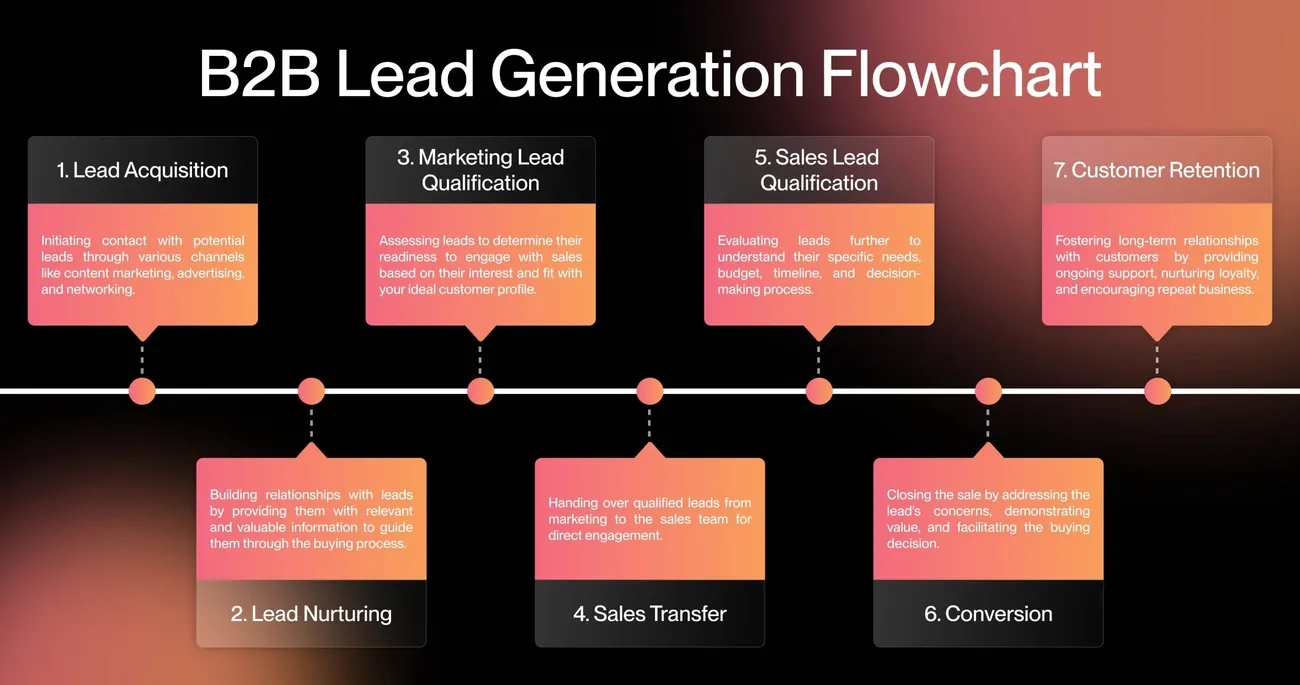
Image Source: Ninjapromo
Successful cold outreach begins long before you type your first message. The groundwork you do in research and targeting often makes the difference between responses and the dreaded silence. Let’s look at the essential preparation steps that can dramatically boost your cold outreach results.
Define your ideal customer profile
The foundation of effective cold outreach is knowing exactly who you’re targeting. An ideal customer profile (ICP) is essentially a detailed description of the perfect company or customer for your business, those most likely to buy, stay loyal, and refer you to others.
When building your ICP, focus on these six critical traits:
- Industry fit: The sector must align with your product/service offerings
- Financial ability: Companies with appropriate funding and budget
- Readiness to buy: Organizations with a clear need for your solution
- Growth potential: Businesses showing ability or plans to scale
- Company size: Employee count matching your total addressable market
- Geographic location: Regions where you can effectively serve clients
Companies with well-defined ICPs see impressive results, 36% higher customer retention rates and 38% higher sales win rates, ultimately leading to 208% growth in marketing-generated revenue. Your ICP serves as your targeting framework to prioritize high-value prospects for your cold email campaigns.
To create your ICP, analyze your current customer base and look for patterns among your most successful accounts. What connects your best customers? Pull reports from your CRM to identify trends among clients with the highest lifetime value. Then, interview your “super users” to discover their buying processes, how they found you, and why they chose your solution.
Use LinkedIn and tools to find cold calling leads
Once your ICP is established, LinkedIn becomes your gold mine for finding qualified prospects. LinkedIn Sales Navigator is particularly powerful, allowing you to filter target accounts by industry, company size, job title, and other relevant criteria.
Before reaching out, use LinkedIn to:
- Identify decision-makers at your target companies
- Research their profiles for recent promotions, articles, or news mentions
- Discover mutual connections that can serve as warm introductions
The platform’s TeamLink feature automatically shows you how prospects connect with members of your organization, giving you potential pathways for introduction. Also, checking whether prospects actively engage with comments can provide additional outreach opportunities beyond direct messaging.
For more comprehensive prospecting, combine LinkedIn with specialized tools like Apollo.io for email discovery and sequencing, or ZoomInfo for technographic data about companies using specific platforms.
Verify and clean your email list
The final crucial preparation step is ensuring your contact information is accurate. Even the perfect message sent to an invalid address is a wasted opportunity and potentially damages your sender reputation.
Email list verification goes beyond basic cleaning and validation. While cleaning fixes formatting errors and validation checks domain existence, only verification confirms whether an inbox can actually receive mail right now. This three-step hierarchy matters:
- Cleaning: Fixes typos, removes duplicates
- Validation: Checks syntax and domain validity
- Verification: Pings mailboxes to confirm deliverability
Skipping verification can have serious consequences, a mere 10% bounce rate (300 bad addresses in a 3,000-contact list) can damage your domain reputation across email providers and trigger spam filters, reducing inbox placement on future campaigns by 30-50%.
To maintain a healthy sender reputation, verify your email list before every new campaign, whenever a list is older than 90 days, after changing domains or ESPs, and immediately after acquiring new contacts.
Crafting Cold Emails That Get Responses
“Personalized emails of a cold email boost response rate by 30.5%.”
, Brian Dean, Founder of Backlinko and SEO expert
Let’s face it – your cold email’s success hinges on what you actually write. After all your research and targeting work, your message needs to stand out in a crowded inbox. Here are the four essential components that turn ignored emails into responses.
Write subject lines that get opened
Your subject line is the gatekeeper of your email, it decides whether recipients open your message or send it straight to trash. Cold emailing is especially tough since you lack an existing relationship and non-verbal feedback, making your subject line absolutely critical.
Winning cold email subject lines share these traits:
- Hyper-relevant: Focus on the prospect’s problems, not yourself
- Brief and direct: Keep it under 5-7 words for better mobile visibility
- Personalized: Reference mutual connections or competitors they use
- Intriguing: Spark curiosity without being clickbait
- Natural-sounding: Avoid “salesy” or overly formal language
The numbers don’t lie, personalized subject lines alone can increase open rates by 10%. Want to stand out even more? Try lowercase formatting, research shows this approach cuts through the sea of formal title-case emails in most inboxes.
Personalize your message beyond the name
Once your subject line gets the open, you have about 3 seconds to grab their attention. Here’s a common mistake: immediately talking about yourself or your company. Don’t do it!
Real personalization means:
- Researching the prospect thoroughly on LinkedIn, blogs, and social media
- Mentioning specific details about their work or recent achievements
- Explaining how you found them, whether through a referral or industry event
- Tailoring content to their specific industry challenges
Keep your introduction to 2-3 sentences max, focusing entirely on the recipient rather than yourself. This shows you’ve deliberately chosen to contact them after doing your homework, not just blasting generic messages.
What to say in a cold approach email
Above all else, keep it short! The ideal cold email should be under 100-150 words, delivering immediate value.
Structure your message to:
- Address specific pain points you’ve uncovered through research
- Present your solution through storytelling rather than direct selling
- Build credibility with relevant case studies or social proof
- Show you understand their industry challenges
Remember that cold emails should start conversations, not close deals. You’re trying to build a connection and understand their needs, not push an aggressive sales pitch that’ll get you ignored.
Include a clear and low-friction CTA
Your call-to-action determines whether recipients take the next step. Interestingly, emails with only one CTA performed 371% better than those with multiple CTAs.
Your CTA should:
- Express your email’s purpose in a single sentence
- Be crystal clear and concise
- Request something the prospect can do right away
- Present low commitment, don’t ask too much from a cold prospect
For busy decision-makers, simple CTAs like “Worth a quick chat?” or “Open to exploring this further?” work best. Whatever you’re asking, make it ridiculously easy to say yes.
The secret to effective cold emails is providing value to prospects. Focus on solving their problems rather than promoting your business. This approach, combined with thoughtful personalization and a clear next step, dramatically boosts your chances of getting responses that actually lead somewhere.
Cold Outreach Examples That Work (With Templates)
Now that you understand how to craft cold emails, let’s look at six proven templates that consistently drive high response rates. These examples work across different scenarios and can be customized for your specific outreach needs.
Example 1: Referral-based cold email
Referral emails establish instant credibility by leveraging existing connections, generating 3-5x higher response rates than standard cold outreach.
Subject: Thanks for the connection with [Prospect Name]
Hi [First Name],
[Mutual Connection] suggested I reach out regarding your team’s [specific challenge].
We’ve helped companies like [Similar Company] achieve [specific result] through our [service/product]. Given your recent [company achievement/news], I thought our approach might be valuable for [Prospect Company] too.
Would it make sense to schedule a quick 15-minute call next week to explore if we could help you achieve similar results?
Best,
[Your Name]
This template works because it immediately establishes trust through a mutual connection while personalizing the message with research about the prospect’s company.
Example 2: Pain-point focused outreach
When you address specific challenges directly, you show prospects you understand their situation, making them 4-7 times more likely to engage.
Subject: Solving [specific pain point] for [Company]
Hi [First Name],
I noticed your team at [Company] might be experiencing challenges with:
- [Pain point 1 specific to their industry]
- [Pain point 2 related to their role]
- [Pain point 3 tied to recent company news]
At [Your Company], we’ve developed a solution that specifically addresses these issues. For example, [Client Name] saw [specific result] after implementing our approach.
How are you currently handling these challenges? I’d be happy to share how we’ve helped similar companies overcome them.
Regards,
[Your Name]
The strength of this template is showing deep understanding of industry-specific pain points rather than generic problems.
Example 3: Competitor switch pitch
Mentioning competitors creates curiosity and naturally opens conversations about potential improvements.
Subject: Why companies are switching from [Competitor] to [Your Solution]
Hi [First Name],
I noticed [Prospect Company] is currently using [Competitor’s Product] for [specific function].
Many of our clients like [Named Client] previously used the same solution but switched to [Your Company] because we offer [key differentiator], resulting in [specific benefit/metric].
Would you be interested in seeing how we compare specifically for your use case? I could share a brief case study of another [industry] company that made the switch.
Best,
[Your Name]
This approach works because it tactfully highlights your advantages without directly criticizing competitors.
Example 4: Value-first email with resource
Providing immediate value establishes goodwill and shows expertise without asking for anything in return.
Subject: A resource for [Company Name]’s [specific goal]
Hi [First Name],
I’ve been following [Company]’s work in [specific area] and was particularly impressed with [recent achievement].
I thought you might find this [resource/guide/article] helpful for your initiatives around [relevant topic]. It contains [specific benefit of the resource].
If you find it useful, I’d be happy to share additional insights specific to your industry. Our team at [Company] specializes in helping businesses like yours [achieve specific outcome].
Regards,
[Your Name]
This template succeeds by offering value upfront rather than immediately asking for the prospect’s time.
Example 5: Humor-based cold email
Adding appropriate humor can boost response rates by 40% by making your email stand out among dozens of serious messages.
Subject: Not a typical [industry] pitch, I promise
Hi [First Name],
I know checking emails on a Monday can feel like [humorous comparison]. So I’ll keep this brief.
I help companies like [Company Name] solve [specific problem] without [pain point].
Instead of boring you with statistics, I’ll just say our approach helped [Client Name] achieve [impressive result] in [timeframe].
Worth a 10-minute chat? If not, please enjoy this [brief industry joke/meme] as a token of appreciation for reading this far.
Best,
[Your Name]
The key with humor in cold outreach is keeping it professional and appropriate for your audience.
Example 6: Follow-up email that re-engages
Re-engagement emails can recover up to 15% of prospects who didn’t respond to your first attempt.
Subject: Quick follow-up from [Your Name]
Hi [First Name],
I reached out last week about helping [Company Name] with [specific challenge]. I understand you’re busy, so I’ll be brief.
Since my last email, we’ve helped another company in your industry achieve [new result]. I thought this might be relevant given your recent [company news/initiative].
If addressing [pain point] is a priority in the coming months, I’d love to share some insights specific to your situation.
All the best,
[Your Name]
This follow-up works by providing new information rather than simply “checking in” or “bumping” the previous message.
Remember to customize each template with specific research about your prospect. Testing different approaches with similar audiences will help you determine which templates generate the highest response rates for your particular offering.
Key metrics to monitor (open, reply, bounce)
Here are the crucial numbers you should be watching:
Open rates are your first success indicator. Personalized campaigns achieve an impressive 62% open rate for smaller campaigns (11-50 prospects) and 38% for larger ones (201-1000 prospects). If your open rate drops below 27.7%, it’s time to rethink your subject lines.
Reply rates show how engaging your message truly is. The data speaks for itself, non-personalized emails get a measly 9% reply rate, while advanced personalization can boost responses to 18%. Pay special attention to your adjusted reply rate (responses from people who opened your email), as this reveals how compelling your actual message is.
Bounce rates need to stay under 3-5%. Higher rates signal list quality problems that can seriously damage your sender reputation, potentially cutting your inbox placement by 30-50% on future campaigns.
Don’t forget to also track your conversion rates (typically 1-5%) and spam complaint rates, both of which directly impact your deliverability.
A/B testing subject lines and CTAs
Systematic testing is your path to continuous improvement. When running A/B tests:
Test only one element at a time. Changing multiple variables makes it impossible to know what actually made the difference.
For subject lines, focus on personalization, emails with personalized subject lines can lift open rates by up to 26%. Try alternating between straightforward approaches (“Weekend Sale”) and personalized versions (“[Name], Your Exclusive Deal”).
For CTAs, experiment with different phrases (‘Shop Now’ vs ‘Claim Your Offer’), colors, and placements. Sometimes moving a CTA to the middle instead of the end dramatically increases clicks.
Using feedback to refine your approach
Each campaign gives you valuable learning opportunities. Take notes on which templates perform better and track both quantity and quality of responses. Look for patterns in the elements that consistently lead to positive outcomes.
Don’t be afraid to ask for direct feedback from prospects, even after rejections, about your outreach approach. This qualitative data often reveals insights that numbers alone can’t tell you.
Remember that optimization is never really “done.” The most successful cold outreach campaigns continuously evolve through testing, learning, and refinement based on real performance data.
Conclusion
Cold outreach remains a powerful tool in your marketing arsenal when done right. As you’ve seen throughout this guide, it’s the small details that make all the difference between being ignored and getting that coveted 80% response rate, crafting precise subject lines, personalizing messages that resonate, and including clear calls-to-action.
Successful cold outreach demands both patience and persistence. Don’t make the mistake that 70% of sales reps make by giving up after the first unanswered email. You’re essentially walking away from potential relationships before they’ve had a chance to develop.
The technical side matters just as much as your messaging. Domain warming, proper authentication, and strategic timing all determine whether your carefully crafted emails actually reach your prospects’ inboxes. When you combine these technical elements with continuous testing and refinement based on performance metrics, you create a sustainable system for generating quality leads.
While the templates in this guide give you a solid foundation, your willingness to adapt based on real performance data will ultimately determine your success. By analyzing open rates, reply rates, and conversion metrics after each campaign, you’ll build an approach that’s perfectly tailored to your specific audience.
Effective cold outreach shares common traits, genuine research, clear value, respect for the recipient’s time, and a focus on starting conversations rather than closing immediate sales. As you implement these strategies, remember that building relationships should always come before pushing for quick wins.
Your journey to mastering cold outreach starts with these proven techniques. When executed consistently and refined through testing, these strategies will help you stand out in crowded inboxes and turn cold prospects into valuable business relationships.
Unlock high-converting leads now! Visit GrowLeads.io for top cold outreach strategies.
FAQs
Q1. What are some effective strategies for cold outreach?
Some effective cold outreach strategies include personalizing your message, keeping emails brief and focused, leveraging mutual connections, creating targeted case studies, and including a clear call-to-action. It’s also important to practice “smart brevity”, engage with key decision-makers, and follow up consistently.
Q2. How can I improve my cold email open rates?
To improve cold email open rates, focus on crafting personalized subject lines, optimizing email deliverability, and sending emails at optimal times (like early mornings between 5-8 AM). Also, ensure your domain is properly warmed up and authenticated with SPF, DKIM, and DMARC protocols.
Q3. What elements should a good cold email include?
A good cold email should be concise (under 100-150 words), personalized to the recipient, address specific pain points, provide immediate value, establish credibility through relevant examples, and include a clear, low-friction call-to-action. It should focus on starting a conversation rather than making an immediate sale.
Q4. What response rate should I aim for in cold email campaigns?
While response rates can vary by industry, a 5-10% response rate is often considered good for cold email campaigns. However, with advanced personalization and optimization, some campaigns can achieve response rates of 15-20% or higher. Continuous testing and refinement are key to improving your results.
Q5. How important is follow-up in cold outreach?
Follow-up is crucial in cold outreach. Many sales representatives stop after the first unanswered email, but persistence often pays off. Implement a strategic follow-up sequence, providing new information or value in each message. This approach can significantly increase your overall response and conversion rates.

Builds the demand intelligence, automation, and deliverability systems behind Growleads pipeline.