
SaaS Sales Pipeline: Best Practices for 2026
The global SaaS market will grow from $317.55 billion to $1,228.87 billion by 2032. More than 10,000 new SaaS companies join the market yearly. Your sales pipeline management strategy determines your success.
Managing a SaaS sales pipeline gets tougher each day. Companies that manage their sales pipelines effectively grow 15% faster than others. The sales cycle varies from 40 days for small deals to 170 days for larger contracts.
A strong SaaS sales pipeline is a vital part of success. About 70% of subscription businesses grow through better pricing models and pipeline management. This makes strategic pipeline management essential.
Want to turn your sales pipeline into a revenue powerhouse? Let’s look at proven strategies that will help you remain competitive in 2025 and beyond.
Understanding the SaaS Sales Pipeline Stages
A well-laid-out saas sales pipeline are the foundations of your revenue growth. Your prospects take this experience from the moment they find your solution until they become loyal, long-term customers.
Awareness: Capturing Original Interest
Potential customers start their experience when they first find your SaaS solution. Your goal in this prospecting phase is to contact cold prospects through different channels. Most SaaS companies combine cold outreach, inbound marketing, and referrals to generate leads. Building brand awareness happens through content marketing, search engine optimization, social media, and other promotional activities.
Research shows companies with robust and flexible sales pipelines can handle a 40% increase in lead volume without affecting performance or quality of participation. In spite of that, separating quality leads from noise remains the biggest problem. You should focus on prospects matching your ideal customer profile to maximize efficiency.
Qualification: Identifying Viable Prospects
You shouldn’t chase every lead. The qualification stage helps you spot prospects who show genuine interest and have the budget and authority to make purchasing decisions.
The Budget, Authority, Need, and Timeline (BANT) framework remains a powerful qualification tool even after 70 years. A 2023 Gartner Digital Markets survey revealed 52% of salespeople still find it reliable to qualify prospects. About 41% value its flexibility, and 36% say it helps them plan their sales process timeline. This framework helps you avoid wasting resources on dead-end leads.
It also shows SaaS companies qualify leads based on:
- Company size and number of employees
- Estimated website traffic
- Size of specific teams relevant to your solution
- Product usage metrics for those with free trials or plans
Demonstration: Showcasing Value
Your next step after qualifying a lead is showing your solution’s value. This key stage moves past generic pitches to highlight how your product solves specific challenges.
The “Tell, Show, Tell” method works best for SaaS demos. You tell prospects what they’ll see, show your solution in action, and wrap up what you’ve covered. The best demos encourage interaction rather than one-way presentations. One expert points out, “The best salespeople use a demo to continue to diagnose through the discovery phase”.
Success in demos comes from:
- Tailored solutions for specific pain points
- Active prospect participation
- Solutions shown in the customer’s context
- High-quality video and audio
Negotiation and Closing: Sealing the Deal
Serious prospects move the discussion toward pricing, terms, and final agreements. This stage can determine success or failure, so you must prepare well.
Companies without formal negotiation processes see a 63.3% drop in net income. Clear negotiation strategies become vital. Top negotiators are 12.5x more likely to feel satisfied with outcomes and 3.1x more likely to hit target pricing.
Successful negotiation requires:
- A full picture of the prospect’s pain points
- Staying calm during discussions
- Trading concessions instead of giving them away
- Knowing when to walk away
Retention and Expansion: Growing Customer Value
Getting a new customer marks the start—not the end—of your relationship. SaaS companies make their real money through retention and expansion.
Keeping existing customers costs nowhere near as much as finding new ones. Strong customer retention brings repeat purchases, referrals, and valuable feedback. A mere 5% boost in customer retention can grow revenue by 25% to 95%.
Most SaaS companies aim for retention rates above 80%, with many reaching 90% or higher. These numbers come from excellent onboarding, customer feedback implementation, and active expansion through upselling and cross-selling.
Understanding and fine-tuning each stage of your saas sales pipeline creates a system that accelerates predictable revenue growth and builds lasting customer relationships.
Key Metrics for Effective Pipeline Management
The right metrics play a vital role in optimizing your saas sales pipeline. You’re flying blind without proper measurement, and this makes it impossible to spot bottlenecks or forecast accurately.
Conversion Rates Between Stages
Your pipeline’s health shows through conversion rates that reveal the percentage of opportunities moving successfully between stages. These rates show how well leads flow through your sales process.
Top-performing SaaS companies see their website-to-free-account signup conversion rate between 2-5%, and leading businesses achieve rates above 10%. The MQL to SQL conversion rate stands at 13% – a crucial measure to evaluate your lead qualification process.
Your conversion metrics should focus on:
- Pipeline conversion rate (PCR): The share of pipeline opportunities that turn into bookings each period
- Free-to-paid conversion rate: Users converting from trials range from 25-60%
- Month-1 retention rate: B2B SaaS companies average 46.9%
Lower conversion rates might point to problems with product/market fit, a mismatch with your ideal customer profile, or website conversion strategies that need work. Yes, it is through a detailed analysis of conversion rates that you can learn about both marketing and sales performance.
Average Deal Size and Value
Average deal size (ADS), also known as average contract value, shows how much customers spend on your solution. This simple metric helps you understand your pipeline’s financial health and project future revenue.
The ADS calculation divides total revenue by closed deals in a specific period. To cite an instance, see how public SaaS companies targeting SMBs have an average deal size of about $4,800. Mid-market focused companies reach $40,000, and enterprise-focused businesses hit approximately $220,000.
ADS reveals key insights about your:
- Sales process performance
- Pipeline quality
- The core team’s results
Time-based ADS tracking helps you spot changes in your sales pipeline and fine-tune your strategy. On top of that, it helps allocate resources better—especially when deciding between enterprise and smaller accounts.
Sales Velocity: Measuring Pipeline Speed
Sales velocity shows how fast deals move through your pipeline and acts as your business’s “revenue speedometer”. This metric combines several factors to demonstrate your sales team’s efficiency in converting opportunities into revenue.
The sales velocity formula works like this:
Sales Velocity = (Number of Opportunities × Average Deal Value × Win Rate) / Sales Cycle Length
Picture this: your SaaS company has 100 opportunities, deals average $1,000, you convert 20%, and your sales cycle takes 60 days. This gives you a sales velocity of $333.33 per day.
Sales velocity helps you:
- Project earnings for specific timeframes
- Check sales team capacity
- Create realistic quotas
- Find effective pipeline stages
- Spot where deals drop off
Customer Acquisition Cost (CAC)
Customer Acquisition Cost remains crucial to sustainable growth. CAC shows what you spend to get each new customer, including all sales and marketing expenses.
Here’s the formula:
CAC = Total Marketing and Sales Spend / Number of New Customers Acquired
SaaS companies average $702 for CAC, while B2B companies spend about $536. Your CAC should stay well below your customer lifetime value (LTV)—targeting a 3:1 or 4:1 LTV:CAC ratio.
Successful SaaS businesses watch their CAC payback period closely. This shows how long customers take to generate enough revenue to cover their acquisition cost. Your CAC should stay under 25% of your LTV to maximize profits.
These four key metrics give you clear visibility into your saas sales pipeline performance. You can spot areas that need work and utilize analytical insights to speed up growth and boost revenue.
Building a Structured Sales Pipeline Strategy
A systematic approach to your sales activities creates a strong foundation for SaaS sales success. Your saas sales pipeline doesn’t need reinvention. You need clarity, consistency, and predictable results throughout your sales process.
Defining Clear Stage Criteria
Clear exit criteria at each pipeline stage play a vital role. These objective measures determine when a prospect should move to the next phase. Sales teams waste resources and hit dead-ends when they rush prospects through stages without meeting proper criteria.
Exit criteria act as quality filters in your saas sales pipeline. Your sales representatives can measure a prospect’s readiness against set standards. To name just one example, prospects might need to finish a product demo, verify their budget, or identify key decision-makers before moving to proposals.
Clear stage criteria help maintain high pipeline quality. Your sales professionals can focus on prospects with better closing chances when they filter out weaker leads. This targeted approach improves conversion rates and resource allocation.
Creating Standardized Processes
Your SaaS business needs consistency and predictable results to grow. Research shows companies with standardized sales processes grow revenue 28% faster than those without formal processes.
Here’s how to create an effective standardized process:
- Watch your current sales activities and spot patterns in winning deals
- Create a repeatable framework from these observations
- Write down specific actions needed at each stage
- Check and improve your process based on results
Standardized processes bring many benefits. They make sure your team covers every step in the buyer’s trip. Your team also gets a shared language that makes coaching and measuring performance easier.
SaaS businesses benefit from repeatable sales playbooks. These should include proven techniques, answers to common objections, and closing strategies for different customers. Your sales cycle gets shorter and conversion rates improve as you grow.
Implementing Consistent Lead Scoring
Lead scoring helps you handle complex SaaS sales by ranking prospects based on their conversion potential. This process assigns points to leads to show if they need more nurturing or are ready to buy.
A strong SaaS lead scoring model should look at:
- ICP (Ideal Customer Profile) fit data
- Demographic information
- Engagement metrics
- Intent signals
Companies save time when they use effective lead scoring. Sales development representatives (SDRs) spend less time manually filtering leads. Teams grow faster because they can focus on qualified prospects instead of trying to reach everyone.
Many people forget about negative scoring factors. Leads shouldn’t just collect points forever. Without a point decay system, leads end up with similar scores even when their engagement patterns differ. You need both positive and negative scoring to keep your system accurate.
Clear stage criteria, standardized processes, and consistent lead scoring create a saas sales pipeline that delivers predictable revenue growth. This removes guesswork from your sales strategy.
Technology Solutions for Pipeline Optimization
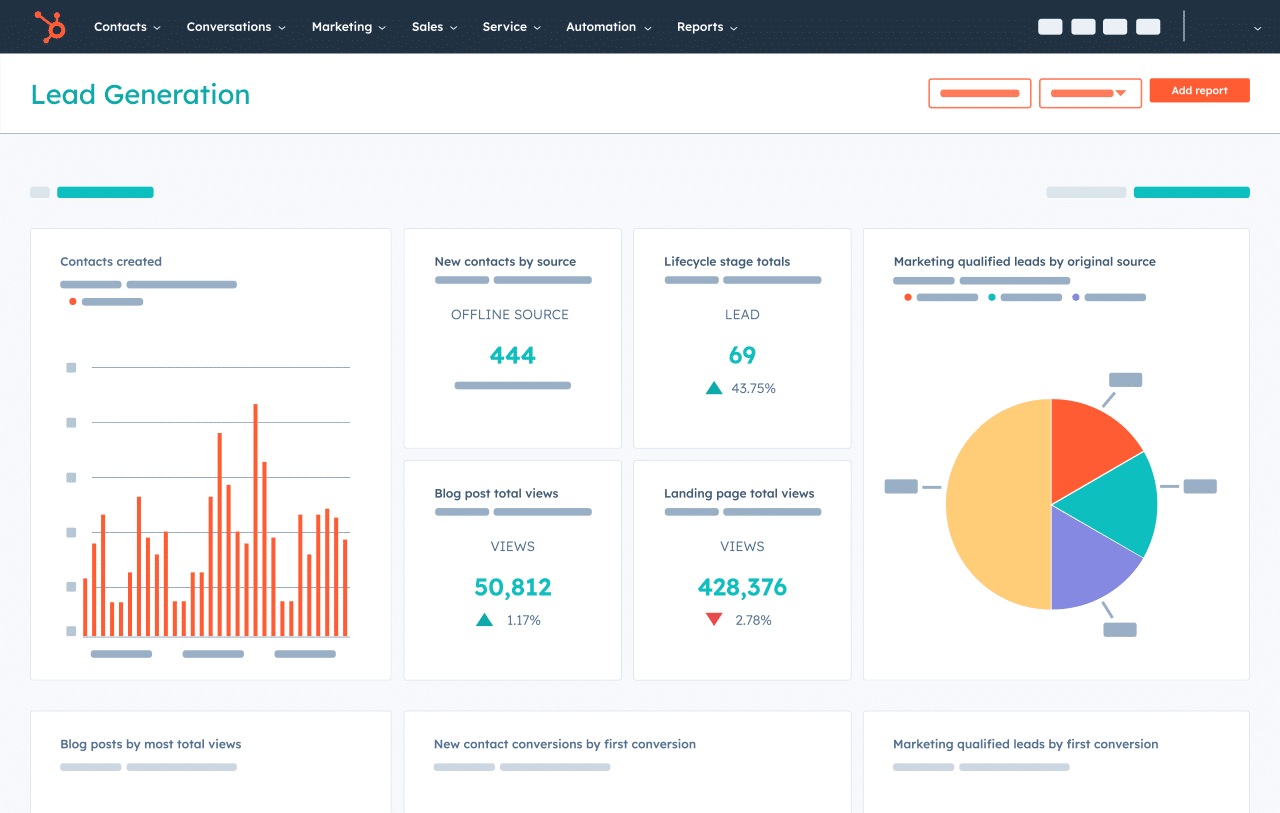
Image Source: Coefficient
The right technology solutions are no longer optional for saas sales pipeline optimization—they’re essential in today’s digital world. A proper tech stack can revolutionize your sales efforts from manual and cumbersome processes to evidence-based simplified processes.
CRM Systems for SaaS Companies
A reliable Customer Relationship Management (CRM) system sits at the heart of any working saas sales pipeline management strategy. These platforms serve as centralized hubs that host customer information, interactions, and tasks throughout your organization. Modern CRM solutions built for SaaS businesses give you several key advantages:
- Contact management and lead tracking
- Sales pipeline visualization and chance management
- Task scheduling and automated reminders
- Communication history tracking
- Analytics and reporting capabilities
Salesforce remains a trusted player in the CRM space. Many SaaS companies use it to manage sales and marketing activities with detailed features that include contact management, sales forecasting, and pipeline tracking. HubSpot CRM helps teams maintain an organized database of contacts and provides features like task reminders and pipeline tracking to simplify lead management.
Pipedrive is perfect for SaaS companies that need user-friendly interfaces. The platform offers visualization tools that help sales representatives track their pipeline, progress deals, and monitor contact activity and deal value. Sales leaders can identify problem areas and simplify their sales process with customizable dashboards.
Pipeline Visualization Tools
Clear visibility into your sales process is one of the best pipeline management best practices. Pipeline visualization tools convert raw data into interactive dashboards that give immediate insights into deal progress.
These visualization platforms display interactive dashboards that show each lead’s position and progress in the pipeline. They also send automated alerts about stalled leads or pending activities. To cite an instance, see tools like Pipedrive and Monday Sales CRM that let you create customized pipeline views and generate automatic alerts on critical leads needing attention.
Kluster Intelligence takes visualization a step further by interpreting CRM data to produce innovative insights and action points. You can visualize key metrics tailored to your specific needs with its customizable dashboards. Clari’s Revenue Operations platform gives immediate updates on deal progress with AI-driven insights that help spot potential risks and opportunities.
Automation Platforms for Routine Tasks
Automation tools that eliminate repetitive tasks represent one of the most important advances in how to effectively manage a sales pipeline. Sales reps now use various SaaS products that store and organize customer data and exploit predictive analytics to anticipate customer needs.
Automated workflows and reminders help maintain consistent sales processes. They reduce manual efforts while improving productivity. This efficiency helps convert leads faster and boost overall sales performance. Automation lets sales teams handle more leads without adding personnel—your business can grow without increasing headcount proportionally.
Zapier stands out as a codeless platform that helps automate work across 4,000+ web applications. This tool creates workflows between different applications in your tech stack to ensure seamless data flow. MobileMonkey provides OmniChat capabilities that connect businesses with customers immediately through multiple channels.
Data pipeline tools optimize your sales technology ecosystem further. These solutions automatically extract raw data from different sources, whatever the format, and centralize it into a unified repository. You get a detailed view of customer interactions that guides more informed decision-making throughout your sales pipeline strategy.
The integration of these technology solutions creates a detailed system. It simplifies your saas sales pipeline and provides insights to continuously refine your approach and maximize results.
Cross-Functional Alignment in Pipeline Management
Cross-functional arrangement stands as the foundation of any successful saas sales pipeline. Teams working together create unity across departments that typically work independently. Companies with well-defined collaborative processes show an 18% higher revenue growth compared to others.
Sales and Marketing Integration
Sales and marketing teams must work as one unit to remove traditional departmental barriers. Both teams achieve better results through unified goals and shared metrics instead of competing for lead attribution.
Marketing teams bring analytical insights about market trends and customer priorities, while sales teams provide real-life feedback about what appeals to prospects. Companies see up to 36% higher customer retention and 38% higher sales win rates when these views come together.
The path to integration requires:
- A shared dashboard that defines Marketing Qualified Leads (MQLs) and Sales Qualified Leads (SQLs) clearly
- Regular team meetings to share wins, challenges, and new trends
- Clear criteria for uninterrupted lead transfers between teams
Product Team Collaboration
Product teams working closely with pipeline management creates a bridge between sales promises and product capabilities. This partnership helps sales teams avoid overselling while product teams receive valuable customer feedback to shape development priorities.
Product and sales teams working together spot closing opportunities faster and build features that match market demands. This partnership helps measure the product’s business value in customer terms, making ROI discussions more effective during sales conversations.
Customer Success Involvement
Customer success teams have evolved beyond support roles into revenue-generating assets, working alongside sales and marketing efforts. Research shows 95% of B2B companies now run dedicated customer success operations.
Customer Success Qualified Leads (CSQLs) have become a vital metric that strengthens collaboration between customer success and sales teams. These customer-generated leads convert faster and at higher rates.
Customer success teams identify growth opportunities and predict potential customer losses through value-focused conversations. This proactive strategy transforms customer success from a cost center into a strategic revenue driver that boosts pipeline performance.
Data-Driven Pipeline Management Best Practices
Going beyond structure and tools, knowing how to use analytical insights in your saas sales pipeline helps create predictable revenue growth. The best SaaS companies depend on systematic approaches to assess, forecast, and optimize their pipelines.
Regular Pipeline Reviews
Weekly formal pipeline reviews with your sales team are the life-blood of effective pipeline management best practices. These well-laid-out meetings help you cooperate with your team to learn about pipeline health, spot roadblocks, and accomplish moving deals forward.
These reviews should emphasize deal momentum instead of deal history. Your sales reps should bring their most pressing deals so the team can work together to move them forward. The meetings should last 30 minutes with a clear agenda:
- 4 minutes to cover general status
- 7 minutes to discuss each problem lead (review 3 leads)
- 5 minutes to set action items
Forecasting Techniques for SaaS
A well-laid-out pipeline makes forecasting scientific rather than guesswork. Your CRM’s forecasting tools use predictive analytics to spot patterns and sales trends. These tools analyze deal size, probability, and past performance to predict outcomes.
Your industry forecasts should include seasonal changes and historical data for better accuracy. Regular forecast updates based on immediate changes give you a clearer picture of revenue potential and help prioritize efforts.
Identifying and Addressing Bottlenecks
You should get into each stage of your saas sales pipeline to find inefficiencies. The places where leads often stall or drop off need attention. This systematic analysis points out specific areas that need fixing.
Data analytics tracks metrics like Lead Velocity Rate (LVR) to measure how fast leads move through your pipeline. Predictive models can also flag deals that might stall, which lets your team step in early with targeted efforts.
Deal Qualification Frameworks
The Budget, Authority, Need, and Timeline (BANT) framework helps 52% of salespeople qualify prospects reliably. This proven approach stops SaaS businesses from wasting resources on leads that probably won’t convert.
Other frameworks like MEDDIC (Metrics, Economic Buyer, Decision Criteria, Decision Process, Identify Pain, Champion) and SPIN (Situation, Pain, Implications, Need-payoff) provide structured ways to qualify leads based on your business needs.
Conclusion
Your SaaS sales pipeline needs a smart mix of process, technology, and teamwork across departments. Good pipeline management helps your team convert more leads, close deals faster, and maintain steady revenue growth.
Success comes from mastering each pipeline stage and tracking key metrics like conversion rates, deal size, and customer costs. Your processes need standardization, and the right tech stack is significant to scale operations well.
Making decisions based on data and reviewing pipelines regularly helps spot problems early. Sales, marketing, product, and customer success teams must line up to create a unified approach that delivers better results throughout the customer’s trip.
Pipeline optimization never stops. You should start with proven strategies, track results regularly, and tweak your approach based on performance data. So your SaaS business will build a predictable revenue system that beats competitors and stimulates long-term growth.
Building a smoother SaaS sales pipeline can feel like a big lift. Not sure where to start? We’d love to chat and share some practical tips to help you hit your goals in 2025.
FAQs
Q1. What are the key stages of a SaaS sales pipeline?
A typical SaaS sales pipeline consists of five main stages: Awareness, Qualification, Demonstration, Negotiation and Closing, and Retention and Expansion. Each stage represents a crucial step in the customer journey from initial discovery to becoming a loyal, long-term client.
Q2. How can I improve conversion rates in my SaaS sales pipeline?
To improve conversion rates, focus on defining clear stage criteria, implementing consistent lead scoring, and creating standardized sales processes. Additionally, leverage technology solutions like CRM systems and pipeline visualization tools to track and optimize your pipeline performance.
Q3. What metrics should I track to measure the effectiveness of my SaaS sales pipeline?
Key metrics to track include conversion rates between stages, average deal size and value, sales velocity, and customer acquisition cost (CAC). These metrics provide insights into your pipeline health, financial performance, and overall sales efficiency.
Q4. How important is cross-functional alignment in SaaS sales pipeline management?
Cross-functional alignment is crucial for effective pipeline management. Integrating sales, marketing, product, and customer success teams leads to better lead quality, more accurate forecasting, and improved customer retention. This collaboration can result in up to 36% higher customer retention and 38% higher sales win rates.
Q5. What role does technology play in optimizing a SaaS sales pipeline?
Technology plays a vital role in pipeline optimization. CRM systems, pipeline visualization tools, and automation platforms help streamline processes, provide real-time insights, and eliminate repetitive tasks. These solutions enable sales teams to focus on high-value activities and make data-driven decisions to improve pipeline performance.

Malay is the VP of Growth & Operations at Growleads, where he transforms businesses through automation, behavioral analytics, and omni-channel scaling strategies.
As a growth strategist, Malay has helped organizations streamline operations, decode customer behavior, and scale revenue through data-driven automation. His expertise spans process optimization, conversion analytics, and building scalable growth systems that deliver measurable results.