
How to Create a Sales Outreach Checklist: A Step-by-Step Guide That Works

Did you know that sales reps spend up to 60% of their time on administrative duties rather than actual selling activities? I was shocked too. My sales outreach checklist changed this reality for our clients at SalesBread, generating close to 7000 new prospects in just 24 months.
I get you – your outreach efforts probably feel scattered and ineffective right now. You’re sending emails into the void, getting minimal responses, or losing track of who needs a follow-up. Sound familiar? The difference between success and failure comes down to structure. High-growth organizations implement an average of 16 touchpoints in their follow-up cadence, while HubSpot reports it takes about eight cold calls just to connect with a prospect.
Think of a sales outreach strategy as your roadmap to success. Without one, your process becomes inconsistent, prospects fall through the cracks, and your team wastes precious time reinventing the wheel with each new campaign. It’s crazy, right? About 41% of organizations have built dedicated account-based SDR teams to solve this exact problem, yet 37% of B2B buyers still say they don’t get enough information from brands to make a purchase decision.
That’s why I’ve created this step-by-step guide. Whether you’re starting from scratch or refining your existing approach, I’ll walk you through exactly what you need to create a system that converts prospects into customers. Let’s transform your outreach from a shot in the dark to a strategic, repeatable process that actually works!
Understand the Role of a Sales Outreach Checklist
A structured sales outreach checklist acts as the backbone of successful prospecting campaigns. When I first implemented this approach with my clients, I noticed an immediate difference in their results. The transformation was honestly surprising, even to me. Let’s explore why these simple tools deliver such powerful outcomes.
Why checklists improve outreach consistency
Creating a sales outreach checklist transforms scattered communication attempts into a strategic system. According to research, checklists provide several significant advantages:
- Increased efficiency – A well-designed checklist eliminates guesswork and reduces time spent on unproductive activities, allowing your team to focus on high-value tasks
- Enhanced customer targeting – Checklists help you narrow your audience definition, moving from broad categories like “marketing teams in the US” to specific segments like “Content Managers at agencies with $10M+ revenue”
- Consistency in communication – Every prospect receives the same high-quality experience regardless of which team member handles their account
- Better KPI tracking – Structured approaches make it easier to measure results at each stage of your outreach funnel
- Competitive advantage – When competitors rely on disorganized approaches, your systematic method stands out
Perhaps most importantly, a sales outreach checklist ensures personalization. “No one-size-fits-all approach to creating an effective outreach strategy,” explains industry expert Maddy Martin. With a checklist, your team can maintain both consistency and personalization—seemingly opposing goals that become achievable through structured processes.
Furthermore, a properly implemented checklist nurtures long-term customer relationships instead of just focusing on immediate conversions. By tracking interactions systematically, you create a foundation for ongoing engagement rather than one-off transactions.
Common mistakes without a checklist
Without a structured outreach checklist, sales teams consistently fall into predictable traps that undermine their results. I’ve observed these patterns repeatedly when analyzing struggling campaigns:
The first major mistake involves inconsistent communication. Irregular outreach gives the impression of disorganization and makes prospects question your reliability. Many sales teams fail to establish clear next steps and expectations during calls, leaving follow-up actions in a gray area.
Another critical error is premature pitching. “The reality of sales is that one of the worst things you can start doing is pitching your product up front,” notes sales research. Instead of learning about prospects’ specific challenges, inexperienced reps immediately launch into product features—a mistake a checklist would prevent.
Measurement neglect also plagues checklist-free approaches. I’ve seen this happen so many times. Defining success solely by sales numbers disregards the necessity to evaluate each step in your outreach funnel. Without specific metrics at every stage, you cannot pinpoint where opportunities for improvement exist.
Additionally, inadequate targeting causes numerous outreach failures. If your target audience is too broad, you’ll struggle to craft messages that resonate with specific needs. A checklist forces the definition of your ideal customer profile, eliminating this common pitfall.
Essentially, a sales outreach checklist functions as your quality control system. It ensures nothing falls through the cracks while maintaining the personalised approach modern buyers expect.
Step 1: Define Your Outreach Goals and Audience
Image Source: Callyzer
Let’s talk about the foundation of successful sales outreach – knowing where you’re headed and who you’re talking to. Without these pieces in place, you might as well be throwing darts blindfolded. I’ve seen too many teams jump straight into sending emails without doing this crucial groundwork first.
Clarify your sales outreach strategy
Before you fire off a single email or pick up the phone, you need to get crystal clear on what you’re trying to accomplish. Your outreach strategy shouldn’t exist in a vacuum – it needs to connect directly to your bigger business goals.
Start with your revenue targets. What’s the number you need to hit? Then work backward. How many deals do you need to close monthly to reach that target? This simple exercise ensures your daily outreach activities actually contribute to what matters.
Once you’ve got your revenue targets locked down, figure out which specific metrics you should track. For B2B SaaS companies, I recommend monitoring these conversion points:
- Response rates per 100 messages
- Percentage of responses that turn into meetings
- Number of demos that become opportunities
- Opportunities that convert to customers
This approach lets you make adjustments on the fly. Say you’ve only landed two new clients by mid-month but need ten for the month – looking at these metrics helps pinpoint exactly where things are breaking down.
Build your ideal customer profile
Your outreach is only as good as your targeting. An ideal customer profile (ICP) describes the perfect company that would benefit from your product while bringing value to your business.
Don’t settle for vague descriptions. Your ICP needs specific criteria across these areas:
- Demographics: Age, gender, income, education level
- Firmographics: Revenue size, employee count, organisation structure
- Psychographics: Attitudes, values, and personality traits driving decisions
- Behavioural patterns: How they buy, their tech adoption habits
For SaaS products specifically, look at company size, industry, decision-maker roles, and how they adopt technology. One mistake I see constantly is casting too wide a net – you’re better off targeting a smaller, highly qualified group based on your ICP.
A trick I use? Identify your “super users” – current customers getting maximum value from your product. What do they have in common? The best customers typically share six traits: industry fit, budget to purchase, immediate need, growth potential, appropriate size, and geographic compatibility.
Segment your outreach list
Creating an ICP is just the start. Breaking your prospects into meaningful segments takes your effectiveness to another level. This means categorizing people based on specific criteria so you can truly personalize your messaging.
When you segment properly, you can tailor content to address the unique challenges of each group. A software company might create completely different messaging for small businesses versus enterprises. Small business messaging emphasizes affordability and ease of use, while enterprise messaging highlights advanced features and scalability.
The results speak for themselves – targeted emails show you understand recipients’ specific needs, driving higher open rates, click-throughs, and ultimately better conversion.
For B2B outreach, practical segmentation includes industry type, company size, job roles, location, buying stage, past interactions, and technology stack. The magic happens when you combine multiple criteria to create super-specific segments that let you write messages so relevant they feel personally crafted.
Here’s a bonus tip: good segmentation actually reduces the customization needed for each individual message. The more targeted your segments, the less you need to personalize each email – making your outreach both more personal and more efficient.
Step 2: Prepare Your Messaging and Value Offer

Image Source: SlideTeam
Creating powerful messaging is absolutely essential for effective sales outreach. Now that you’ve identified your target audience, your next job is crafting content that actually resonates with prospects and clearly shows your value.
Craft personalized email templates
Let’s be honest – personalization isn’t optional anymore. It’s a must-have. Research shows that personalised email content can boost response rates by 32.7%. But here’s the thing – not all personalisation delivers equal results.
I recommend this tiered approach based on prospect value:
- For high-value prospects: Spend 10-15 minutes researching their specific challenges
- For mid-tier prospects: Personalise using company developments (3-5 minutes per prospect)
- For standard outreach: Use basic placeholders for name, company, and role
Did you know that name personalisation in subject lines alone increases average open rates by 39%? Your templates should include placeholders for pain points specific to each buyer persona—after all, 71% of consumers now expect personalised interactions.
Address pain points early
Your messaging needs to quickly show you understand your prospect’s challenges. I’ve found that people buy products to solve specific pain points, not because they love spending money. By addressing these issues early in your outreach, you establish relevance and show empathy.
Start by identifying these three levels of pain prospects experience:
- Technical pain: Minor frustrations or inefficiencies
- Business impact: Measurable consequences affecting operations
- Personal stakes: How the problem affects the individual’s success
When creating your templates, focus on business pains with numbers attached. Help prospects calculate what inaction costs them—what happens if they don’t solve this problem?
Use social proof and data
Social proof turns your claims from “trust me” into “see for yourself.” About 72% of consumers say testimonials and reviews increase their trust in brands. I couldn’t make up better numbers if I tried!
Make sure you include:
- Customer testimonials that connect directly to the prospect’s challenges
- Case studies with actual numbers (like “reduced maintenance costs by 20%”)
- Industry-specific success stories that build credibility
Avoid sounding too salesy
Times have changed, and those self-centred sales pitches just don’t work anymore. Focus instead on building relationships rather than pushing for immediate sales. This approach means understanding customer needs and positioning yourself as a helpful advisor.
Take a red pen to weak phrases like “just,” “kind of,” “a little bit,” or “I think” in your templates. And please don’t start calls with “Did I catch you at a good time?”—try “Did I catch you at a bad time?” for much better conversation openings.
Remember your goal is starting a conversation, not making an immediate sale. I’ve seen too many reps blow great opportunities by trying to close deals instantly.
Step 3: Build the Checklist for Execution
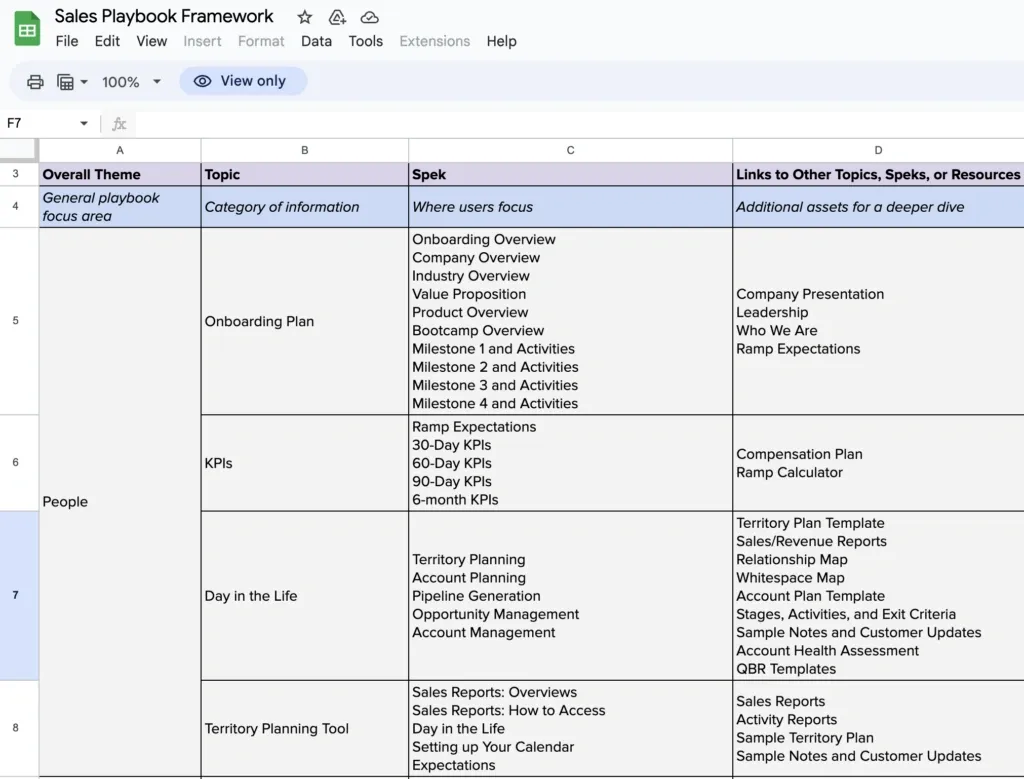
Image Source: Spekit
Now that you’ve laid the groundwork, let’s build your execution checklist. This systematic approach makes sure nothing falls through the cracks during your outreach campaigns.
Pre-outreach research steps
Every successful outreach begins with thorough preparation. I always start by organising leads into at least three categories: hot, warm, and cold. Trust me – this temperature-based segmentation helps you prioritise high-potential prospects while maintaining appropriate follow-up with others.
Next, gather specific information about each prospect to personalise your approach effectively. Don’t just look at basic company details – dig deeper to understand what your prospects actually care about. What are their ambitions? What keeps them up at night? What have they recently achieved?
Message personalisation checks
I get it – personalisation dramatically improves response rates, but you can’t spend hours on every prospect. That’s why I recommend a tiered approach based on prospect value.
For your high-value prospects, implement high-touch tactics with targeted thought leadership content addressing specific challenges. For everyone else, use semi-personalised approaches.
Before hitting send on any message, double-check you’ve included:
- Recipient-specific details beyond just their name
- Reference to their specific industry challenges
- Value proposition tailored to their role
- Natural language that doesn’t sound like a robot wrote it
Call-to-action clarity
The effectiveness of your outreach hinges on crystal-clear CTAS. Here’s something surprising – multiple CTAs won’t increase your conversion chances. In fact, including a single CTA increased clicks by 371% in one study.
Your checklist should verify each outreach message contains exactly one CTA that’s specific, straightforward, and reasonable for the relationship stage. Your prospects should immediately understand what action you want them to take next.
Follow-up schedule setup
Did you know that, according to Marketing Doughnut, 80% of sales leads require five follow-ups after initial contact? Yet only 8% of salespeople actually reach this threshold. That’s leaving money on the table!
I recommend establishing a consistent follow-up cadence: 2 days after first contact, 7 days later, another 7 days, then 14 days, followed by 30 days. This structured approach prevents promising leads from disappearing while respecting boundaries—no more than three consecutive calls without response.
Channel selection (email, LinkedIn, SMS)
Your outreach data tells you which channels work best for your specific audience. Don’t put all your eggs in one basket. Implement a multichannel approach mixing email, phone, social media, and possibly SMS for maximum effectiveness.
One more thing – avoid sending similar messaging from the same domain within a 24-hour window, or you’ll risk getting flagged as spam. Set sequence throttles to control total output while maintaining that personalised touch across all channels.
Step 4: Review, Test, and Improve Your Checklist
After implementing your sales outreach checklist, the real work begins. Testing, measuring, and refining your approach turns a good strategy into an exceptional one. I’ve seen this happen time and again with my clients – data beats assumptions every time.
A/B test your outreach messages
Want to know the most reliable way to improve your outreach? Systematic A/B testing. This method eliminates guesswork by comparing different versions of your messages to see which performs better. Here’s my advice for getting it right:
- For open rates: Test different subject lines while keeping the email body identical
- For reply rates: Keep subject lines the same, but modify the email body
Make sure you send each version to at least 100 prospects for statistical validity. I see so many sales teams make this mistake – they test multiple variables at once, which clouds results and prevents clear conclusions about what actually worked.
Track response and conversion rates
Monitoring key metrics reveals the health of your outreach strategy. Pay attention to these numbers:
- Open rates: Average cold email open rates hover around 55% for average performers
- Reply rates: A good cold email reply rate is approximately 15%
- Click-through rates: The average CTR is about 2.02%, varying by industry and campaign type
- Conversion rates: Calculate using: (Conversions ÷ Delivered Emails) × 100
Did you know high-performing teams consistently achieve a 4.2% conversion rate, while average performers reach only about 0.7%? That’s a huge difference! Track these figures through your CRM or outreach platform’s analytics dashboard to identify exactly where prospects drop off in your funnel.
Refine based on feedback and results
Continuous improvement needs both data analysis and real feedback. I always recommend getting input from:
- Prospects who converted to customers
- Those who engaged but didn’t convert
- Prospects who never responded
This feedback, combined with your metrics, shows patterns about what resonates with your audience. Adjust your messaging, timing, and personalisation approach accordingly. Regular review cycles keep your outreach fresh as market conditions and prospect preferences change.
Remember that personalisation is non-negotiable—tests consistently show that hyper-personalised outreach dramatically outperforms generic messaging. Use your test results to refine your personalisation strategy for different segments of your prospect list. Trust me, it’s worth the extra effort.
Conclusion
Hey, remember those 7,000 new prospects our clients at SalesBread generated? That wasn’t luck. Their success came from following this exact framework – defining clear goals, segmenting audiences, crafting messages that actually resonate, and constantly refining their approach based on real data.
I’ve walked you through how to transform scattered outreach efforts into a structured, repeatable process. This is the difference between mediocre and exceptional sales results. A well-designed sales outreach checklist eliminates guesswork, maximises efficiency, and ensures consistency across your team’s communications.
Want to master your sales game even further? Visit GrowLeads.io for exclusive outreach strategies. The resources there will complement what you’ve learned here with additional tactics tailored to your specific industry.
Your sales outreach checklist isn’t just a document – it’s your competitive advantage. While your competitors rely on hit-or-miss approaches, your systematic method stands out, creating predictable results rather than random successes. The best sales pros know that structure actually creates freedom, allowing creativity to flourish within proven frameworks.
I know implementing your checklist might feel like extra work at first. Trust me though – the time saved, opportunities captured, and relationships built will prove its worth many times over. So take action today – build your checklist, test it thoroughly, and watch your response rates climb as your outreach transforms from forgettable to remarkable.
FAQs
Q1. What is a sales outreach checklist and why is it important?
A sales outreach checklist is a structured tool that guides sales teams through the process of contacting potential customers. It’s important because it improves consistency, efficiency, and effectiveness in sales communications, helping to convert more prospects into customers.
Q2. How can I personalize my sales outreach messages effectively?
To personalize your outreach, research your prospects thoroughly, address their specific pain points, use their name and company details, and tailor your value proposition to their role and industry. For high-value prospects, spend extra time crafting highly targeted messages based on their recent achievements or challenges.
Q3. What are some key metrics to track in a sales outreach campaign?
Important metrics to track include open rates, reply rates, click-through rates, and conversion rates. For cold emails, aim for an open rate around 55% and a reply rate of about 15%. High-performing teams often achieve a conversion rate of 4.2% or higher.
Q4. How often should I follow up with prospects after initial contact?
Implement a consistent follow-up schedule: reach out 2 days after first contact, then 7 days later, another 7 days after that, followed by 14 days, and finally 30 days. Remember not to make more than three consecutive calls without a response to respect boundaries.
Q5. What’s the best way to improve my sales outreach strategy over time?
Continuously improve your strategy by A/B testing your messages, tracking key performance metrics, and gathering feedback from both converted and non-converted prospects. Regularly analyze this data to refine your messaging, timing, and personalization approach for different segments of your prospect list.

Manav is the Head of Business Development at Growleads, specializing in lead generation, social selling, and pipeline acceleration. He transforms networking into revenue through strategic relationship building and data-driven sales processes.
As a business development leader, Manav has helped organizations build scalable lead generation systems, optimize conversion funnels, and accelerate deal closure rates. His expertise spans LinkedIn strategy, sales automation, and building high-performing business development processes.


