
7 Highest-Converting B2B Ad Formats on Google (2026 Data)

Google owns a staggering 90% of search engine market share worldwide, making b2b ad formats on Google absolutely crucial for companies targeting other businesses. I’ve seen countless marketing teams struggle to capture attention in this space, and for good reason.
Let’s face it – B2B advertising is fundamentally different from consumer marketing. With an average sales cycle stretching to 2.1 months and potential clients conducting at least 12 different online searches before even visiting your website, the stakes are incredibly high. Not only do you need visibility, but you need the right kind of visibility.
What makes this challenge even more complex is that B2B Google Ads accounts for over 50% of the paid budget for most B2B companies. That’s a significant investment that demands equally significant returns. Surprisingly, many businesses are pouring money into formats that simply don’t deliver results.
I’ve analysed the latest data and discovered something remarkable – companies can earn up to $8 for every $1 spent on Google advertising when they choose the right ad formats. The keyword here is “right.” While some formats like Branded Search Ads deliver an impressive 1299% return on ad spend, others barely break even.
In this guide, I’ll walk you through the 7 highest-converting B2B ad formats on Google based on fresh 2025 data. Whether you’re managing Google ads for B2B clients or optimising your own company’s B2B ads strategy, these insights will help you allocate your budget where it actually drives results.
Google Search Ads (Branded)

Image Source: Search Engine Land
Branded search ads represent the highest-converting Google ad format for B2B companies according to 2025 data. Based on recent analysis, B2B marketers spend merely 18% of their Google Search Ads budget on branded terms, yet these ads generate a remarkable 1299% return on ad spend – that’s 19 times higher than non-branded campaigns.
Google Search Ads (Branded) Overview
I’ve seen many companies overlook branded search ads, but they’re absolute gold mines. These ads appear when users specifically search for your company name or products. They include your brand name directly in the keyword (such as “Dreamdata B2B attribution”) and target users who already recognize your company.
Think of branded search ads as your defensive line, protecting your brand terms from competitors who might otherwise bid on them to steal your traffic – a common practice many marketers refer to as paying the “Google Tax”.
Unlike other ad formats, branded search campaigns capitalize on demand you’ve already created through your broader marketing efforts. Since these campaigns trigger for searches that include variations of your brand name, they connect with prospects who have previously encountered your company through other channels.
Why Google Search Ads (Branded) Convert
Are you wondering why branded search ads perform so well? The exceptional conversion performance of branded search ads stems primarily from their position in the buyer journey. Since these ads target users who deliberately searched for your company, they engage prospects much deeper in the sales funnel who already demonstrate clear interest.
Additionally, branded keywords typically cost significantly less than their non-branded counterparts while delivering substantially higher click-through rates. This cost efficiency contributes directly to their impressive ROAS performance.
The conversion power of branded search ads isn’t a standalone success – rather, it reflects the combined effectiveness of your overall marketing strategy. When your other marketing channels successfully generate brand awareness, your branded search campaigns reap the benefits with highly qualified traffic.
Best Use Case for Google Search Ads (Branded)
Branded search campaigns excel in several critical B2B scenarios:
- Capturing bottom-funnel conversions from prospects already familiar with your solutions
- Defending market position by preventing competitors from bidding on your brand terms
- Maximizing ROI on marketing budgets thanks to lower costs and higher conversion rates
- Complementing brand consideration intent strategies by capturing attention from users researching your company
Especially for B2B SaaS companies, branded search campaigns represent essential “low-hanging fruit” that’s often overlooked in favor of high-intent non-branded keywords. Yet implementing them provides a complete funnel approach that maximizes conversion opportunities.
Google Search Ads (Branded) Performance Metrics
The performance gap between branded and non-branded campaigns is striking. While B2B marketers allocate just 18% of their Google Search Ads budget to branded terms, these campaigns deliver a staggering 1299% ROAS. In contrast, non-branded campaigns consuming 82% of budgets generate only 68% ROAS.
This dramatic difference stems from two primary factors. First, branded keywords typically cost less than competitive non-branded terms. Second, search queries containing your brand name inherently indicate higher purchase intent, resulting in superior conversion rates.
However, I need to point out an important caveat here. Because branded campaigns naturally convert at higher rates, they can significantly inflate perceived marketing performance when combined with non-branded campaigns. Consequently, sophisticated B2B marketers should separate branded and non-branded campaign reporting to accurately gauge channel efficiency.
To properly evaluate Google Ads effectiveness, focus performance measurement against revenue rather than just clicks or impressions. This approach provides a more accurate picture of how your campaigns truly contribute to business growth.
Google Search Ads (Non-Branded)

Image Source: Dreamdata
Non-branded keywords make up the majority of B2B search ad spend yet deliver significantly lower returns compared to their branded counterparts. I’ve discovered that B2B marketers typically allocate a whopping 82% of their Google Search Ads budget to non-branded terms, yet these campaigns generate only a 68% return on ad spend.
Google Search Ads (Non-Branded) Overview
Non-branded search ads target keywords related to your product category or solution without including your company name. For instance, if you sell attribution software, non-branded terms might include “B2B attribution software” or “revenue attribution platform”. These keywords represent your opportunity for demand generation, connecting with prospects who may not yet know your brand but are actively searching for solutions you provide.
Google processes more than 8.5 billion searches daily, creating immense potential for capturing real-time intent. Particularly for B2B companies, non-branded search serves as a vital middle-funnel tactic, helping guide prospects through their consideration phase before they’re ready to make a purchase decision.
Why Google Search Ads (Non-Branded) Convert
Despite their lower overall ROAS compared to branded campaigns, non-branded search ads convert for several compelling reasons:
First, they reach users demonstrating high commercial intent. When someone searches for “B2B attribution platform,” they’re actively looking for a solution, not merely browsing. This intent-driven traffic typically converts better than display or social media campaigns, where the audience hasn’t explicitly expressed interest in your solution category.
Second, non-branded search allows precise targeting based on keyword selection. By focusing on high-intent search terms that signal buying readiness, you can filter out casual researchers and connect with qualified prospects.
Finally, Google’s search engine dominance matters immensely. With 90% of global search traffic and 58% of search advertising market share, Google Ads positions your B2B solution exactly where buyers naturally go to find answers.
Best Use Case for Google Search Ads (Non-Branded)
Non-branded search campaigns excel in these specific B2B scenarios:
- Driving net-new acquisition when you need to reach potential customers unfamiliar with your brand
- Capturing middle-funnel researchers who are comparing different solutions but haven’t decided on specific vendors
- Building awareness in your product category for prospects in the consideration phase
- Supporting content marketing efforts by directing high-intent traffic to educational resources
The most effective non-branded search strategies focus on keywords with reasonable CPCs and sufficient monthly search volume—ideally over 500 searches monthly to ensure scalability.
Google Search Ads (Non-Branded) Performance Metrics
Looking at 2025 data, the average click-through rate for Google Ads across industries stands at 6.66%, a 3.74% increase year-over-year. Meanwhile, the average cost per click has risen to $5.26, representing a 12.88% increase from the previous year.
For B2B specifically, costs run substantially higher than averages across all industries. While the overall average CPC is $5.26, B2B tech companies often see CPCs over $8.86—a reflection of the higher customer lifetime value in B2B transactions.
Conversion rates have improved despite rising costs, with the average conversion rate across industries reaching 7.52% in 2025, a 6.84% increase year-over-year. This improvement partially offsets the rising cost challenge, as 65% of industries experienced better conversion rates in 2025.
The AI/ML sector shows particularly strong performance with a 7.89% click-through rate, likely due to heightened interest in this growing space. Additionally, this sector achieved one of the highest average conversion rates in 2024 due to strong demand for gated content.
One critical insight: effective management requires separating branded and non-branded campaigns. Combining them can significantly inflate perceived marketing performance. Instead, track each individually and focus on revenue attribution rather than just clicks or impressions to accurately measure effectiveness.
Google Display Ads

Image Source: WordStream
The Google Display Network offers B2B marketers access to over 2 million websites, videos, and apps, reaching approximately 90% of global internet users. I find this visually-driven alternative to text-based search ads serves a distinct purpose in the B2B marketing ecosystem.
Google Display Ads Overview
Google Display ads are image-based advertisements that appear across Google’s vast Display Network (GDN). These visual ads can contain text overlay and call-to-action buttons, giving you greater creative freedom than search ads. For B2B companies, the GDN represents an opportunity to build brand recognition while targeting specific professional audiences based on their browsing behavior, interests, and demographic information.
What makes Display ads particularly valuable? Their targeting precision. Through options like in-market audiences, affinity audiences, demographic targeting, and custom intent audiences, you can define exactly who sees your ads. This eliminates wasteful spending on irrelevant impressions—a crucial consideration for B2B campaigns where audience specificity matters tremendously.
Why Google Display Ads Convert
Although Display ads typically have lower conversion rates than search ads, I’ve found they convert effectively for several key reasons. First, they’re remarkably affordable—the average cost-per-click for B2B display ads is just $0.79, roughly one-fourth the cost of equivalent search ads. This cost efficiency enables broader reach without depleting your marketing budgets.
Second, Display ads excel at retargeting previous website visitors. According to 2025 data from Firebrand Marketing, display remarketing campaigns achieved a 2.45% conversion rate, substantially higher than the network average. This effectiveness stems from keeping your brand visible to prospects throughout their extended B2B buying journey.
Third, the visual format creates lasting brand impressions that influence future purchasing decisions. As stated in one analysis, “Display ads provide value at any stage of the funnel when you leverage the latest targeting and optimization functions”. These visual touchpoints build familiarity that pays dividends later in the sales process.
Best Use Case for Google Display Ads
Display ads perform most effectively in these B2B scenarios:
- Brand awareness campaigns when introducing new products or entering markets
- Top-of-funnel prospecting to reach potential customers before they actively search for solutions
- Remarketing to website visitors who showed interest but didn’t convert
- Complementing search campaigns by generating demand that can later be captured through branded search
The infrastructure sector showed particularly strong performance with a 2.89% conversion rate, suggesting B2B offerings with longer consideration cycles benefit significantly from Display’s visual reinforcement capabilities.
Google Display Ads Performance Metrics
Looking at 2025 performance data, the average click-through rate for Display ads across industries is 0.46%, with B2B specifically matching this average. While substantially lower than search ad CTRs, this figure reflects Display’s position higher in the marketing funnel.
The average cost-per-click for B2B Display ads is $0.79, notably higher than the all-industry average of $0.63, reflecting the competitive nature of B2B advertising. Companies with medium monthly budgets ($6,000-$15,000) achieved the most cost-effective results, with an average cost per conversion of just $25.
The conversion rate for B2B Display ads averages 0.80%, higher than the all-industry average of 0.57%. Notably, later-stage companies (Series C funding) achieved significantly better performance with a 3.78% conversion rate, indicating that established brands with stronger market recognition convert display traffic more effectively.
The average cost-per-acquisition for B2B Display ads is $130.36, considerably higher than the all-industry average of $75.51. Nevertheless, this investment often proves worthwhile when considering the high customer lifetime value typical in B2B relationships. Indeed, HR tech companies achieved remarkably low CPAs of just $18, demonstrating that with proper targeting, Display can deliver cost-effective B2B leads.
YouTube Ads
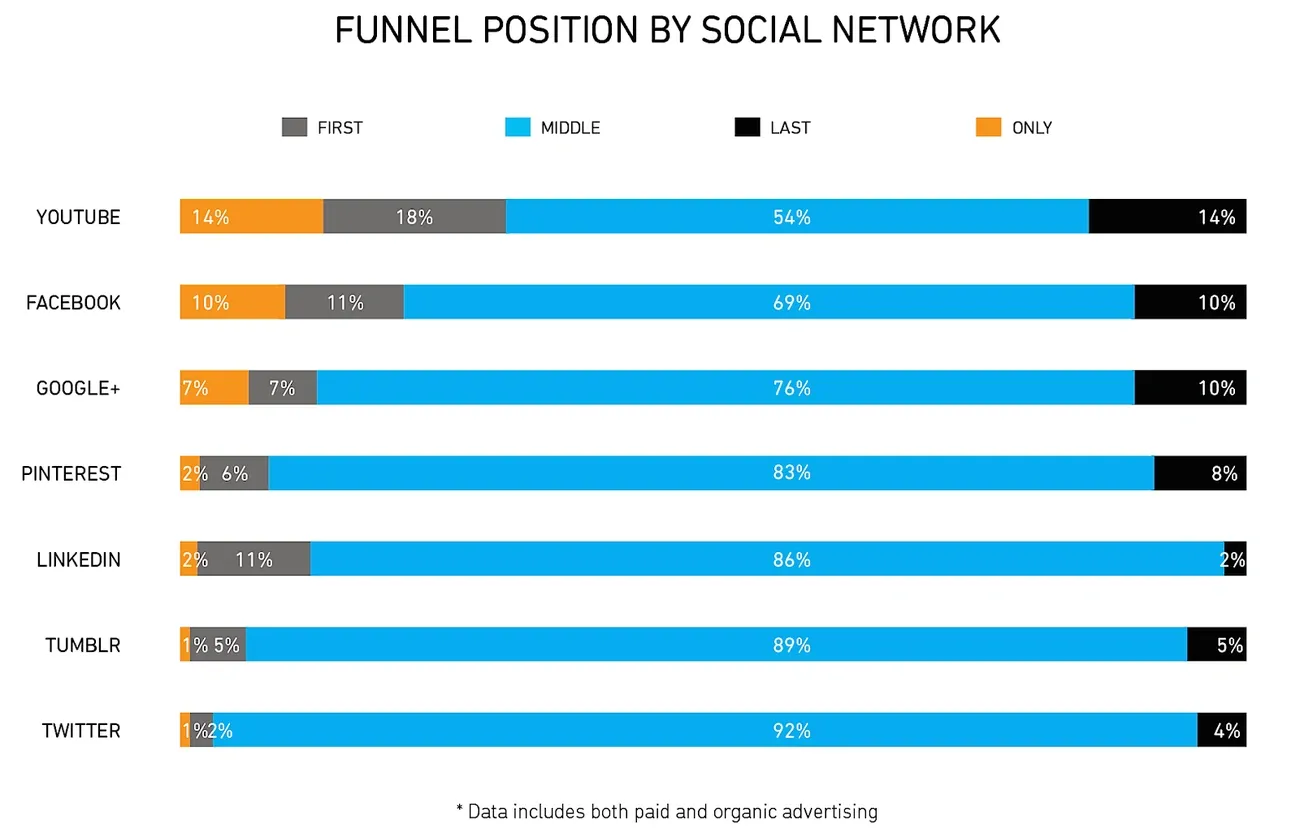
Image Source: Single Grain
Did you know YouTube ranks as the second-largest search engine globally? That’s huge for B2B marketers looking for opportunities beyond traditional text ads. I love how this platform lets B2B brands tell their story visually in ways that plain text just can’t match.
YouTube Ads Overview
YouTube operates right within Google’s advertising ecosystem, giving you access to over 2 billion monthly active users worldwide. What makes it so powerful? It sits perfectly between when buyers are researching and when they’re ready to purchase—exactly where B2B prospects spend most of their time.
If you’re in the B2B space, you’ve got several ad format options: skippable in-stream ads (TrueView), non-skippable ads, and display ads. But the real value comes from using the platform to answer questions, build trust, and educate your potential clients.
The targeting precision is what really separates YouTube from traditional B2B channels. You can create custom audience segments based on competitor websites, target in-market audiences like “Corporate Event Planning,” or reach users based on their Google search queries.
Why YouTube Ads Convert
Why do YouTube ads work so well for B2B? It’s pretty simple – they engage prospects visually while they’re actively gathering information. Think about it: how much easier is it to explain your complex B2B solution with a video demonstration rather than paragraphs of text?
The targeting capabilities are remarkable, too. Beyond standard remarketing, custom intent audiences let you reach users based on their search queries entered on Google. This connects you with prospects who’ve shown clear intent but aren’t quite ready to purchase.
Here’s something you might not know – many B2B decision-makers belong to Gen X, who account for 1.5 billion daily views on YouTube, with 75% of people aged 35-53 watching at least monthly. That’s a perfect demographic alignment for reaching the people who actually make buying decisions.
Best Use Case for YouTube Ads
YouTube ads really shine in these B2B scenarios:
- Starting conversations with prospects early in lengthy sales cycles
- Demonstrating complex products or services visually
- Building trust through customer testimonial videos
- Educating potential clients about industry challenges your solution addresses
I absolutely agree with one expert who noted, “Even the best one-minute video cannot close a complex B2B deal on its own. What it can do is start a conversation, educate and build trust – the things that move buyers through a long sales cycle”.
YouTube Ads Performance Metrics
Looking at the numbers, YouTube ads deliver solid performance for B2B advertisers. The average view rate (percentage of impressions resulting in views) is approximately 31.9%, with 15% or higher generally considered good for in-stream ads.
Cost efficiency is another big advantage—the average cost per view (CPV) is around $0.03, making it an affordable option if you’re watching your budget. Meanwhile, the average click-through rate sits at 0.65%.
For B2B conversion metrics, there’s an interesting split: YouTube ads typically generate a 0.05-0.5% conversion rate for products, whereas lead generation campaigns can achieve 40-60% conversion rates. This difference makes sense when you consider how B2B buyers typically need multiple touchpoints before conversion.
When measuring your campaign’s success, focus on metrics like view-through rate (VTR), skip rate (especially for TrueView ads where skipping before 3 seconds incurs no charge), and the percentage of video watched. These indicators will help you optimize your campaign for maximum impact.
Performance Max Campaigns
Image Source: EZ Rankings
Performance Max stands as Google’s most innovative campaign type, unifying all ad formats under a single AI-driven system. Launched in 2021, this automated approach has evolved significantly, with B2B advertisers seeing 30-50% higher Return on Ad Spend compared to standard campaigns when managed strategically.
Performance Max Campaigns Overview
Performance Max campaigns leverage Google’s advanced machine learning algorithms to automatically optimize ad placements across all Google channels simultaneously—Search, Shopping, YouTube, Display, Discover, Gmail, and Maps. This unified campaign structure eliminates the need for managing separate campaigns for different channels, allowing the AI to dynamically determine the most appropriate ad format for each potential customer.
I’ve watched Performance Max evolve from what many initially described as a “black box” into something far more transparent over the past three years. Google has added numerous reporting and control options, including item ID reporting, negative keywords, and channel breakdowns. These improvements give you greater transparency and control while maintaining the benefits of automation.
Why Performance Max Campaigns Convert
Ever wondered why these campaigns perform so well? It’s simple – Performance Max campaigns convert effectively primarily because they capitalize on Google’s powerful machine learning to identify and engage potential customers wherever they spend time online. For B2B advertisers specifically, this cross-channel approach helps find valuable prospects outside traditional search campaigns.
The conversion power of Performance Max stems from its ability to create a “virtuous circle” of optimization—you provide high-quality conversion data and audience signals, then the AI uses these inputs to identify factors most predictive of high-quality leads. Essentially, the more quality data you feed it, the smarter it becomes at finding similar high-value prospects.
I’ve seen this firsthand with clients. One oil and gas client saw Performance Max deliver superior lead generation results compared to traditional methods. This improved performance comes from Performance Max’s talent for discovering new audience segments through its machine learning capabilities.
Best Use Case for Performance Max Campaigns
Performance Max excels in these specific B2B scenarios:
- Lead generation campaigns requiring scale across multiple channels
- New customer acquisition when you need to reach beyond known audiences
- Complex product marketing that benefits from varied ad formats
- Cross-channel remarketing to nurture prospects throughout extended B2B buying cycles
Want the best results? Make sure your account has healthy conversion data through search and reliable offline conversion tracking. Good audience lists and a solid definition of your ideal customer profile are essential for Performance Max to engage the right people.
Performance Max Campaigns Performance Metrics
I get it – you want results fast. But with Performance Max, patience truly pays off. Google recommends allowing at least 6 weeks for campaigns to run before making major changes, giving the AI sufficient time to learn and optimise.
The data shows Performance Max campaigns need at least 30 monthly conversions, ideally 60 or more, for optimal performance. With appropriate conversion volume, Performance Max typically achieves 95% to 116% of the target ROAS, although results vary.
Wondering how much budget to allocate? Most B2B marketers find allocating 20% of their budget toward starting a Performance Max campaign ideal for testing, while those just beginning with Google advertising might consider devoting 80% to Performance Max to leverage its cross-inventory capabilities.
The results can be impressive. One software company reported closing two deals in just 25 days after launching a Performance Max campaign—remarkable for B2B where sales cycles typically span months. Similarly, a higher education marketing campaign delivered a 5.17% click-through rate and generated double-digit sales-qualified leads.
Here’s my favorite part: when properly configured with value-based bidding and offline conversion tracking, Performance Max can reduce cost per lead by up to 34% when optimized specifically for sales-qualified leads rather than raw lead volume. That’s real money back in your marketing budget!
Remarketing Ads (RLSA)

Image Source: inBeat Agency
Remarketing Lists for Search Ads (RLSA) represent one of the most underutilized yet powerful Google ad formats for B2B companies. Unlike standard campaigns that cast wide nets, remarketing zeroes in on prospects who’ve already demonstrated interest in your offerings. I’ve found this precision targeting particularly valuable for B2B companies with extended sales cycles and multiple decision-makers.
Remarketing Ads Overview
RLSA enables B2B advertisers to customize search campaigns specifically for users who have previously visited their website. This works through browser cookies that track user behavior, allowing you to show tailored ads when these prospects return to Google Search.
Although often used interchangeably, remarketing and retargeting have subtle differences. Remarketing primarily involves re-engaging past customers through email, whereas retargeting focuses on serving ads to users who visited your site but didn’t convert.
For B2B specifically, RLSA accommodates longer buying cycles by providing ongoing, relevant content that nurtures leads over time. This makes it exceptionally well-suited for complex purchase decisions that typically involve 6-10 stakeholders, each conducting their own research over 3-12+ months.
Why Remarketing Ads Convert
Remarketing ads consistently demonstrate stronger performance metrics compared to standard targeting, primarily because they reach users already familiar with your brand. In fact, one campaign analysis showed remarketing delivered a 50% lower cost per acquisition, 25% increase in conversion rate, and 20% lower cost per click.
The conversion power stems from increased brand recall – remarketing helps keep your company top-of-mind while prospects progress through their decision-making process. Furthermore, personalization plays a crucial role as you can tailor ads based on specific actions leads took on your website.
Best Use Case for Remarketing Ads
B2B remarketing performs exceptionally well in these scenarios:
- Re-engaging cart abandoners with targeted messaging and custom bids
- Creating cross-sell opportunities by showing complementary products to previous purchasers
- Increasing bids for high-value users who demonstrated significant engagement
- Targeting competitive keywords exclusively to past visitors, optimizing budget efficiency
Strategic audience segmentation enhances effectiveness through multi-dimensional targeting based on engagement level, time since last visit, and content interest. Additionally, layering demographic and device bid adjustments ensures budget flows toward highest-potential opportunities.
Remarketing Ads Performance Metrics
The data clearly demonstrates remarketing’s effectiveness. One Inc. Magazine campaign showed RLSA drove an additional 14.6% conversions at a 50% lower CPA alongside an 18.6% increase in conversion rate compared to standard ads.
For reference, healthy RLSA click-through rates hover around 10% when properly implemented, substantially outperforming standard display remarketing (1.5%) and regular display ads (0.5%). This effectiveness justifies allocating budget specifically for remarketing campaigns despite their narrower audience reach.
In tracking performance, look beyond standard metrics to view-through conversions, which occur when users see but don’t immediately click your ads before eventually converting. This measurement provides valuable insight into remarketing’s brand awareness impact throughout lengthy B2B buying cycles.
Customer Match Ads
I’ve found that first-party data is absolute gold in the B2B advertising world, and that’s exactly what powers Google’s Customer Match ads. This format lets you take your existing contact lists and turn them into precision-targeting machines across multiple Google platforms. You simply upload your email addresses, phone numbers, and other customer data to create custom audiences that reach existing customers or find new prospects who look just like your best clients.
Customer Match Ads Overview
Customer Match connects you with your customers across Google’s entire ecosystem – Search, Shopping, Gmail, YouTube, and Display. The process is straightforward: you upload your customer information, and Google uses secure SHA256 encryption to hash the data, keeping everything private while matching it with Google user accounts.
What makes Customer Match really shine is its versatility. When you’re running Search and Shopping campaigns, you can adjust bids based on how customers have interacted with you before. With Gmail, you’ll get your message right at the top of prospects’ inboxes through personalized ads. YouTube campaigns let you target segments similar to your most valuable customers, while Display ads help you reach potential new clients.
Why Customer Match Ads Convert
I get asked all the time why Customer Match works so well, and the answer is simple – it leverages your most valuable asset: existing customer relationships. By breaking your lists into segments based on engagement levels, purchase history, and customer value, you create campaigns that speak directly to specific audience needs.
The numbers don’t lie – this approach absolutely crushes standard targeting methods. One study I came across showed businesses using Customer Match see up to 75% lower cost per lead and 42% higher match rates on platforms like YouTube. That’s a massive difference!
The conversion power comes from pinpoint precision and relevance. Instead of casting a wide net, you’re focusing exclusively on people who already know your brand or look almost identical to your best customers. Plus, Customer Match plays nicely with Smart Bidding and Google’s AI optimization tools, automatically enhancing campaign performance without you having to fiddle with manual settings.
Best Use Case for Customer Match Ads
In my experience, Customer Match performs exceptionally well in these B2B scenarios:
- Re-engaging past clients who previously purchased but haven’t returned
- Upselling existing customers with premium features or complementary products
- Creating lookalike audiences to find new prospects resembling your best clients
- Segmenting leads by funnel stage to deliver stage-appropriate messaging
Here’s a tip to save you some headaches: don’t just upload one massive list and call it a day. Instead, segment your data based on recency, behavior, and engagement levels. And remember to refresh your lists regularly – Customer Match lists have a maximum membership duration of 540 days, so you need to keep things current.
Customer Match Ads Performance Metrics
When it comes to Customer Match, understanding match rates is crucial for success. This metric shows what percentage of your uploaded list successfully connected to Google users. While you’ll never get 100% match rates (wouldn’t that be nice?), focusing on data quality dramatically improves performance.
I’ve seen advertisers who upload multiple match keys get significantly better results – adding a second match key increases list size by 28%, while a third key adds another 35%. Personal emails consistently drive the highest match rates across platforms.
When you implement Customer Match properly, the efficiency is remarkable. The data clearly shows cost-per-acquisition drops substantially when targeting these highly-qualified audiences, especially for companies dealing with those lengthy B2B sales cycles. It’s like having a heat-seeking missile for your best prospects rather than carpet bombing and hoping for hits.
Comparison Table
Want to see how all these ad formats stack up against each other? I get you.
When I’m advising clients on where to put their ad dollars, I like to break down the performance metrics side-by-side. This really helps you visualise which formats deliver the best bang for your buck.
Let’s take a look at how each of these B2B ad formats performs against each other:
| Ad Format | Average ROAS/Performance | Cost Metrics | Conversion Rate | Best Use Cases | Key Distinguishing Feature |
|---|---|---|---|---|---|
| Google Search Ads (Branded) | 1299% ROAS | Lower CPCs than non-branded | Higher than non-branded | Bottom-funnel conversions, defending market position | Targets users specifically searching for your brand |
| Google Search Ads (Non-Branded) | 68% ROAS | $8.86 CPC (B2B Tech) | 7.52% | Net-new acquisition, Middle-funnel researchers | Captures active solution seekers |
| Google Display Ads | Not directly mentioned | $0.79 CPC | 0.80% (B2B) | Brand awareness, Top-funnel prospecting | Access to 2 M+ websites reaching 90% of internet users |
| YouTube Ads | Not directly mentioned | $0.03 CPV | 0.05-0.5% (products), 40-60% (lead gen) | Visual product demos, Building trust | Reaches 2B+ monthly active users |
| Performance Max | 30-50% higher than standard campaigns | 34% lower cost per lead | 95-116% of target ROAS | Lead generation at scale, New customer acquisition | AI-driven optimization across all Google channels |
| Remarketing Ads (RLSA) | 50% lower CPA | 20% lower CPC | 25% higher than standard | Re-engaging cart abandoners, Cross-sell opportunities | 10% CTR for properly implemented campaigns |
| Customer Match Ads | 75% lower cost per lead | Not directly mentioned | 42% higher match rates | Re-engaging past clients, Upselling existing customers | Leverages first-party customer data |
The difference in performance is pretty striking, isn’t it? Branded search ads clearly dominate with that monster 1299% ROAS, but don’t write off the other formats. Each serves a specific purpose in your marketing funnel.
What jumps out to me is that remarketing and customer match both deliver significant cost savings – 50% lower CPA and 75% lower cost per lead respectively. That’s huge when you’re managing tight budgets.
Are you noticing how YouTube stands out with that super-low $0.03 cost per view? If you’re trying to explain a complex B2B product, this could be your secret weapon.
Look at these numbers as a starting point. Your specific industry and audience will affect your actual performance, but this comparison should help you prioritize where to begin testing.
Conclusion
Making Smart Choices with B2B Google Ad Formats
After exploring these seven high-performing B2B ad formats, one thing stands clear – strategic selection matters more than simply increasing budget. Though branded search ads deliver an astounding 1299% return on ad spend, each format serves unique purposes throughout your buyer’s journey.
Previously, my team struggled with the same challenge you might face – determining where to allocate our limited marketing dollars for maximum impact. Data now shows the solution lies not in picking one universal format but creating a complementary mix tailored to specific business goals.
Branded search ads excel at bottom-funnel conversions while non-branded search helps capture active solution-seekers. Meanwhile, display ads build awareness, YouTube engages visually, Performance Max leverages AI across all channels, RLSA reconnects with previous visitors, and Customer Match harnesses your valuable first-party data.
Most successful B2B companies segment their campaigns by funnel stage rather than dumping everything into a single approach. This strategic allocation allows you to nurture prospects throughout their extended decision journey while maintaining brand visibility across multiple touchpoints.
Additionally, remember the substantial differences in performance metrics between formats. While branded search delivers exceptional ROAS, YouTube thrives with educational content, and remarketing reduces acquisition costs by 50%. Understanding these distinctions helps you set realistic expectations and measure success appropriately for each campaign type.
Undoubtedly, Google advertising represents a significant investment for B2B companies – often consuming over half the paid marketing budget. However, when executed properly, these ad formats generate substantial returns that justify the expense. Discover what B2B ad formats on Google drive the best results. Elevate your digital marketing strategy at GrowLeads.io today!
My final advice? Start small, test thoroughly, and gradually scale your winning campaigns. Though perfecting your Google Ads strategy requires ongoing optimization, the journey becomes remarkably more manageable when you understand which formats align with your specific business objectives. Your next successful campaign awaits – which format will you prioritize first?
FAQs
Q1. Are Google Ads still effective for B2B SaaS companies in 2025?
Yes, Google Ads can be highly effective for B2B SaaS companies when implemented strategically. While some accounts waste budget, properly optimized campaigns can generate qualified leads and drive significant returns on ad spend.
Q2. What are the most important Google Ad formats for B2B marketing in 2025?
The highest-converting B2B ad formats on Google in 2025 include branded search ads, non-branded search ads, display ads, YouTube ads, Performance Max campaigns, remarketing ads, and Customer Match ads. Each format serves different purposes throughout the buyer’s journey.
Q3. How has broad match keyword targeting changed for B2B advertisers?
Broad match has improved significantly, leveraging Google’s user signals to deliver more relevant results. However, its effectiveness varies by industry and account size. Proper implementation and ongoing optimization are crucial for success with broad match targeting.
Q4. What strategies can improve B2B lead quality from Google Ads?
To improve lead quality, use ad copy that pre-qualifies prospects, implement strategic form questions, leverage audience signals, and focus on offline conversion tracking. Optimizing for sales-qualified leads (SQLs) rather than just form fills can significantly enhance campaign performance.
Q5. How important is conversion tracking for B2B Google Ads campaigns?
Proper conversion tracking is critical for B2B Google Ads success. Importing offline conversions, setting appropriate attribution windows, and optimizing for high-value actions like SQLs or closed deals allows Google’s AI to better target potential customers and improve overall campaign performance.

Manav is the Head of Business Development at Growleads, specializing in lead generation, social selling, and pipeline acceleration. He transforms networking into revenue through strategic relationship building and data-driven sales processes.
As a business development leader, Manav has helped organizations build scalable lead generation systems, optimize conversion funnels, and accelerate deal closure rates. His expertise spans LinkedIn strategy, sales automation, and building high-performing business development processes.

![B2B Lead Generation: Email vs LinkedIn vs Google Ads - Real Results [2025]](https://growleads.io/wp-content/uploads/2025/06/20250609_1625_B2B-Lead-Generation-Solutions_remix_01jxa57dcpemdvvj3kdw869p6e-710x473.png "What's the Best B2B Lead Generation Strategy in 2026: Email, LinkedIn, or Google Ads? 21")