How to Craft High-Converting Cold Emails: A Proven Guide for 2025 Success
 Cold email examples that work are rare gems in today’s packed inboxes. The average professional gets bombarded with 121 emails each day, making it tough to catch anyone’s attention. Most emails only achieve a 23.9% open rate, and the response rates barely reach 8.5%.
The silver lining appears when you polish your approach. Tailored cold email templates can lift open rates by 10%. A single follow-up email boosts response rates by an impressive 220%. Success doesn’t depend on writing long messages – the best performing emails pack their punch in 50-125 words and span 2-5 crisp sentences.
This piece shares our battle-tested cold email examples that cut through the noise. You’ll discover everything from quick-question templates to storytelling approaches that are the foundations of email copywriting success. It also reveals how to craft cold emails that put your recipient’s needs first instead of pushing hard sales – a transformation that has revolutionized cold outreach from mass messaging into relationship building.
The Quick Question Cold Email Template
The “Quick Question” approach ranks as one of the best cold email templates in 2025. This format delivers amazing results while other methods fail, thanks to its simple yet powerful nature. People love it because it feels friendly and casual – exactly what busy professionals need in their crowded inboxes.
When to use this template
This template works best in situations where traditional sales tactics don’t cut it. You should use it:
- Your target is a busy decision-maker who ignores obvious sales pitches
- Your cold email campaigns show poor response rates
- You haven’t confirmed the right point of contact
- You need to reach someone in a large company without clear contact details
- You want to find the right person before spending time on a detailed pitch
The template really shines when you’re reaching out to new accounts or industries where you don’t have connections yet. Its straightforward style makes it perfect to start conversations without overwhelming your prospects.
Why it works
Several psychological factors make this approach incredibly effective. The template works because it asks for something small – you’re not selling anything, just asking for basic information that takes seconds to answer.
The “Quick question” subject line gets 40-70% open rates in every industry. These numbers come from its casual, friendly appearance. Your email looks more like a message from a coworker than a sales pitch.
The template succeeds by:
- Sparking curiosity without being salesy
- Building quick credibility with a company intro
- Showing relevance by mentioning similar clients
- Making a small, specific request
- Keeping everything short and easy to read
Recipients want to help rather than ignore you. Your outreach feels more human because you admit you might not have the right contact, which makes people want to help.
The template has another advantage: it starts a conversation before trying to sell anything. This approach builds rapport naturally.
Example email copy
Subject Line: Quick question
Hey [First Name],
At [Your Company], we’ve helped [specific number] companies like [Recipient’s Company] achieve [quantifiable benefit with numbers if possible].
Could you point me towards the right member of your team to chat about [specific pain point that resonates with your ideal customer OR function like “sales” or “recruiting”]?
Thank you,
[Your Name]
This template works because it’s short and focused. Keeping it under 100 words means even the busiest people can respond quickly. You won’t find extensive punctuation, capitalization, or obvious sales language that screams “promotional message”.
Your version needs personalization to work well. Add researched, company-specific details instead of generic text in the bracketed sections. Mention real results from similar companies to build credibility fast.
The subject line should stay simple. “Quick question” beats fancy alternatives because it doesn’t trigger sales defenses. People open your email expecting a real question, not a pitch, which makes them more open to your message.
This template starts conversations conversation starter. Once you connect with the right person, you can move to deeper discussions about how your solution fixes their problems.
The Third-Party Connection Template
Mutual connections can transform cold outreach into a warmer introduction. Research shows 65% of new business opportunities come from referrals and recommendations. This approach turns strangers into acquaintances through shared connections—making the Third-Party Connection Template one of your most powerful cold email templates.
How it helps reach decision-makers
Getting past gatekeepers is a major challenge in cold outreach. The Third-Party Connection Template solves this by giving you direct access to decision-makers through indirect channels. This approach works by:
- Building instant credibility through association with a trusted contact
- Using social proof from mutual connections
- Making recipients feel comfortable responding to someone they share a connection with
- Starting conversations naturally without sounding like a sales pitch
These third-party connections help you reach prospects who might ignore traditional cold emails. Junior employees are often eager to present profitable opportunities to their employers to advance their careers. You can turn these employees into internal champions who connect you with key decision-makers.
Best practices for using it
The Third-Party Connection Template works best when you follow these proven strategies:
Look for real connections between you and your prospect. Strong connections pass more authority to you. Search beyond obvious professional relationships to find unexpected common ground like:
- Former colleagues or employers (even if at different times)
- Alumni from the same school or university
- Members of the same professional organizations
- Individuals from the same hometown or city
- Shared interests or backgrounds outside of work
Research both your prospect and mutual connection thoroughly before sending your email. This preparation lets you mention specific details that show genuine familiarity instead of just dropping names.
Start your message by mentioning the mutual connection in your opening line. To name just one example, see: “Hi [Prospect’s Name], [Mutual Connection] suggested I reach out to you about [specific topic].” This creates common ground right away.
Tell them exactly why you’re reaching out. The Third-Party Connection approach relies on being transparent. State what you want to accomplish, whether that’s learning about opportunities, sharing information, or setting up a brief call.
Cold email format example
Subject line: [Mutual Connection’s Name] suggested we connect
Hi [Prospect’s Name],
[Mutual Connection] spoke highly of your work and suggested we connect. I noticed we both [mention a genuine commonality or shared interest].
At [Your Company], we’ve helped businesses like yours [specific achievement with numbers if possible]. Your role at [Company Name] made me think our [product/service] could help you [specific benefit relevant to prospect].
Would you be open to a 15-minute call next week to discuss how we might [specific value proposition]? I’m available Tuesday or Wednesday afternoon if that works for you.
Thanks for considering,
[Your Name]
This cold email format works because it builds credibility through the third-party connection right away. It also follows the key principle of focusing on the recipient rather than yourself.
Note that authenticity matters more than clever writing when using this template. Your real connection with the third party should be the focus, not an exaggerated claim. False connections will permanently damage trust once discovered.
The Third-Party Connection Template turns cold outreach into something warmer and more personal. You’ll substantially increase your chances of getting a response.
The PAS (Problem-Agitate-Solve) Template
The PAS (Problem-Agitate-Solve) formula ranks as one of the most powerful psychological frameworks for cold email copywriting. My testing shows this three-part structure gets higher response rates than standard pitches because it connects directly with prospect pain points before offering your solution. Let’s get into why this approach works so well for cold outreach.
Breaking down the PAS formula
PAS creates a three-step psychological experience that leads your prospect from seeing a problem to embracing your solution:
Problem: First, identify a specific issue your prospect faces. Success here means pinpointing something that actually troubles them, not what you think bothers them. Good problem statements show you’ve done your homework and understand their specific challenges.
Agitate: Your next step amplifies the problem by showing what it all means. This step triggers an emotional response by highlighting why their problem frustrates them particularly. You’re not trying to manipulate but help them see the real cost of not addressing the issue.
Solve: Your product or service emerges as the logical solution. This section must clearly show how your offering eliminates the problem you’ve highlighted. A straightforward call-to-action makes taking the next step easy.
Research shows that highlighting a flaw or problem your reader experiences creates strong motivation to act. The PAS formula gets such high response rates in part because people don’t want others pointing out their company’s weaknesses.
How to identify the right problem
Good problem identification needs thoughtful research before you write your cold email template:
- Conduct customer interviews – Your existing clients can tell you what challenges they wanted to solve when they bought your solution.
- Research social platforms – Twitter, Google, Yelp, Facebook, and industry forums often reveal where your prospects discuss their challenges publicly.
- Study competitor reviews – Negative reviews about competitors often show unmet market needs.
- Focus on major pain points – Your product might solve several issues, but focus on the most important problem for maximum effect.
People face many problems. The ideal approach targets their biggest challenge—one your product or service specifically solves. Notwithstanding that, the PAS format works well as long as you address a real issue and can clearly show the stakes of leaving it unsolved.
Look beyond surface-level problems during research. To name just one example, someone might want more than just a bear-catching tool – they could be seeking status, achievement, or professional advancement.
Cold email template example
Subject Line: Transform [Company Name]’s customer reviews in 30 days
Hi [First Name],
I noticed [Company Name] has received several negative reviews regarding customer service response times recently.
Undeniably, losing customers due to support tickets falling through the cracks is frustrating—especially considering each lost customer represents approximately $[Average Customer Value] in missed revenue. Furthermore, these negative experiences often spread to potential customers through online reviews, multiplying the damage.
[Product Name] integrates all your customer data into one centralized dashboard, allowing your team to track, manage, and measure every customer interaction across all channels. Our clients typically see a [X%] improvement in response times within the first month.
Would you be open to a quick conversation about how we might help turn those negative reviews into loyal, satisfied customers?
Best,
[Your Name]
This template succeeds because it shows upfront that you’ve researched the prospect’s specific situation. The problem statement speaks directly to them, the agitation reinforces real business consequences, and the solution offers a clear path forward without overwhelming detail.
The PAS formula delivers its best response rates when you’ve identified a problem the recipient sees as urgent and important. Make sure you’ve really researched your prospect’s actual challenges beforehand.
The AIDA (Attention-Interest-Desire-Action) Template
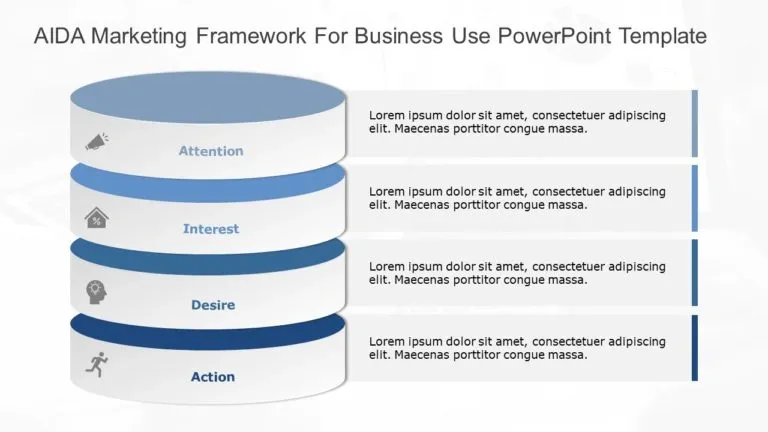
Image Source: SlideUpLift
“Nearly three-quarters of marketers plan to increase content production this year”
— Smith, Marketing Industry Expert
The AIDA formula stands as a proven approach to persuasive writing that excels in cold email outreach. Advertiser Elias St. Elmo Lewis developed this method in 1898. The four-step experience guides prospects from awareness to action, which makes it highly effective for converting cold emails.
How AIDA applies to cold emails
The AIDA framework consists of four components that match your prospects’ natural decision-making process:
Attention: Your prospect’s attention must be captured in two crucial spots – the subject line and opening line. Research shows that identifying specific needs matters more than showing you’ve gathered information about them. Your message needs to stand out among 92 business emails people receive each day.
Interest: After capturing attention, you need to show how you’ll solve their identified problem. Keep this section brief yet compelling. Move prospects from curiosity to engagement through focused solutions that relate to their situation.
Desire: This stage turns interest into genuine want. Some marketers call this the “Decision” stage with the same goal – moving prospects from “this seems interesting” to “I need this.” The best way involves showing relevant social proof, qualifications, or results that match your prospect’s situation.
Action: The final step needs a clear call-to-action that makes the next move obvious. Cold emails typically ask for a reply, call, or specific offline action instead of an immediate purchase. The response process should be simple by suggesting specific times or requiring minimal effort.
Using social proof and data
Social proof works as a powerful tool in the AIDA framework and can boost conversions by 15%. About 92% of consumers don’t buy when they see no customer reviews. Adding testimonials or case studies to your cold emails builds instant credibility.
Choose testimonials that address your prospect’s challenges or potential concerns. Specific metrics work better – “We helped Company X reduce deployment time by 60% while cutting errors by 75%” has more impact than general statements.
Mentioning prominent clients makes sense when possible. Names like “experts such as Gary Vaynerchuk, Tim Ferriss, and Malcolm Gladwell” boost perceived credibility if these connections are authentic.
Example cold email copywriting
Subject: Transform [Company]’s customer response times in 30 days
Hi [Name],
I noticed [Company] just launched your new [Specific Feature]. Great work on the implementation!
Having analyzed similar companies in [Industry], I’ve identified an opportunity in your [specific area] that could save your team significant time and resources.
We recently helped [Similar Company] reduce their [relevant metric] by 60% while improving [another metric] by 75%. Their team now saves 20+ hours weekly – just ask [Named Customer], who we’re proud to count among our satisfied clients.
Would you be open to a 15-minute call next Thursday to explore if we could achieve similar results for [Company]?
Best regards,
[Your Name]
This template works because it follows the AIDA structure: it grabs attention with personalized observation, builds interest through relevant analysis, creates desire with specific social proof, and ends with a clear, simple call to action.
Note that follow-up messages should continue the “action” component. Extend your initial invitation while keeping the momentum. Research shows that AIDA-structured cold emails keep recipients engaged through the sales funnel and get more responses than generic outreach.
The Straight-to-Business Template
C-level executives and busy decision-makers expect you to get straight to the point. The Straight-to-Business Template skips pleasantries and delivers value right away. This respects their limited time and attention. Executives receive between 100-200 emails daily, so this approach helps your message stand out through its brevity and clarity.
Why directness works for busy professionals
Direct communication gets better results than flowery alternatives when you’re reaching out to high-level executives. They don’t have time to read “Hope you’re doing well” or “Season’s greetings.” They’ll simply stop reading.
Research reveals that many cold emails fail because they take too long to make their point. Professionals value emails that spot their pain points right away and present clear, relevant solutions. The straight-to-business approach shows you understand their packed schedules and priorities.
Your directness builds trust. You position yourself as a straightforward business partner instead of another salesperson by respecting their time and avoiding manipulative language. Sales professionals say cold emails work best when they don’t feel like a sales pitch.
Direct messages perform better because they force you to be clear about your value proposition. Your offer must stand on its own merits without excessive introduction or background. This makes your message compelling and easy to review.
Tips for writing concise cold emails
Here’s how to create straight-to-business emails that get responses:
- Keep it short – Your email should be 5-15 lines or about 150 words. Data shows 50-125 words work best for cold emails.
- Identify their problem immediately – Start by highlighting a scenario or challenge your prospect faces. “Is your customer support system actually losing you money?”
- Lead with concrete data – Share specific, quantifiable results you’ve achieved for similar companies. Numbers convince more than general claims.
- Structure for scannability – Break content into 2-3 sentence paragraphs with simple sentences. Studies show 80% of people scan emails, so format matters.
- Eliminate jargon and fluff – Write at a third-grade reading level. Simple copy works better than sophisticated language.
- Include only one call-to-action – Ask for one specific action that makes the next step clear.
This template consistently gets strong response rates:
Hi {first name},
Is your {specific area} system actually costing you {negative consequence}?
We’ve helped companies like yours lower {specific metric} by {X%} and improve {another metric} by {Y%} in less than {timeframe}.
All we did was implement {product/service name}, which {brief description of how it works}.
Do you have time this week to discuss how we could achieve similar results for {their company}?
{Your signature}
This template’s effectiveness comes from focusing on the prospect’s needs rather than your company’s capabilities. It answers their main question: “What’s in it for me?”.
The best times to send cold emails are Tuesday through Thursday, around 10 AM or 2 PM in the recipient’s time zone. The straight-to-business approach matches how busy professionals process information—quickly, focusing on relevance and value.
The Paint-a-Picture Template

Image Source: AgencyAnalytics
Storytelling stands out as one of the least used techniques in cold outreach. The Paint-a-Picture template gets higher engagement than traditional approaches. This powerful format creates a vivid contrast between your prospect’s current reality and the improved future your solution provides. It brings abstract benefits into concrete, emotional focus.
Using storytelling in cold emails
Our brains naturally process information through stories. Cold emails with narrative elements become more memorable by a lot. Stories are 22 times more likely to be remembered than facts alone. The Paint-a-Picture template makes use of this psychological principle to break through inbox fatigue.
To make storytelling work in your cold emails:
- Start with a relatable scenario that emphasizes a specific pain point your prospect faces. The scenario should feel immediate and realistic—something they’ve dealt with lately.
- Build tension by showing the negative consequences of this situation. Keep this part brief yet emotionally powerful.
- Introduce your solution as the natural resolution to this tension. Show exactly how it changes their situation.
The best Paint-a-Picture emails avoid long narratives. Your entire story should fit in just a few sentences. Note that the story isn’t about your company—it puts your prospect at the center as the hero who finds success with your solution.
How to make your reader visualize success
Your prospect’s true needs should guide your visualization strategy. This template works exceptionally well when prospects struggle to grasp abstract benefits.
Specificity makes visualization powerful. Don’t claim general improvements. Instead, paint concrete before-and-after scenarios with details that strike a chord emotionally. To name just one example, compare “our software saves time” with “imagine opening your laptop Monday morning to find twice as many qualified leads waiting for you”.
Here’s an example that consistently gets strong responses:
Hi {first name},
Nothing is more frustrating than losing great candidates because you can’t locate their resumes, interview notes, or contact information when needed.
Imagine instead a world where all candidate information sits in one simple, easy-to-find place. {Product name} creates exactly that reality for HR teams like yours.
Would you be open to a quick demo this week to see how it works?
{Your signature}
This template soars because it shortcuts the conversion process. Prospects who can see themselves experiencing the benefits firsthand stop asking “Does this work?” and start asking “Where do I sign up?”. This makes your call-to-action feel like the natural next step in their process.
The Something Useful Template
“64% of companies saw an ROI from content marketing efforts last year”
— Johnson, Marketing Researcher and Analyst
Free valuable resources appeal to everyone. The Something Useful template builds on this simple fact by giving real value with no strings attached. This strategy has proven to work when reaching out to prospects who might brush off regular sales emails.
How to offer value without asking
Good research before sending your email makes all the difference. Start by breaking down what your prospect shares on social media or publishes on their company blog. Their interests and potential challenges should guide your approach.
Your next step is to share something genuinely helpful that connects to their interests or challenges. Unlike other templates, you don’t ask for a meeting or sale in return. Common interests create natural connections when you share valuable insights, which helps build rapport organically.
Prospects who are tough sells or prefer doing business with familiar faces respond well to this approach. People naturally connect over shared interests, and that’s why this template gets more and thus encourages more responses.
Examples of useful content to share
Here’s what you can share that adds value:
- Industry articles or blog posts they might have missed
- Free resources like guides, templates, or checklists
- Quick analysis or feedback on their website or recent content
- Useful tools that match their goals
- Custom Loom videos with expert tips to improve their results
Cold email template for value-first outreach
Subject: Thought you’d find this helpful, [First Name]
Hi [First Name],
I noticed your recent post about [specific topic] on [platform]. Your point about [specific detail] was particularly insightful!
[Insert 1-2 sentences about how their perspective helped you or what you found valuable]
Have you seen [article/resource] by [name]? It explores similar concepts and might be useful for your work on [specific project/goal].
[Your signature]
Recipients see you as a helpful resource instead of just another salesperson. Most people welcome relevant content, even in cold emails – provided it delivers real value that lines up with their interests.
3 Key Elements Every Cold Email Should Include
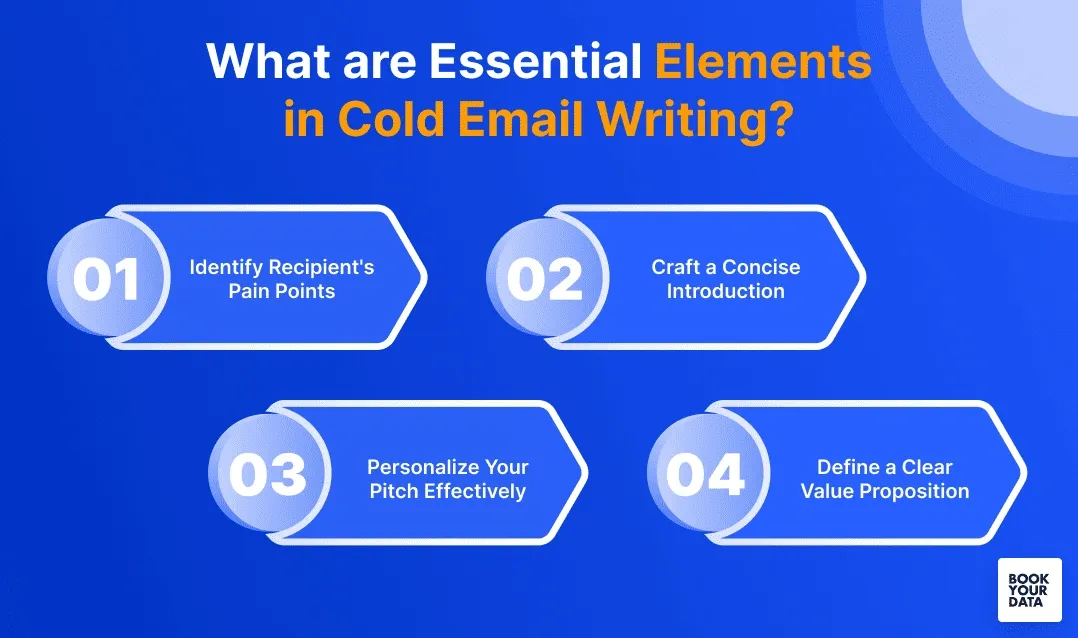
Image Source: BookYourData
Successful cold email examples that work share three basic elements. These elements are the foundations of any outreach strategy that gets results, whatever template you pick.
1. Personalization
Good personalization is nowhere near as simple as using someone’s name. Emails that are tailored get open rates up to 45% higher than generic messages. Real personalization shows you’ve spent time understanding your recipient’s situation.
Here’s how to personalize your cold emails effectively:
- Reference recent company achievements or news
- Mention specific challenges their business faces
- Connect your offer to their unique circumstances
- Use a natural, human tone
Note that personalization needs to be relevant. Your message should address what matters to them instead of just throwing in random facts.
2. Research
Quality research is the life-blood of cold outreach that works. You need to know your targets well before you reach out to them. This extra effort pays off – one sales pro got a response just because “it was obvious you did research on me”.
Good research has these key parts:
- Learning about LinkedIn profiles and company websites
- Checking recent social media posts and content
- Finding specific pain points and goals
- Spotting trigger events like job changes or company news
This homework keeps you from making mistakes and helps build rapport faster with your prospects.
3. Clear value proposition
A value proposition tells exactly how you can solve your recipient’s problem. It needs to state what they’ll get, with real numbers if possible.
Your value proposition should:
- Target specific problems they face
- Show you understand their business challenges
- Use numbers when possible (“save 20% on costs”)
- Back up claims with case studies or testimonials
The most personalized email won’t work without giving people a good reason to care. Make your value proposition the heart of your cold email strategy.
Conclusion
Final Thoughts on Cold Email Success
Cold email remains a powerful tool that helps you reach potential clients when used the right way. This piece covered seven proven templates that consistently get responses in today’s competitive environment.
These templates each shine in different situations. Quick Question works great for your first contact, while Third-Party Connection makes use of shared relationships. PAS and AIDA are psychological frameworks that guide prospects through decision-making. Straight-to-Business speaks directly to busy executives, Paint-a-Picture lets prospects see their success, and Something Useful builds relationships by delivering real value.
Whatever template you pick, you can’t skip personalization, research, and a clear value proposition. Of course, these elements reshape the scene by turning basic outreach into messages people want to open.
Note that cold email success takes time. You’ll need to test different approaches with your audience to find the templates that work best for your business. On top of that, it helps to track your results so you can improve your approach over time.
The best cold emails build relationships instead of pushing for quick sales. Many marketers rush to close deals, but taking time to understand your prospect’s needs first leads to much better results down the road.
You can start using these templates right away – just make them your own. The real magic happens when you blend proven frameworks with your authentic style.
What cold email strategy will you try first?
Use these cold email secrets to get replies. Powered by Growleads.io’s proven outbound framework.
FAQs
Q1. Are cold emails still effective in 2025?
Cold emails can still be effective when done properly. The key is to focus on quality over quantity, with highly personalized messages that offer genuine value to the recipient. While response rates have declined, well-crafted cold emails that demonstrate research and address specific pain points can still yield results.
Q2. What are some best practices for cold emailing in 2025?
Some best practices include: thoroughly researching your prospects, personalizing each message beyond just using names, keeping emails concise (50-125 words), leading with a clear value proposition, and focusing on building relationships rather than immediate sales. Using a mix of channels like LinkedIn and calls alongside email can also improve effectiveness.
Q3. How can I make my cold emails stand out in crowded inboxes?
To stand out, focus on creating a compelling subject line, get straight to the point in your opening, demonstrate that you’ve done your homework on the recipient’s business, offer something of value upfront without asking for anything in return, and use storytelling techniques to make your message more engaging and memorable.
Q4. What’s the ideal length for a cold email?
The ideal length for a cold email is typically between 50-125 words. This equates to about 2-5 concise sentences. Keeping your message brief respects the recipient’s time and increases the likelihood that they’ll read it in full.
Q5. How important is follow-up in cold email outreach?
Follow-up is crucial in cold email outreach. Adding just one follow-up email can increase response rates by up to 220%. However, it’s important to strike a balance – too many follow-ups can be perceived as spam. Focus on providing additional value in each follow-up rather than simply repeating your initial request.

Malay is the VP of Growth & Operations at Growleads, where he transforms businesses through automation, behavioral analytics, and omni-channel scaling strategies.
As a growth strategist, Malay has helped organizations streamline operations, decode customer behavior, and scale revenue through data-driven automation. His expertise spans process optimization, conversion analytics, and building scalable growth systems that deliver measurable results.