
Creative Lead Generation Strategies: 2026 Expert Guide

Struggling with lead generation?
You’re not alone. With the average person spending 17 hours a week watching online videos, there’s a huge opportunity to capture attention in creative ways. Video marketing has become a powerful tool, with 96% of marketers agreeing it helps users better understand products.
The challenge is that traditional lead generation tactics are losing their edge. Generic webinars, bland email sequences, and forgettable content no longer cut through the noise. When 36% of marketing budgets go toward demand generation, wasting resources on outdated methods isn’t an option.
From years of testing various lead generation strategies, one truth stands out: the approaches that work best don’t just capture attention, they foster genuine connections with potential customers. This human-first approach is key to standing out in a crowded market.
Whether you’re selling homes, B2B software, or niche products, the creative lead generation techniques in this guide have delivered consistent, high-quality results. Forget quick fads, these are sustainable methods designed to help you win in 2025 and beyond.
See How My Agency Can Drive More Traffic to Your Website
SEO – unlock more SEO traffic. See real results.
Content Marketing – our team creates epic content that will get shared, get links, and attract traffic.
Paid Media – effective paid strategies with clear ROI.
Start with the Right Mindset for Creative Lead Generation
Let me tell you something important: creative lead generation isn’t about tactics, it’s a mindset.
The businesses crushing it in 2025 understand that generating quality leads requires thinking differently than companies did even five years ago. I’ve discovered that shifting your perspective can transform your results more than any single tactic ever will.
Why traditional tactics are no longer enough
Traditional lead generation methods are failing because buyer behavior has fundamentally changed. Nearly 40 percent of marketers and sales teams report that finding high-quality leads is their top challenge. Why? Because today’s potential customers:
- Are empowered and informed, accessing information on their own terms before engaging with sales
- Find generic lead magnets (ebooks, newsletters, pop-ups) boring and lacking value
- Crave personalized experiences, not mass email templates or generic pitches
Most businesses make the critical mistake of viewing lead generation as merely an activity or project rather than a long-term business strategy requiring planning, investment, and patience. They also believe that more leads automatically mean more sales, when in reality, lead quality matters far more than quantity.
The B2B Marketing Benchmark reveals how thoroughly marketing leaders have internalized the “95/5 rule“, only 5% of your target audience is prepared to buy right now, with 95% out-of-market at any given time. Throwing the same stale lead magnets at this 95% won’t help them remember you when they’re finally ready to purchase.
Digital marketing has forever altered how buyers make decisions. As one executive noted, “Today’s B2B buyers aren’t passive recipients of promotional marketing messages. They’re discerning consumers who make decisions about which brands to even consider purchasing from based largely on how much they feel they can trust them”.
I see too many companies take a “one and done” approach to lead generation, then wonder why it fails. Rather than engaging in sporadic campaigns, successful lead generation requires adopting a holistic mindset where every marketing activity focuses on building relationships with potential customers.
How creativity builds trust and attention
Trust has emerged as the cornerstone of successful business relationships, and it starts with lead generation. Creative approaches build this essential trust in ways traditional tactics simply cannot.
Powerful creative marketing materials generate 10-20x more sales than ordinary campaigns by winning over the customer with a resonant experience. When you approach lead generation with creativity, you demonstrate that you understand your audience on a deeper level.
Trust grows when you consistently deliver value without asking for something in return. Lead-gen content builds trust most effectively when it demonstrates your expertise, embodies thought leadership, and shows genuine understanding of your target audience. Additionally, according to McKinsey, personalization not only impacts initial purchases but also influences behavior throughout the entire customer lifecycle.
Creative lead generation focuses on solving real problems. According to Forbes, 74% of customers are frustrated with content that isn’t personalized, and 72% simply won’t engage with non-personalized content. Effective lead generation requires genuinely caring about helping customers solve real pain points, not just selling subscriptions to anyone with a credit card.
To make creativity your competitive advantage, start by questioning your purpose. Are you focused on building relationships or just collecting contact information? The most innovative lead generation strategies come from marketers who truly understand their audience’s challenges.
A creative mindset also recognizes that your customers don’t identify themselves by where they are in the buying process. Instead of pushing product information prematurely, creative lead generation builds memorable connections that keep you top-of-mind until they’re ready to buy.
Implementing a formal referral program is another creative approach that continually generates new leads while building trust into your lead generation process. Creative tactics like interactive content, personalized outreach, and unexpected touchpoints demonstrate your commitment to the prospect’s success, not just making a quick sale.
By adopting a creative lead generation mindset, you’ll stand out in a crowded market while building the trust that turns prospects into long-term clients.
Define Your Audience and Their Real Problems
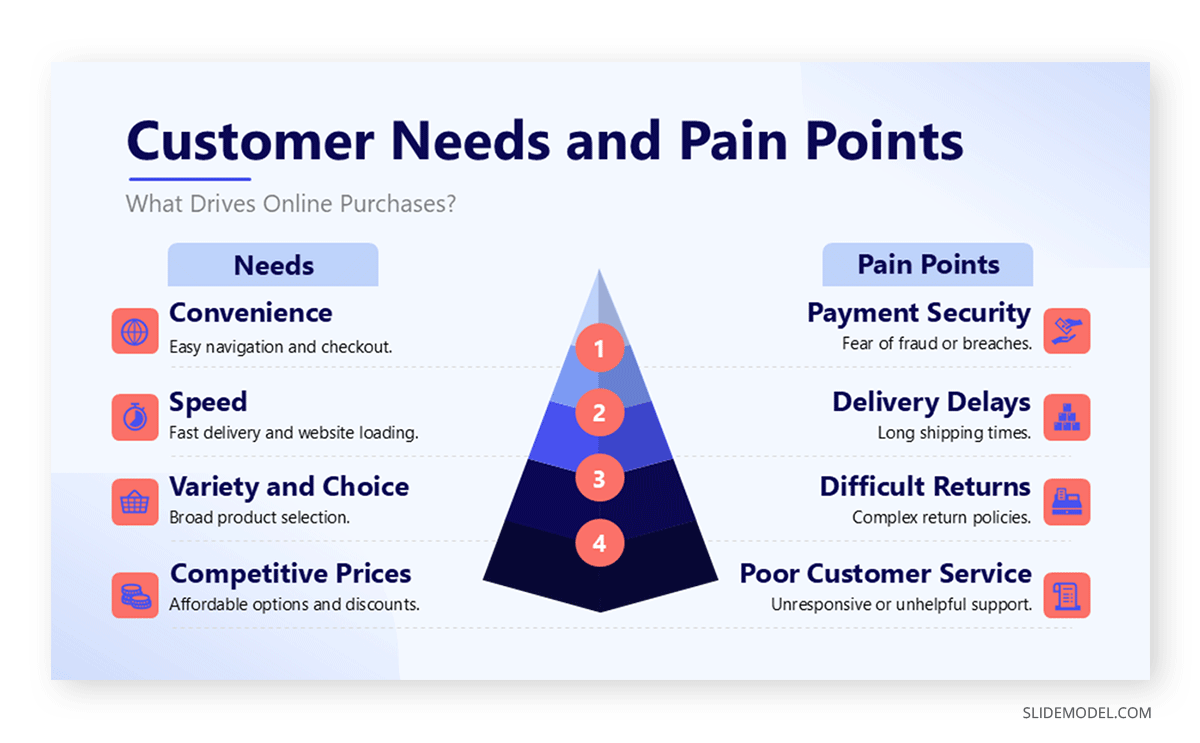
Image Source: SlideModel
Do you truly understand who your audience is? This single question determines your lead generation success. I’ve seen countless businesses make the crucial mistake of defining their target audience too broadly or focusing only on basic demographics.
Use behavior, not just demographics
Let’s be honest – traditional market research just doesn’t cut it anymore when you’re trying to generate quality leads. Sure, knowing someone’s age, job title, and location gives you a basic profile, but these surface-level characteristics tell you nothing about how prospects actually behave or what motivates them to make decisions.
Behavioral analytics is where the magic happens. It transforms your lead generation by revealing exactly how different segments of your audience interact with your content. Unlike those static demographic spreadsheets, behavioral insights show you:
- Visit sources – Where prospects come from (search, social, email) shapes their expectations
- Page interactions – What content they actually engage with and how deeply they explore
- Previous visits – How they’ve interacted with your brand over time
- Engagement patterns – Which actions signal genuine interest versus casual browsing
When you segment your audience through behavior rather than just demographics, you get a crystal-clear picture of what they really need. This behavioral targeting lets you focus your efforts on users showing actual interest or intent, making your ROI much better by putting resources where they’ll actually pay off.
“Most businesses make the critical mistake of viewing lead generation as merely an activity rather than a long-term business strategy requiring planning, investment, and patience,” explains one marketing expert. Behavioral data helps transform this approach by revealing the why behind your audience’s actions.
Even in B2B markets, behavioral segmentation is invaluable. Your customer base isn’t just a uniform group – it’s made up of different people with varying seniorities, departments, and industries. Each behaves differently and uses your product for completely different purposes. Understanding these distinctions helps you tailor your lead generation approaches to each specific segment.
Map pain points to lead magnet ideas
Want to create lead magnets that actually work? Start by identifying your audience’s pain points. These are the specific problems your potential customers face that your product or service can solve. Financial challenges, process inefficiencies, and inadequate support are common categories where customers struggle.
Here’s how I uncover these pain points effectively:
- Review existing client interactions – Analyze patterns in customer service inquiries, sales calls, and feedback forms
- Create customer journey maps – Document each stage from awareness to decision, noting obstacles along the way
- Conduct targeted surveys – Ask direct questions about challenges your audience faces
- Build empathy maps – Detail what your ideal customers see, hear, think, and feel throughout their journey
Once you’ve identified these pain points, you can map them directly to lead magnet ideas that address specific challenges. For instance, if your research reveals that potential clients struggle with process inefficiencies, create interactive tools, templates, or short guides that solve those exact problems.
I’ve seen this work firsthand. Highly specific lead magnets consistently outperform general content. When The Sales Evangelist offered a free ebook addressing revenue growth challenges, they touched on a pain point in the very first sentence of their offer, immediately resonating with their audience.
Want to test if your lead magnet truly addresses real problems? Ask yourself these questions:
- Does it provide a quick solution to a specific challenge?
- Is it tailored to behavioral segments, not just broad demographics?
- Does it demonstrate understanding of the emotional aspects of the pain point?
Understanding your audience’s motivations through behavioral analysis and pain point mapping creates the foundation for lead magnets that genuinely resonate, establishing trust before you ever make a sales pitch.
Build Lead Magnets That Actually Get Used

Image Source: Elegant Themes
Let’s talk about lead magnets. You know what doesn’t work? Those PDFs that collect digital dust in your prospects’ download folders. They’re not generating any quality leads for you. What you need are resources people actually use and value. Let me show you how to build lead magnets that convert passive visitors into engaged prospects who are excited to hear from you.
3 ways to generate leads with interactive tools
Have you tried interactive content yet? It generates significantly higher engagement than static content, with marketers reporting drastic increases in ROI when using these tools for lead generation. Unlike those boring traditional downloads, interactive content invites participation, creating experiences that prospects willingly exchange their contact information to access.
First, assessments and quizzes transform passive browsing into active engagement. I love these for lead qualification because they evaluate knowledge, behaviors, or needs on specific topics. Quizzes offer entertainment while collecting valuable information, building stronger relationships with prospects by providing personalized, relevant content before asking for anything in return.
Second, calculators and tools address financial or practical concerns. From mortgage calculators to project timelines, these resources provide immediate value that static content can’t match. Calculators are especially effective because they show prospects exactly what they’ll gain by using your product or service.
Third, interactive contests with prize incentives motivate participation while growing your email list exponentially. The contest format encourages social sharing, expanding your reach organically through word-of-mouth.
How do you implement these? Platforms like Involve.me offer no-code builders for creating customizable lead funnels combining multiple interactive elements. These tools allow you to deliver personalized AI content based on user responses while integrating with your existing marketing stack.
Creative ways to generate real estate leads
Real estate agents face unique lead generation challenges, yet some of the most effective approaches cost little to implement.
Building relationships with human resources departments at local companies is an overlooked goldmine. Meeting with HR personnel and offering relocation assistance to new hires establishes you as the go-to resource for incoming employees needing housing.
Hosting free educational seminars yields impressive results too. Ronnie Glomb, CEO of Your Town Realty, offers seminars teaching people how to buy HUD homes for as little as $100 down, consistently attracting ready buyers. What makes this even better? Holding these events in free library meeting rooms keeps costs minimal while establishing your expertise.
Open house contests provide another creative approach I’ve seen work wonders. Having attendees sign up for vacation giveaways (partnering with companies that offload excess hotel reservations) builds your prospect database while generating excitement. With costs around $100 per contest, the ROI potential is substantial.
Video content remains underutilized despite its effectiveness. Real estate professionals should create YouTube channels featuring property tours, neighborhood overviews, and educational content. This content can be repurposed for short-form platforms like Instagram or TikTok, maximizing reach without additional production.
How to test if your lead magnet is worth it
Even the most carefully crafted lead magnets need testing to ensure they’re actually performing. Start by examining your lead magnet’s “origin story” – does it clearly communicate why this resource exists and how it helps solve a specific problem? Without this context, even valuable content may underperform.
Don’t just track downloads. That’s amateur hour. Instead, measure both quantity and quality metrics. While download numbers provide basic insight, engagement metrics reveal true effectiveness. Track how much time prospects spend with your content, email open rates following download, and whether they progress through your nurture sequence.
I highly recommend A/B testing different elements of your lead magnet to identify friction points. Test variations of headlines, formats, or delivery methods to determine which produces the most conversions. The lead magnet name functions like a headline, significantly influencing whether someone continues or clicks away.
Most importantly, evaluate whether your lead magnet helps pre-sell whatever product or service you’ll eventually ask subscribers to purchase. If your lead magnet attracts the wrong audience or doesn’t adequately prepare leads for the sales process, even high download numbers won’t translate to revenue.
By creating interactive experiences, implementing creative industry-specific approaches, and continuously testing effectiveness, you’ll build lead magnets that consistently deliver qualified prospects ready for your next offer.
Use Content Formats That Spark Curiosity
Creating curiosity isn’t just a nice-to-have for lead generation, it’s absolutely essential if you want to stand out in 2025. The formats you choose can make the difference between prospects scrolling past your message or eagerly engaging with it. Let me share three content approaches I’ve seen consistently spark that valuable curiosity.
Short-form video with embedded CTAs
Short-form video isn’t just trending, it’s delivering real results. With over 84% of marketers reporting that video has helped increase website traffic, the data clearly supports its effectiveness for lead generation. What makes these brief videos so powerful? They capture attention quickly while driving specific actions.
Where you place your call-to-action within these videos matters tremendously. After analyzing over half a million CTAs in videos, research shows an average conversion rate of 13% across platforms. Sales videos, webinar recordings, and original series content consistently generate the highest conversion rates.
Want to maximize your short-form video effectiveness? Here’s what works:
- Place your CTA after you’ve delivered value but before viewer interest drops
- Use text CTAs for simplicity, they’re the most popular option because they require minimal setup
- Ensure your CTA button or text visually stands out without being visually jarring
- Include a voiceover reiterating the CTA to reinforce the message through multiple sensory channels
I’ve found short-form video works especially well for B2B lead generation because it meets busy decision-makers where they are, delivering valuable insights in under 60 seconds. These videos integrate perfectly into your existing marketing ecosystem, driving traffic to landing pages, downloadable resources, or direct contacts.
Quizzes and calculators that teach and convert
Interactive content transforms passive browsing into active engagement. Unlike static downloads that people forget about, quizzes and calculators create experiences that prospects willingly exchange their contact information to access.
Quizzes serve a dual purpose, they simultaneously engage your audience and qualify leads. Through carefully crafted questions, you can identify where prospects are in their buyer journey while providing personalized, relevant content. Plus, they create a fun, interactive experience that makes your brand memorable.
Calculators deliver immediate, tangible value. Whether determining potential ROI, savings estimates, or project timelines, these tools demonstrate exactly what prospects stand to gain from your product or service. For example, a mortgage company might offer a payment calculator that helps prospects understand their financing options before collecting contact information.
What makes these interactive tools particularly effective is their ability to automate lead qualification. As prospects input information about their situation, you gain valuable insights into their needs, challenges, and buying readiness. This intelligence allows for more targeted follow-up communications.
Email templates that feel personal, not promotional
The inbox remains a powerful territory for lead generation, provided your emails feel genuinely personal rather than obviously promotional. Personalization goes far beyond adding a first name to a subject line.
Effective personalization strategies include:
- Tailoring content based on previous browsing behavior or purchase history
- Using dynamic content blocks that change based on subscriber data
- Incorporating behavioral triggers that respond to specific actions
For example, abandoned cart emails should be super simple, focusing just on the items left behind and offering support. Meanwhile, re-engagement emails can leverage past browsing sessions to reconnect with inactive subscribers.
The more an email speaks to a prospect’s specific situation, the higher the chances they’ll take it seriously. This relevance moves leads faster down the funnel without feeling pushed. According to a recent Segment report, 89% of decision-makers stated that personalization will continue to be an invaluable tactic in coming years.
Remember that personalization isn’t just about technology, it’s about psychology. When you demonstrate that you understand a prospect’s specific challenges and needs, you establish a level of trust that generic content simply cannot achieve.
Turn Everyday Interactions into Lead Opportunities
Did you know your everyday conversations are packed with untapped potential for lead generation? I’m serious. Beyond those carefully planned marketing campaigns, your daily interactions, both online and offline, can become powerful opportunities to connect with prospects. Let me show you how to transform these everyday moments into valuable leads.
How to generate your own leads from communities
Building an authentic presence in online communities delivers remarkable results without expensive advertising. Facebook groups, in particular, remain an overlooked goldmine for lead generation. Despite all the noise about Facebook’s declining relevance, these groups continue to deliver exceptional opportunities when you approach them the right way.
The secret? Genuine engagement. Not sales pitches. By actively participating in discussions covering both positive and negative industry aspects, you establish trust organically. I’ve seen this approach position one brand as a thought leader for tens of thousands of photographers in the US, at zero cost while targeting precisely their ideal audience.
Forums, membership sites, and social media groups create environments where prospects are actively seeking solutions and recommendations. Look at how Peloton consistently attracts new leads through their community-driven approach, showing how active communities naturally drive word-of-mouth promotion.
Key to community-based lead generation: Offer value first, build relationships second, and mention your products third, if at all. When you contribute meaningfully, people naturally investigate who you are.
Using social proof in unexpected places
Social proof influences purchasing decisions more than most realize. The numbers don’t lie: 92% of consumers read online reviews before making purchases, while 63% are more likely to buy from websites featuring product ratings and reviews.
Don’t just limit testimonials to a dedicated page nobody visits. Instead, place them strategically throughout customer journeys:
- Enhance landing pages and homepages with authentic customer feedback
- Integrate reviews into paid advertisements for enhanced credibility
- Feature video testimonials, which engage viewers more effectively than text
- Display customer success stories in email signatures and business cards
Additionally, showing user-generated content increases website engagement dramatically, with visitors spending 90% more time on sites showcasing this content. When customers share images or videos featuring your products, they become powerful lead generation assets.
Offline moments that drive online conversions
Despite our digital obsession, offline interactions remain conversion powerhouses. Phone calls generate ten times more revenue than web leads across multiple industries, offering personal connections impossible to replicate online.
Here’s how I recommend transforming in-person conversations into digital leads: create custom landing pages for offline contacts. Provide QR codes on receipts, packaging, and in-store signs for instant digital connections. This omnichannel approach ensures no potential lead falls through the cracks.
Hosting free educational sessions or workshops establishes your expertise while gathering qualified leads. One real estate CEO I know consistently attracts ready buyers through seminars teaching people how to purchase HUD homes for minimal down payments, proving educational value translates directly to lead generation success.
Remember that offline data integration is crucial, track offline conversions using custom promo codes, vanity URLs, or point-of-sale systems integrated with your CRM to measure true campaign effectiveness.
Track What Works and Double Down
Image Source: Porter Metrics
Want to know what separates professional marketers from amateurs? It’s tracking. Measuring the effectiveness of your creative lead generation efforts is absolutely crucial. Without it, you’re basically operating in the dark, wasting resources on strategies that don’t perform while missing chances to scale what’s actually working.
Simple ways to measure creative lead performance
Here’s what I recommend: establish a tracking system that combines both hard numbers and qualitative insights. Start by setting clear benchmarks based on your historical data to create realistic performance goals. This gives you a solid reference point to measure all your future campaigns against.
Focus on these essential metrics:
- Conversion rate – The percentage of leads that become customers, showing which strategies actually deliver measurable outcomes
- Cost Per Lead (CPL) – Calculated by dividing total spend by leads acquired, revealing your efficiency and ROI
- Marketing Qualified Leads (MQLs) – Potential customers showing interest based on your targeted marketing initiatives
- Lead-to-customer ratio – A high conversion rate tells you your marketing and sales efforts are attracting the right audience
Don’t just collect numbers once a month. Implement continuous measurement through analytics dashboards that give you immediate visual insights. I’m also a big fan of A/B testing to quickly identify which creative combinations perform best. Remember, the goal isn’t just collecting data, it’s gaining actionable intelligence you can use.
When to pivot vs. when to scale
So how do you decide whether to pivot or double down? It all comes down to understanding your performance trends. According to experts, you should run three key comparisons: “Performance over time, performance against benchmarks, and performance against existing campaigns”. These comparisons reveal when something starts losing its effectiveness.
Double down when the data shows clear patterns of success. As one marketing leader noted, “Analyze results regularly to identify areas for improvement and double down on lead generation tactics that yield the best results”.
When should you pivot? When you see high bounce rates on landing pages, declining engagement metrics, or if your lead conversion rate drops significantly below industry benchmarks. And during industry disruptions? Adopt a nimble approach by reevaluating channels and quickly adapting to emerging trends.
Think of it this way – if you’re not measuring, you’re just guessing. And guessing is expensive.
Conclusion
Creative lead generation isn’t rocket science, but it does demand fresh thinking and consistent execution. Throughout this guide, I’ve shared strategies that move beyond those tired, outdated tactics, focusing instead on building genuine connections with potential customers.
Success starts with the right mindset – viewing lead generation as a relationship-building process rather than just collecting email addresses. Understanding your audience’s actual behavior, addressing their real pain points, and creating valuable interactive content establishes trust before you ask for anything in return.
Why do short-form videos, personalized emails, and community engagement deliver such great results? Because they meet prospects where they are, speaking directly to their needs. And when you actually measure performance (unlike most marketers), you can quickly identify which approaches resonate most strongly with your audience and optimize your efforts for maximum impact.
Did any of these creative lead gen methods catch your eye for 2025? Which one would you try first? I’d love to know. We’re at GrowLeads.in if you’d like a hand bringing it to life.
Remember, effective lead generation requires patience and persistence – it’s not an overnight miracle. But the relationships you build through these creative approaches will drive sustainable growth for years to come. And that’s what really matters, right?
FAQs
Q1. What are some creative lead generation methods for 2025?
Some creative lead generation methods for 2025 include using interactive content like quizzes and calculators, leveraging short-form video with embedded CTAs, personalizing email templates, engaging in online communities authentically, and utilizing social proof in unexpected places throughout the customer journey.
Q2. How can businesses measure the effectiveness of their lead generation efforts?
Businesses can measure lead generation effectiveness by tracking key metrics such as conversion rates, cost per lead (CPL), number of marketing qualified leads (MQLs), and lead-to-customer ratio. Using analytics dashboards and conducting regular A/B testing can provide actionable insights to optimize strategies.
Q3. Why is it important to define your audience beyond basic demographics?
Defining your audience beyond basic demographics is crucial because it allows you to understand their behaviors, pain points, and motivations. This deeper insight enables you to create more targeted and effective lead magnets, personalized content, and marketing strategies that resonate with your potential customers.
Q4. How can real estate agents generate leads creatively?
Real estate agents can generate leads creatively by hosting free educational seminars, building relationships with HR departments at local companies, conducting open house contests with vacation giveaways, and creating video content for platforms like YouTube, Instagram, and TikTok to showcase properties and share valuable information.
Q5. What role does trust play in creative lead generation?
Trust plays a crucial role in creative lead generation as it forms the foundation for building lasting relationships with potential customers. By consistently delivering value, demonstrating expertise, and addressing real pain points without immediate sales pressure, businesses can establish trust that turns prospects into long-term clients and advocates for their brand.

Sanjay leads content strategy at Growleads, helping brands create compelling narratives that drive engagement and conversions. He combines strategic thinking with creative storytelling to build content that captures attention and delivers results.
As a content strategist, Sanjay has helped organizations develop content systems that increase brand awareness, drive qualified traffic, and convert audiences into customers. His expertise spans content strategy, brand storytelling, and building scalable content operations.